
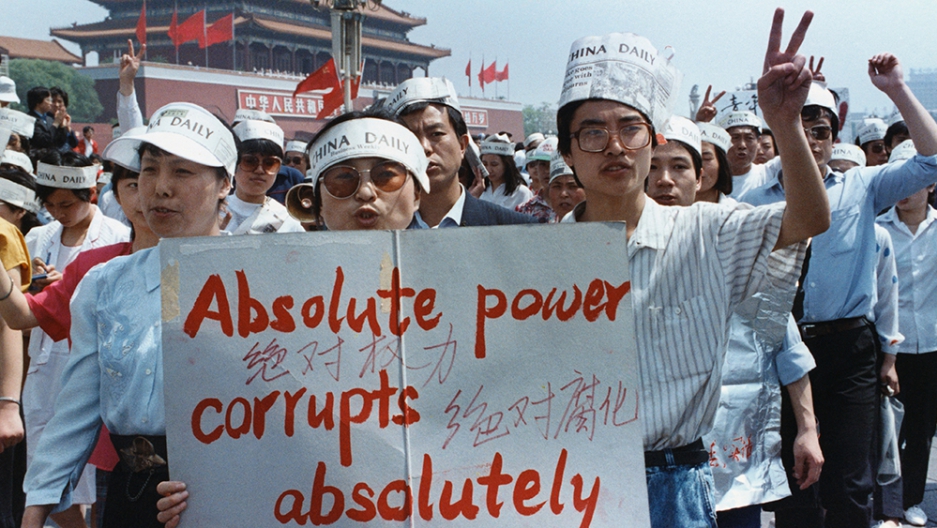
中国共产党自从诞生之日起,就自诩为人民民主的进步政党,在与蒋介石争夺天下时,如《解放日报》等官媒更是民主金句不断,诸如“没有民主,一切都是假的”、 “自由和民主是现代社会的阳光和空气”、 “必须有完全的新闻自由”等放到今日来看依然毫不过时,单看彼时的中共,俨然是一心革除封建专制余孽,为了伟大事业抛头颅洒热血的民主斗士!然而1999年,中国作家笑蜀编撰了一本《历史的先声——来自半个世纪前的庄严承诺》,将这些中共上世纪40年代发表的民主金句尽数收录并出版,其中并未添加任何私货,结果此时早已坐稳江山,彻底暴露极权面目的中共被这记隔了半个世纪,由自己亲手发出的的回旋镖正中面门,独裁者岂能忍受这等阴阳怪气的嘲讽,中共恼羞成怒,两个月后时任中共中央宣传部长丁关根在会议上重点抨击此书的出版,并火速下令全国查禁,出版社停业整顿,出版社负责人调离原职,已出版书籍查封销毁,北京公安更是在图书馆翻来覆去寻找漏网之书,以这种自己啪啪打脸的桥段沦为全世界的笑柄。
民主制度的优缺点
现代民主制度绝非完美的制度,英国历史上最伟大的首相丘吉尔曾说过:“民主是最糟糕的制度,但它是我们所尝试过的所有制度中最不坏的。”诚然,民主制度总是伴随着一系列衍生问题,诸如决策效率低、周期长,政策不连贯,盲目迎合选民等,但就目前来说,民主是唯一真正实现了将权力关进笼子的社会制度,精妙的分权制衡与监督机制,确保了民主拥有强大的纠错机制。这也是民主制度的精髓,仅此一点民主就可以碾压独裁国家社会的所有“优点”。
中国的“全过程民主”
反观中国的“全过程民主”,中国的最高权力机构全国人大如今不过是习近平的掌中玩物,2900余名全国人大代表皆是冢中枯骨、举手机器。连任时间高达66年、公认建国以来资格最老的全国人大“常青树”申纪兰接受记者采访时曾有过一句惊世名言——“我非常拥护共产党。当代表就是要听党的话,我从来没有投过反对票”。申纪兰女士可能锄了一辈子地,以至于四肢发达头脑简单,不知道有些话是要放在心里不适合说出来的,也可能她只是希望借机向国家领袖表达她的忠诚,但无论是哪一种可能,根据她的实际作为来看,这番话很可能是她发自肺腑的真心话,但这也就意味着她当人民代表的一生中,曾经既支持人民公社,又支持取消人民公社。既支持大跃进,又支持取消大跃进。既支持文革,又支持平反文革。举手机器的风采在她身上体现的淋漓尽致。
权力与监督的失衡
中共自始至终就没有想过和老百姓分享权力,事实上,无论是自诩为进步政党,还是自称追求正义、代表最广大的农民也好,这些都没有实际意义,任何以暴力作为后盾、且权力不受制衡的政权最终都只会走上独裁极权这条路,西方国家的人民在实行对公权力的监督权时,总是保持十二分的警惕,将公权力视为洪水猛兽,时刻关注权力的牢笼有没有松懈的可能,此外传媒行业也在时刻运用舆论的力量行使监督政府的第四权,这种权力的有效分配与互相监督是民主制度的基石,既确保了权力是自下而上的赋予,也确保了权力只能在笼子里跳舞而不敢越雷池一步。
反观中国,姑且不谈胡温时期中国还残留着些许党内民主的氛围,自习近平这位“千古一帝”上任以来,中共种种倒行逆施不断,包括但不限于镇压监禁有良心的异见人士,以“四个意识”全方位加强中共对整个社会的掌控力,2018年更是悍然修改宪法,将国家主席“不得连任超过两届”的祖训删去,摆明了要终身连任。中国的媒体不见分毫的质疑和抗议之声,反而声情并茂地大唱赞歌,声称这是“符合国家事业发展需要、顺应人民意愿”、 “有助于推动宪法与时俱进、完善发展”。可谓毫无新闻工作者的操守,已彻底沦为中共的喉舌与宣传工具。而早在2016年,央视就曾在习近平前来视察时,明牌打出了“央视姓党,绝对忠诚,请您检阅”这等恬不知耻的溜须拍马标语。批评此事的任志强,也在2020年因发文痛斥习近平是“脱光了衣服也要当皇帝的小丑”而被捕入狱,皇帝震怒之下,下面的官员匆匆找了个理由将任志强重判了18年有期徒刑。
被滥用的公权力
近年来中共维稳费支出节节攀升,2020年中国的维稳经费已然超过军费开支7%,高达2100亿美元,纵观古今中外,可谓前无古人后无来者,要知道,这笔钱甚至远远超过覆盖14亿中国人免费医疗的所需。而庞大的维稳经费和社会管控带来的另一个问题,就是宣传与现实的巨大脱节,在新闻宣传里,中国的前景永远稳中向好,四海升平,是“全世界最安全的国家”,然而在现实里,针对无辜者的暴力恐怖事件频发,各地因遭遇不公的维权上访不断,恐慌弥漫在每个中国人的心中。
那么为什么中共可以如此肆意妄为而不必在乎影响和民意呢?正是因为中国的体制决定了权力是由上而下赋予,上级领导掌握着下级官员的生杀予夺,所以官员永远只需对上负责,2023年8月杜苏芮台风过境时,中共官员为了保住习近平钦点的“千年大计”雄安,在未通知泄洪转移和部署救援措施的前提下,悍然将洪水倾泻在70万常住人口的涿州,酿成一幕幕生离死别、流离失所的惨剧,究其根源不过是因为习近平是这些中共官员的权力来源罢了,他们的办事逻辑也很简单:“皇上重视雄安,做奴才的自然要为皇上分忧,就苦一苦百姓吧”,倘若这些官员是由人民选举,接受人民和媒体监督,那他们还敢冒天下之大不韪作出此等匪夷所思的决策吗?
权力只对权力来源负责,这一原则在中国的政治体制中显得尤为突出。在一个权力高度集中的体系中,官员的首要任务往往是取悦上级,而非服务于普通人民。这种结构使得权力的滥用成为常态。中国现行的体制虽然宣称实行“全过程民主”,但实质上却体现了权力的极端集中和对公民自由的压制。
结论
如果中国有实现民主自由的那一天,必须实现权力的自下而上的赋予。公权力真正来源于人民,绝非人手一张选票那么简单。完善的分权制衡与监督机制,同时公众对政治有清醒的认知和警惕,才能有效遏制权力的腐败和滥用。民主制度并非完美无缺,但它通过权力的分散和系统的监督,提供了一种相对有效的方式来约束权力、保护公民权益。中国的未来在于学习和借鉴这些经验,推进真正的权力改革,让权力对人民负责,而不是仅仅对上级负责。唯有如此,中国才能避免当前的权力滥用,实现真正的公平和进步。
作者:中国民主党英国总部党员程敏
Power and Accountability: The Downfall of Absolute Power. The Chinese Communist Party’s Promises and Reality
From its inception, the Chinese Communist Party (CCP) claimed to be a progressive party advocating for people’s democracy. During its struggle against Chiang Kai-shek, party media such as Liberation Daily were filled with pro-democracy rhetoric like “Without democracy, everything is fake”, “Freedom and democracy are the sunlight and air of modern society”, and “Complete freedom of the press is essential”. These slogans, still relevant today, painted the CCP as democratic warriors sacrificing for a great cause. However, in 1999, Chinese writer Xiao Shu published The Voice of History: The Solemn Promise from Half a Century Ago, compiling these quotes without any personal commentary. The CCP, by then firmly in power and showing its true authoritarian nature, was infuriated. In response, then-Minister of Propaganda Ding Guangen criticized the book and swiftly banned it nationwide, shutting down the publisher and destroying the books, turning this self-inflicted humiliation into a global laughingstock.
The Pros and Cons of Democracy
Modern democratic systems are far from perfect. As Winston Churchill, one of the greatest British Prime Ministers, famously said, “Democracy is the worst form of government, except for all the others that have been tried.” Indeed, democracy often comes with inefficiencies, long decision-making processes, and the risk of populism. However, it remains the only system that effectively confines power within a cage. The intricate checks and balances ensure a robust mechanism for correcting mistakes. This inherent strength of democracy alone allows it to surpass all the “advantages” claimed by autocratic regimes.
China’s “Whole-Process Democracy”
In contrast, China’s so-called “whole-process democracy” is a farce. The National People’s Congress, China’s highest authority, is merely a puppet of Xi Jinping, with its 2,900 representatives acting as mere rubber stamps. For instance, Shen Jilan, the longest-serving delegate since the founding of the People’s Republic, once famously said, “I wholeheartedly support the Communist Party. Being a representative means listening to the Party. I have never voted against any proposal.” This statement, whether out of loyalty or naivety, reveals her as a mere tool of the Party, supporting contradictory policies without question.
The Imbalance of Power and Supervision
The CCP has never intended to share power with the people. Regardless of its claims of pursuing justice and representing the majority, any regime backed by violence and unchecked power inevitably becomes dictatorial. In Western democracies, citizens vigilantly monitor public power, and the media plays a crucial role as the fourth estate. This effective distribution and mutual supervision of power are the cornerstones of democracy, ensuring power is granted from the bottom up and remains confined within legal boundaries.
Conversely, since Xi Jinping’s rise to power, China has regressed into stricter authoritarianism, cracking down on dissidents, enforcing the “Four Consciousnesses” to strengthen control, and abolishing presidential term limits to allow Xi’s indefinite rule. Chinese media, instead of questioning, sings praises for these moves, showcasing its transformation into a mere propaganda tool. In 2016, CCTV even shamelessly displayed a banner proclaiming “CCTV is loyal to the Party, please inspect us” during Xi’s visit, leading to the arrest and heavy sentencing of critic Ren Zhiqiang in 2020.
The Abuse of Public Power
China’s stability maintenance expenditures have skyrocketed, exceeding military spending by 7% in 2020, totalling $210 billion. This unprecedented expenditure highlights a stark disconnect between propaganda and reality. While the media portrays China as the safest country globally, the reality is marked by frequent violent incidents and widespread unrest among citizens facing injustice.
The root of the CCP’s unchecked actions lies in its top-down power structure. Officials are accountable only to their superiors, not the people. During the 2023 Typhoon Doksuri, to protect Xi Jinping’s “Millennium Plan” for Xiong’an, officials diverted floodwaters to Zhuozhou without proper warning or evacuation, causing widespread devastation. This decision reflects the simple logic: “The Emperor values Xiong’an, so we must alleviate his worries, even if it means sacrificing the people.” If these officials were elected and accountable to the people and media, would they dare to make such reckless decisions?
Conclusion
For China to achieve true democracy and freedom, power must be granted from the bottom up, originating from the people. This involves more than just having a vote; it requires a robust system of checks and balances and a vigilant public. While democracy is not flawless, its decentralisation of power and systematic oversight provide an effective way to curb corruption and protect citizens’ rights. China’s future lies in learning from these experiences, advancing genuine reforms, and ensuring that power is accountable to the people, not just to superiors. Only then can China avoid the current abuses of power and achieve true fairness and progress.
Author: Cheng Min, Member of the UK Headquarters of China Democracy Party
