
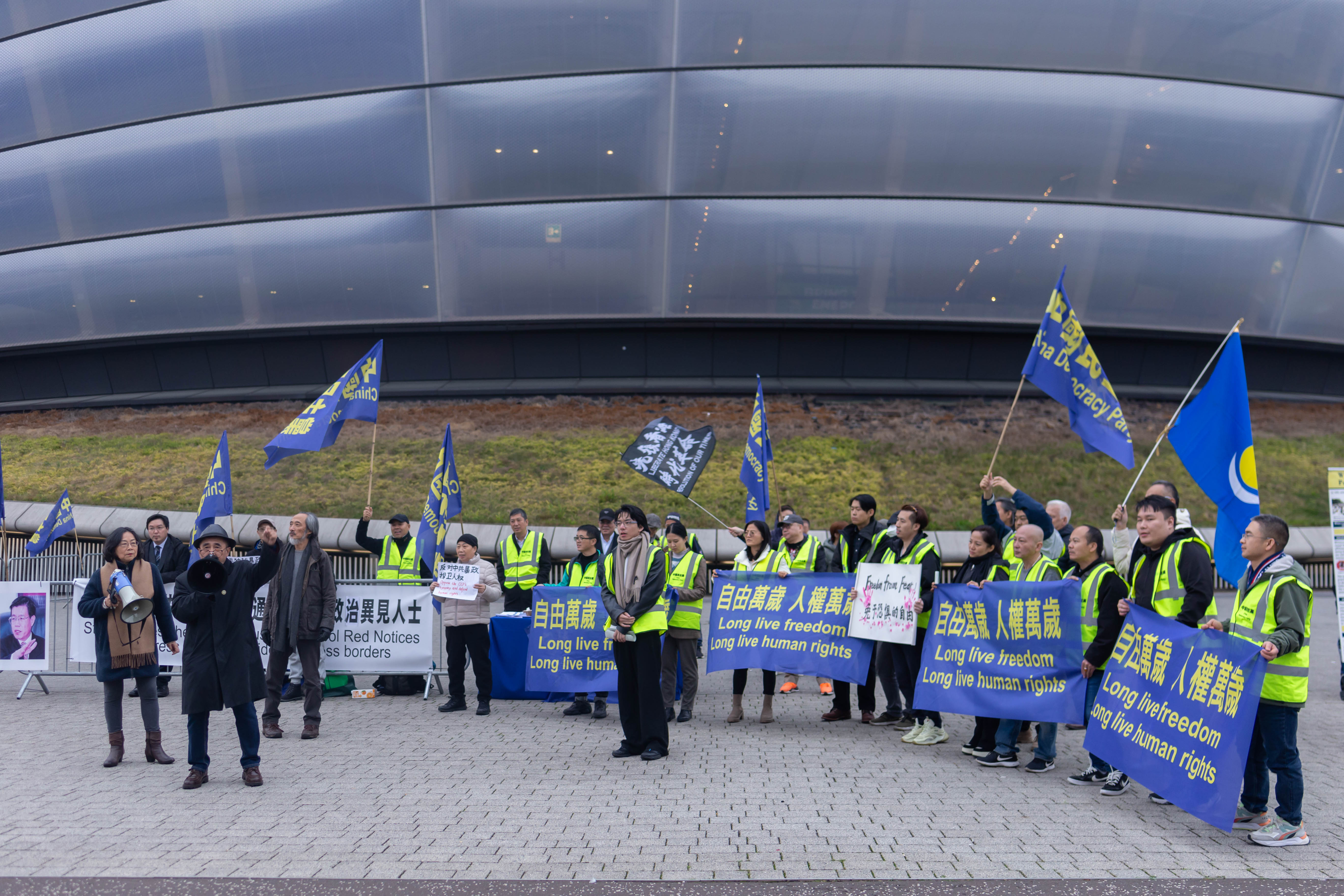
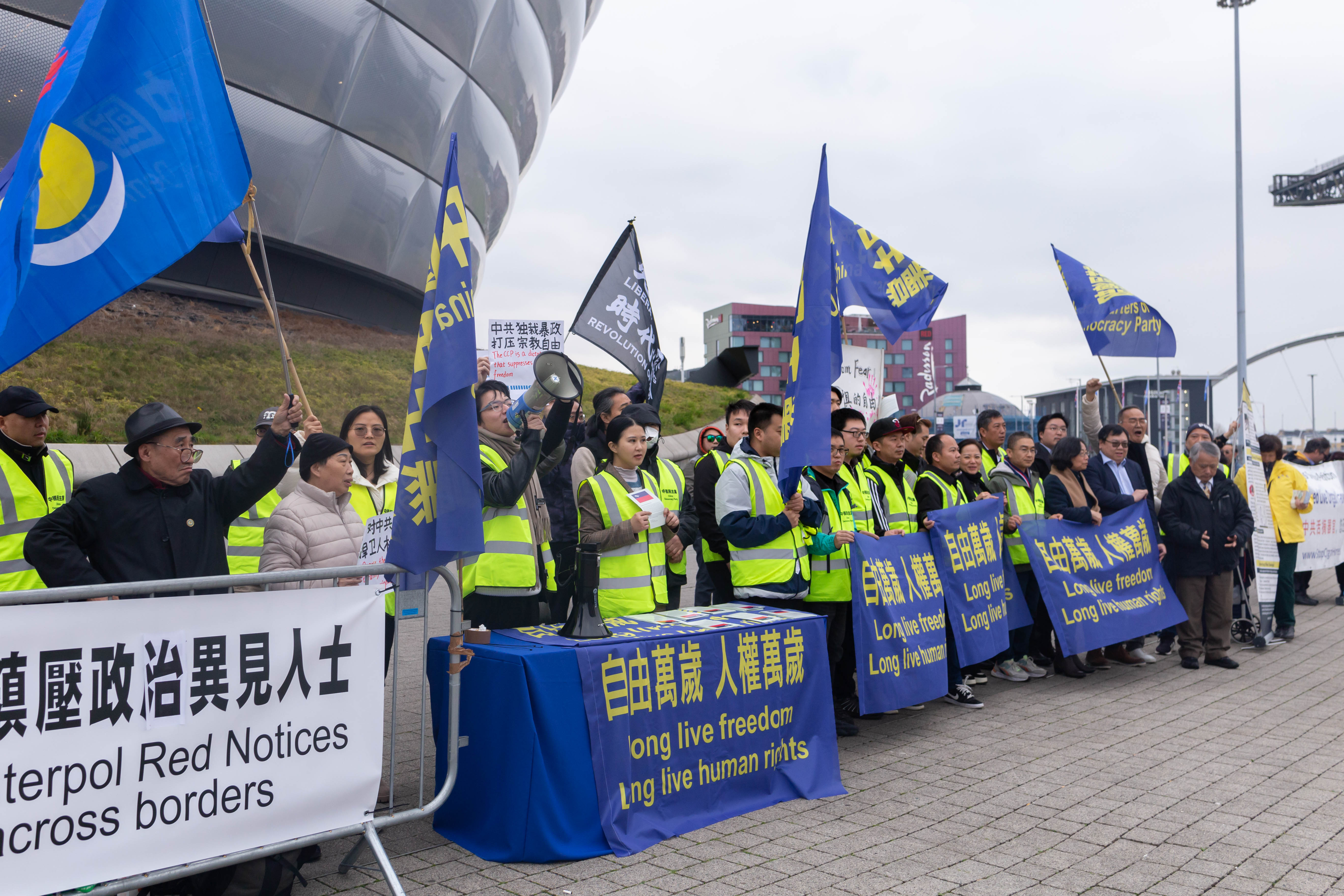
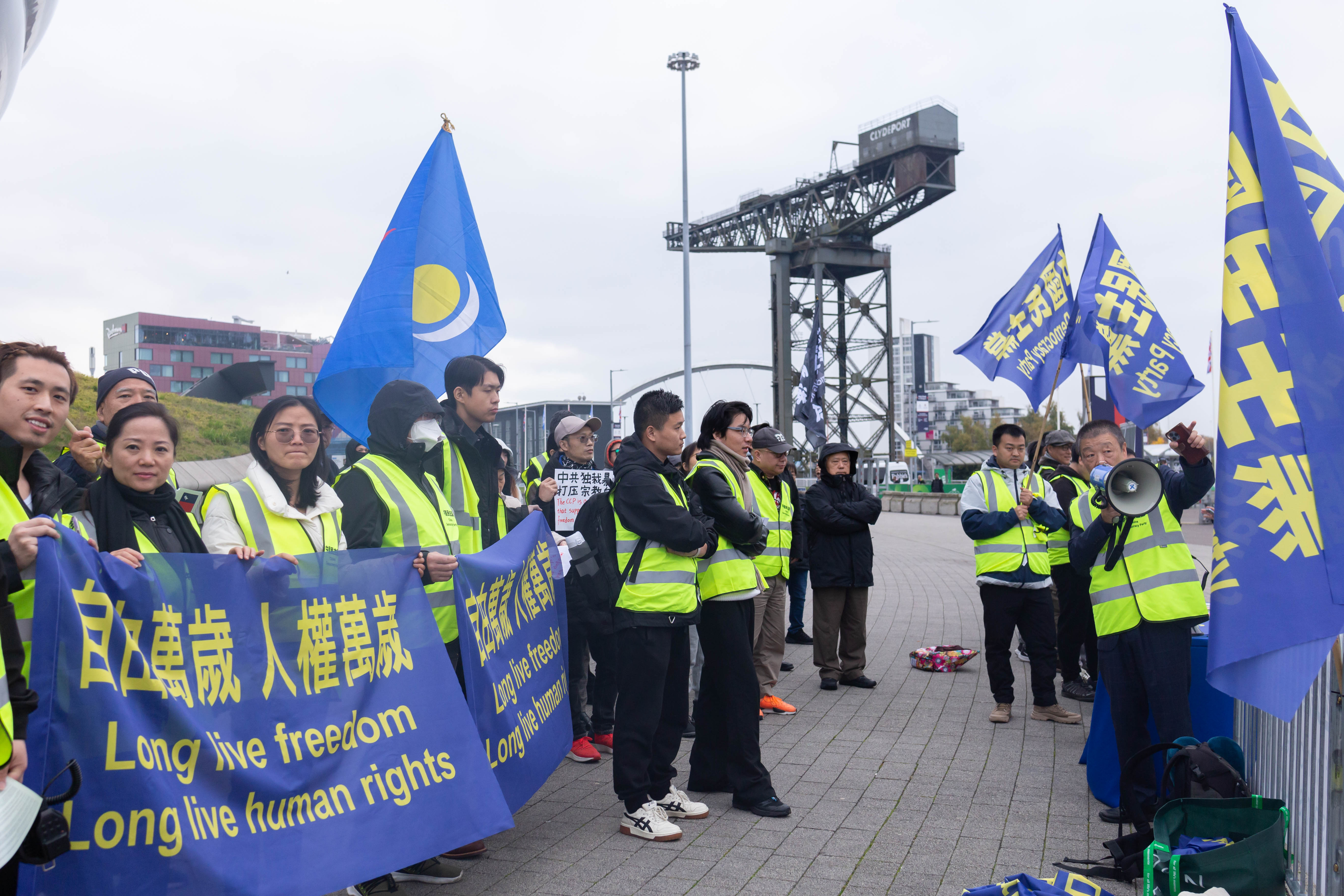
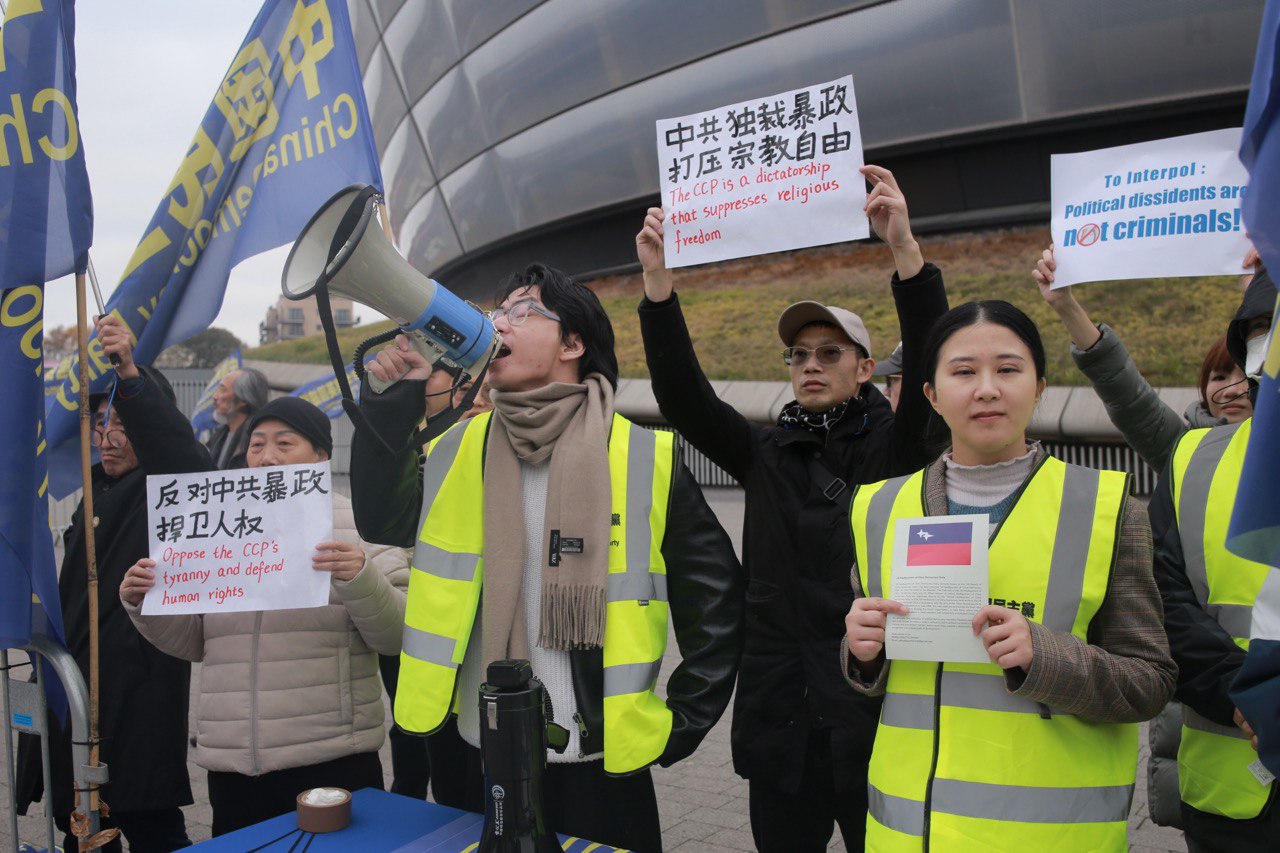
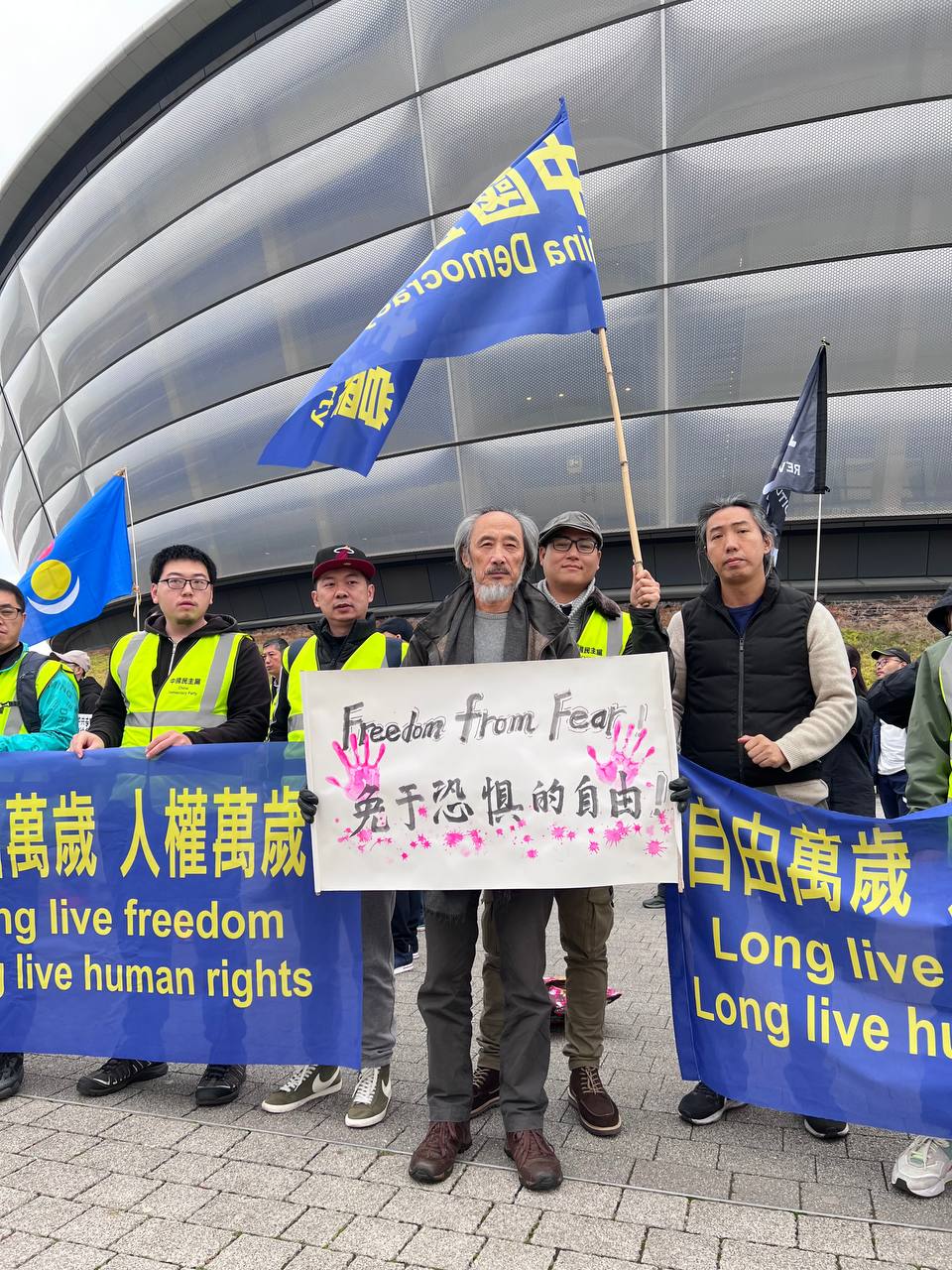
2024年11月5日,在苏格兰格拉斯哥召开的国际刑警组织(INTERPOL)年会上,几十位中国民主党成员及人权活动人士聚集会场外,举着横幅,高喊口号,呼吁国际社会关注中共政府利用国际刑警组织的“红色通缉令”(简称“红通”)来打压异议人士的现象。这一抗议活动引发了参会代表的关注。中国民主党英国总部等团体认为,中国政府将“红色通缉令”作为镇压手段,用以对付批评政府的声音,使他们在国际上无处藏身。迫使他们回国面对不公正的法律审判。
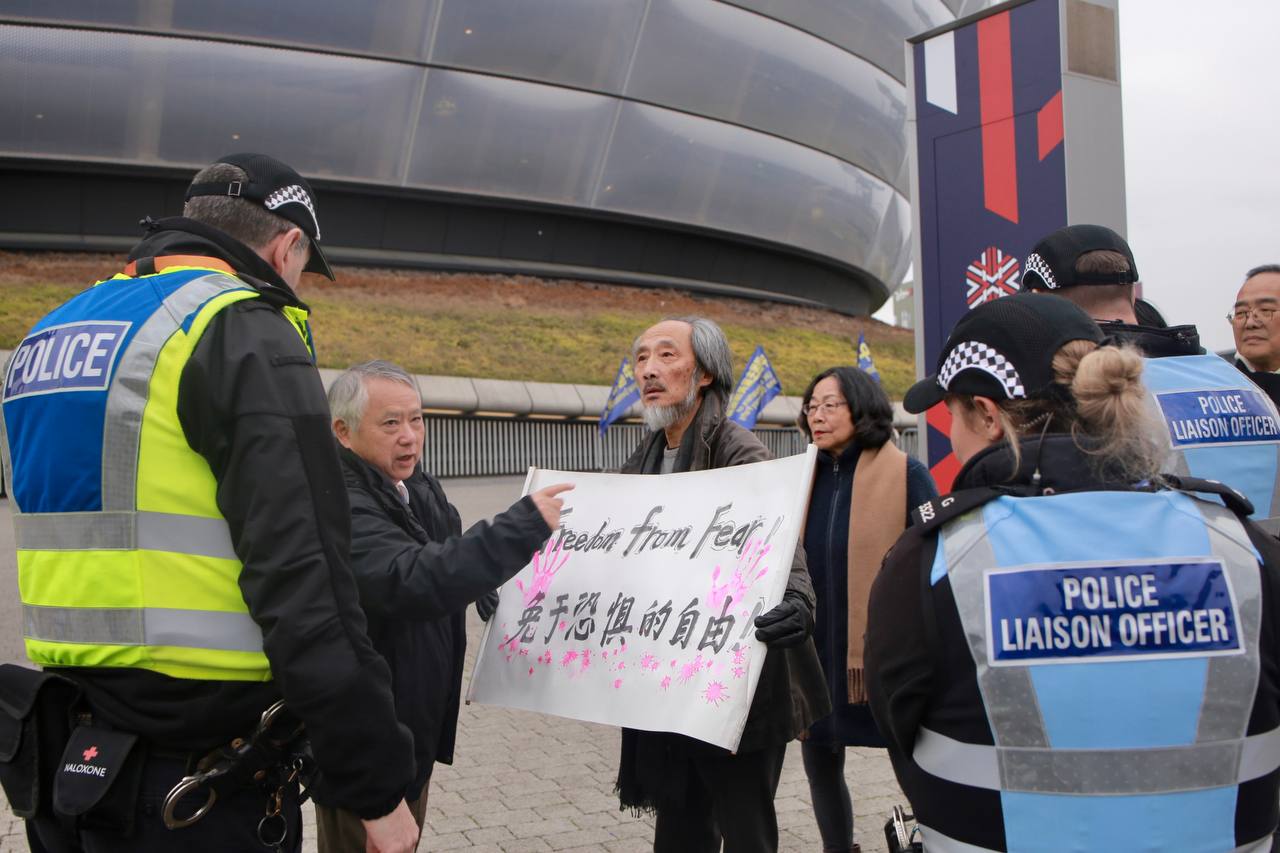
抗议活动由中国民主党英国总部组织,汇集了多个民主团体及流亡人士。抗议者手举标语,呼吁国际刑警组织重新审视并加强对“红色通缉令”发布流程的监督,确保这一机制不被任何国家滥用。抗议者们在国际刑警组织年会会场外打出标语,标语上写着“抗议中共政府滥用红通跨国镇压政治异见人士”、“自由万岁、人权万岁”等字样。中国民民主党英国总部顾问黄华接受美国之音采访时表示,我们在会场外表达了我们的诉求,“强烈谴责中共滥用红通,跨国镇压政治异见人士”,英国的警察非常友善,给我们提供了便利。
“红色通缉令”原本是国际刑警组织为帮助成员国打击跨国犯罪而设计的一项全球通缉令,目的是让成员国间能够迅速分享嫌疑人的信息,进行跨国协作。然而,近年来有越来越多的批评声音指出,一些国家,尤其是中国和俄罗斯,土耳其,频繁申请发布“红色通缉令”以追捕政治异见者或民权活动家,而非真正的罪犯。中国政府方面则否认这一指责,称所有的“红色通缉令”都遵循法律程序,用以追捕在逃的经济或刑事犯罪嫌疑人。然而,国际人权组织指出,许多持不同政见的流亡者仅因发表反对政府的言论或参与政治活动,就遭到中国政府指控为“刑事犯罪”并被发布“红通”。
一位参与抗议的流亡人士所说:“自由世界应为那些没有机会发声的人们站出来发声,守护国际组织的公正性。否则,国际刑警组织将不再是追捕罪犯的工具,而是被用来镇压政治异见的利器。”
中国民主党英国总部报道
参加此次活动的党员:王冠儒、黄华、Thomas、俞滨、郭宇轩、周小斌、程敏、成小丹、朱双林、胡晓、李亚伦、李皓博、韦伊铭、林明强、周亮、王宇峻、王应和、朱司勇、李景棠、魏辰雨、何智威、闫磊等
China Democracy Party and other dissidents protest against the Chinese government’s use of Interpol for transnational repression
On 5 November 2024, dozens of members of UK Headquarters of China Democracy Party and human rights activists gathered outside the INTERPOL annual conference in Glasgow, Scotland, holding banners and shouting slogans calling for international attention to the Chinese Communist government’s use of the Interpol ‘Red Notice’ (‘Red Notice’) to suppress dissidents. ‘Red Notice”) of Interpol to suppress dissidents. The protest sparked concern among delegates to the conference. Groups such as UK Headquarters of China Democracy Party argued that the Chinese government uses the ‘Red Notice’ as a means of repression against voices critical of the government, so that they have no place to hide in the international arena. The protest was organised by the CDP UK HQ.
The protest was organised by the UK Headquarters of China Democracy Party and brought together a number of pro-democracy groups and exiles. Protesters held banners calling on Interpol to review and strengthen its oversight of the Red Notice process to ensure that the mechanism is not abused by any country. Outside the Interpol annual meeting, protesters put up banners with slogans such as ‘Protest against the Chinese Communist government’s abuse of Red Notices to suppress political dissidents across the border’ and ‘Long live freedom, long live human rights’. In an interview with Voice of America, Huang Hua, an adviser to the UK Headquarters of China Democracy Party, said that we expressed our demands outside the venue, ‘strongly condemning the CCP’s misuse of the Red Notice to suppress political dissidents across the border,’ and that the police in the UK were very friendly and provided us with facilities.
The ‘Red Notice’ is originally a global wanted notice designed by Interpol to help member countries combat transnational crimes, with the aim of enabling member countries to share information on suspects quickly and collaborate across borders. However, in recent years, there has been growing criticism that some countries, notably China and Russia and Turkey, have frequently applied to issue ‘red notices’ to pursue political dissidents or civil rights activists rather than actual criminals. For its part, the Chinese government has denied the accusation, saying that all ‘red notices’ follow legal procedures for pursuing fugitive economic or criminal suspects. However, international human rights organisations have noted that many dissident exiles have been charged with ‘criminal offences’ and issued with ‘red notices’ by the Chinese government simply for speaking out against the government or engaging in political activities.
As one of the exiles involved in the protests put it: ‘The free world should stand up for those who have no chance to speak out and defend the impartiality of international organisations. Otherwise, Interpol will no longer be a tool for hunting down criminals, but a tool for suppressing political dissent.’
By UK Headquarters of China Democracy Party
Party members who attended the event: Wang Guanru, Huang Hua, Thomas, Yu Bin, Guo Yuxuan, Zhou Xiaobin, Cheng Min, Cheng Xiaodan, Zhu Shuanglin, Hu Xiao, Li Yalun, Li Haobo, Wei Yiming, Lin Mingqiang, Zhou Liang, Wang Yujun, Wang Yinghe, Zhu Siyong, Li Jingtang, Wei Chenyu, He Zhiwei, Yan Lei, etc.
