
Junius Tian
中共政权的周围向来不缺自带干粮的“五毛”,而当代中国也恰好不乏具备“自干五”人格特质的人。
自从习近平同志的社会主义铁拳在一系列“指明方向”的举措后不断落下,我在自干五的口中听到了无数次“已觉醒”。曾几何时,自干五的“觉醒”是那样的珍贵,以至于每当一个自干五“觉醒”,都值得人们大张旗鼓地庆祝一番、感动一番。而如今,这种“觉醒”终于也变得如同中国制造一般廉价。不同的是,“觉醒”的形式各有千秋,而“觉醒”的原因却总是千篇一律。
自Covid 动态清零政策实施以来,中国经历了从全民自干五到全民“觉醒”的逆潮流发展,其迅速且富有戏剧性的程度令人惊讶。其中,中国留学生群体和精致伪小资们更是为我们贡献了其间最大的节目效果,让我们亲眼目睹了中国的Z世代是如何在短短时间内,从高喊“操你妈逼,你妈死了”迅速切换到“不要封控要吃饭,8964天安门”。
在这个全民“觉醒”的时代,一切似乎都在悄然变化,又似乎一切都始终如一。曾经的自干五高喊着与昨日截然相反的口号,却像一块刷了新漆的旧地板,仍难掩日夜发出的吱吱作响。当我们站在这个中国大门逐渐关闭的新时代蓦然回首,不禁要问:
在那个尚存推动变革希望的时代,究竟是什么让这样一个群体选择良心沉睡,为虎作伥?而在今日这长夜难明的新时代,又是什么促使他们在短短一两年内突然“觉醒”?当他们口口声声说“觉醒”时,究竟意味着什么?
忠诚教育说的荒诞
人们长期以来说着这样一个善意的谎言,中共政权的忠诚教育强大而成功,以至于那些“善良”而无知的自干五在这样的教育下长期被蒙蔽。然而,当我们摒弃自欺欺人的幻想,正视现实,就会发现——中共的忠诚教育,如同它治下的万事万物一般,始终逃不脱瓦房店化的命运。
在中国境内大大小小的教育机构中,无论是忠诚教育的执行者,还是其接受者,始终都在敷衍了事。那些做题家们口中喊着最漂亮的“自由、平等、公正、法治”,却在现实生活的方方面面处处回避与中共当局谈论“自由、平等、公正、法治”。
中共忠诚教育的实际效力,无非是一件连孩子都能轻易戳破的“皇帝新衣”。马克思主义者的傲慢使得中共政权一向吝于伪装,它的专制生硬而丑陋,统治逻辑也如所有马克思主义左棍的人格一般——鲜廉寡耻。
他们既不像普京政权那样,操控一个体面的“全民大选”以赋予自身执政合法性;也不像海湾国家那样,试图在神权和传统中寻找统治依据。他们建立了一个高喊“人人平等”,却在每个角落都渗透傲慢与优越感的社会,统治着一个声称“人民当家作主”,却连小学班长都要内定的国家。
即便如此,仍然有人坚称,自己被当局那套敷衍了事的忠诚教育洗脑长达数十年。这种说法,是多么的荒谬和讽刺。
一个人之所以成为自干五,从来不是因为接受了中共的忠诚教育;同样,一个人之所以成为自由派,也并非因为后天“觉醒”。所有的一切,只是一个简单的本质主义问题。
哪有什么“岁月静好”都是一场自欺欺人
与“觉醒”相对应的另一个词是“岁静”,即“岁月静好”之意,形容那些生于中国却声称自己不关心政治的人。然而,在我看来,“岁静”是一个伪命题,因为在左翼极权主义的统治下,没有人能真正置身事外。
我们不能苛责每一个自称“岁静”的人,因为在中国,持不同政见者也许不得不伪装“岁静”,以换取最基本的人身安全。然而,更多情况下,那些宣称自己“岁静”的人,要么是在“装外宾”,要么是在扮演“客观中立”。
中国社交媒体上充斥着“装外宾”的岁静者——那些湾区做题家和法拉盛经济移民在小红书上假装“岁静”,一方面摆出高高在上的“高等华人”姿态,在中国的劳苦大众面前炫耀优越感;另一方面,又故作客观地为中共政权低人权优势取得的经济成就沾沾自喜。
与此同时,中国各大城市CBD的伪小资们也不甘落伍的在装“岁静”。廉价的虚荣心驱使他们,即便亲身经历了极权政治带来的痛苦和压抑,仍肉麻地喊着“阿中哥哥加油”。他们假装着外宾,在极权主义的土地上东施效颦地说着欧美现代“自由派”的后现代主义潮词。
“哪有什么岁月静好,不过是有人替你负重前行。” 这句话本是中国网络审查环境下,“带路党”们为身陷囹圄的异见人士和人权活动家默默祈祷的暗语。可谁曾想到,在兔杂自干五和各路低能缝合怪的无限解构下,它竟沦为一条恶臭不堪的谄媚之词,成了奉承中共军警走狗的阿谀。
对中国的自干五而言,他们所享受的“岁静”,背后确实有人替他们负重前行。只是,这负重前行之人,并不是中共的军警,而是那些他们口中的“公知”——那些抗争恶法的709律师,那些尚存良知的网络大V,那些身陷囹圄却被他们讥讽和遗忘的“恨国”群体。他们的存在或许带不来中国的民主化,却迫使中共不得不考虑国际影响,尽力粉饰所谓的社会主义人权与法治。
即便如此,这些坚守着他人岁静的破墙,终究在自干五的欢呼声和社会主义铁拳的疾风暴雨下轰然倒塌。自干五们在日益严苛的审查下,一边自欺欺人地幻想着“岁月静好”,一边又为虎作伥,撕咬那些被打倒的“洋奴公知”。
他们不敢直视真正的暴政,却将一切苦难归咎于中国根本不存在的“资本”,但凡铁拳落下,便跪在马克思主义僭主脚下扇着自己耳光大呼“奴才该死。”可笑的是,他们的所作所为,正在亲手加速终结自己身为奴才的“好日子”。而这一切丑态,何其相似于千百年来,那些围观刑场、分食死囚血肉的京城百姓。
XX岁,已觉醒
当他们终于发现,自己无法稳坐“岁静”后,我们这群有节目效果的自干五“同胞”们,终于“觉醒”了。
他们的“觉醒”来得如此猝不及防,不知情者还以为他们要掀起一场法国大革命,谁曾想,他们不过是在搞一场维权革命——一场彻头彻尾只关乎自身利益的“革命”。
13岁,已觉醒,是康米——因为中共推出“防沉迷”游戏禁令;
23岁,已二觉,是毛左——因为恶劣的外资环境让他们“毕业即失业”;
33岁,已三觉,是安人——因为他们发现,自己千辛万苦复读考研,却对未来毫无助益;
43岁,已四觉,是社民——因为他们即将迎来中年失业;
53岁,已五觉,盼毛归——因为他们发现,社会主义政权能让他辛苦半生的银行存款一夜变为一张废纸;
63、73岁,已N 觉,白发革命——因为他们发现,自己倾尽一生缴纳的“医保”,却难“保”一辈子辛劳所致的慢性病。
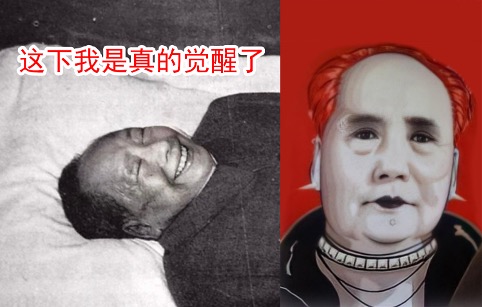
他们举着毛泽东这头僭主的遗照“觉醒”了,却觉醒得像靖难之役后的明朝士子,自认怀才不遇,却依旧死心塌地忠于朱皇帝。他们拉出“先皇”的画像,嚎啕大哭:“倘若先皇朱八八还在,事情何至于此!”
他们学着鲁迅的口吻,嘲笑古人的麻木与愚昧,却转身便为自己这场盼明君、哭先皇的丑剧,披上了一层“后现代”的外衣。
他们“觉醒”后,怀念李克强,怀念薄熙来,怀念胡锦涛,怀念江泽民,怀念邓小平,甚至怀念毛泽东。他们喃喃念叨:“马克思本意是好的,都是下面的人执行歪了。”可他们却唯独没有怀念过的是,那曾为他们争取自由而遭迫害,被他们恶毒中伤过的人。从未想起那被他们揶揄过的loser赵紫阳,想起那被他们斥为洋奴尸骨无存的刘晓波,想起被他们调侃“王师还剩几个连”的民国派知识分子,想起那被他们恶毒戏称为“五对负重轮”馅饼的六四亡魂。
今天,他们在压抑的中国社交媒体上“阴阳怪气”,在大使馆前高喊“八九六四天安门”,可就在昨日,他们还曾在微博、豆瓣、贴吧上,用最恶毒、最腌臜的语言,咒骂那些曾一心想为他们带来自由的人们。
无数有良知而勇敢的人倒下,无数灵魂在痛苦的呻吟下结束了悲惨的一生,而最终,历史的回音却只有你一句——XX岁,已觉醒。
他们因何而醒?
2018年,在各路“盼明君”的自干五期盼下,习近平同志正式修宪登基,撕掉了马克思主义左棍极权统治的遮羞布。
自此,“已觉醒”和“别发外网”的笑话便在中国的魔幻现实中不断交织。Covid动态清零后,自干五们更是恨不得年均觉醒8964次。
他们“觉醒”后,自诩客观中立的分析西式民主自由是如何地效率低,讥讽王丹、魏京生这些满口民主的过时“老东西”。他们谈论着最潮、最批爆的前卫政治潮流,却向来对中共暴政下被剥夺话语权者缺乏同情心。他们对中共政权下的基本民主人权状况避而不谈,一面口口声声声援女性和性少数群体的权利,却又迎合西方大学退步左翼的论调,力挺恐怖组织和宗教极端主义。
这一次,他们彻底“觉醒”了——和古代那些动辄“文死谏”的酸腐文人不同,他们学会了伪激进式的“死谏”。高等教育质量的滑坡与学位泛滥教会他们这种人用后现代主义话术回避中共政权下民主人权状况的日益恶化,却大谈民主国家的“系统性压迫”和“种族歧视”,每每提及中共政权及该政权相关人物,却依旧不改“青天大老爷”和“先帝明君”。他们曾经如此仇恨民主与自由,每每提起必称“皿煮目田”加以嘲弄,而今在他们“觉醒”后,依旧秉持同样“质朴”的内心,高呼民主便是免费住房、免费福利、免费医疗、免费教育,而自由则是他们拥有全世界、以他们的喜怒哀乐为中心的权力。
他们因此“觉醒”,正如他们的祖辈如何为一亩三分地而双手沾满自己保护者的鲜血,正如他们的父辈如何为蝇头小利而选择坐视义人死去,厉声质问着所谓“公知”民主能干饭否,却又谦卑的向僭主交出自由的权利。
请勿二觉
自干五终于悄悄收起了“皿煮目田”,也学着“恨国党”和“50万”们讲起了“民主自由”,却依旧用社会达尔文主义来诠释他们所理解的“民主自由”。他们仍然习惯性地将人分为三六九等,依然一开口辩论就“拍房产证、亮户口本”,或像酸腐秀才般炫耀那早已滥发到毫无价值的学历。
他们与西方大学里的香槟社会主义者一拍即合,一边在互联网上声称反对他们的人是“失败者”、“低学历者”,一边又自诩代表弱势群体和工人阶级。他们自负又自大地指点江山、激扬文字,研究应如何在西方资本主义国家里搞激进左翼革命,玩弄政治正确为自己牟利。可他们却从未同情过与自己政见不合却热爱自由的弱势群体和穷人,从未用同理心感受过未受西方资本主义“文化霸权”影响的传统国家里,专制是如何的黑暗压抑,普通人又是如何血泪艰辛。
他们当然“觉醒”了——他们一直都是醒着的。自他们出生之日起,刻在 DNA 里的社会达尔文主义信仰便已觉醒;欺软怕硬、畏威不畏德的个性便已觉醒;虚荣与自以为是便已觉醒;自干五的人格便已觉醒。他们根本不必等到今天才说:“XX 岁,已觉醒。”
自干五“已觉醒”,代价是成千上万义人长眠于暴政的寒冬;其实你也不必觉醒,因为没人有兴趣看一场反复变换自我感动的独角俄狄浦斯王剧。
When the voluntary wumao say they have Awakened, what do they really mean?
Junius Tian
Many Westerners concerned with China’s democracy and human rights are familiar with the term “wumao,” referring to state-funded pro-Communist trolls. However, they may not know that there is also a group of Chinese citizens who voluntarily support the Communist Party’s rule. They call themselves ziganwu, meaning “voluntary wumao.”
In China’s online communities, there was once a large number of voluntary wumao, with anti-Western rhetoric and hateful comments towards other ethnic groups being widespread. For a long time, democracy and freedom were seen as derogatory terms by Chinese netizens. On the Chinese internet, any moderate or inclusive opinion, or sympathy for democratic values, would be reported by the voluntary wumao.
However, this trend has dramatically reversed with the implementation of China’s “Zero-COVID” policy. The voices of voluntary wumao on the Chinese internet have grown silent, while a large influx of Chinese economic immigrants has flooded the U.S.-Mexico border. Among the fastest to shift their stance are the Chinese students abroad. Just a few years ago, they were using the harshest curses against Hong Kong protesters and Chinese dissenters, yet today, they stand side by side with their former enemies, but what they shouting is “We need food, not lockdowns.”
In a striking parallel to the Western awakening movements, China has also witnessed its own version of an awakening among the voluntary wumao. Initially, many believed this movement would serve as a turning point for political and social reform in China. However, as the Chinese version of the “awakening” progressed, many came to realize that things were not so simple. The voluntary wumao lamented the economic pains their lives endured, yet directed their hatred toward “capitalism” and the so-called “imperialist forces.”
Everything in China is quietly changing, but no one knows whether this will lead the red dragon to become more open or steer it down a more conservative, traditional Communist path.
A well-intentioned lie — they have been brainwashed
In the eyes of Westerners, there is always the fairytale belief that a righteous and kind people will ultimately triumph over tyranny. When I was a child, I believed this story without question, and it played a large part in shaping me into a liberal. I loved this story, much like I loved the Brothers Grimm tales. Yet as I grew older, I came to understand a truth: political reality is not a fairytale. When we consider whether great values and political systems can be established, we cannot ignore their compatibility with specific cultures and societies. It’s like imagining that if Snow White had not met the prince, but had instead encountered China’s Dong Zhimin, the ending of the fairytale might have been very different.
Kind-hearted people are often reluctant to confront the harsh reality of things, which is why they invent fairytales. One such fairytale is “They have been brainwashed.” Many attribute the large number of voluntary wumao in China to the Communist Party’s extensive loyalty propaganda in education. However, the truth is that most of those who execute and receive this propaganda do so half-heartedly. In China’s compulsory education system, teachers also teach students some vague concepts of freedom and equality. Many Chinese students understand the meaning of these terms. Yet, on one hand, they avoid discussing freedom and equality with the Chinese authorities, and on the other, they mock the liberal democratic values of the U.S. and Western countries.
For those living in China, the Communist Party’s authoritarian rule is stark and unambiguous. Unlike Putin’s regime, which employs intricate methods to manipulate elections for legitimacy, or the theocratic systems of the Gulf states that base their rule on religious authority and tradition, the Chinese regime operates on a fundamentally materialistic form of totalitarianism. It is rooted in rigid social Darwinism and extreme self-interest.
The Chinese Marxist regime’s propaganda bears Orwellian traits of doublethink, but its methods of brainwashing lack depth, making their lies as fragile as the emperor’s new clothes. On one hand, the government promotes China as a country where the people rule, while on the other, the Communist Party openly displays its autocratic nature. They even infuse Marxist ideology’s inherent arrogance and bureaucratic traits into primary education. Anyone who has grown up in China and gone through elementary school can clearly feel how apparent authoritarianism and totalitarianism are in the country.
In the days before the Chinese authorities invested as many resources into censorship as they do today, there was a persistent undercurrent of mild criticism and subtle satire within China’s online society. In many communities with a stronger liberal atmosphere, private criticism of the Communist Party was not uncommon. However, these anti-authoritarian voices were always in the minority. During those years, many Chinese internet dissenters believed the myth that “they had been brainwashed,” and so they tirelessly explained the meaning of democratic values and debated why people needed love and fraternity instead of social Darwinism. The response they always received was: “Can democracy be eaten? Can love and fraternity be eaten?”
Voluntary wumao once mocked democratic values with the deepest malice, ridiculing how equality and fraternity were mere hypocrisies. They used the harshest social Darwinist logic to challenge the last remnants of human kindness. Now, they claim to have “awakened” and become democracy fighters. I cannot understand whether they have truly become good people, or if they have simply realized that democracy can be “eaten.”
Self-deception — when you live in China and don’t care about politics
Another of the favorite excuses of the “awakened” voluntary wumao is that they never cared about Chinese politics before the zero-Covid policy. They claim it was precisely this ignorance of politics that led them to fervently support a tyrannical regime—mocking its victims without remorse and deriding those who sacrificed their freedom to fight for other’s freedom.
But the truth is that in China, no one has the luxury of ignoring politics. Every citizen is either an unwilling cog in the machinery of totalitarianism or one of its victims. Even the most cloistered intellectual, upon switching on the television, stepping outside, or merely glancing at the omnipresent communist propaganda slogans plastered across city streets, finds it impossible to avoid political thought. Traditional autocracies silence their subjects; Marxist dictatorships, by contrast, compel participation. Dissent is not merely punished—it is publicly denounced, forcing people to declare allegiance or face ostracism.
For someone living in such a system to claim they have “never cared about politics” is to make one of two admissions: either they are flaunting their privilege, boasting that they alone can exist above the fray, untouched by oppression, or they are feigning neutrality to lend themselves an air of objectivity. Indeed, China has its own breed of modern liberals—people who mimic Western progressive rhetoric while professing disinterest in politics within their own country. The vast majority of these modern liberals, in fact, are voluntary wumao—or, as some now claim, they are former voluntary wumao but today “awakened.”
In a sense, these individuals are a paradoxical amalgamation. While they understand the nature of the Chinese Communist Party’s rule, they simultaneously pretend to live in a free and democratic country. Their mouths often utter avant-garde political concepts like feminism and LGBT rights. Yet ironically, their engagement with these ideas is not rooted in conviction but in fashion, much like the Shanghai socialites of the last century who sprinkled their speech with foreign phrases to appear cosmopolitan.
This performative liberalism has been riddled with contradictions since its inception, much like the regressive leftists and champagne socialists of Western academia. They readily condemn “systemic racism” and so-called “human rights abuses” in the United States and Europe, yet remain conveniently silent on the escalating political repression within China itself. When Hong Kongers took to the streets to demand democratic rights, these self-styled champions of tolerance—ostensibly possessing the compassion of a middle-class moralist—firmly sided with the Chinese government, clamoring for the state to use force, even torture, against pro-democracy activists.
In truth, these so-called “don’t care about politics” Chinese modern liberals care deeply about politics—but only insofar as it is safe for them to do so. They skillfully sidestep any issue that might put them at risk while seamlessly aligning their radicalism with the ruling ideology. Like their Western “woke” counterparts, they embrace performative activism—except their ire is directed not at the tyrants who rule over people, but at the democratic world that tolerates their existence.
What has caused they late “awakening”?
No matter what, those former staunch supporters of the Chinese authorities have ultimately chosen to “awakened.” They had once clearly stated to the world, on several occasions, that as long as China’s economy continued to soar, providing them with endless opportunities to make money, principles like democracy, freedom, human rights, and humanitarianism were of no importance to them. Yet today, they hypocritically tell the world how much they now care about the very values they once despised and ridiculed.
They can even transform themselves into figures of inspiration, telling a moving “awakening” story in the United States, Canada, and across the world, presenting themselves in Congress as champions of freedom to win public sympathy. Yet, they have never sincerely apologized to those they once reported to the authorities and sent to prison, nor to those they persecuted. They have never apologized to the victims of the Tiananmen massacre, whom they once mockingly referred to as “59 tank meat patties.”
Yes, they have “awakened.” Their ideologies are varied—some call themselves Maoists, some claim to be Trotskyists, and others identify as anarchists. Despite the differences in their labels, their demands are unified. They now claim that democracy means free housing, free healthcare, free welfare, and free education, while freedom is the ability to make the world revolve around their whims and desires.
Their motives for awakening, much like those of their ancestors, are driven by petty self-interest—betraying their protectors for small gains, with their hands stained by the blood of landowners and entrepreneurs. When tyranny finally descends upon them, they play the victim, begging for other’s sympathy. Yet what truly hurts them is not the loss of freedom, but the fact that tyranny can no longer provide them with their “free” handouts.
In truth, they never needed to stage an “awakening”—because they were never asleep. They have always known exactly what they wanted, and it was never freedom or democracy. From the ancient Aegean civilizations to the Magna Carta, and finally to the Universal Declaration of Human Rights, the values forged through countless lives, blood, and tears are, to them, worth nothing — 0 pence.
