
作者——中国民主党英国总部党员 程敏
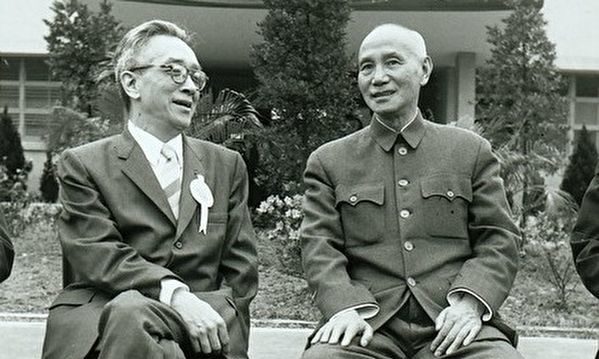
读胡适先生的《两种根本不同的政党》,感触颇深。这篇文章不仅是对政党制度的深刻剖析,更是一份历史留给后人的警钟。文中胡适先生精准地区分了“多党竞争”与“一党独裁”的本质,明确指出苏联式的共产极权政党并非真正意义上的“政党”,而是一种彻底剥夺人民自由与权利的统治机器。
在现代社会体系下,真正的民主政党必须接受竞争,允许反对派存在,必须服从宪法、法治和选民意志,并拥有“胜固可喜,败亦欣然”的雅量。而中共继承自苏联的一党专政体制,则完全建立在暴力与恐惧之上,通过思想洗脑、新闻封锁、打击异己、清除异见来维系一党专政的恐怖统治。与苏联前辈不同之处在于,中共“善于吸取教训”,更会伪装,搞几个所谓的“民主党派”来以参政之名,行鼓掌之事,好给自己贴上“民主国家”的标签。而中共党魁常以100%得票率当选国家元首,更是苏系独裁制度的一大特色——既要独裁,又要装出一副民主选举的模样,荒诞而滑稽。
可无论他们怎么包装,骨子里这套继承自苏联的独裁制度从来就不承认任何政治对手的合法存在,不接受公开辩论,也不容许权力更替。它的本质是一种彻头彻尾的极权统治。这也是我认为中共永远无法与台湾和平统一的原因之一。不管他们对台湾许下什么甜言蜜语,都只是缓兵之计。中共的最终目的永远是把所有统治的地区都变成大陆那样,没有言论自由、没有新闻自由、只有一党独裁、恐怖高压的现代文明洼地。中共自己早已证明了这一点,香港就是最鲜明的前车之鉴。
苏式极权制度最大的危害,在于它不仅剥夺了人民的物质自由,更摧毁了精神自由与道德尊严。胡适本人被蒋介石接到台湾后,短短三个月内,他的老友,辅仁大学校长,学者陈垣就不得不在《人民日报》上发文批判胡适“背离人民、为反动政权服务”;随后毛泽东又在1951年1957年这七年间两次发动对“反动学术权威”胡适的大批判,期间纠集了超过160位学者作家对胡适口诛笔伐。胡适的小儿子胡思杜不仅被逼迫发表文章谴责父亲、歌颂共产主义,最后甚至被逼到自杀身亡。在这样可怕的独裁体制下,人民被迫服从一个“真理”的唯一来源,所有不同意见都被视为“反动”,甚至“罪恶”。教育变成洗脑,新闻变成宣传,批评被定性为“敌对势力”。并以最残酷的手段折磨甚至杀害所有“反动者”。久而久之,整个社会终将陷入集体沉默和虚伪,个体的思考能力与判断力被彻底消磨。
胡适先生曾说:“容忍比自由更重要。”而极权制度最不能容忍的,正是异见、怀疑和批评。苏式体制不允许独立人格的存在,更无法接受政治上的对话与博弈。结果就是,一个社会只能在高压下“表面稳定”,但真实的民意被压抑,制度的合法性建立在恐惧而非信任之上。一旦外部压力或内部裂缝出现,整个政权就像沙上之塔,随时可能崩塌。
从历史回望今天,胡适的这篇文章依然具有现实意义。一党独大,无监督、不透明、不受制衡,哪怕打着“人民”的旗号,也只会走向极权的深渊。中国人常说毛泽东伟大,因为他是第一个喊出“人民万岁”的领导人。但早在千年前,古人就有“民贵君轻”的口号了。毛泽东害死数千万人,罪行罄竹难书,可在中国,真正了解这些历史的人却寥寥无几。我们不能只听执政者说了什么,更要看他们做了什么,并且要确保在他们做错的时候,我们能有权斥责,甚至换掉他们——这才是民主制度的精髓。
如果民主是一辆摇摇晃晃的马车,虽然颠簸,但始终在路上,不至于偏离太远;那么独裁就是一辆高速狂奔的汽车,效率极高,雷厉风行,但一旦方向错误,车上所有人都只能跟着那个开车的疯子一起坠入悬崖。我们必须保持警醒。苏联的崩溃并未让极权主义彻底退出历史舞台,而中共每天都仍在用“稳定”“统一”的名义掩盖它的独裁与压迫。
Reflections on “Two Fundamentally Different Types of Political Parties”: A Warning from the History of Soviet-Style Totalitarianism
By Cheng Min, Member of the UK Headquarters of China Democracy Party
Reading Hu Shih’s essay Two Fundamentally Different Types of Political Parties left a profound impression on me. The piece is not only a sharp analysis of party systems but also a historical alarm bell for generations to come. In it, Mr. Hu makes a clear distinction between multi-party competition and one-party dictatorship, pointing out that Soviet-style communist parties are not genuine political parties in the democratic sense, but rather machines of control that strip the people of their freedom and rights.
In modern political systems, a real democratic party must accept competition, tolerate opposition, obey constitutional law and the will of voters, and have the grace to win with humility and lose with dignity. In contrast, the one-party rule inherited by the Chinese Communist Party (CCP) from the Soviet model is founded entirely on violence and fear. It sustains its rule through ideological indoctrination, media censorship, suppression of dissent, and the elimination of opposition.
Unlike its Soviet predecessors, the CCP has mastered the art of disguise. It manufactures a handful of so-called “democratic parties” to participate in government as symbolic ornaments, clapping hands in staged meetings to paint a false picture of a multi-party system. Its leaders, often “elected” with 100% of the vote, demonstrate the absurdity of its dictatorship masquerading as democracy—both grotesque and farcical.
But no matter how well-dressed, the nature of this Soviet-style dictatorship has always refused to recognize the legitimacy of any political rival, has never allowed public debate, and has never permitted a peaceful transition of power. At its core, it is an extreme form of totalitarian rule. This, in my view, is one of the fundamental reasons why the CCP will never be able to peacefully unify with Taiwan. No matter how sweet the promises it makes, they are merely delay tactics. The CCP’s true goal is always to turn every area it controls into another mainland China—without freedom of speech or press, ruled by fear and a single party.
Hong Kong is the most striking recent example of this reality.
The most insidious threat of Soviet-style totalitarianism lies not only in its deprivation of material freedom, but in its destruction of spiritual freedom and moral dignity. After Hu Shih was brought to Taiwan by Chiang Kai-shek, his longtime friend—scholar and university president Chen Yuan—was forced to publish a denunciation of Hu in the People’s Daily, calling him a “traitor to the people.” In the years that followed, Mao Zedong personally launched two large-scale campaigns to vilify Hu Shih (in 1951 and 1957), mobilizing over 160 writers and scholars to attack him.
Hu’s younger son, Hu Sidu, was pressured into publicly denouncing his father and praising communism. Eventually, he was driven to take his own life. In such a terrifying system, the people are forced to obey a single source of truth, and any dissenting view is labeled as “reactionary” or even “evil.” Education becomes indoctrination, the media becomes propaganda, and criticism is branded as hostility. Those deemed “enemies” are tortured or killed with cruelty. Over time, the entire society falls into silence and hypocrisy, as independent thought and moral judgment are gradually destroyed.
Hu Shih once said, “Tolerance is more important than freedom.” And the very thing that totalitarian systems cannot tolerate is dissent, doubt, and criticism. The Soviet model permits no space for independent personality, nor political dialogue or negotiation. The result is a society that appears stable under pressure, but in reality, silences public opinion and builds legitimacy on fear rather than trust. When external pressure or internal fractures appear, the whole regime, like a tower of sand, may collapse at any moment.
Looking back from today, Hu Shih’s words remain deeply relevant. When a party grows too powerful—without supervision, transparency, or checks and balances—it inevitably descends into totalitarianism, even if it claims to act “on behalf of the people.” Chinese people often say Mao Zedong was great because he was the first leader to shout “Long live the people.” But long before Mao, ancient Chinese philosophy had already declared, “The people are more important than the ruler.”
Mao Zedong caused the deaths of tens of millions, yet few in China truly understand that part of history. We must not only listen to what those in power say—we must watch what they do. And we must ensure that when they do wrong, we have the right to criticize them, or even remove them from office. That is the essence of democracy.
If democracy is a shaky carriage—bumpy but always moving forward—then dictatorship is a speeding car: fast and decisive, but once it steers in the wrong direction, everyone inside is doomed to crash with the driver.
We must remain vigilant. The collapse of the Soviet Union did not mean the end of totalitarianism. The CCP still cloaks its dictatorship and repression under the names of “stability” and “unity” every single day.
