
2026年1月17日,伦敦 / 曼彻斯特

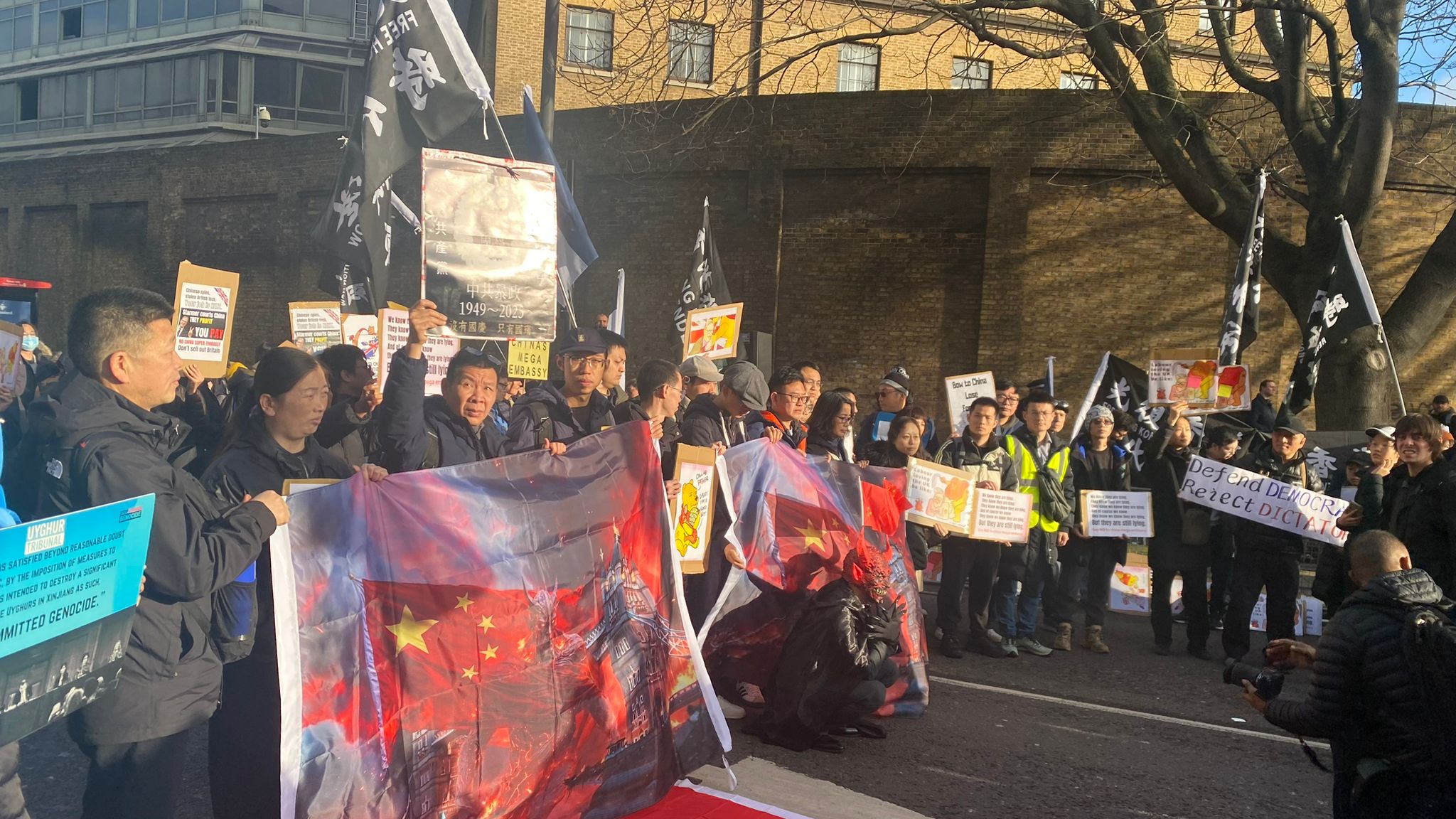
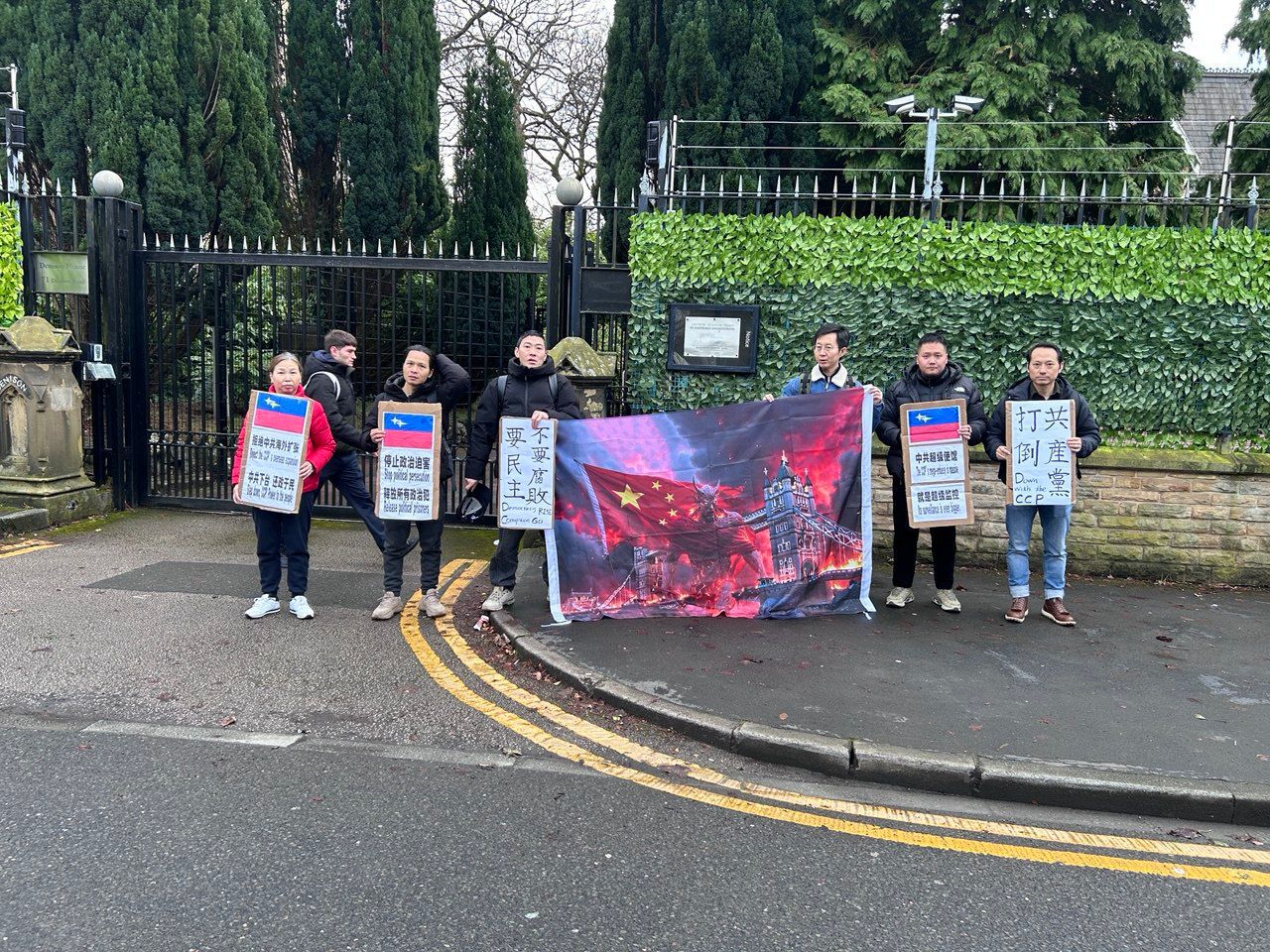
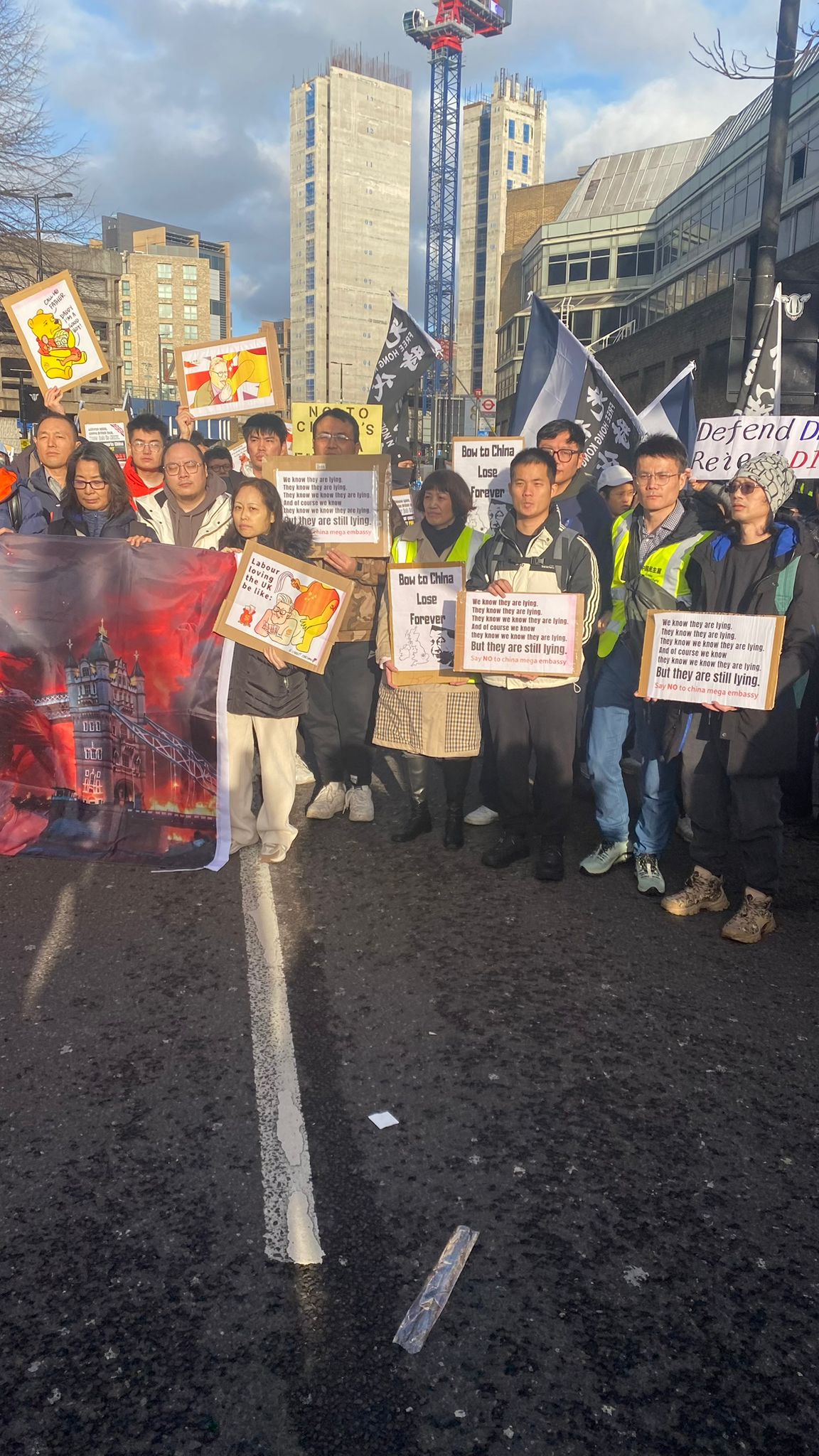
2026年1月17日,中国民主党英国总部在英国多地发起针对中国政府拟在伦敦铸币场旧址建设“超级大使馆”的抗议行动。当天,伦敦与曼彻斯特两地同步举行示威活动,吸引了来自不同社群的大量参与者,并引发英国社会与国际媒体的高度关注。
背景:争议中的“超级大使馆”计划
近年来,中国政府计划在伦敦塔桥附近的铸币场旧址(Royal Mint Court)建立规模空前的新驻英大使馆。该计划因建筑体量巨大、安保设施高度封闭、地理位置敏感而持续引发争议。英国多家媒体及人权组织指出,该项目不仅可能对周边社区生活造成长期影响,更引发了关于跨国镇压、情报活动、人权与言论自由的广泛担忧。
在此背景下,中国民主党英国总部认为,这一计划并非单纯的外交建设,而是中共在海外进一步扩展政治与安全影响力的重要象征,值得英国社会高度警惕。
伦敦现场:人潮汇聚,诉求清晰
1月17日下午,伦敦铸币场旧址周边逐渐被抗议人群包围。来自中国民主党英国总部、香港民主社群、维吾尔社群、西藏社群以及多个人权组织的参与者陆续抵达,现场人群规模不断扩大。
抗议者手持大量横幅、海报与标语,内容涵盖反对中共极权统治、反对跨国打压、支持中国与香港民主运动、呼吁英国政府维护人权与国家安全等议题。多语种标语在现场随处可见,显示出此次行动的国际性与跨社群特征。
现场秩序井然,警方在周边维持交通与安全,但并未干预示威活动。多位抗议者表示,希望通过和平、公开的方式,让英国社会更清楚地认识到“超级大使馆”背后所代表的政治意义。
英国政界发声:反对意见进入主流政治议程
在伦敦铸币场旧址外的抗议活动中,英国保守党领导人Kemi Badenoch也就“超级大使馆”计划公开表态。她表示,首相在本月晚些时候计划访问中国之前,应明确拒绝该大使馆项目。
Badenoch在现场对媒体指出:“我认为我们需要发出一个信号,我不知道Keir Starmer首相的想法是什么。”她强调,“在他对大使馆说不之前,他不应该去北京。”
她的表态被视为英国主流政治力量首次在公开场合,将“超级大使馆”问题与国家安全、外交立场及对华政策直接挂钩,使这一争议从民间抗议层面,进一步上升至国家政治决策层面的讨论。
曼彻斯特同步行动:南北呼应
在伦敦抗议进行的同时,中国民主党英国总部党员及支持者在曼彻斯特中国总领馆门前举行了同步游行示威。示威者沿既定路线行进,高举标语,高喊口号,与伦敦主会场形成南北呼应。
这一跨城市联动的抗议方式,显示出组织的动员能力,也强化了行动的象征意义——反对中共极权扩张的声音,并不局限于伦敦一地,而是遍布英国各地。
视觉焦点:反共宣传与“魔鬼造型”引发强烈关注
在伦敦主会场,中国民主党英国总部精心策划的反共宣传展示成为全场最受瞩目的焦点之一。尤其是以“魔鬼”形象进行反讽的行为艺术,通过夸张的造型、象征性的道具和强烈的视觉对比,直观呈现了中共政权在抗议者眼中所代表的压迫、谎言与恐惧。
这一形象化表达迅速吸引了大量媒体镜头。多家电视台和摄影记者长时间围绕拍摄,采访组织者与参与者。一些路过的英国市民也被吸引驻足,主动向抗议者询问活动背景,现场形成频繁的交流。
媒体密集报道,舆论迅速扩散
当天,现场聚集了大量英国本地与国际媒体,包括电视、网络媒体与平面媒体。多名记者表示,这场抗议在规模、视觉呈现和议题深度上都极具新闻价值。
活动结束后,相关影像与报道迅速在社交媒体上传播,使“超级大使馆”议题再次进入英国公众讨论视野。一些评论指出,此次抗议不仅是针对一项建筑计划,更是围绕英国如何面对来自极权国家的长期影响力挑战展开的公共讨论。
影响与意义:民主力量的公开表达
中国民主党英国总部在活动中强调,此次行动的核心目标并非针对中国人民,而是明确反对中共政权的极权统治及其在海外的延伸。组织方表示,希望英国政府在审议相关项目时,充分考虑人权、安全与民主价值,而不仅仅是经济或外交层面的因素。
分析人士认为,这场跨城抗议体现了流亡民主力量在海外持续发声的能力,也反映出英国社会内部对中共问题的关注正在不断加深。对于中国民主党而言,此次行动不仅是一次抗议,更是一次向国际社会展示其立场与存在感的重要时刻。
结语
随着夜幕降临,伦敦与曼彻斯特的示威活动在和平氛围中结束,但围绕“超级大使馆”计划的争议仍在继续。1月17日的抗议行动,已成为英国反对中共极权扩张力量的一次集中展示,也为未来相关公共讨论留下了清晰而醒目的注脚。
中国民主党英国总部组织信息
组织者
• 中国民主党英国总部街头活动总指挥:王魏晋
• 中国民主党英国总部活动副总指挥:卢灵飞、范可为、杨体和
党员参与名单
• 王魏晋
• 卢灵飞
• 范可为
• 俞杰辉
• 吴志芬
• 谢清怡
• 戴超
• 黄天
• 王涛
• 李申耀
• 吴小海
• 吴冉
• 张学美
• 许少男
• 张石头
• 周勇
• 钱越
• 杨沁龙
• 丁晨光
• 杨云
• 顾晓锋
• 兰子明
• 李涛
• 王世渠
• 威尔逊
• 程敏
• 成小丹
• 韦崇华
• 杨体和
• 钟淑琴
• 邬勇
• 周凤雄
• 赵武
• 郭稼瑄
• 王建
• 黄林
• 杨溯
Opposing the “Mega Embassy” Project. China Democracy Party UK Headquarters Launches Cross-City Protests in London and Manchester
17 January 2026, London / Manchester
On 17 January 2026, the China Democracy Party UK Headquarters launched protest actions in multiple locations across the UK against the Chinese government’s plan to build a “mega embassy” on the site of the former Royal Mint in London. On that day, simultaneous demonstrations were held in London and Manchester, drawing large numbers of participants from different communities and attracting significant attention from British society and international media.
Background: A “mega embassy” project under controversy
In recent years, the Chinese government has planned to establish an unprecedentedly large new embassy on the former Royal Mint Court site near Tower Bridge in London. Due to the vast scale of the planned building, its highly fortified security facilities and sensitive location, the project has continuously sparked controversy. Numerous British media outlets and human rights organisations have pointed out that this project may not only have a long-term impact on the daily lives of nearby communities, but has also triggered widespread concerns about transnational repression, intelligence activities, and issues relating to human rights and freedom of expression.
Against this backdrop, the China Democracy Party UK Headquarters believes that this plan is not a simple diplomatic construction project, but an important symbol of the CCP further expanding its political and security influence overseas, and that it warrants a high degree of vigilance from British society.
London: Crowds gather, demands are clear
On the afternoon of 17 January, the area around the former Royal Mint Court site gradually filled with protesters. Participants from the China Democracy Party UK Headquarters, Hong Kong pro-democracy communities, Uyghur and Tibetan communities, as well as multiple human rights organisations, arrived one after another, and the size of the crowd continued to grow.
Protesters held a large number of banners, posters and placards, covering themes such as opposition to CCP authoritarian rule, opposition to transnational repression, support for the democracy movements in China and Hong Kong, and calls for the British government to uphold human rights and national security. Multilingual slogans could be seen everywhere, highlighting the international and cross-community nature of this action.
The protest remained orderly. Police maintained traffic and security in the surrounding area but did not intervene in the demonstration. Many protesters stated that they hoped, through peaceful and open means, to help British society better understand the political significance represented by the “mega embassy” project.
Voices from British politics: Opposition enters the mainstream political agenda
During the protest outside the former Royal Mint Court site in London, UK Conservative Party leader Kemi Badenoch also spoke publicly about the “mega embassy” plan. She stated that the Prime Minister should clearly reject the embassy project before his planned visit to China later this month.
Speaking to the media at the scene, Badenoch said: “I think we need to send a signal. I don’t know what Prime Minister Keir Starmer thinks.” She stressed: “He should not be going to Beijing until he says no to the embassy.”
Her statement has been seen as the first time that a major force in British mainstream politics has, in a public setting, directly linked the “mega embassy” issue to national security, foreign policy and the UK’s stance towards China. This has pushed the controversy beyond the level of grassroots protest and into the realm of national political decision-making.
Manchester: A parallel action echoing the south from the north
While the London protest was under way, party members and supporters of the China Democracy Party UK Headquarters held a simultaneous march and demonstration in front of the Chinese Consulate-General in Manchester. Protesters followed a pre-arranged route, holding placards and chanting slogans, forming a north–south echo with the main rally in London.
This cross-city, coordinated protest approach not only demonstrates the organisation’s mobilising capacity, but also strengthens the symbolic message of the action – that opposition to the CCP’s authoritarian expansion is not confined to London, but is present across the UK.
Visual focus: Anti-CCP messaging and “devil imagery” draw strong attention
At the main London venue, the anti-CCP visual displays carefully prepared by the China Democracy Party UK Headquarters became one of the most eye-catching focal points of the day. In particular, the use of “devil” imagery as satirical performance art – through exaggerated costumes, symbolic props and stark visual contrasts – vividly conveyed how the CCP regime is seen by protesters as representing oppression, lies and fear.
This visual expression quickly drew intense media attention. Numerous TV crews and photojournalists spent a long time filming at the scene and interviewing organisers and participants. Many British passers-by were also drawn to stop and watch, and they took the initiative to ask protesters about the background to the event, leading to frequent exchanges on site.
Heavy media coverage and rapid spread of public debate
On the day, the site drew a large number of British and international media outlets, including television, online and print media. Many journalists said that in terms of scale, visual presentation and the depth of the issues involved, this protest was of significant news value.
After the event, footage and reports were quickly circulated on social media, bringing the “mega embassy” issue once again into the field of public debate in the UK. Some commentators noted that this protest was not only about a construction project, but formed part of a wider public discussion on how the UK should respond to the long-term influence operations of an authoritarian state.
Impact and significance: An open expression of democratic forces
During the event, the China Democracy Party UK Headquarters stressed that the core aim of this action was not to target the Chinese people, but to clearly oppose the CCP’s authoritarian rule and its overseas extensions. The organisers stated that they hope the British government, when considering this project, will fully take into account human rights, security and democratic values, rather than focusing solely on economic or diplomatic factors.
Analysts believe that this cross-city protest reflects both the continued ability of exiled democratic forces to speak out overseas and the growing concern within British society about the CCP issue. For the China Democracy Party, this action is not only a protest, but also an important opportunity to present its stance and presence to the international community.
Conclusion
As night fell, the demonstrations in London and Manchester ended peacefully, but the controversy over the “mega embassy” project continues. The protest actions of 17 January have become a concentrated display of the forces opposing the CCP’s authoritarian expansion in the UK, and have left a clear and striking mark for future public debates on this issue.
Organisational information of the China Democracy Party UK Headquarters
Organisers
• Chief Commander of Street Activities, China Democracy Party UK Headquarters: Wang Weijin
• Deputy Commanders of Activities, China Democracy Party UK Headquarters: Lu Lingfei, Fan Kewei, Yang Tihe
List of participating party members
• Wang Weijin
• Lu Lingfei
• Fan Kewei
• Yu Jiehui
• Wu Zhifen
• Xie Qingyi
• Dai Chao
• Huang Tian
• Wang Tao
• Li Shenyao
• Wu Xiaohai
• Wu Ran
• Zhang Xuemei
• Xu Shaonan
• Zhang Shitou
• Zhou Yong
• Qian Yue
• Yang Qinlong
• Ding Chenguang
• Yang Yun
• Gu Xiaofeng
• Lan Ziming
• Li Tao
• Wang Shiqu
• Wilson
• Cheng Min
• Cheng Xiaodan
• Wei Chonghua
• Yang Tihe
• Zhong Shuqin
• Wu Yong
• Zhou Fengxiong
• Zhao Wu
• Guo Jiaxuan
• Wang Jian
• Huang Lin
• Yang Su
