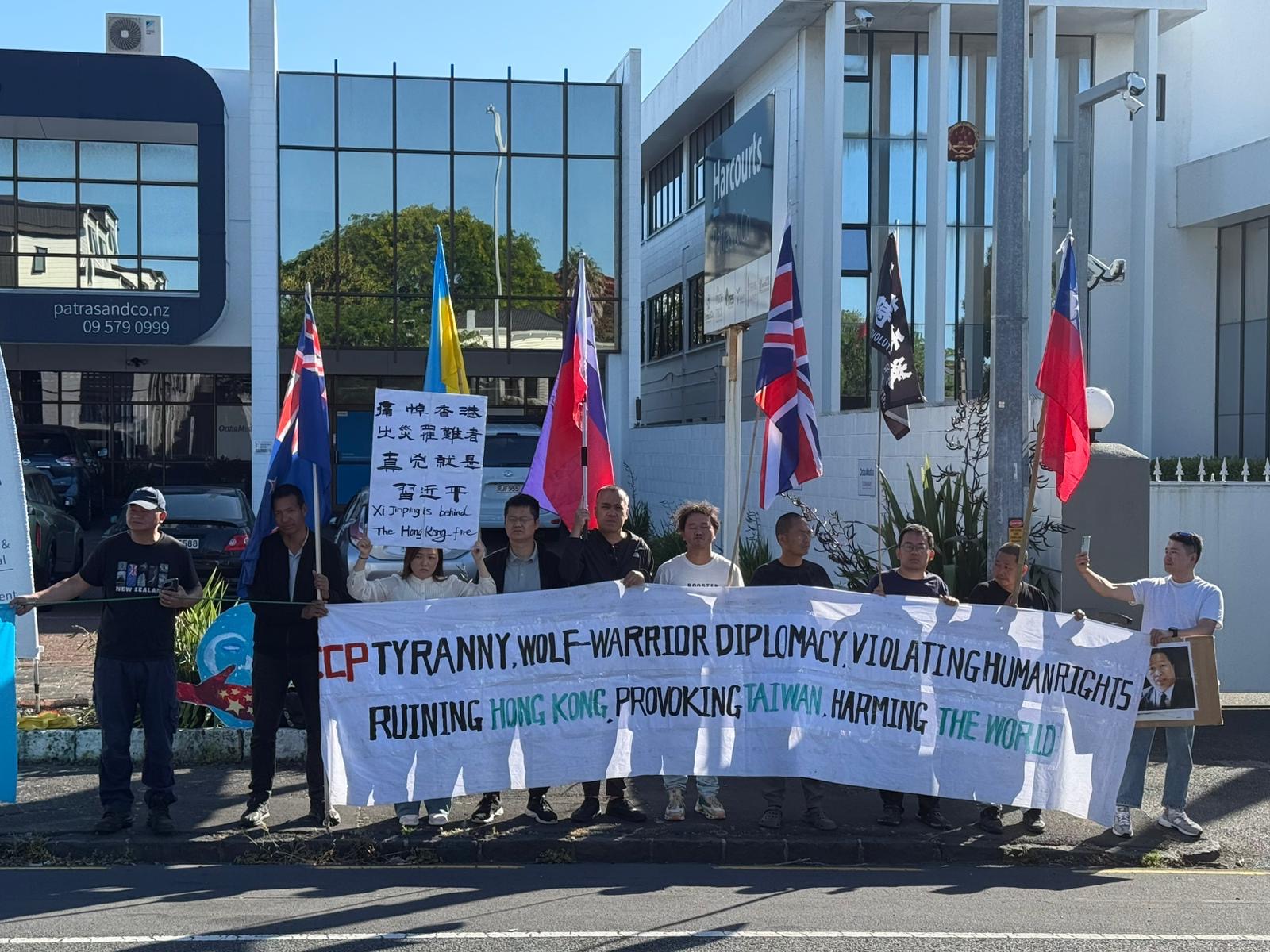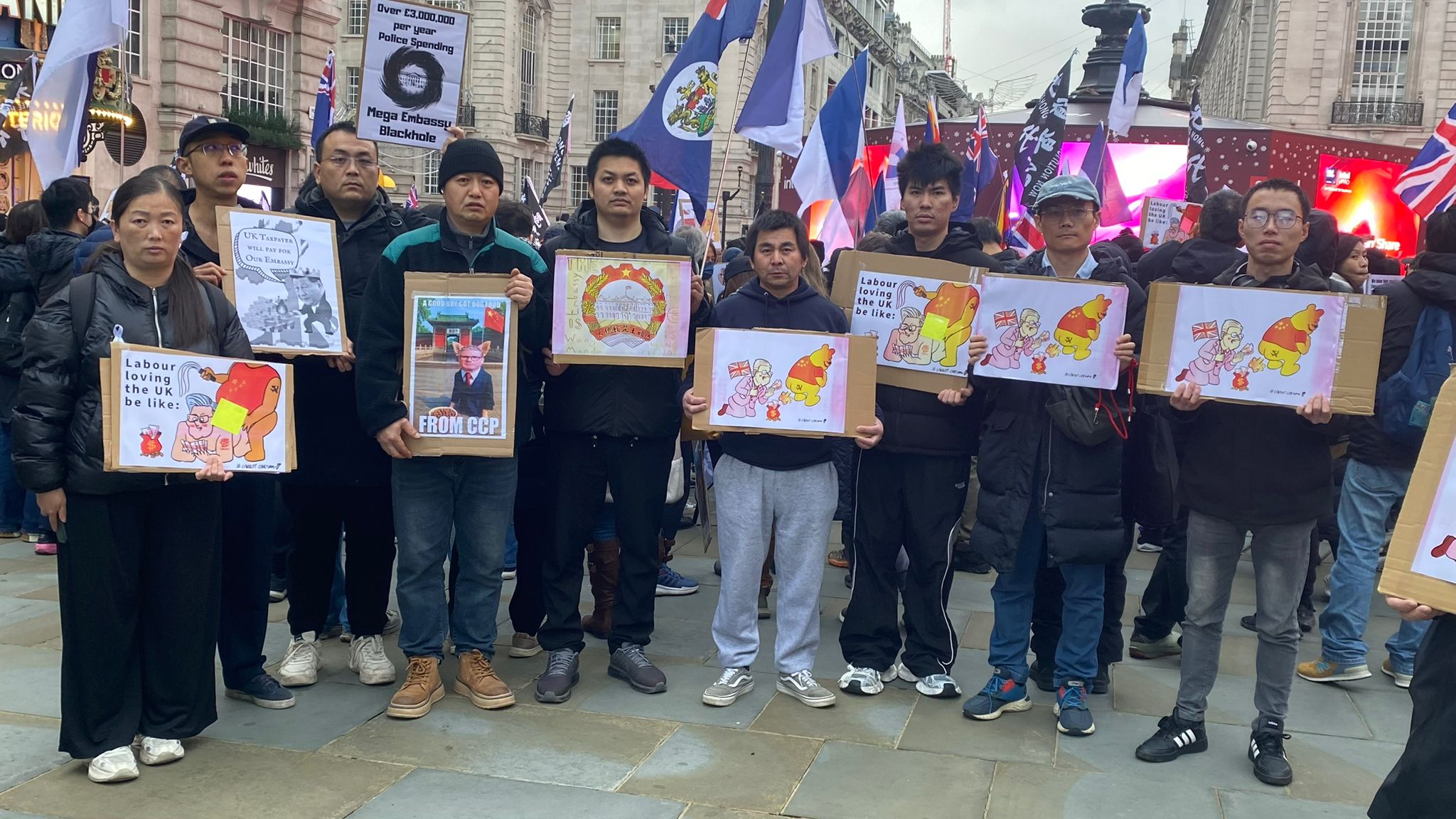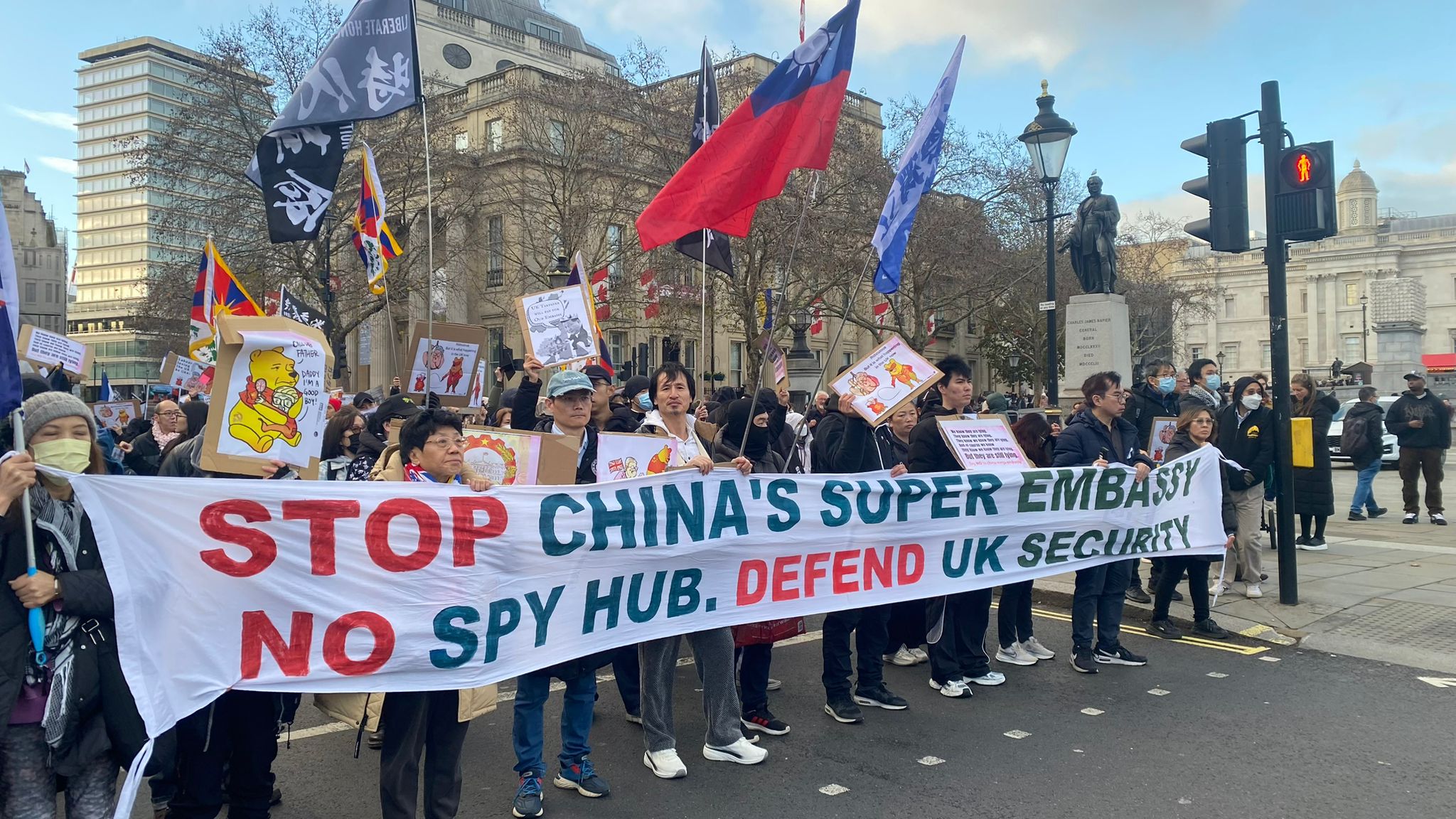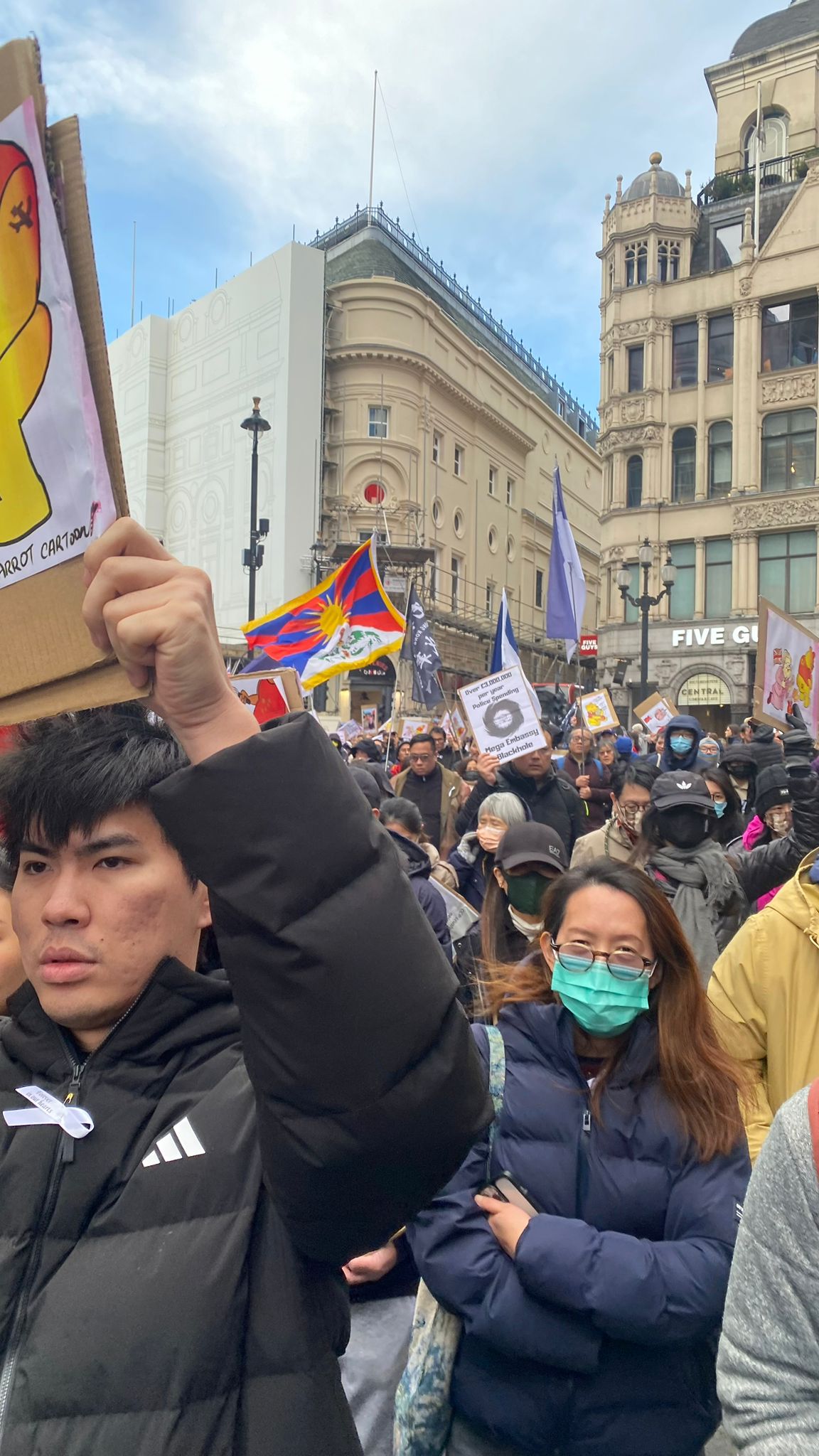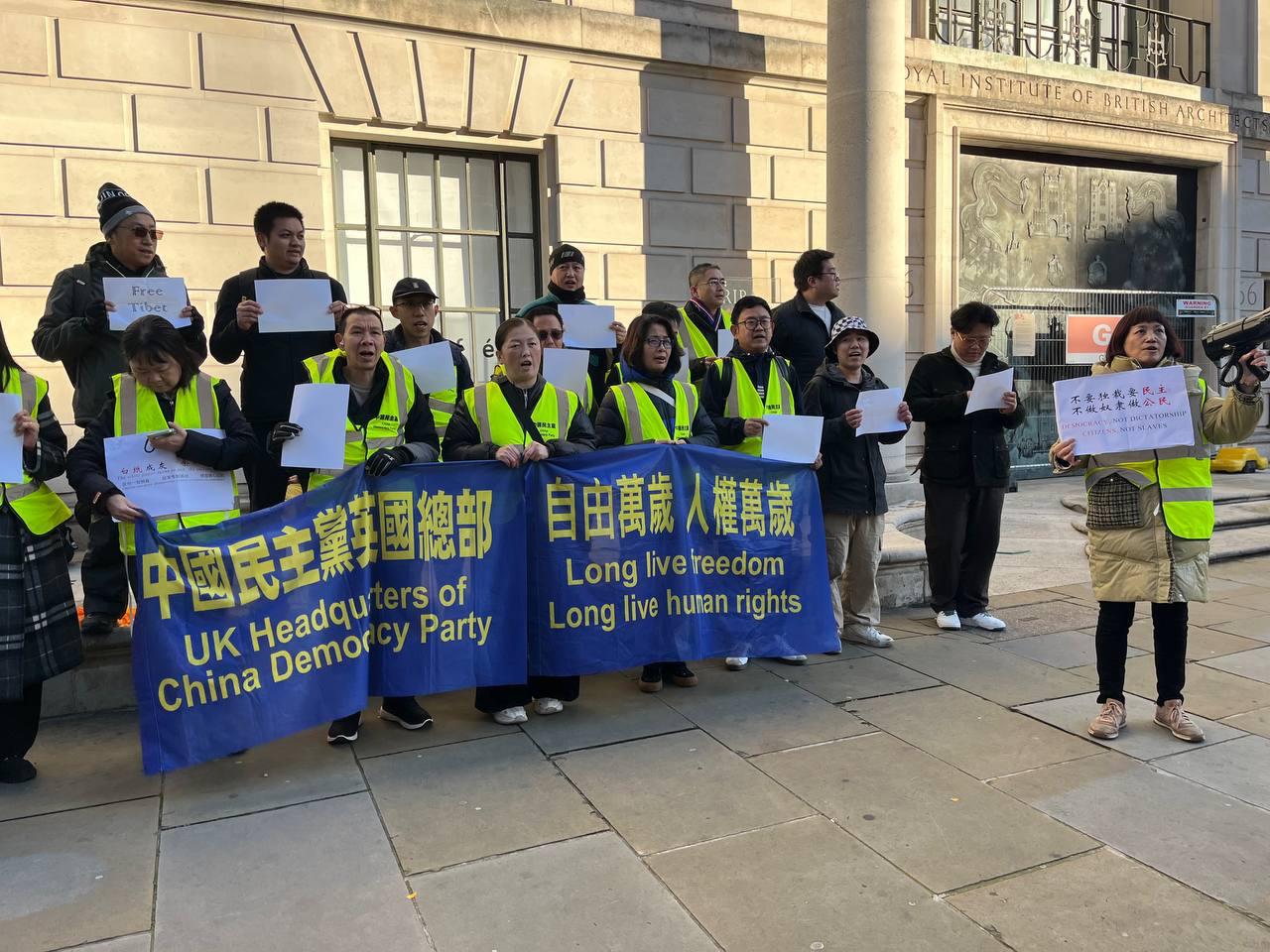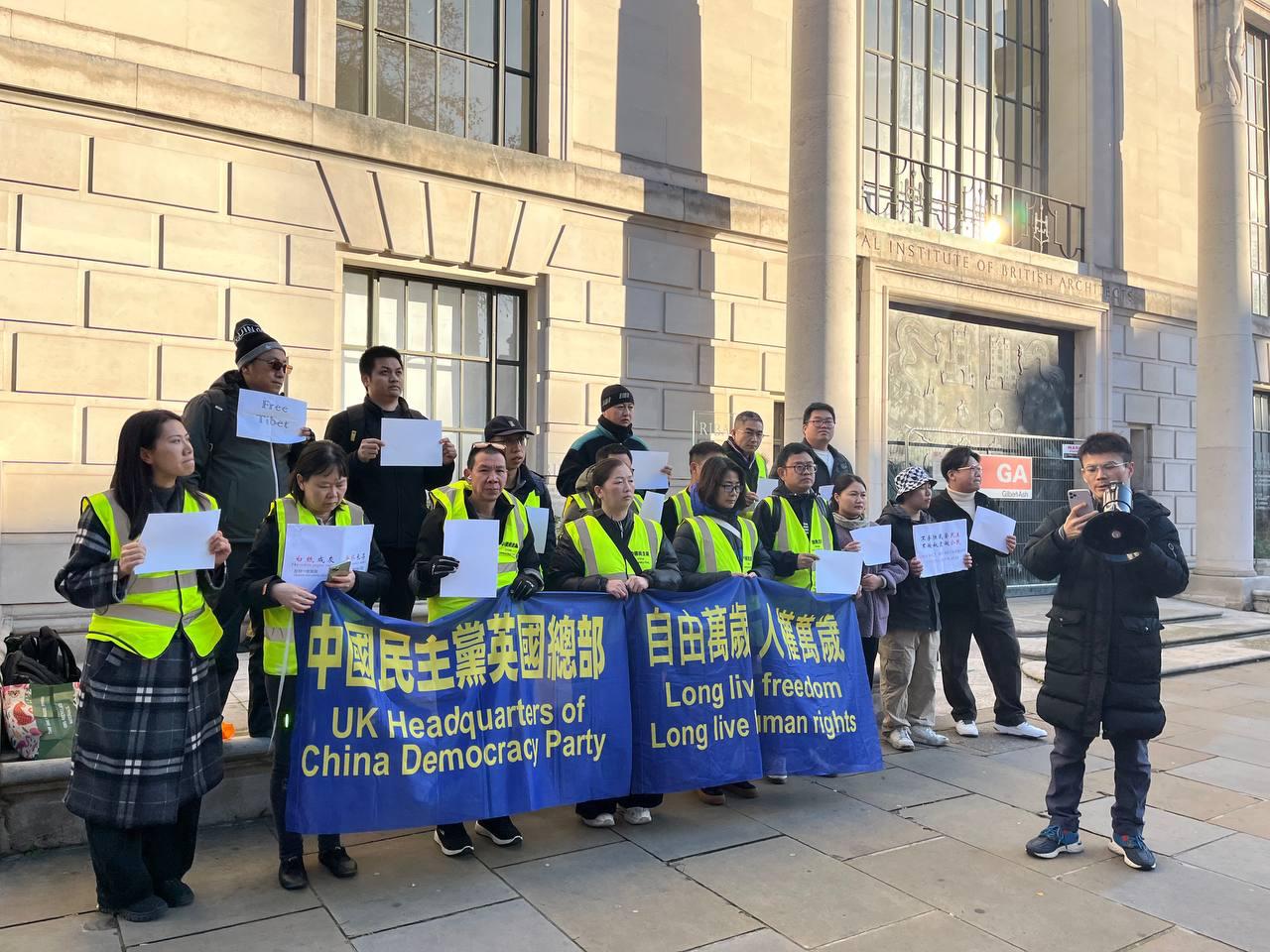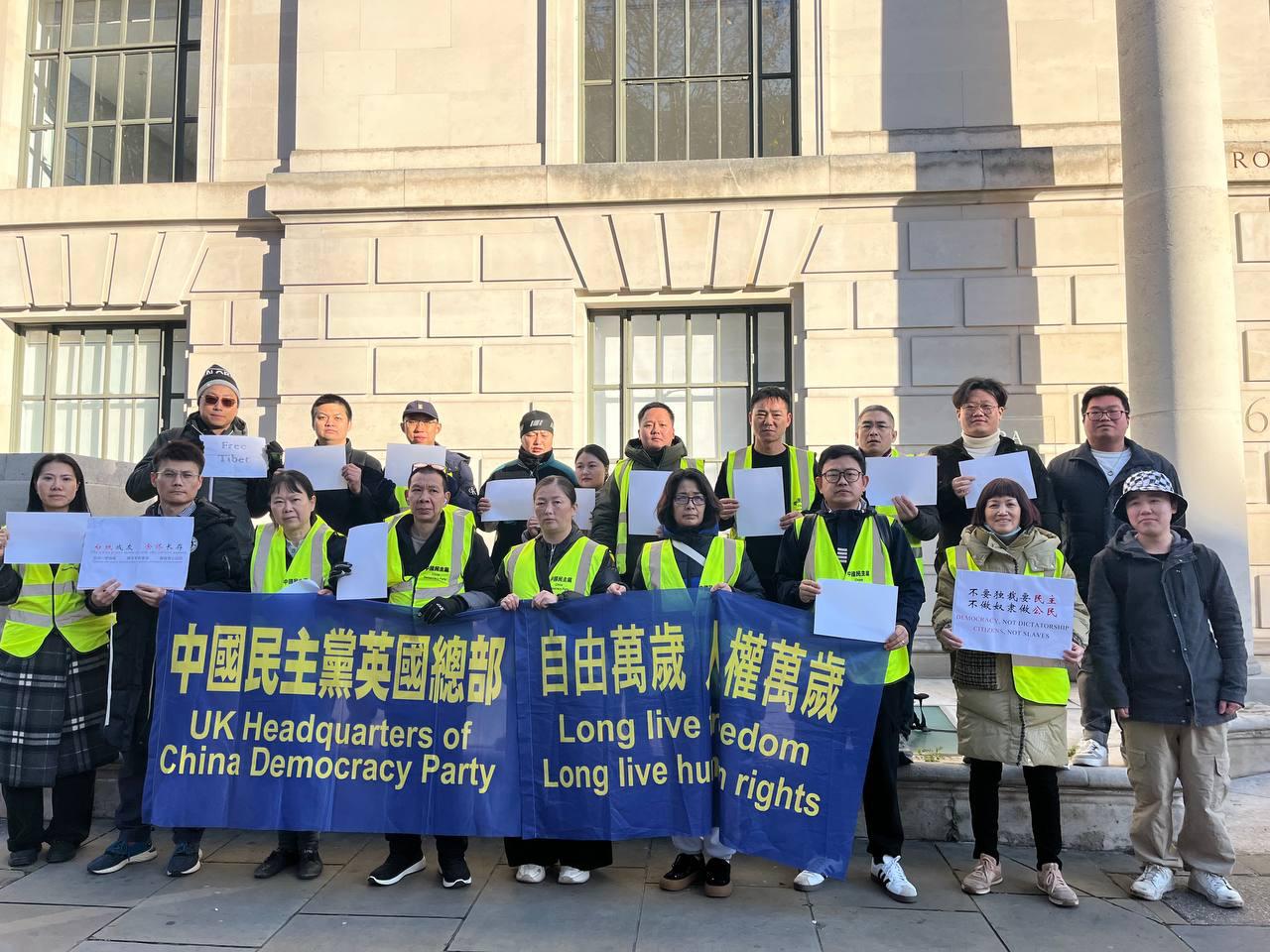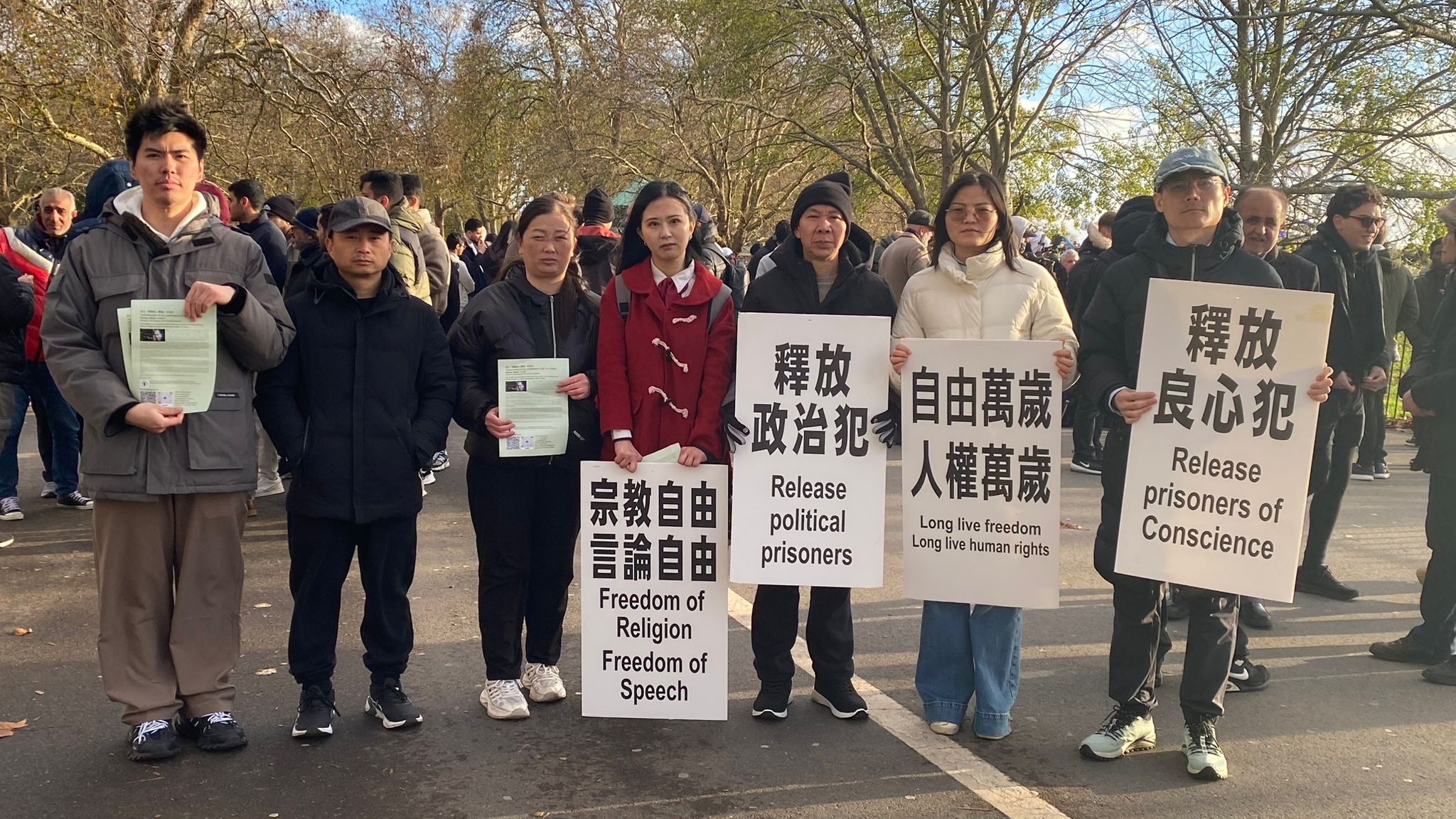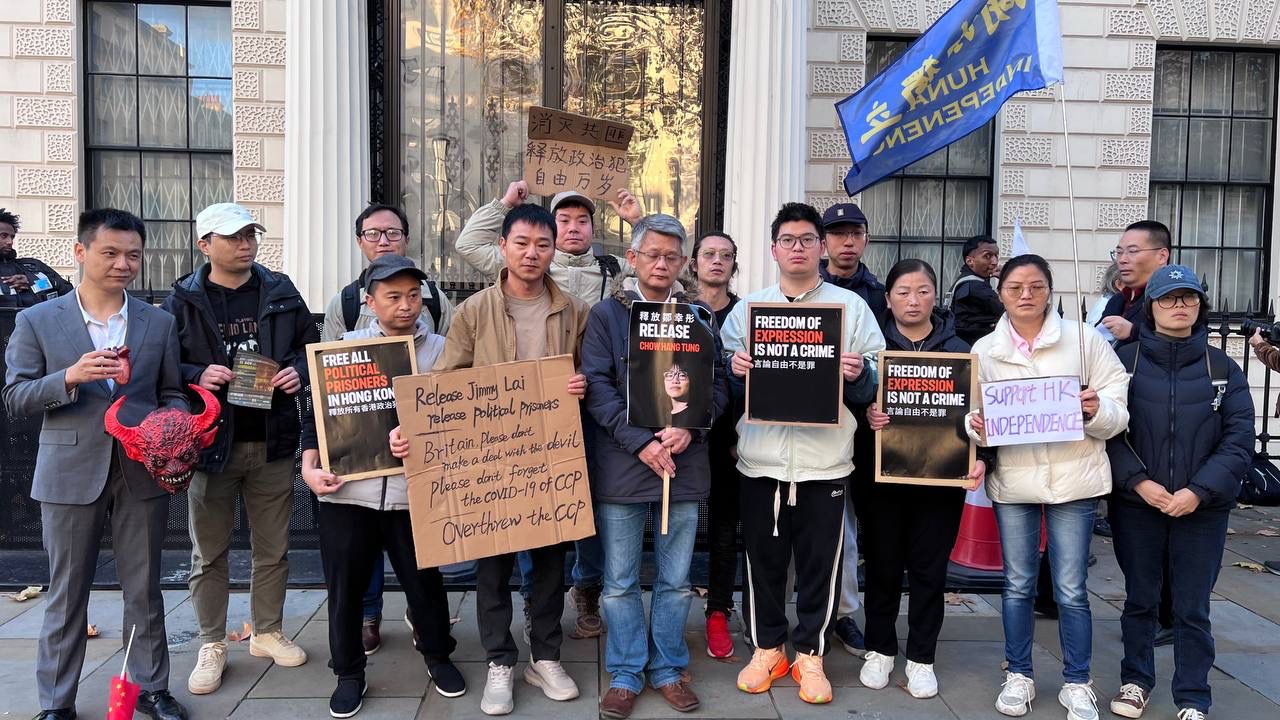
白纸成蝶,自由之翼—伦敦纪念白纸运动三周年Wings of Freedom Born from White Paper —London Marks the Third Anniversary of the White Paper Movement

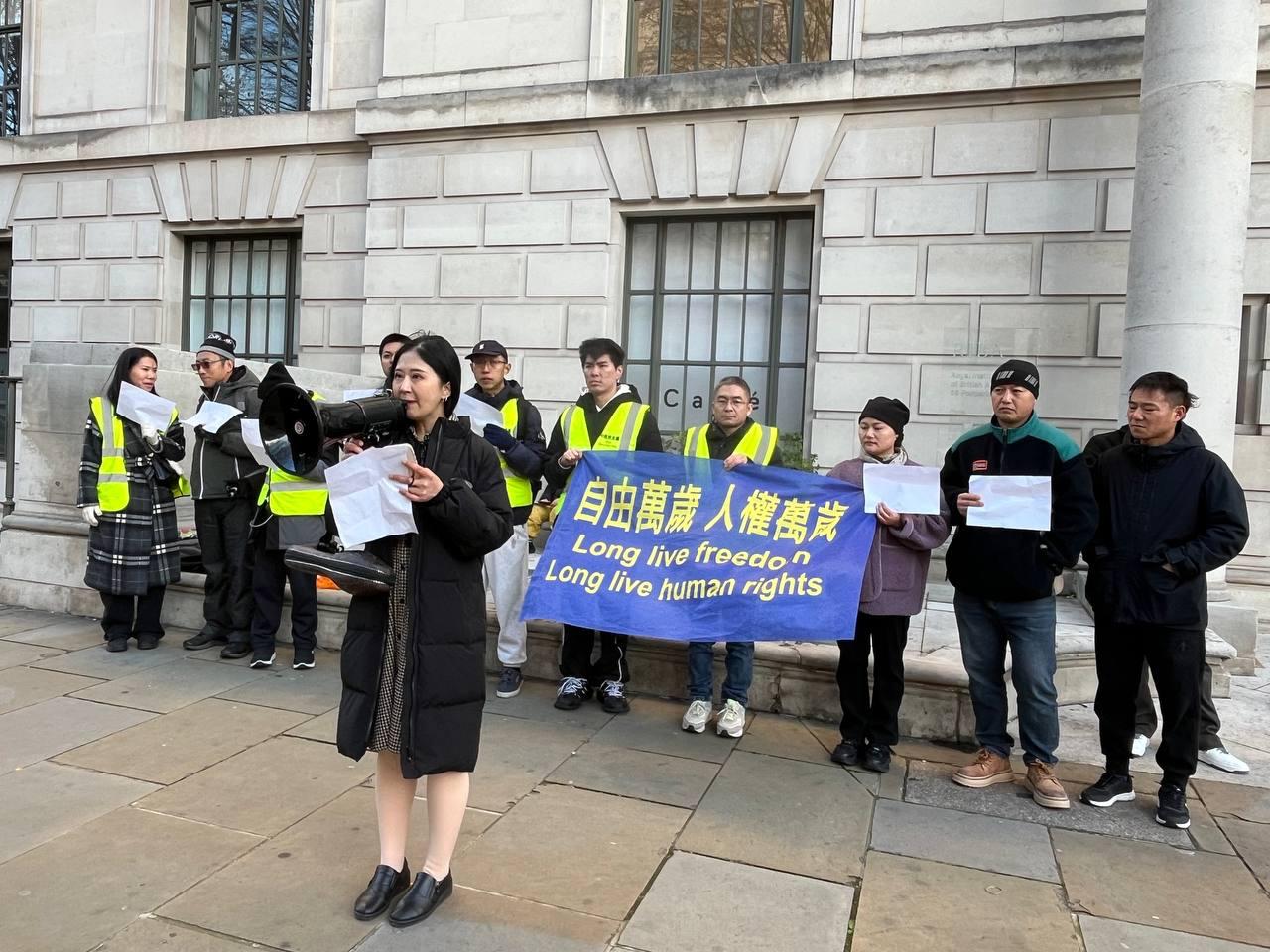
三年前的今天,2022年11月26日,一张张空白的A4纸划破了夜空下的寂静,点燃了中国历史上一次重要的民主运动。在三年后的今天,我们回望这场白纸革命自发性浪潮,它不仅仅是终结“动态清零”的催化剂,更是刻在中国人集体记忆中,关于勇气、觉醒和自由的永恒符号。

一、 运动的起点:无声胜有声的符号

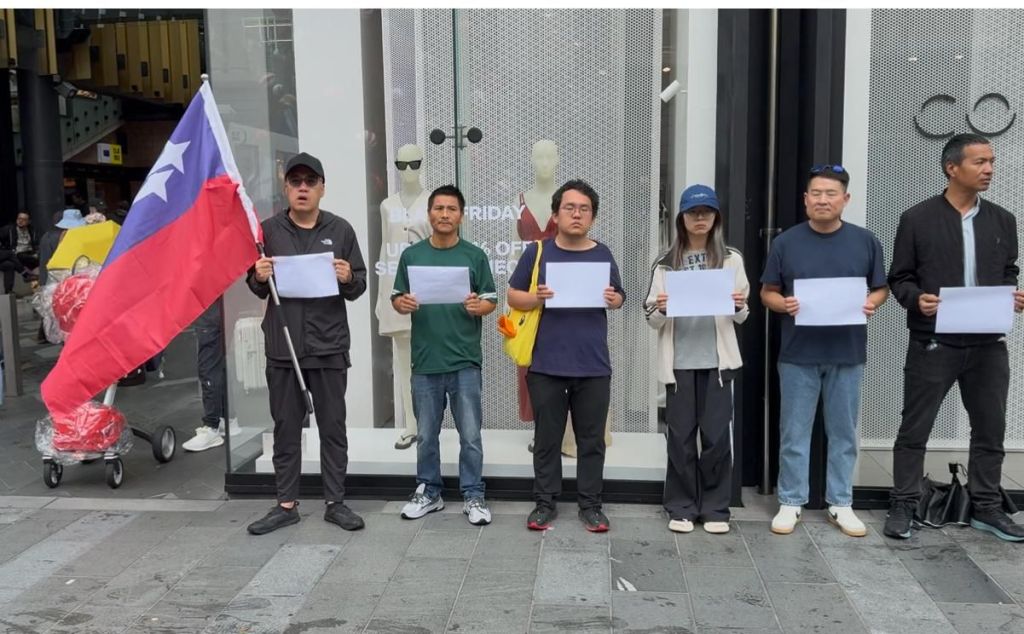
白纸运动爆发于2022年11月下旬,最初是民众对乌鲁木齐火灾惨剧的愤怒,以及对三年严苛封控政策的彻底厌倦。在缺乏言论自由的空间里,抗议者们做出了一个极具智慧和反讽意味的选择:高举空白的A4纸。

这张纸,象征着:

• 反抗审查: 因为不能说、不敢说,所以选择什么都不说,反而道尽了一切。

• 集体共鸣: 它超越了地域、阶层和年龄的界限,成为全国性抗议最快、最有效的统一标识。

• 荒谬的控诉: 它以最温和、最无可指摘的形式,控诉着体制的荒谬和高压。

正是这种“无声的呐喊”,让运动在极短时间内从校园蔓延至全国数十个城市街头。

二、 白纸成蝶:蜕变与代价

白纸运动最为人称道的精髓,在于它所蕴含的**“白纸成蝶”**的蜕变精神。

在压力和恐惧的茧房中,无数个体市民和学生选择了站出来,他们的行动,象征着公民意识的突破与新生。白纸不再是单纯的抗议工具,而是一种对**“自由之翼”**的强烈向往。

这场运动取得了即时性的重大胜利:短短几天后,政府开始大幅放松疫情管控,最终宣告“动态清零”时代的结束。

然而,我们也必须记住这场运动的代价。在随后的“秋后算账”中,许多参与者被捕、被传唤、被消失。他们为集体自由的微弱火光付出了沉重的个人代价。三年来,人们并没有忘记那些因此而沉默或受难的面孔。纪念白纸运动,就是纪念这些为公众权利挺身而出的个体。

• 对权利的认知: 年轻一代对宪法赋予的集会、言论等基本权利有了更深刻的认知和坚持。

• 打破恐惧的记忆: 运动打破了集体恐惧和原子化状态,证明了普通民众通过自发聚集能够影响国家决策。

• 无形的影响力: 白纸成蝶的故事,已经成为中国社会反抗精神遗产的一部分,影响着新一代的公共表达方式。

在2025年11月26日这个特殊的日子,我们不仅仅是回顾历史,更是继承那份**“突破重围”的勇气。白纸的颜色是纯洁的,但它所承载的“自由之翼”**的重量,将永远提醒我们:权利不是被给予的,而是要靠勇气去争取和守护的。

 中国民主党英国总部总部组织信息

活动总指挥:卢灵飞

副指挥: 王魏晋 范可为

Wings of Freedom Born from White Paper —

London Marks the Third Anniversary of the White Paper Movement

Three years ago today, on 26 November 2022, sheets of blank A4 paper pierced the silence of China’s night and ignited one of the most significant democratic movements in recent Chinese history.

Three years later, as we look back on this spontaneous tide of resistance, the White Paper Movement stands not only as the catalyst that ended “Zero-Covid,” but also as an enduring symbol of courage, awakening, and freedom etched into the collective memory of the Chinese people.


1. The Beginning: A Symbol Whose Silence Spoke Louder Than Words

The White Paper Movement erupted in late November 2022, sparked by public outrage over the Urumqi fire tragedy and the exhaustion caused by three years of draconian lockdowns.

With no space for free speech, protesters made a choice of brilliant defiance and irony: they held up blank sheets of A4 paper.

These white sheets symbolised:

Resistance to censorship:

When nothing could be spoken, the act of holding “nothing” expressed everything.

Collective resonance:

They transcended geography, class, and age, becoming the fastest-spreading unifying symbol of nationwide protest.

A quiet indictment of absurdity:

Using the most peaceful, unassailable object to expose the absurdity and brutality of the system.

This “silent cry” allowed the movement to spread from campuses to the streets of dozens of cities in a matter of days.


2. White Paper Becomes Butterfly: The Transformation and Its Cost

The most powerful essence of the White Paper Movement lies in the idea of “white paper becoming butterfly” — a symbol of metamorphosis.

Inside the cocoon of fear and pressure, countless ordinary citizens and students chose to step forward. Their courage represented a rebirth of civic consciousness.

The white sheet was no longer merely a protest tool — it became the “wing of freedom” that people longed for.

The movement achieved a rare, immediate victory: within days, the government began drastically loosening restrictions, leading to the end of the “Zero-Covid” era.

But this victory came with a heavy price.

In the wave of reprisals that followed, many participants were arrested, summoned, or disappeared. They paid dearly for the faint flame of freedom they helped ignite.

Three years on, people have not forgotten those silenced faces and broken lives.

To commemorate the White Paper Movement is to honour those who stood up for the rights of all.

Its long-term significance is equally profound:

A deeper understanding of rights:

A new generation gained a sharper awareness of constitutional freedoms such as assembly and speech.

Breaking the memory of fear:

The movement shattered the atomised, fearful state of society and showed ordinary people they could influence national decisions.

An invisible legacy:

The story of “white paper becoming butterfly” has entered China’s heritage of resistance, quietly shaping the public’s expression today.

On this symbolic date, 26 November 2025, we are not merely recalling history — we are inheriting the courage to break through encirclement.

White is a pure colour, but the wings of freedom it carries are heavy. They remind us always:

Rights are not granted — they must be claimed and defended with courage.


Organisational Information — UK Headquarters of China Democracy Party

Event Director: Lu Lingfei

Deputy Directors: Wang Weijin, Fan Kewei

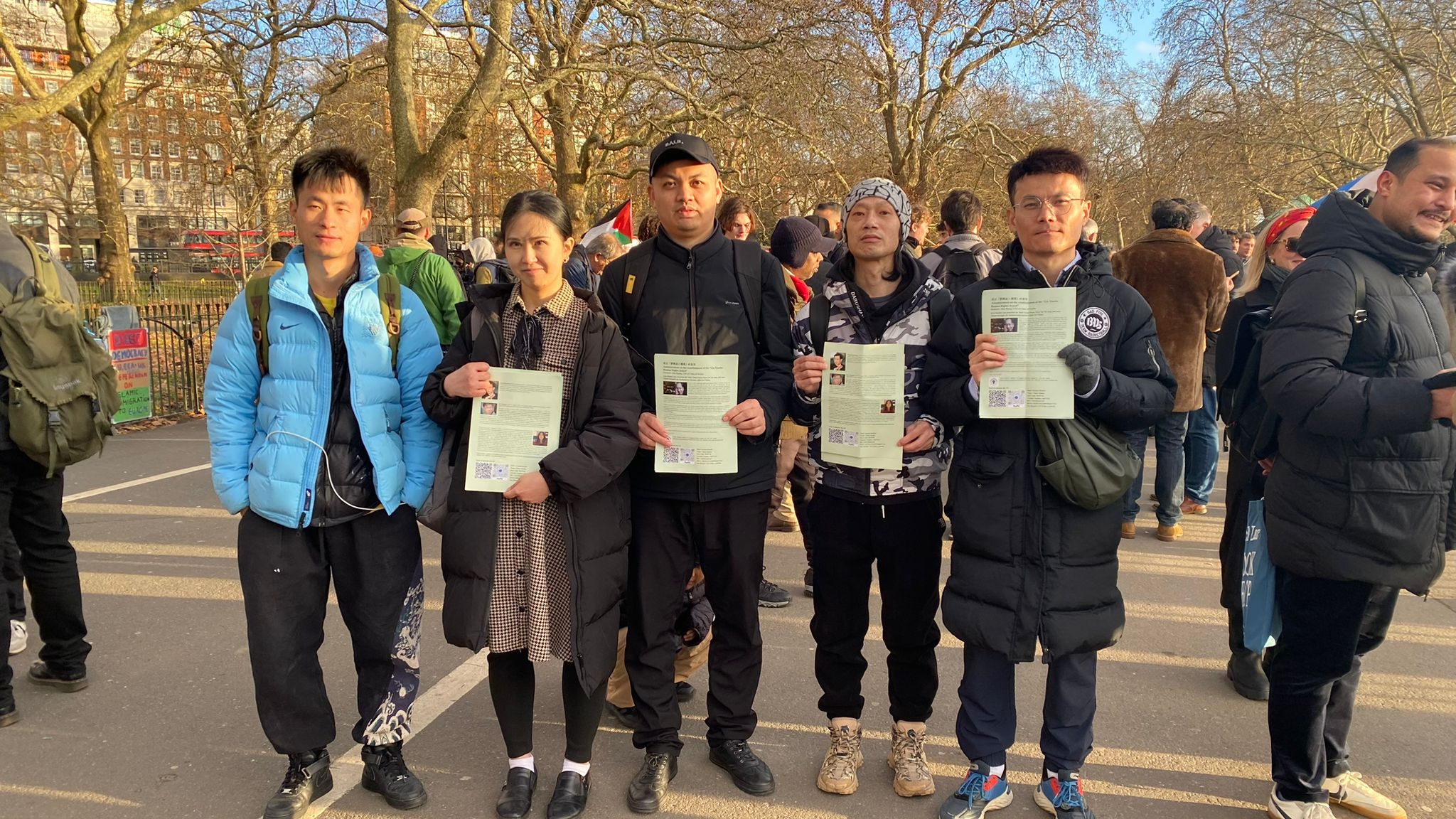
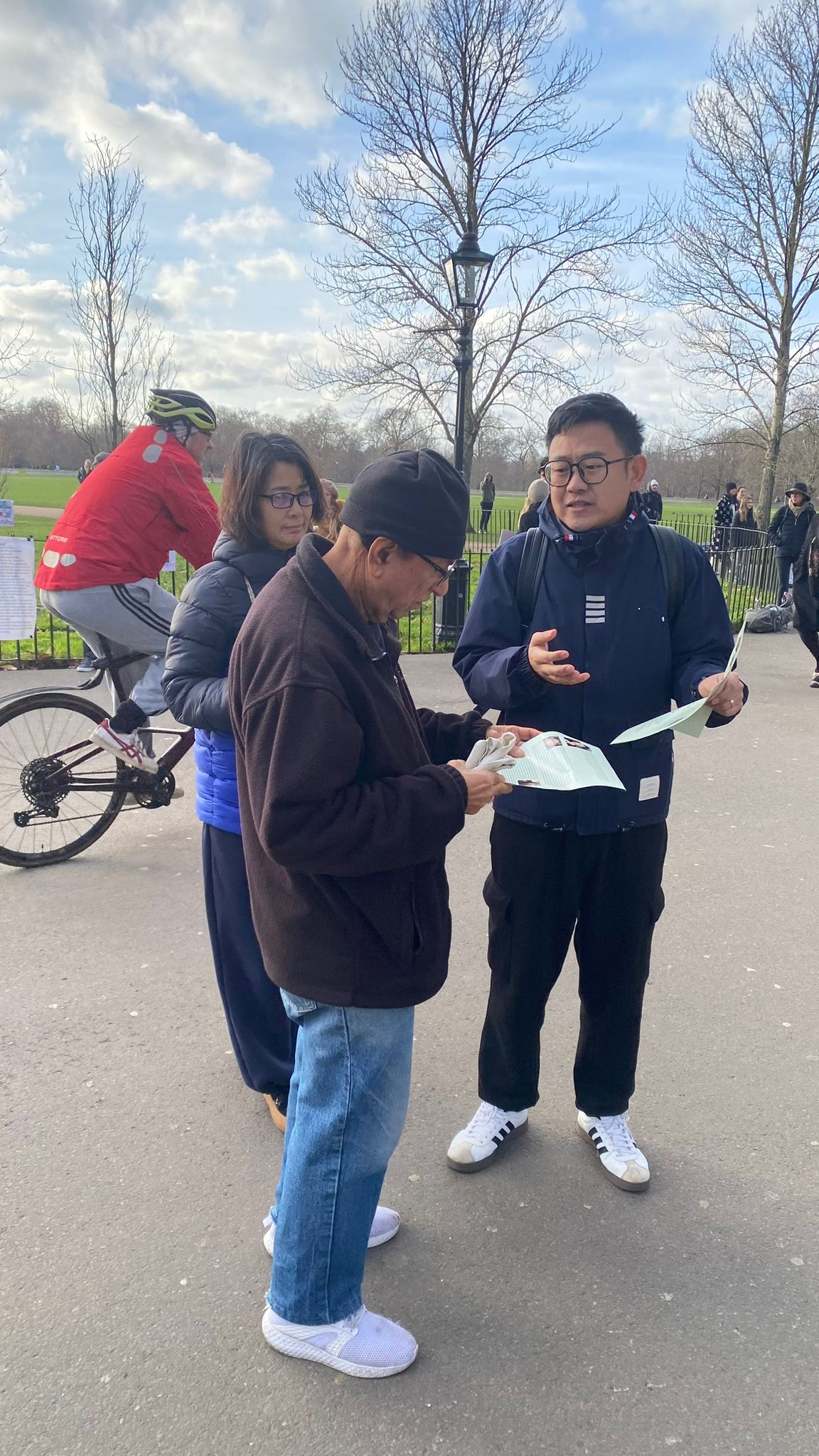
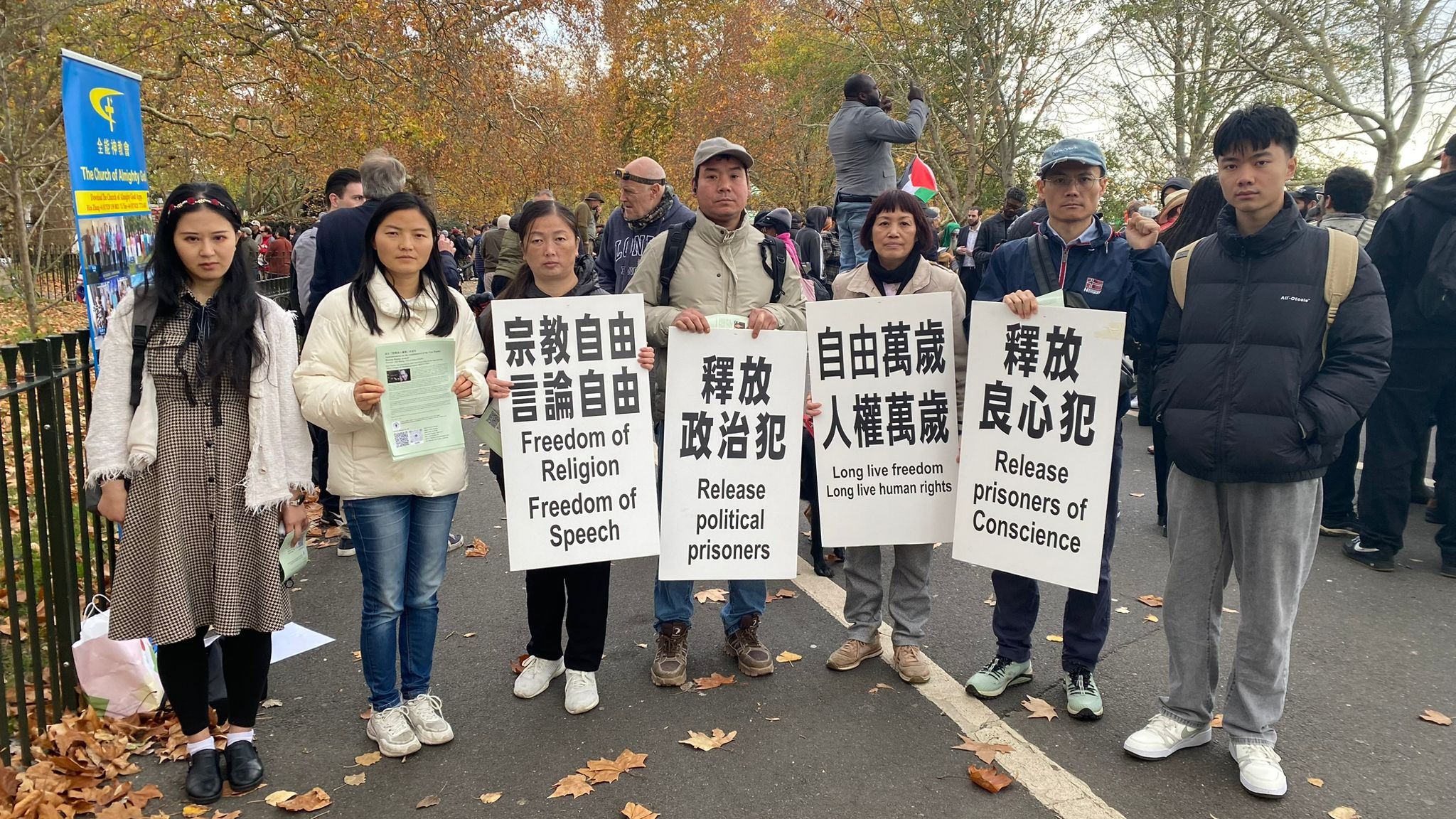
中国民主党英国总部寒风中于海德公园演讲者之角举行刘晓波人权奖募捐活动 UK Headquarters of China Democracy Party Holds Liu Xiaobo Human Rights Award Fundraising Event in the Bitter Cold at Speakers’ Corner, Hyde Park

伦敦,2025年11月23日(星期日)讯


深冬前夕的伦敦空气中带着刺骨的湿寒。海德公园的树影在风中不断摇晃,枯叶贴着冰冷的石板路翻飞。即便如此,在这片承载着百余年公共言说传统的土地上——演讲者之角(Speakers’ Corner),依旧矗立着几面用力撑起的横幅。它们在寒风中抖动,却从未倒下。

正是在这样严苛的天气里,中国民主党英国总部再次如期举行“刘晓波人权奖”募捐活动,以纪念并延续那一份“自由写作与公民勇气”的精神火种。

⭐ 一、寒风为伴:在冬季的伦敦搭起一处自由的光亮

下午一点,风势正盛。成员们迎着寒风将横幅一遍遍固定。每一次风的撕扯都仿佛是对意志的试探,而他们一次又一次把钉扣压紧、把物资重新摆正。

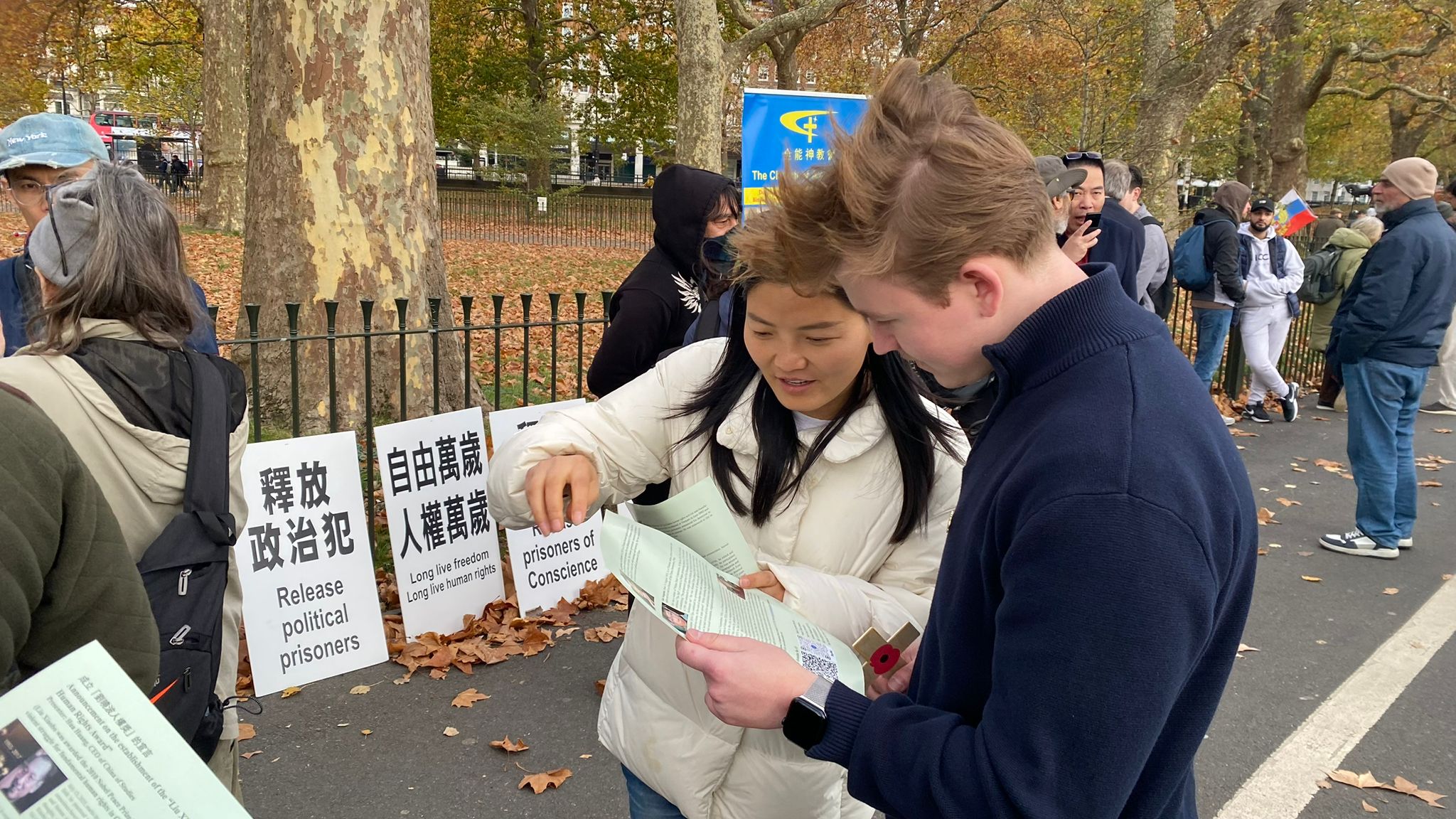
透明募捐箱在灰色天气里反射出微弱的光。刘晓波相关的展板静静立在路旁,如同沉默的见证者。

有成员不自觉地搓着冻红的双手,却依旧微笑着对每一位路人点头致意。

“天气越冷,我们越不能退。”一位成员轻声说,“刘晓波写书时屋里常常只有一盏灯。我们在风中站几个小时,是一种传承。”

这种坚定,让路过的许多人都不由得放慢了脚步。

🎤 二、风中的问与答:伦敦路人与中国故事的交汇

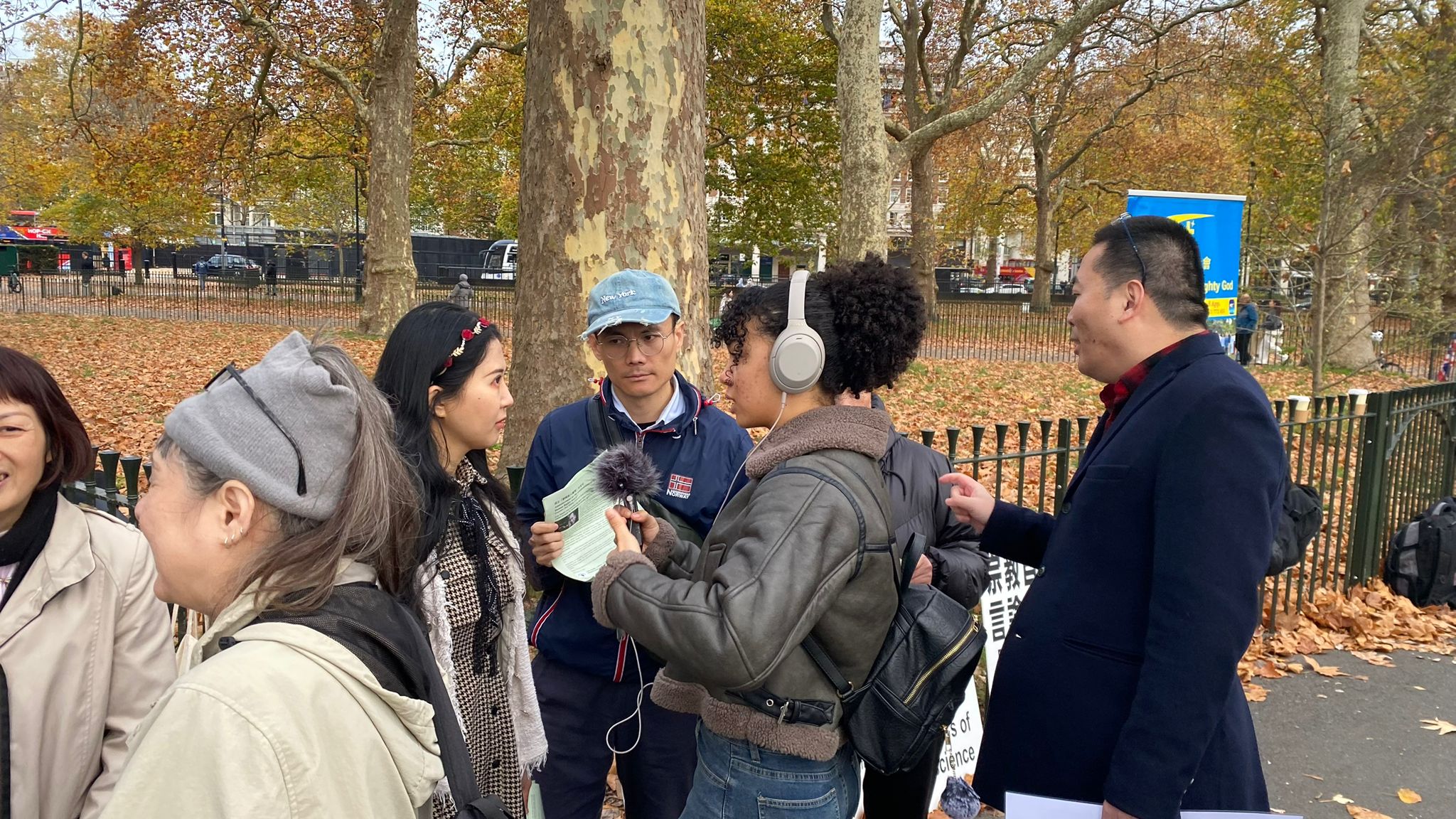
在演讲者之角,人群总是多元、快速、流动的。但这一天,许多人停了下来。

  1. 英国老年女士的轻声感叹

一位裹着厚围巾的英国老太太轻轻抚过展板上的照片。

“我记得他……诺贝尔和平奖得主,是吗?他后来……”
成员缓缓讲述了刘晓波的经历。
她沉默半晌,将十英镑放入透明募捐箱:“愿自由有一天能回到你们的祖国。”

细风吹过,她的声音轻,却带着一种跨越国界的善意。

  1. 亚洲游客与记忆的连接

几位日本与韩国年轻游客驻足良久,他们说自己在中学课本里读过刘晓波。

“我想把你们的照片发到社交媒体,让更多人知道。”

他们留下小额捐款,也留下了温暖的微笑。

  1. 华语世界求学者的共鸣

来自台湾与香港的留学生长时间与成员交谈。

其中一位递来热巧克力:“天气这么冷,你们愿意站在这里,很不容易。我们支持你们。”

寒风虽冷,但人心的温度一点一点累积。

📸 三、媒体镜头中的寒意与坚持

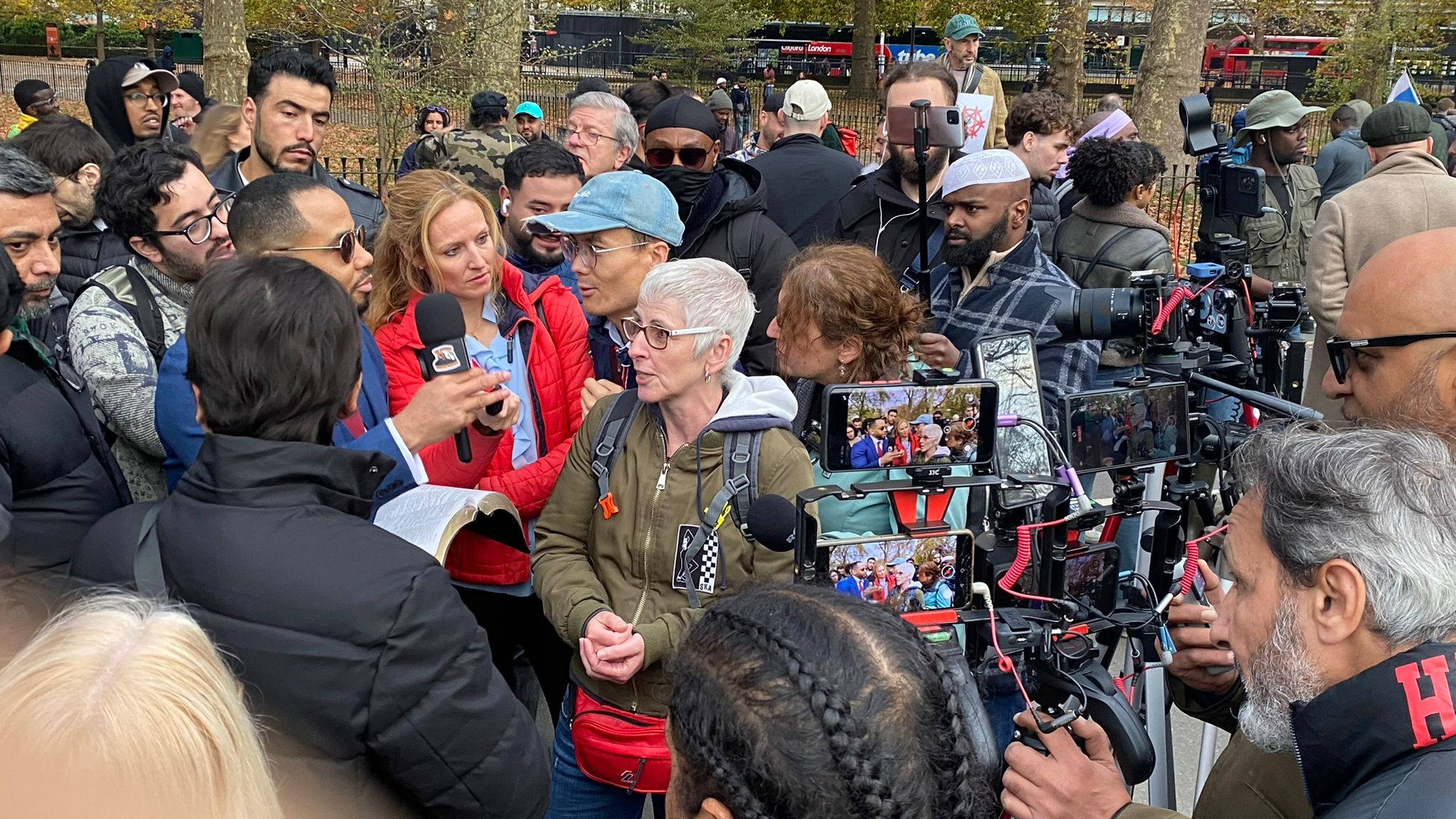
下午两点半,几家媒体与独立纪录片团队陆续抵达。他们的镜头在寒风中晃动,却对准了这些在风里站着的人。

记者们拍摄横幅、记录路人与成员的对话,也采访关于刘晓波人权奖的意义。
一名纪录片导演在采访中说:

“在一个逐渐习惯沉默的世界里,你们选择在最冷的日子里发声。这对历史来说非常珍贵。”

风吹乱了他的笔记,却没有吹乱他眼中的专注。

媒体到场后,更多路人好奇地围上前来,让现场逐渐形成一个小小的自由讨论圈。

🔍 四、募捐的意义:延续思想的火焰

募捐信息清晰地摆放在展示台前,内容包括:
• 支持未来“刘晓波人权奖”获奖者的奖励与倡议基金
• 制作关于刘晓波精神的人权教育材料
• 扩展有关自由写作、表达权的国际合作项目
• 支持中国民主党英国总部的公共行动与文宣制作

募捐箱里逐渐积起了纸币与硬币,细碎的金属声在风中显得格外清脆,像是在为坚持发出的回应。

🗣 五、演讲与讨论:寒风无法阻挡的言说

在扩音器前,多位成员轮流发表即席演讲。

他们谈刘晓波的著作、谈表达自由的意义、谈一个国家必须允许公民讲出不同意见,谈一个被噤声的社会为何需要有人继续说话。

演讲不断引来对话。一位英国年轻人问:

“站在这里发声,你们不担心回国的风险吗?”

成员答道:

“自由不是免费的。有人因为写了一篇文章被关进监狱,而我们只是站在风里。”

这一刻,寒风似乎也沉默了。

🤝 六、组织者与参与党员(到场名单)

组织者

· 王魏晋(中国民主党英国总部街头活动总指挥)
· 胡晓(中国民主党英国总部活动副总指挥)

参与党员

· 王魏晋
· 胡晓
· 成小丹
· 张学美
· 侯尔斌
· 杨沁龙
· 吴小海

🏁 七、活动结束:寒冬未尽,信念仍暖

下午五点,天色渐暗,风越发凛冽,树影被吹得东倒西歪。
成员们在寒意逼人的空气中收拾物资,手指已冻得发僵,但眼神里依旧带着亮光。

组织者在总结时说:

“风很冷,但只要有人愿意倾听,刘晓波的精神就不会熄灭。
只要还有人被囚禁,我们就会继续站在这里。”

海德公园的灯光依次亮起,照在空旷而清冷的草地上。
而在那灯光未及的地方,有一种更深更持久的光——是人的信念,是言说的勇气,是自由的方向。

UK Headquarters of China Democracy Party Holds Liu Xiaobo Human Rights Award Fundraising Event in the Bitter Cold at Speakers’ Corner, Hyde Park

London, Sunday, 23 November 2025

In the damp, penetrating chill of late autumn in London, the air carried a cutting cold. The trees of Hyde Park swayed constantly in the wind, and dead leaves skittered across the icy paving stones. Even so, at Speakers’ Corner – that patch of ground bearing more than a century of public speaking tradition – several banners stood stubbornly upright, held fast against the wind. They shivered and snapped in the gusts, but never fell.

It was in such harsh weather that the UK Headquarters of China Democracy Party once again held a fundraising event for the “Liu Xiaobo Human Rights Award”, in order to commemorate and carry forward the spiritual flame of “free writing and civic courage”.


1. With the cold wind as companion: a small light of freedom in winter London

At 1 p.m., the wind was at its strongest. Members braced themselves against the gusts as they secured the banners again and again. Every tug of the wind seemed like a test of will, and they responded each time by pressing the clips more firmly and setting the materials back in place.

A transparent donation box reflected a faint glimmer in the grey weather. Display boards about Liu Xiaobo stood quietly by the path, like silent witnesses.

Some members unconsciously rubbed their frost-reddened hands, yet still greeted every passer-by with a smile and a nod.

“The colder it is, the less we can retreat,” one member said softly. “When Liu Xiaobo was writing, there was often only a single lamp in his room. Standing out here in the wind for a few hours is a form of continuity.”

That kind of resolve made many people passing by involuntarily slow their steps.


2. Questions and answers in the wind: where Londoners meet China’s stories

At Speakers’ Corner, the crowd is always diverse, fast-moving and fluid. But on this day, many chose to stop.

(1) A quiet sigh from an elderly British lady

An elderly British woman wrapped in a thick scarf gently brushed her hand over a photo on one of the boards.

“I remember him… the Nobel Peace Prize winner, isn’t he? He later…”

A member slowly recounted Liu Xiaobo’s story.

She fell silent for a moment, then placed ten pounds into the transparent donation box. “May freedom one day return to your homeland,” she said.

The wind passed by; her voice was light but carried a kindness that crossed borders.

(2) Asian tourists and the link of memory

Several young tourists from Japan and South Korea lingered for a long time, saying they had read about Liu Xiaobo in their school textbooks.

“I want to post your photos on social media so more people know about this,” one of them said.

They left a small donation, and also left behind a warm smile.

(3) Students from the Sinosphere and a shared resonance

Students from Taiwan and Hong Kong spent a long time talking with the members.

One of them handed over a cup of hot chocolate. “It’s really not easy for you to stand here in this cold. We support you,” the student said.

Though the wind was biting, the warmth in people’s hearts was slowly building up.


3. Through the media lens: cold and persistence being amplified

At around 2:30 p.m., several media outlets and independent documentary teams arrived one after another. Their cameras shook slightly in the wind, but remained trained on those standing in the cold.

Reporters filmed the banners, recorded conversations between passers-by and members, and interviewed them about the meaning of the Liu Xiaobo Human Rights Award.

A documentary director said during an interview:

“In a world that is gradually getting used to silence, the fact that you choose to speak out on one of the coldest days is extremely precious for history.”

The wind scattered his notes, but not the focus in his eyes.

Once the media appeared, more passers-by came over out of curiosity, and the area gradually turned into a small circle of free discussion.


4. The meaning of fundraising: keeping the flame of thought alive

Information about the fundraising was clearly displayed at the stall, stating that the funds would be used to:

  • Support future prize money and advocacy funds for recipients of the “Liu Xiaobo Human Rights Award”;
  • Produce human rights education materials related to Liu Xiaobo’s spirit;
  • Expand international cooperation projects on free writing and freedom of expression;
  • Support the UK Headquarters of China Democracy Party in its public actions and production of printed materials.

Gradually, more banknotes and coins accumulated in the donation box. The crisp clink of metal sounded particularly clear in the wind, as if it were the world answering this act of perseverance.


5. Speeches and discussion: a voice the cold cannot suppress

In front of the portable loudspeaker, several members took turns giving impromptu speeches.

They spoke about Liu Xiaobo’s works, about the meaning of freedom of expression, about how a country must allow its citizens to speak different opinions, and about why a society under enforced silence needs people to keep speaking out.

The speeches repeatedly drew people into discussion.

A young British man asked:

“By standing here and speaking out like this, aren’t you worried about the risks if you return to your country?”

A member replied:

“Freedom is not free. There are people in prison because of a single article, while we are merely standing in the wind.”

For a moment, it seemed even the cold wind fell silent.


6. Organisers and participating members (those present)

Organisers

  • Wang Weijin (Street Action General Coordinator, UK Headquarters of China Democracy Party)
  • Hu Xiao (Deputy Coordinator, UK Headquarters of China Democracy Party)

Participating members

  • Wang Weijin
  • Hu Xiao
  • Cheng Xiaodan
  • Zhang Xuemei
  • Hou Erbin
  • Yang Qinlong
  • Wu Xiaohai


7. End of the event: winter not yet over, conviction still warm

By 5 p.m., the sky had darkened, and the wind had grown even more bitter. The tree shadows bent low under the gusts.

Members packed up the materials in the biting cold; their fingers were numb, but their eyes still held a quiet light.

In the brief summary at the end, one organiser said:

“The wind is cold, but as long as someone is willing to listen, Liu Xiaobo’s spirit will not be extinguished.
As long as there are people imprisoned for speaking out, we will keep standing here.”

The lights of Hyde Park came on one by one, illuminating the empty, chilly lawns.

And in those corners beyond the reach of the lamps, there remained a deeper and more enduring light – the light of human conviction, the courage to speak, and the direction of freedom.

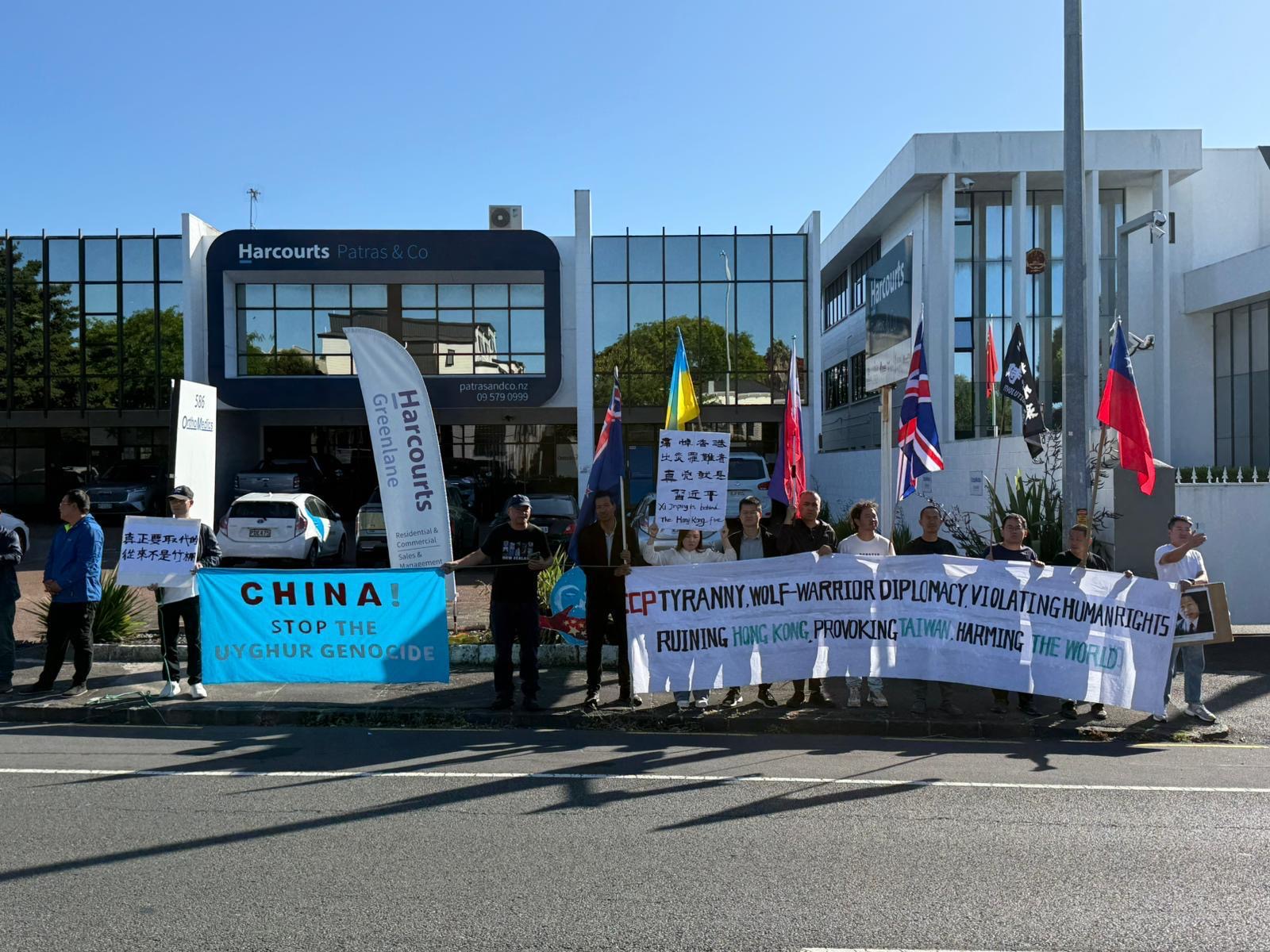
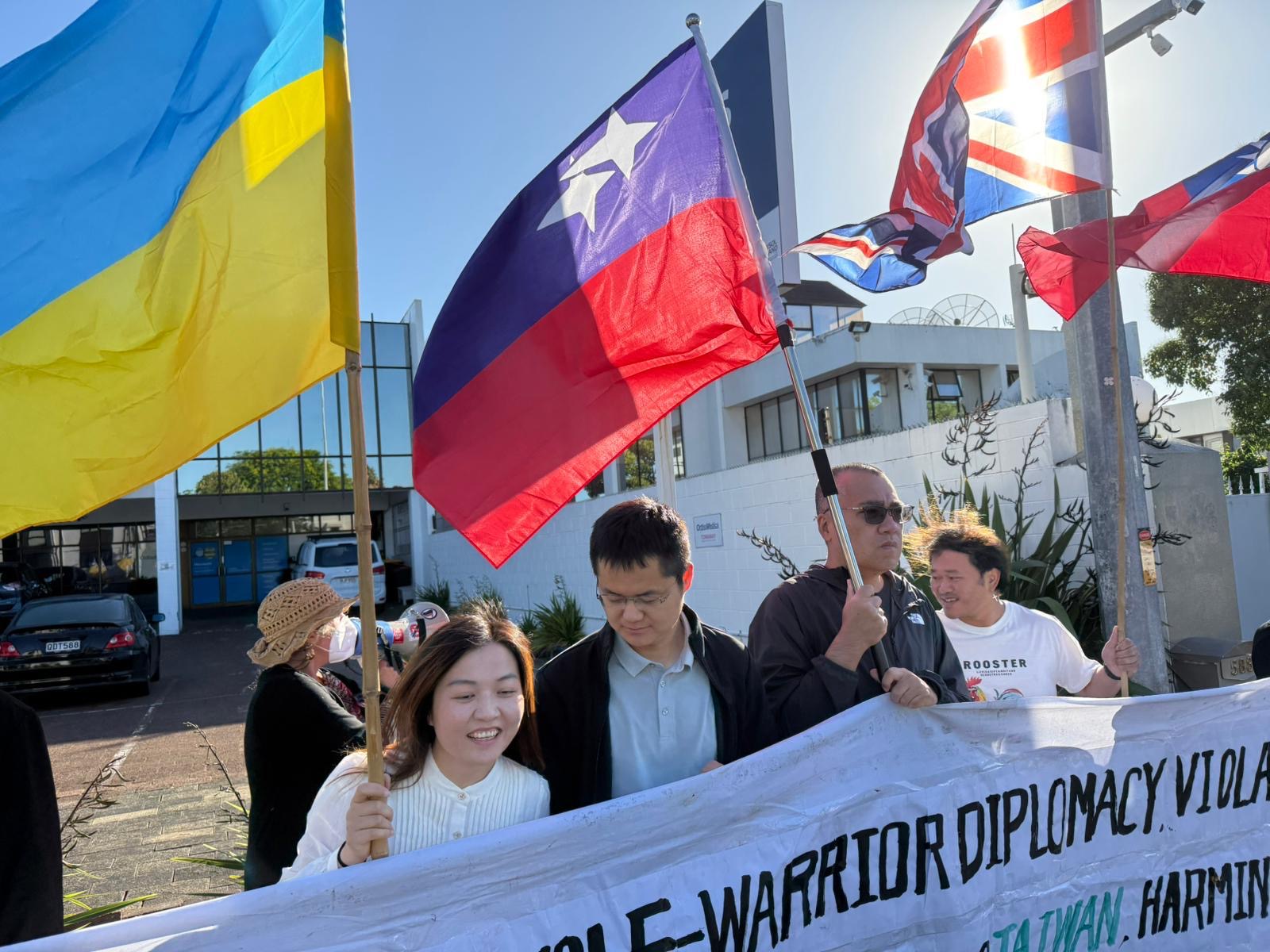
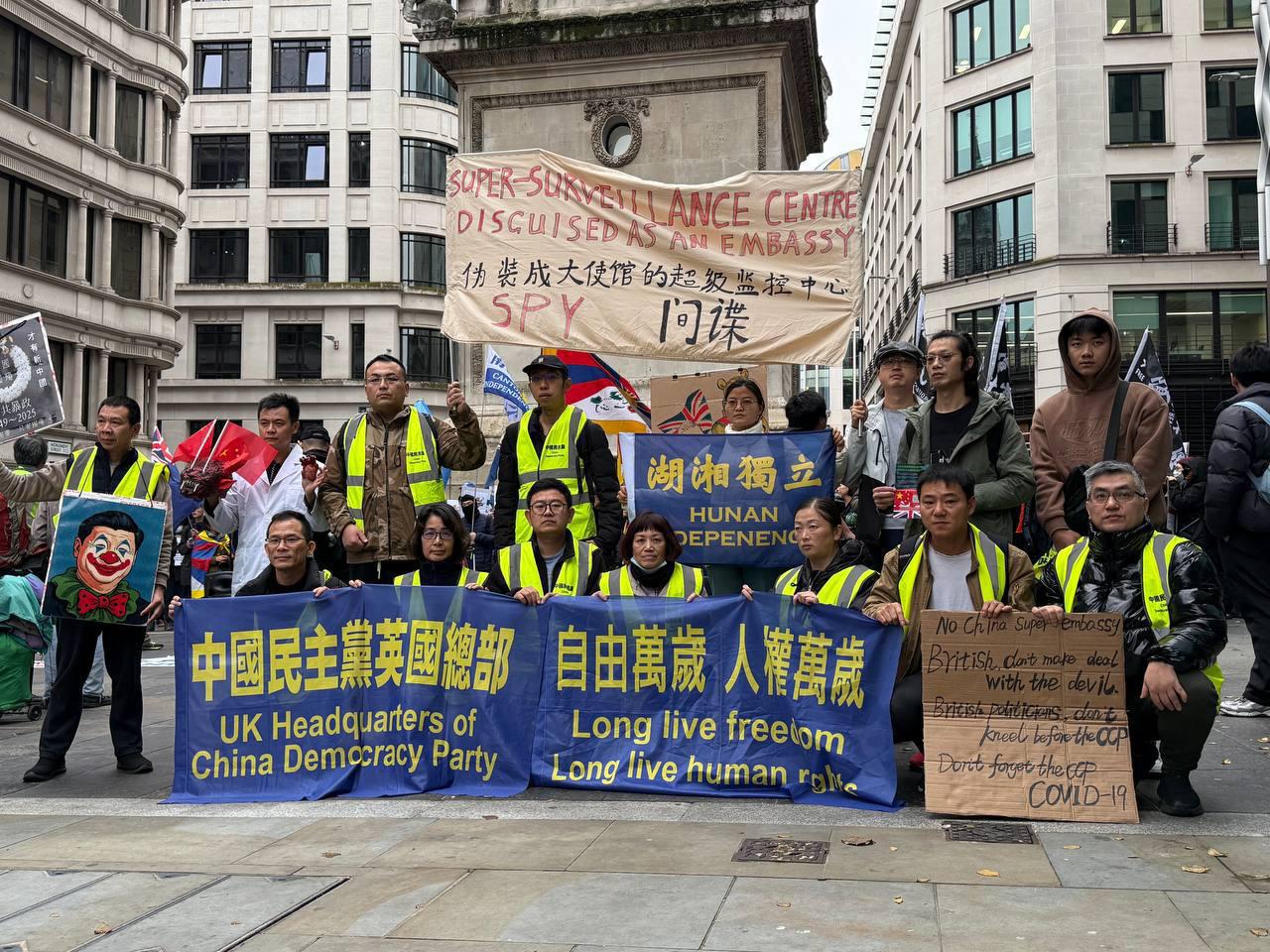
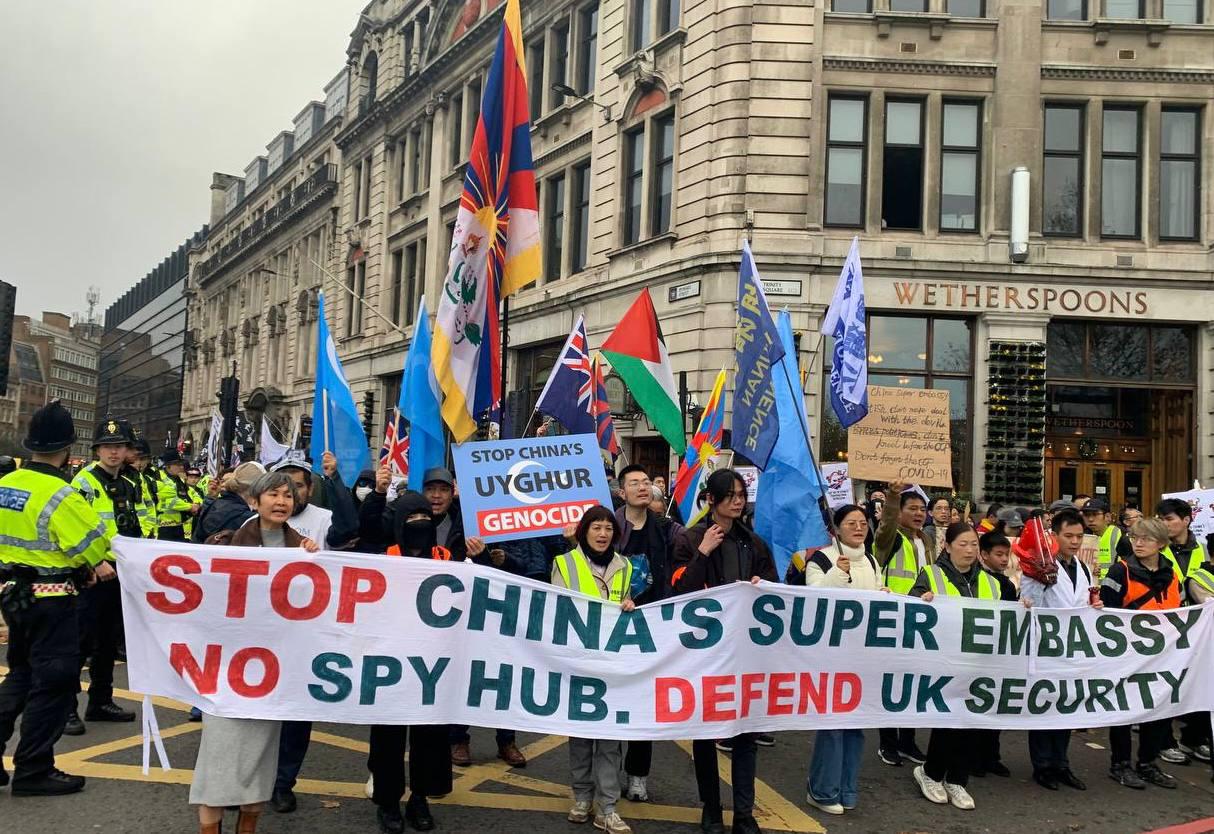
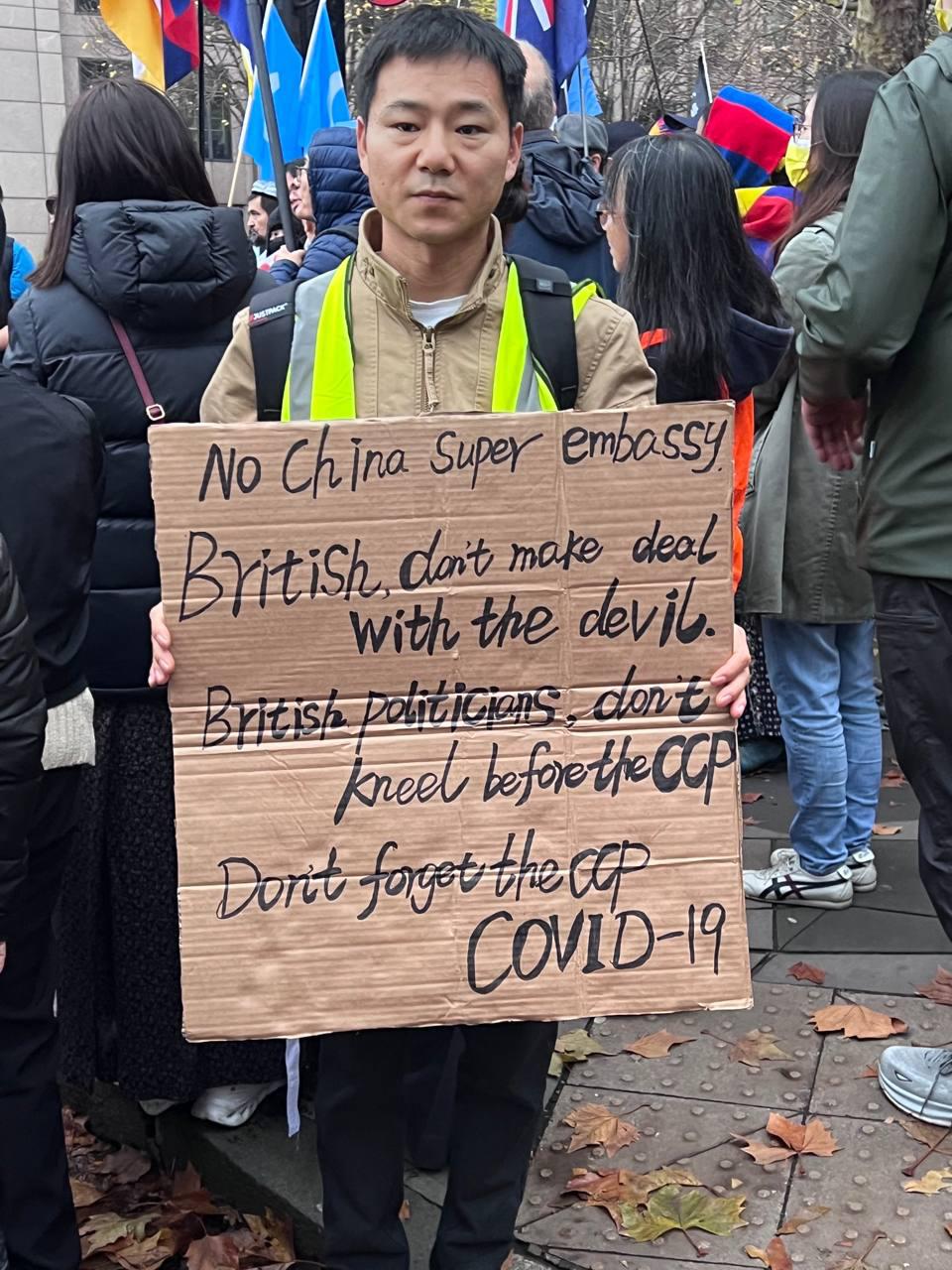
2025 年 11 月 15 日伦敦反对“中共超级大使馆”游行 15 November 2025 — London Protest Against the “China Mega Embassy”

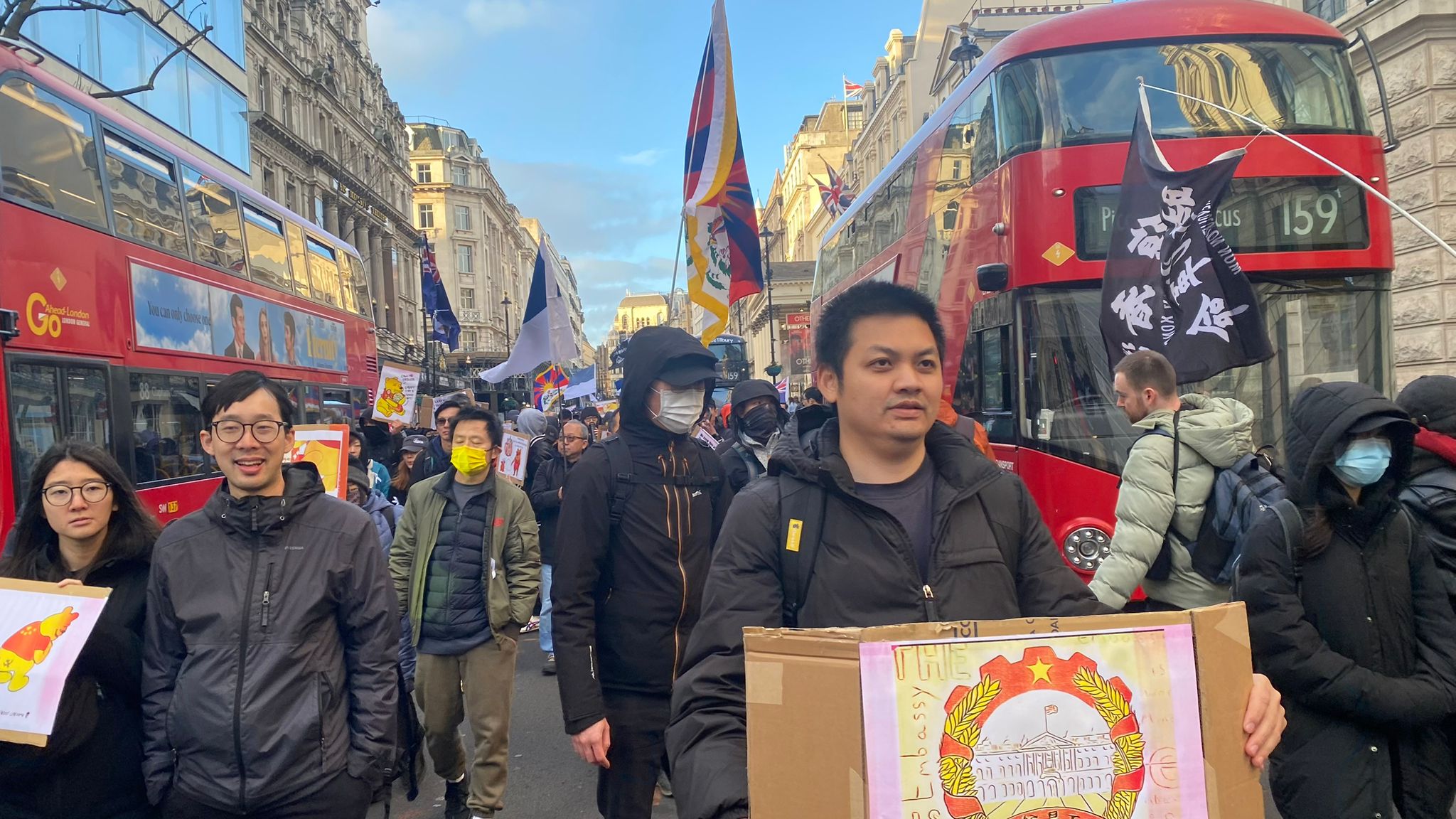
2025 年 11 月 15 日下午 1 时 30 分,中国民主党英国总部组织党员和香港团体一起集合于 伦敦纪念碑(The Monument),拉开了第7轮反对在伦敦建设“中共超级大使馆”的游行抗议活动.政府一次次的延迟决定 , 表示我们愤怒的抗议也许起了丁点的作用 ,叠加美国政府怀疑这个中共超级大使馆用来做间谍活动和控制英国乃至世界的经济和政治,中共政府的超级大使馆计划应该落空.

游行队伍自纪念碑出发,参与者高举标语,呼喊口号 :China is a threat . No China mega Embassy !强调所谓“超级大使馆”就是一座恐怖监狱和间谍活动中心,中共政府幻想用超级大使馆来控制世界命脉,我们民主党人清醒得很,坚决地持续地抗议,来阻止这个超级大使馆的建成!

抵达皇家铸币厂:抗议演讲

队伍一路前往 皇家铸币厂(Royal Mint Court)——即“超级大使馆”拟建之地。在现场,组织方代表发表抗议演讲,强调伦敦作为民主、自由与法治的象征,不应容许为威权目的服务的“政治堡垒”在此落成。现场聚集了不少关注民众,不少人表达了支持与赞许。

前往塔桥:手拉手人链活动

演讲结束后,游行队伍继续前进,最终抵达 塔桥(Tower Bridge)。在这里,游行队伍进行手拉手人链行动,以象征“守护自由、连结民主力量”的意义。雨中的塔桥上,人链延绵成形,口号声回荡在泰晤士河畔。

活动意义

反对“中共超级大使馆”的行动不仅关乎规划与建设问题,更是守护自由、民主、人权的价值宣示。示威者强调,必须捍卫公共空间不受威权力量的渗透,提醒社会警惕任何形式的侵蚀。

组织方声明

中国民主党英国总部在声明中表示,将持续发声,呼吁国际社会关注威权扩张带来的威胁,确保自由价值不受侵犯。

总结

七次的抗议中共超级大使馆的活动,彰显民主党热爱自由,勇敢揭露邪恶中共的丑恶嘴脸,为世界反邪恶轴心添加一点绵薄之力.推动西方文明世界脱离邪恶轴心国的危险,中共就是万恶之源……

中国民主党英国总部供稿
附录:中国民主党英国总部 组织信息

总指挥:范可为
副指挥: 卢灵飞 黄俊

范可为 卢灵飞 黄俊 韦崇华 张学美 成小丹 戴超 温作团 张石头 王涛 吴志芬 俞杰辉 李申耀 吴冉 杨沁龙 吴小海

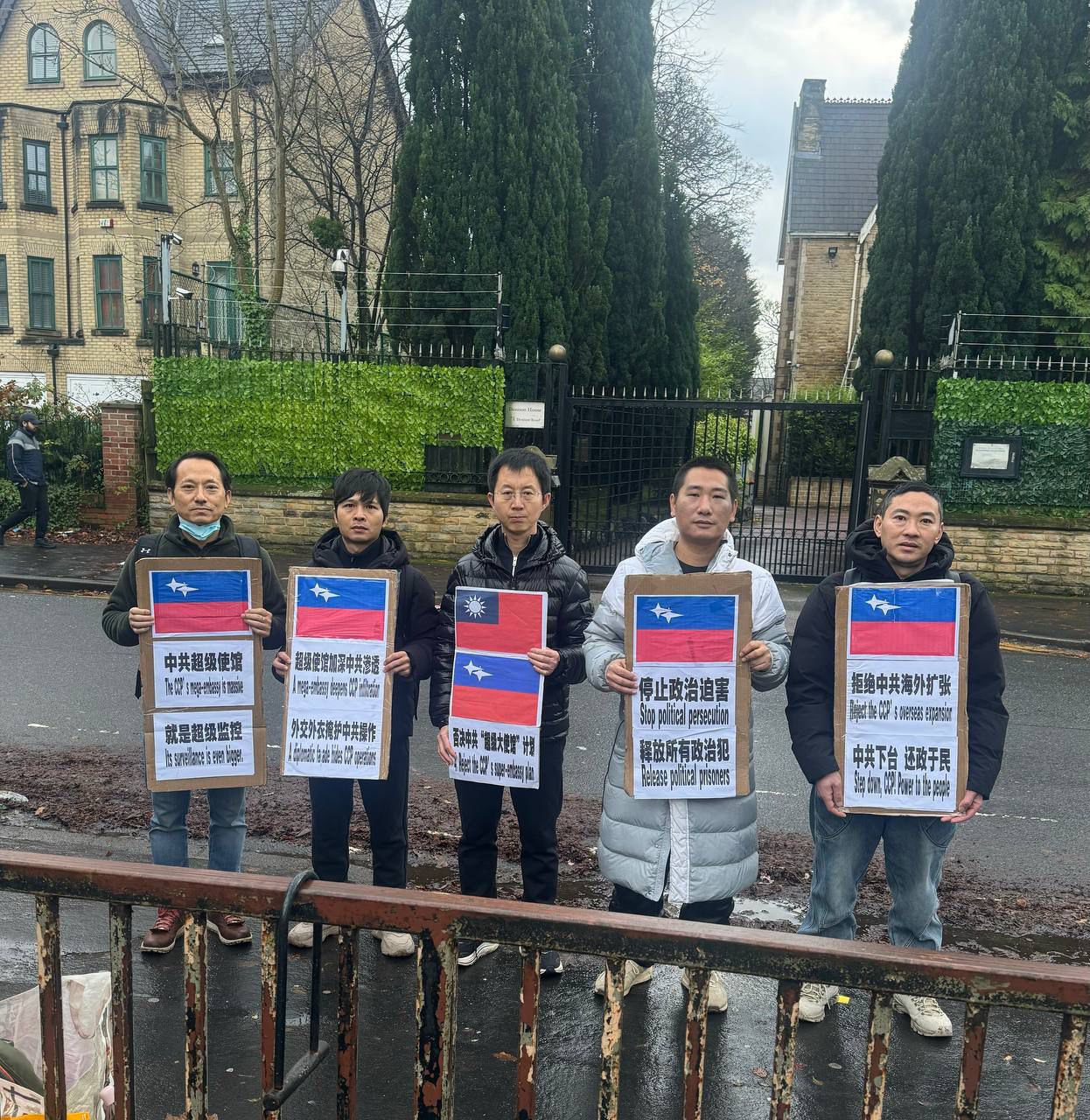
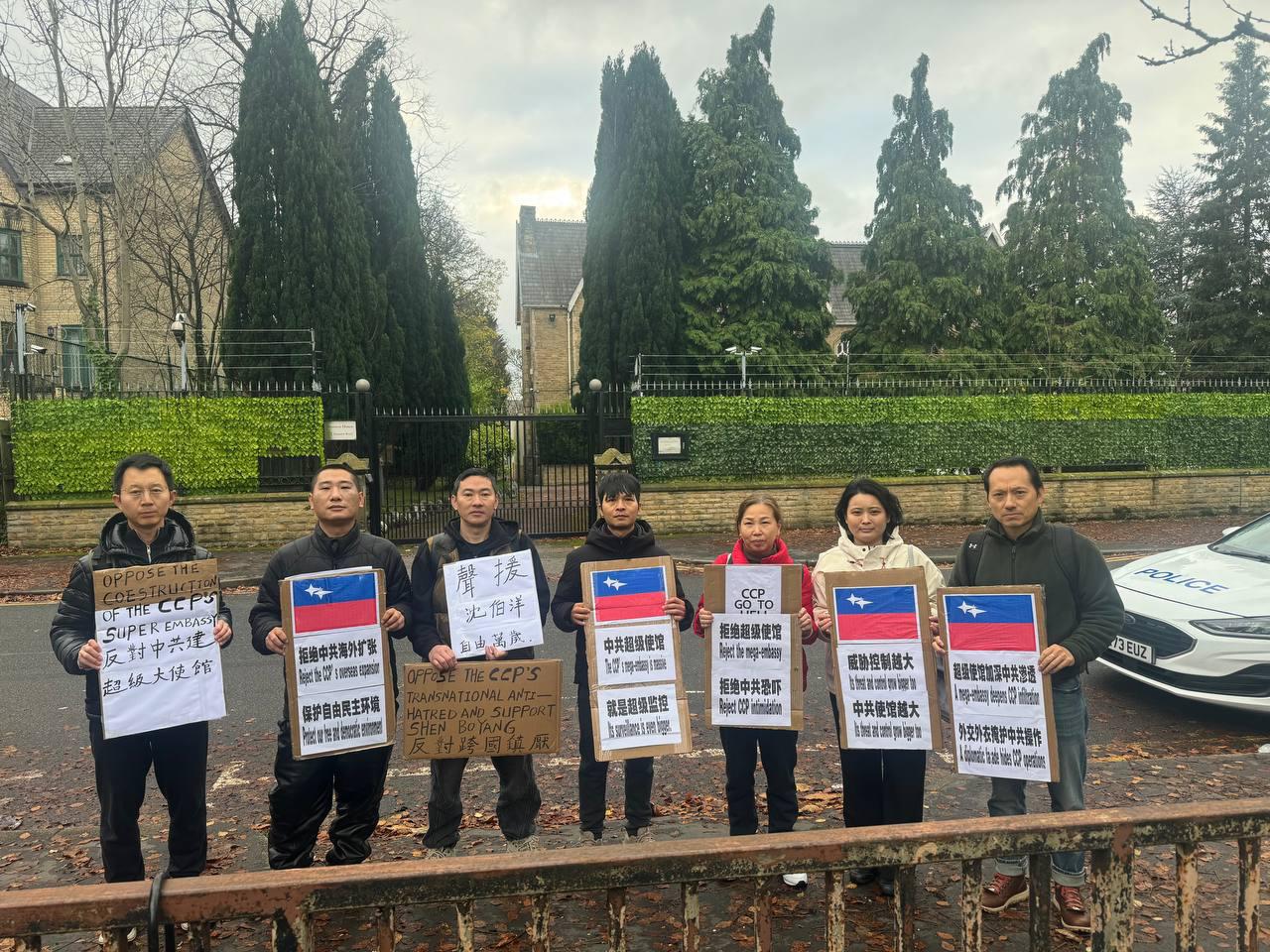
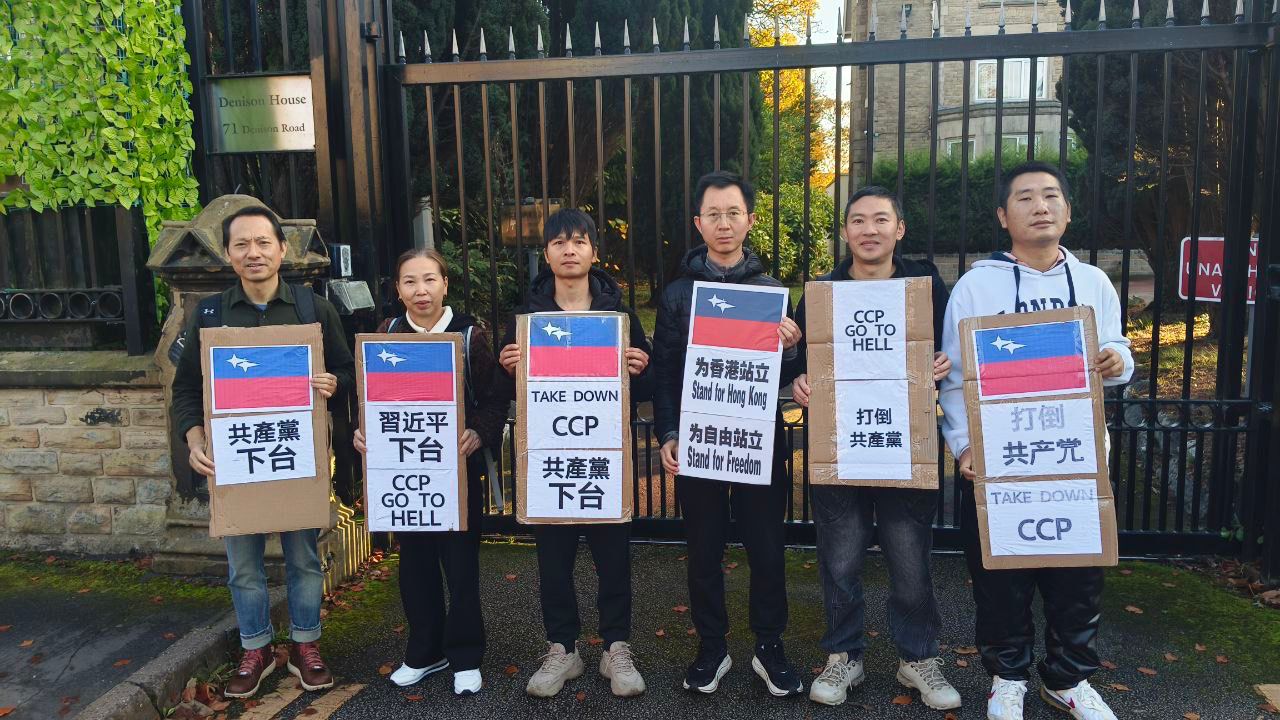
另:居住在曼切斯特的中国民主党英国总部党员也在同一时间在曼城总领事馆前进行了声援活动

组织者 赵武
1.赵武
2.熊志兵
3.邬勇
4.杨体和
5.周凤雄
6:钟淑琴
7.萧雅聪

15 November 2025 — London Protest Against the “China Mega Embassy”

On the afternoon of 15 November 2025 at 1:30 pm, members of the UK Headquarters of China Democracy Party gathered alongside Hong Kong community groups at The Monument, marking the seventh round of protests against the construction of the so-called “China Mega Embassy” in London.

The UK government has repeatedly delayed its planning decision — a sign that these waves of public protest may have begun to exert pressure. Combined with the US government’s warnings that this proposed “mega embassy” could be used for espionage, surveillance, and political influence operations in the UK and beyond, it is increasingly likely that the Chinese government’s plans will not succeed.


March from The Monument — Voices of Warning

Protesters marched from The Monument, holding placards and chanting:

“China is a threat!”

“No China Mega Embassy!”

Participants stressed that this proposed “mega embassy” is not a normal diplomatic facility but a high-security compound for surveillance, intimidation, and cross-border repression.

Members of the China Democracy Party stated clearly:

“We are fully aware of what the CCP seeks to build. We will continue to resist until this mega embassy is stopped.”


Royal Mint Court — Protest Speeches at the Proposed Site

The march reached Royal Mint Court, the planned site of the mega embassy.

There, representatives delivered speeches emphasising that London — a symbol of democracy, liberty, and the rule of law — must not permit the construction of a political fortress serving authoritarian purposes.

Many London residents gathered at the site, expressing support and appreciation for the demonstrators’ persistence.


Towards Tower Bridge — Human Chain for Freedom

After the speeches, the march continued to Tower Bridge, where participants formed a human chain across the bridge, symbolising:

“Defending freedom, connecting democratic力量.”

In the light drizzle, the human chain stretched across the iconic bridge, and chants echoed along the Thames.


Significance of the Protest

The movement against the “China Mega Embassy” is not merely about planning permission or urban construction.

It is a defence of democratic space, a public reminder that authoritarian influence must not be allowed to infiltrate free societies.

Protesters stressed that London, and the UK as a whole, must remain vigilant in safeguarding freedoms from any form of foreign coercion or political penetration.


Statement from the UK Headquarters of China Democracy Party

The organisation reiterated:

  • It will continue to speak out against authoritarian expansion.
  • It calls on the international community to recognise the threat posed by the CCP.
  • It will defend democratic values until they are safe from infringement.

Conclusion

This seventh demonstration against the China Mega Embassy reflects the China Democracy Party’s unwavering commitment to freedom, truth, and exposing the CCP’s authoritarian nature.

These efforts — however modest — contribute to the global resistance against emerging authoritarian blocs and strengthen democratic societies’ awareness of the dangers posed by the Chinese Communist regime, which remains a major source of global repression.


Organisational Information — UK Headquarters of China Democracy Party

Chief Coordinator:

• Fan Kewei

Deputy Coordinators:

• Lu Lingfei

• Huang Jun

Participants in London:

Fan Kewei, Lu Lingfei, Huang Jun, Wei Chonghua, Zhang Xuemei, Cheng Xiaodan, Dai Chao, Wen Zuotuan, Zhang Shitou, Wang Tao, Wu Zhifen, Yu Jiehui, Li Shenyao, Wu Ran, Yang Qinlong, Wu Xiaohai


Parallel Protest in Manchester

At the same time, members of the UK Headquarters of China Democracy Party held a solidarity protest outside the Chinese Consulate-General in Manchester.

Organiser: Zhao Wu

Participants:

Zhao Wu, Xiong Zhibing, Wu Yong, Yang Tihe, Zhou Fengxiong, Zhong Shuqin, Xiao Yacong

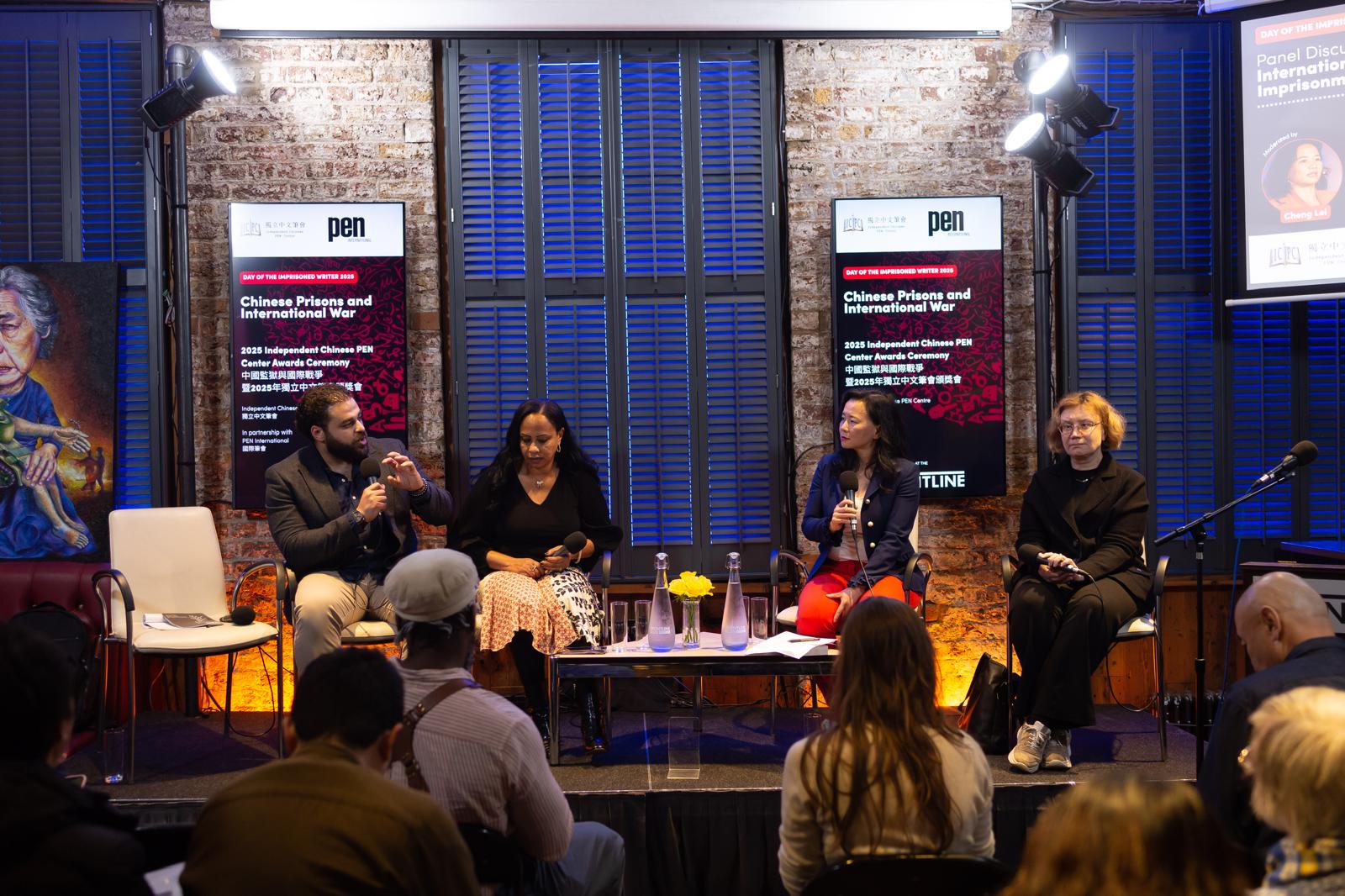
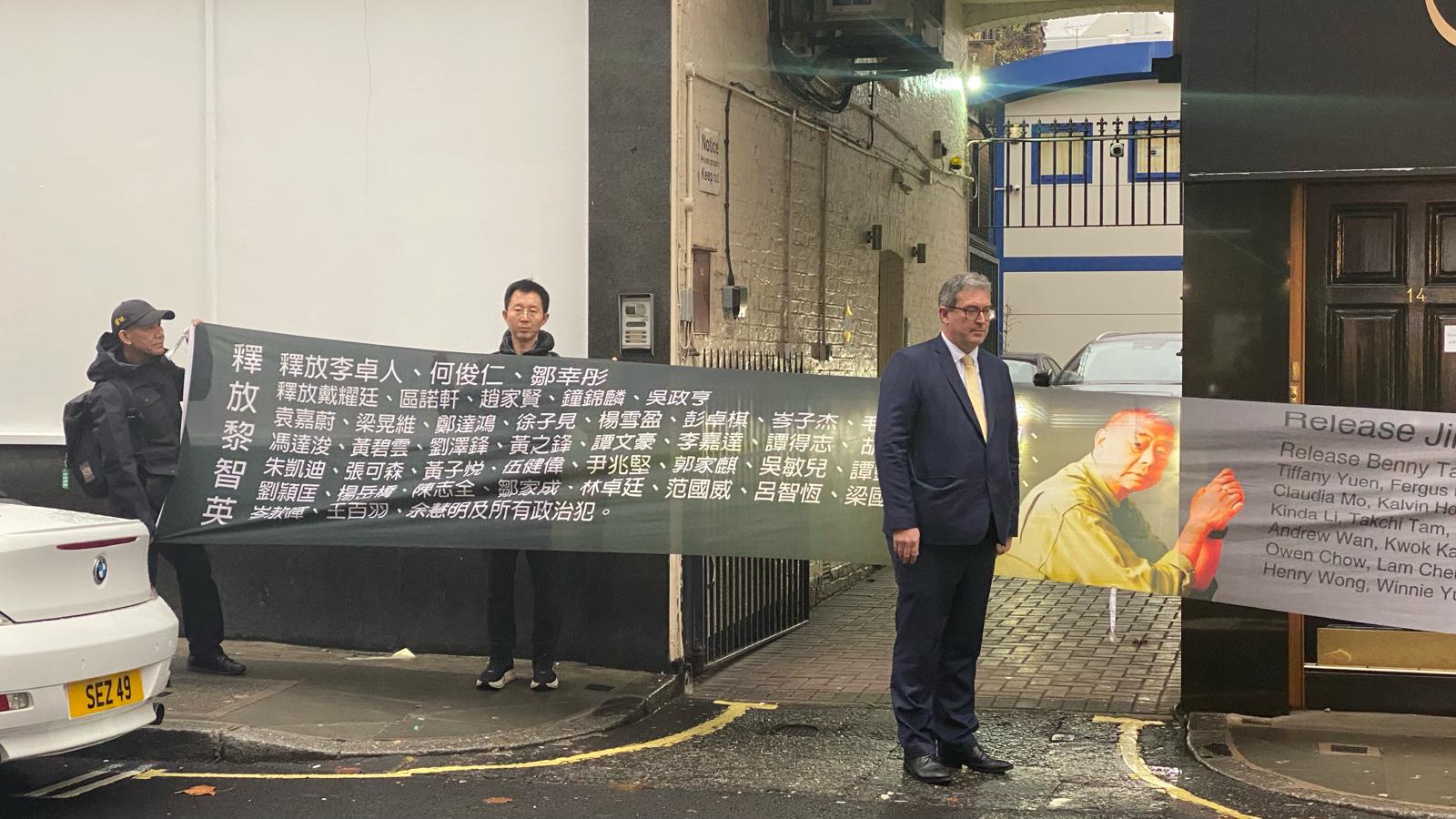
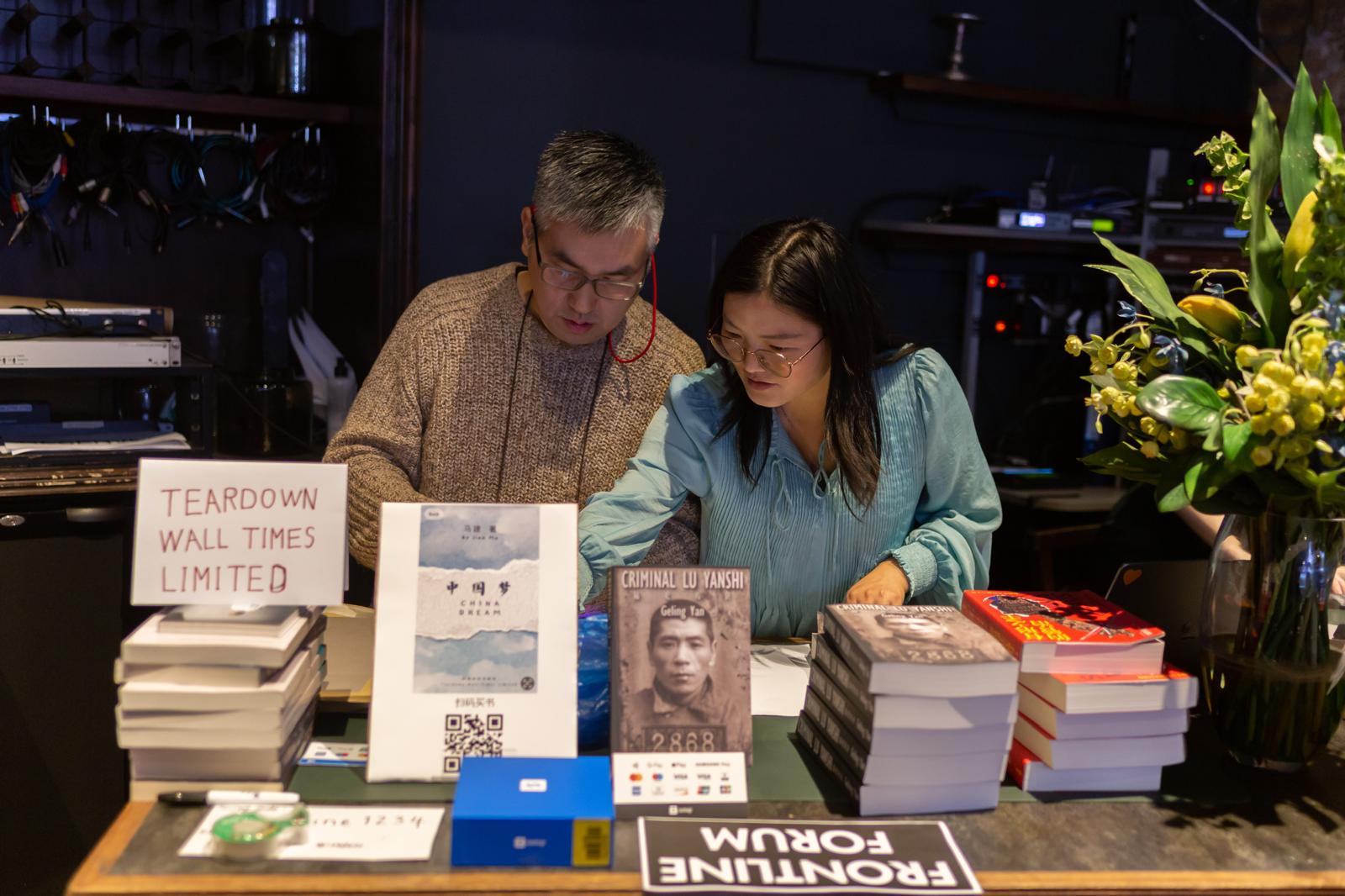
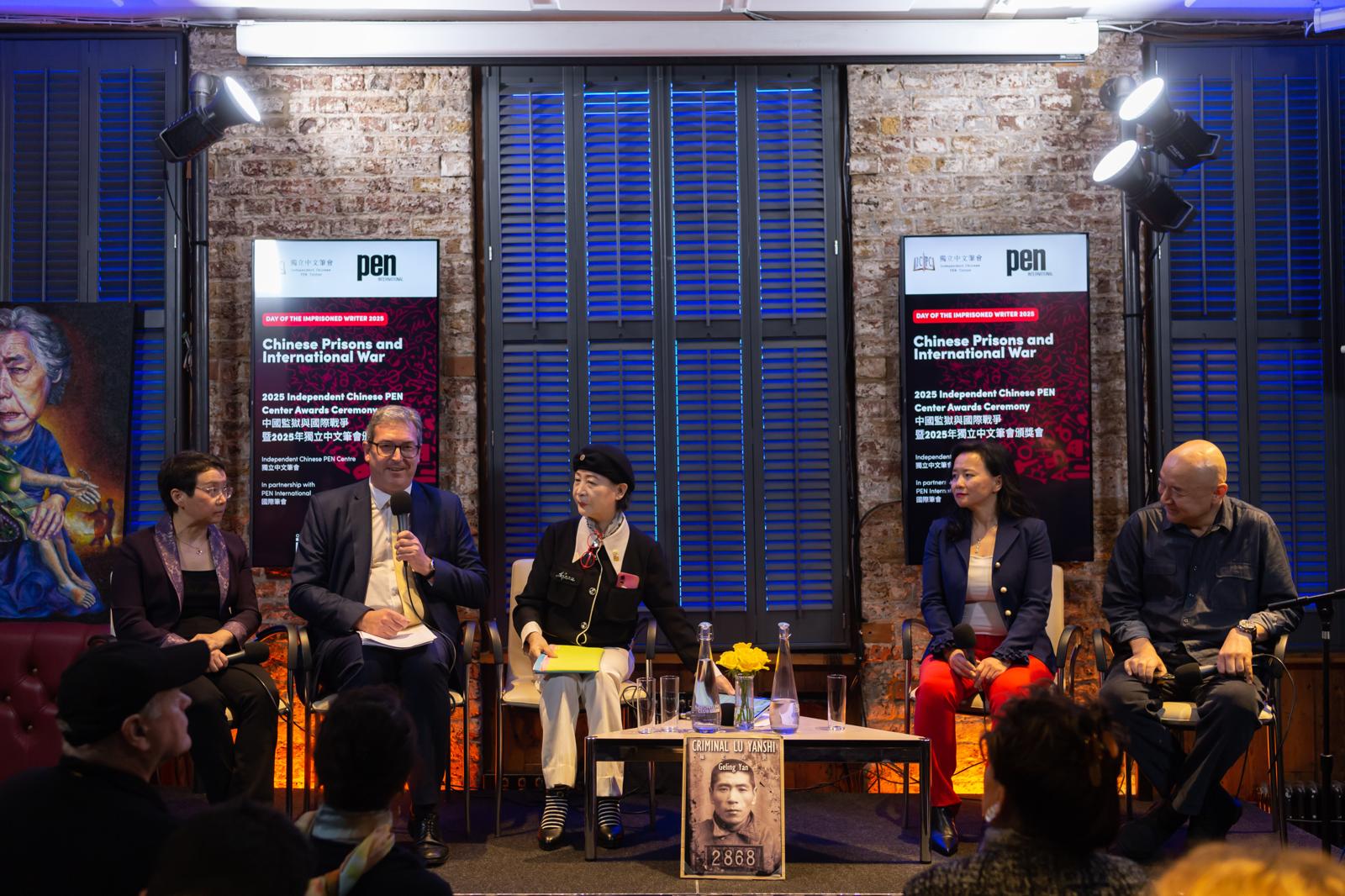
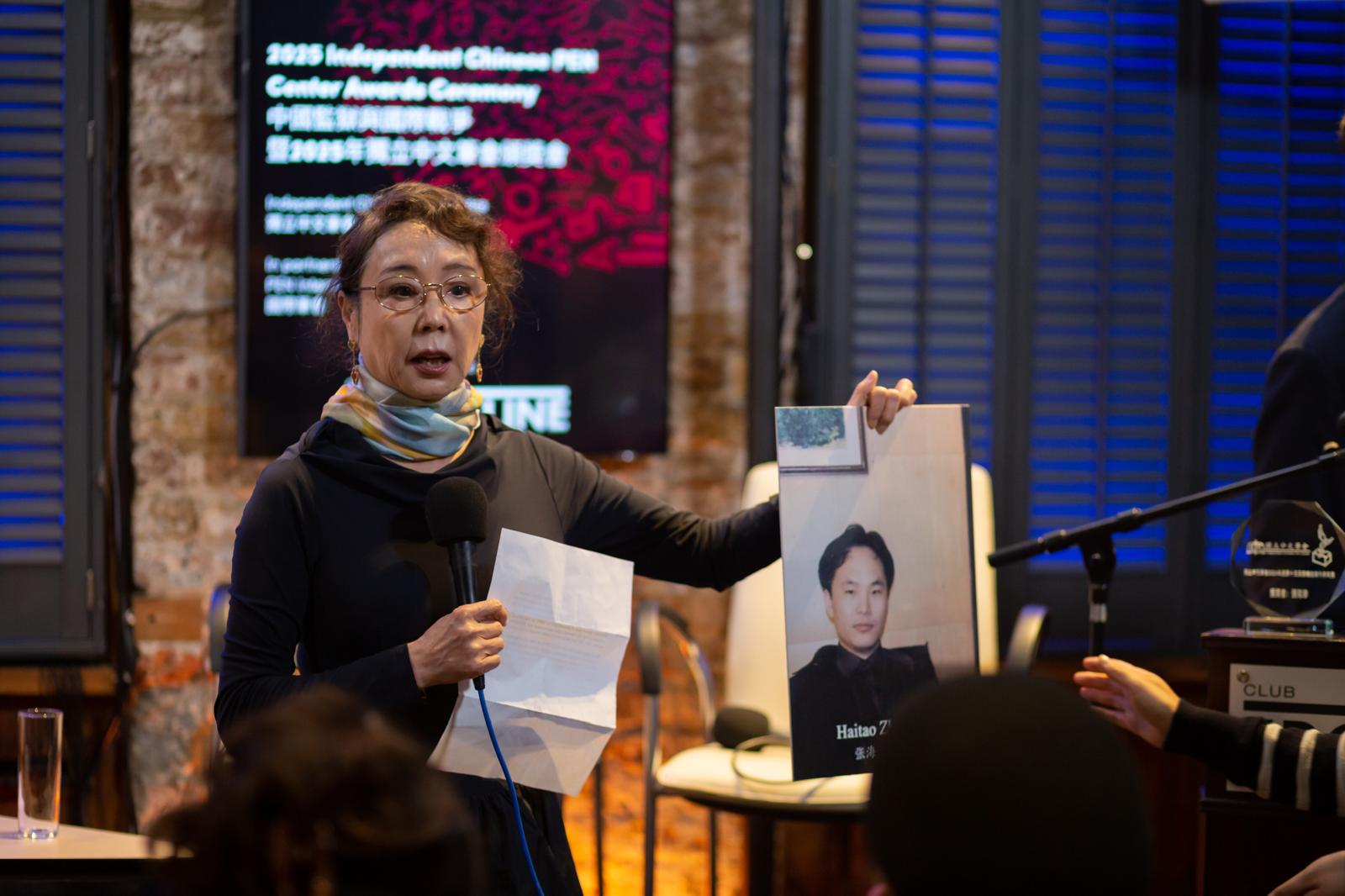
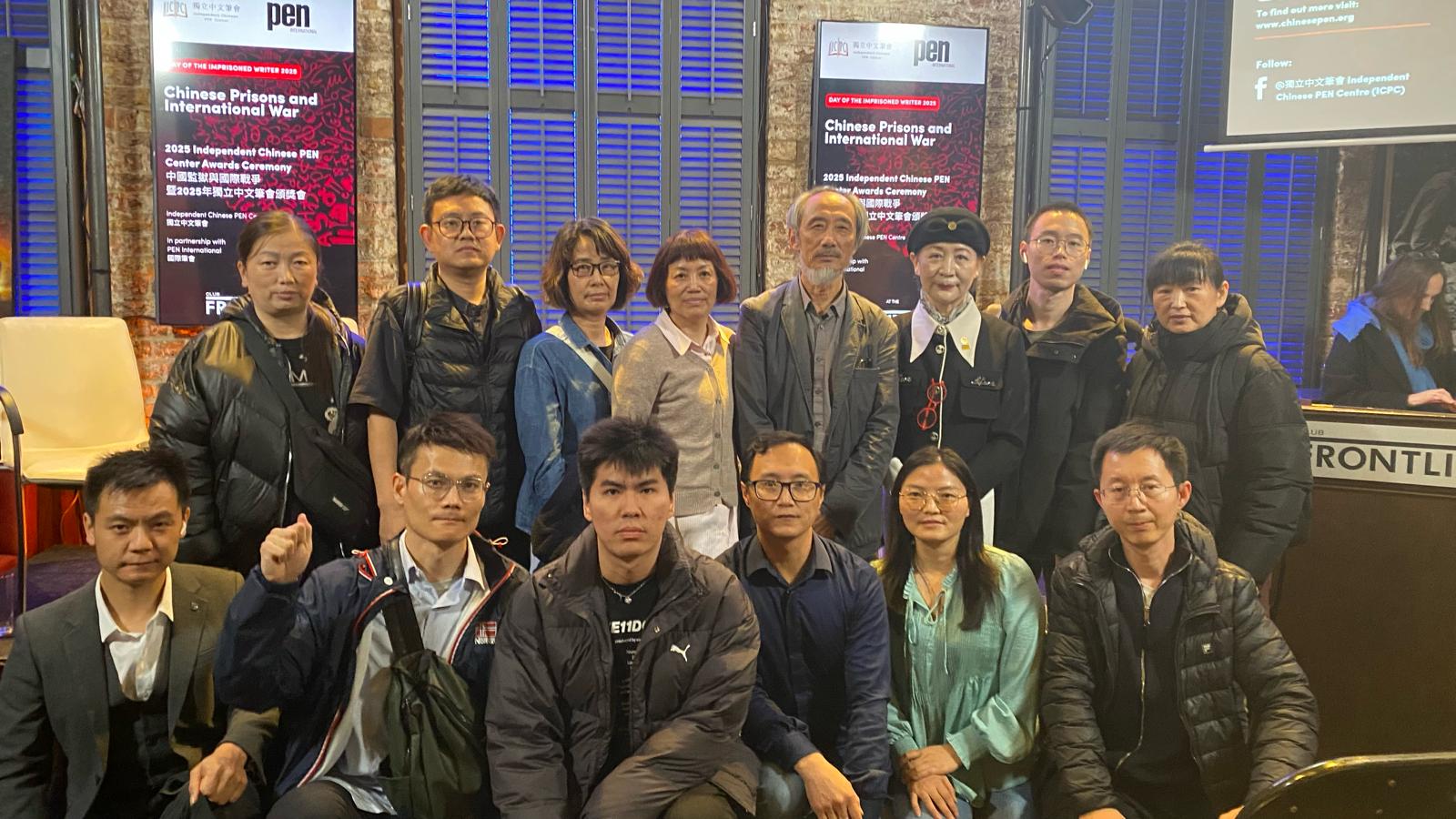
中国民主党英国总部党员参与独立中文笔会与国际笔会联合研讨会——“中国监狱与国际战争” Members of the UK Headquarters of China Democracy Party Attend Joint Seminar of Independent Chinese PEN Centre and PEN International —“Chinese Prisons and International War”

伦敦,2025年11月14日(星期五)讯


由独立中文笔会(ICPC)与国际笔会(PEN International)联合主办的专题研讨会 “中国监狱与国际战争” 今日在伦敦著名的媒体与人权公共讨论空间——前线俱乐部(Frontline Club) 举行。中国民主党英国总部多名党员应邀出席,与来自国际人权组织、媒体机构、大学研究者及流亡作家共同参与讨论。

⭐ 国际笔会“被监禁作家日”系列活动之一

本次研讨会为国际笔会年度“被监禁作家日”(Day of the Imprisoned Writer)系列活动的重要议程之一,旨在通过跨机构协作,关注全球受压迫的作家、记者、人权捍卫者,并特别聚焦中国监狱体系中的文字工作者与政治犯。

会场于下午1时正式开放,参会者陆续入场,前线俱乐部一楼会议厅座无虚席。墙面屏幕滚动播放近年全球被监禁作家的信息卡片,其中包括中国境内多名因写作、倡议或公民行动而被判刑的个案。

🕊 开幕致辞:文学作为见证与抵抗
会议由马健与盛雪主持,独立中文笔会代表随即发言,指出中国监狱体系中对思想犯、表达犯的打压仍在持续,“从诗人、独立记者,到维权律师,许多人仅因文字与言论被拘禁。我们必须持续让世界听见他们的声音。”

🔍 专题一:被监禁作家与记者——中国监狱墙后的现实

首个专题论坛以“被监禁作家的处境”为主题。人权法律专家、前政治犯家属、媒体研究学者依次发言,从制度、案例与国际趋势论述现况:
• 中国监狱体系对涉“表达罪”者的管理方式
• 信息封锁与秘密审判对外界监督的挑战
• 家属探视受限与律师介入难题
• 文学作品、狱中手稿的保存与传播困难

中国民主党英国总部参会党员表示:“监狱里的人不仅被限制自由,也被限制思想的存在。我们有责任在海外继续讲述他们的故事。”

会议现场播放多段访谈纪录片,呈现出境外流亡写作者对狱中友人的口述回忆,引发多名听众动容。

🌍 专题二:威权主义与战争时代的言论空间收缩

第二部分聚焦“威权主义扩张与全球战争环境对言论自由的冲击”。来自乌克兰、安哥拉、中亚地区的流亡作家及记者分享了他们在战争或威权环境下进行写作与报道的经历:
• 战争如何成为国家压制不同声音的借口
• 军事冲突下新闻采集的危险性
• 信息战、宣传战对公共真相的侵蚀
• 国际媒体机构在冲突区域的角色与局限

中国民主党参会成员在互动环节中指出:“当一个国家内部缺乏新闻自由时,战争叙事往往完全被控制。声音越少,暴力就越容易发生。”

🤝 圆桌对话:跨国合作与未来行动

在最后一节圆桌讨论中,来自多个国家与机构的参与者共同讨论“国际合作机制”的构建与未来方向。主要议题包括:
• 国际笔会网络在个案救援中的作用
• 海外华语写作者群体在记录与倡议中的责任
• 学术界与媒体界在冲突叙事中的合作模式
• “被监禁作家日”未来一年的行动规划

多家国际人权组织代表表示,将持续关注中国监狱体系中涉及写作、表达与倡议活动的政治案件,并将继续与独立中文笔会合作发布年度关注名单。

🏁 活动在沉重与希望交织中落幕

会议于下午5时正式结束。参会者在会场外继续交流,部分机构计划在未来数周展开联合声明、个案倡议或研究合作。

中国民主党英国总部参会者表示,此次会议不仅是跨界交流的平台,也让国际社会继续关注中国监狱体系中写作者与言论犯的处境。“只要仍有人因表达而被囚禁,我们就应继续发声。”

📌 中国民主党英国总部组织信息
中国民主党英国总部组织信息

组织者
• 中国民主党英国总部街头活动总指挥:王魏晋
• 中国民主党英国总部街头活动副总指挥:卢灵飞、范可为

党员参与名单
· 王魏晋
· 卢灵飞
· 范可为
· 张学美
· 程敏
· 许少男
· 韦崇华
· 赵武
· 成小丹
· 俞杰辉
· 吴志芬
· 丁晨光
· 黄晓凤
· 杨沁龙
· 温作团
· 成亚利

Members of the UK Headquarters of China Democracy Party Attend Joint Seminar of Independent Chinese PEN Centre and PEN International —“Chinese Prisons and International War”

London, Friday, 14 November 2025

A major thematic seminar titled “Chinese Prisons and International War”, jointly organised by the Independent Chinese PEN Centre (ICPC) and PEN International, was held today at London’s renowned venue for media and human-rights discourse — the Frontline Club.

Several members of the UK Headquarters of China Democracy Party were invited to attend, joining international human-rights organisations, journalists, academics, and exiled writers for a series of in-depth discussions.


Part of PEN International’s Annual ‘Day of the Imprisoned Writer’ Programme

The seminar formed a key component of PEN International’s annual Day of the Imprisoned Writer, aimed at supporting persecuted writers, journalists, and human-rights defenders worldwide, with particular focus on imprisoned authors and political detainees inside China.

The venue opened at 1:00 pm. Attendees filled the first-floor hall of the Frontline Club to capacity.

Digital displays on the surrounding walls showed information cards about imprisoned writers from around the world — including many in China detained for their writing, advocacy work, or civic engagement.


Opening Remarks: Literature as Witness and Resistance

The event was hosted by Ma Jian and Sheng Xue.

Representatives of the Independent Chinese PEN Centre delivered opening remarks, stressing that repression against writers of conscience in Chinese prisons continues unabated:

“From poets and independent journalists to rights lawyers, many are detained solely for their words.

We must ensure the world continues to hear their voices.”


Panel One: Imprisoned Writers and Journalists — Realities Behind China’s Prison Walls

The first thematic session focused on “The Condition of Imprisoned Writers”.

Human-rights legal experts, family members of former political prisoners, and media scholars spoke in turn, addressing institutional, case-specific and global trends:

• The management and treatment of “expression-related offences” within China’s prison system

• How secrecy, censorship, and closed trials obstruct external monitoring

• Restrictions on family visits and barriers to legal representation

• The difficulties of preserving and circulating writings or manuscripts produced in prison

Members of the UK Headquarters of China Democracy Party stated:

“Those imprisoned are deprived not only of physical freedom, but of the space for thought itself.

We who live overseas have a responsibility to continue telling their stories.”

Documentary footage was screened, showing interviews with exiled writers recalling their friends still imprisoned in China, moving many attendees.


Panel Two: Authoritarian Expansion and Shrinking Space for Expression in an Era of War

The second major theme addressed the impact of authoritarianism and global conflicts on freedom of expression.

Writers and journalists in exile from Ukraine, Angola, and Central Asia shared their experiences reporting and writing under war or authoritarian suppression:

• How wartime provides governments with a pretext to silence dissenting voices

• The dangers journalists face during armed conflict

• The erosion of public truth through information warfare and propaganda

• The role and limitations of international media in conflict zones

Members of the China Democracy Party commented during the Q&A:

“When there is no press freedom, wartime narratives become completely controlled.

The fewer the voices, the easier it is for violence to occur.”


Roundtable Discussion: Cross-Border Cooperation and Future Action

In the concluding roundtable session, participants from various institutions discussed mechanisms for international collaboration and future strategies:

• The role of PEN International’s global network in case advocacy

• The responsibility of overseas Chinese-language writers in documentation and public advocacy

• How academia and the media can cooperate in conflict-related research

• Action plans for next year’s “Day of the Imprisoned Writer”

International human-rights organisations pledged continued monitoring of political cases in China involving writing, speech, or civic advocacy, and renewed cooperation with ICPC on annual watch lists.


A Closing Filled with Gravity and Resolve

The seminar concluded at 5:00 pm, but discussions continued outside the venue.

Several organisations expressed interest in issuing joint statements, initiating case-based advocacy, or launching collaborative research in the coming weeks.

Representatives of the UK Headquarters of China Democracy Party said the conference served not only as a cross-sector platform, but also as a reminder that the international community continues to pay attention to the plight of imprisoned writers and prisoners of conscience in China:

“As long as people remain imprisoned for expression, we must continue to speak out.”


Organisational Information — UK Headquarters of China Democracy Party

Organisers

• Wang Weijin — Director of Street Activities, UK Headquarters of China Democracy Party

• Lu Lingfei — Deputy Director

• Fan Kewei — Deputy Director

Participating Members

• Wang Weijin

• Lu Lingfei

• Fan Kewei

• Zhang Xuemei

• Cheng Min

• Xu Shaonan

• Wei Chonghua

• Zhao Wu

• Cheng Xiaodan

• Yu Jiehui

• Wu Zhifen

• Ding Chenguang

• Huang Xiaofeng

• Yang Qinlong

• Wen Zuotuan

• Cheng Yali

寒风中的辩与光 —— 中国民主党英国总部再登海德公园,为自由发声 Debate and Light in the Cold Wind — The UK Headquarters of China Democracy Party Returns to Hyde Park to Speak for Freedom

伦敦,2025年11月9日
伦敦的深秋,总是来得冷峻而突然。中午的海德公园,云层低垂,风声锐利如刀。落叶在石径上翻滚,湖水被寒风撕裂出一道道细碎的波痕。
在“演讲者之角”(Speakers’ Corner)——这片因言论自由而闻名的土地上,中国民主党英国总部的志愿者们,顶着刺骨的冷风,展开了又一次街头募捐与宣传活动。

这一天,他们再次为“刘晓波人权奖”和中国政治犯家属募款。展板、旗帜、募捐箱在灰暗天光下显得格外醒目。寒冷让言语变得艰难,但每一个字都带着重量。

在冷风中开口:信念的温度

中午十二点,体感气温逼近五度。
风把传单吹得东倒西歪,手指因寒意而僵硬,但志愿者们依旧站在原地,用中英双语向路人解释这场行动的意义。

王魏晋,中国民主党英国总部街头活动总指挥,再次站在前排。他的声音不高,却在喧嚣的风声中透出坚毅。

“我们来到这里,不是为了抗议谁,而是为了让被迫沉默的中国公民重新被世界听见。
自由不是口号,而是一个民族的呼吸。”

他的发言吸引了越来越多的围观者。有人驻足聆听,有人拍照记录,也有人走上前提问、辩论。
当他谈到中国异议人士的遭遇时,周围陷入片刻安静。那一刻,寒风仿佛都止息了。

思想的辩场:语言与真相的交锋

“演讲者之角”从不缺乏质疑的声音。
一位自称研究国际政治的英国大学教授问道:“中国的生活水平提高了,人们拥有手机、社交平台和教育机会。这样的社会,还能称为不自由吗?”

党员 胡晓 上前一步。她的目光坚定,声音温和却带着穿透力。

“表面的繁荣不能掩盖思想的禁闭。
当人们必须用隐喻才能说真话,当记者因为报道真相而入狱,当信仰被规定、记忆被审查——那种沉默本身,就是最深的囚笼。”

她的话在冷风中清晰回荡。
人群安静下来,随后爆发出掌声。

媒体的注视:寒风中被放大的声音

这场活动不仅吸引了民众,也引来了多家媒体的镜头。
英国的 Artfact Magazine、The London Tribune、Euronews UK、以及数家独立网络媒体纷纷前来采访拍摄。
摄影机的红灯在灰色空气中闪烁,直播的信号将这片角落传送到了社交媒体的实时画面上。

一位来自 Artfact magazine的记者走上前,采访王魏晋:

“您认为,在国际社会对中国经济奇迹赞叹的同时,人们是否忽略了人权与思想自由的代价?”

王魏晋平静地答道:

“中国的故事,不该只有摩天大楼和高铁速度。
它还包括那些在牢狱中被遗忘的名字——刘晓波、张展、秦永敏、王炳彰……
我们讲这些故事,是为了让世界看到那道被掩盖的裂痕。”

随后,胡晓也接受了采访。她说:

“真正的希望不是等待恩赐,而是一次次地站出来说出真相。
我们不能改变风的方向,但可以让它带着自由的声音传播得更远。”

多家媒体当场表示,将在后续专题报道中刊载他们的发言与行动。
而此刻,他们的影像正通过网络直播被数以万计的观众看到——
来自纽约、布鲁塞尔、悉尼、东京的网友纷纷留言:“我们听见了来自伦敦的中国。”

信念的坚守

随着时间推移,风愈发凛冽。
志愿者的外套被雨点打湿,传单上沾满泥水,但没有人离开。
几位路人上前捐款,其中一名印度留学生轻声说:“我知道你们的勇气有多难。愿世界早日聆听你们的声音。”

从九月到十一月:行动的延续

这已是中国民主党英国总部连续第六次街头募捐活动。
从九月的Ealing Broadway,到大英博物馆,再到上月的首次海德公园行动——
每一次,他们都在不同的街角,向世界讲述被掩盖的中国故事。

这些行动不只是筹款,更是一种公共的见证,一种在自由世界中传递良知的方式。
“我们希望让更多人知道,这个世界上仍有人为说出真话而被囚禁。”一位志愿者说。

黄昏下的光

傍晚时分,伦敦的天空降下细雨。
公园的灯光一点点亮起,映在湿漉漉的石板路上。
志愿者们收起展板与旗帜,脸颊被风吹得通红,却都微笑着互道辛苦。

远处,媒体的摄像机仍在拍摄他们离开的身影。
旗帜在风中猎猎作响,犹如一盏不肯熄灭的灯。

正如刘晓波所言:

“自由的灵魂,不会因恐惧而死去;它会在最冷的地方,继续发光。”

那一天,海德公园的风格外寒冷,
但在那风中,有一种比寒冷更强的东西——
它叫信念。

中国民主党英国总部组织信息

组织者
• 中国民主党英国总部街头活动总指挥:王魏晋

• 中国民主党英国总部活动副总指挥:卢灵飞、胡晓

党员参与名单
• 王魏晋
• 卢灵飞
• 胡晓
• 成小丹
• 兰子明
• 张学美
• 吴冉

Debate and Light in the Cold Wind — The UK Headquarters of China Democracy Party Returns to Hyde Park to Speak for Freedom

London, 9 November 2025 —
Late autumn in London often arrives with a sudden, cutting chill. At noon in Hyde Park, clouds hung low and the wind sliced sharply through the air. Fallen leaves rolled across the stone paths, and the lake surface was torn into ripples by gusts of cold wind.

At Speakers’ Corner—the historic cradle of free expression—the volunteers of the UK Headquarters of China Democracy Party once again stood their ground against the bitter cold, launching another round of street fundraising and public awareness campaigns.

That day, they raised funds for the Liu Xiaobo Human Rights Award and for the families of political prisoners in China. Their banners and donation boxes stood out beneath the dim grey light. The cold made every word difficult to utter, but each carried undeniable weight.

Speaking in the Cold: The Warmth of Conviction

At noon, with the temperature hovering around five degrees, gusts tossed leaflets into the air. Fingers were stiff from the chill, yet the volunteers remained steadfast, explaining in both Chinese and English the meaning behind their presence.

Wang Weijin, Director of Street Activities at the UK Headquarters of China Democracy Party, once again took the lead. His voice was calm but resolute, cutting through the wind.

“We are not here to protest against anyone.
We are here so that the silenced people of China can once again be heard by the world.
Freedom is not a slogan—it is the breath of a nation.”

His words drew a growing crowd. Some stopped to listen, some took photographs, others approached with questions or to debate. When he spoke about the plight of China’s dissidents, the crowd fell into a brief, solemn silence—as if even the wind itself had paused to listen.

A Forum of Ideas: Words and Truth in Collision

At Speakers’ Corner, debate is part of the air itself.

A British university professor who identified himself as a scholar of international politics raised a challenge:

“China’s living standards have risen. People have smartphones, education, social networks—how can such a society still be called unfree?”

Hu Xiao, one of the Party’s volunteers, stepped forward. Her eyes were steady, her voice clear and firm.

“Material prosperity cannot hide the imprisonment of thought.
When people must speak in code to tell the truth,
when journalists are jailed for reporting facts,
when faith is prescribed and memory censored—
that silence itself is the deepest kind of prison.”

Her words rang out across the wind.
The crowd fell quiet, then broke into applause.

The Media’s Lens: Voices Amplified in the Cold

The scene drew the attention of several British and European media outlets, including Artfact Magazine, The London Tribune, Euronews UK, and multiple independent online channels.
Camera lights flickered red against the grey sky, while livestreams carried the moment to social media audiences worldwide.

A journalist from Artfact Magazine asked Wang Weijin:

“Do you believe that, while the world praises China’s economic miracle, people are overlooking the cost to human rights and freedom of thought?”

He replied calmly:

“China’s story is not only about skyscrapers and bullet trains.
It is also about the forgotten names in prisons—
Liu Xiaobo, Zhang Zhan, Qin Yongmin, Wang Bingzhang…
We tell these stories so the world can see the cracks beneath the façade.”

Hu Xiao also spoke to the press:

“True hope is not granted from above—it begins when people stand up and speak the truth.
We cannot change the direction of the wind,
but we can let it carry the voice of freedom further.”

Several journalists confirmed they would publish feature reports on the event. Meanwhile, the live broadcast drew comments from viewers in New York, Brussels, Sydney, and Tokyo:

“We hear the voice of China, from London.”

Perseverance in the Wind

As the afternoon deepened, the wind grew harsher.
Rain dampened coats and blurred ink on the leaflets, but no one left.
Several passersby came forward to donate.
An Indian student whispered, “I know how hard this kind of courage is. May the world hear your voice soon.”

From September to November: The Continuum of Action

This marked the sixth consecutive street campaign by the UK Headquarters of China Democracy Party.
From Ealing Broadway in September, to the British Museum, and the first Hyde Park rally in October—each step carried the same purpose: to make the hidden stories of China heard.

These were not mere fundraising drives, but acts of public witness—small flames of conscience kept alive in the open air of a free world.

“We want people to know that even today, some are still imprisoned simply for speaking the truth,” one volunteer said.

Light Beneath the Dusk

By evening, fine rain fell across Hyde Park.
Streetlights flickered on, reflecting in the slick stone paths.
The volunteers packed up their boards and banners, their faces red from the cold but glowing with quiet pride.

In the distance, cameras kept rolling, capturing their silhouettes as they departed.
Their flag whipped in the wind—like a lamp refusing to go out.

As Liu Xiaobo once wrote:

“The spirit of freedom does not die in fear;
it continues to shine, even in the coldest places.”

That day, Hyde Park was bitterly cold.
But within that wind, something stronger than cold remained alive—
it was conviction.

Organisational Information — UK Headquarters of China Democracy Party

Director of Street Activities:

  • Wang Weijin

Deputy Directors:

  • Lu Lingfei
  • Hu Xiao

Participants:

  • Wang Weijin
  • Lu Lingfei
  • Hu Xiao
  • Cheng Xiaodan
  • Lan Ziming
  • Zhang Xuemei
  • Wu Ran

观《南京照相馆》有感——中式战争片的悲哀 Reflections on The Nanjing Photo Studio: The Tragedy of Chinese-Style War Films

作者:中国民主党英国总部党员 程敏

时间:2025.11.7

前两天看了《南京照相馆》,平心而论,这是一部不错的电影,即便在中国这些年多如牛毛的抗日战争电影中,也足以留下一席之地,叙事流畅,层次分明,通过多个不同职业的小人物视角展现了日寇的残暴与狡诈,并没有使用过多的血腥镜头,却很好的达到了效果,与我很喜欢的《南京!南京!》在很多地方上都有相似之处。但是这部电影并没有摆脱中式战争片的一贯“特点”,那就是打着“勿忘历史”的名义灌输仇恨思维,却对战争背后的深层原因避而不谈,从头看到尾,其实可以概括为两句话,第一句话是显性的,日本人天生邪恶,表面的礼貌和友善只是伪装,本质上是充满兽性的妖魔,我们要永远牢记这段血海深仇,第二句比较隐晦,即片中的经典台词——来自主角对反派日本摄影师所说的”我们不是朋友,绝对不是”。这是中式战争片一贯的套路,通过给民众灌输对日本人这个族群的仇恨来加固对今天“强大祖国”的崇拜,对今天来之不易的“幸福生活”的珍惜,将国内严峻的各类社会矛盾转化为民族仇恨,“感恩我党,让中国人从此站起来了,我们和日本不共戴天,迟早必报此仇,如果没有我党,我们还会遭受同样的惨痛遭遇”。大概就这么个逻辑。下面我就单从片中的反派——日本摄影师伊藤秀夫这个人来谈一谈。

伊藤甫一出场,给人的感觉就是清秀,文质彬彬,他与任何人说话都轻声细语。他会用糖果来安慰受惊的儿童,会在目睹日军强奸妇女的暴行时摇头叹息,会现学中文向为自己办事的中国人说“加油,我的朋友”,并保护安全与提供相对丰厚的食物,看起来似乎是个很正常的受战争裹挟的普通人。但就是这样的人,片中却莫名其妙地开始展现出一种不合逻辑的残忍与冷漠。片中并没有为他的转变提供任何心理铺垫——没有现实与理想的冲突、没有军纪威逼,也没有内心挣扎。转折几乎一夜之间发生:昨天还在同情中国人的伊藤,今天就能举起相机,为行刑队拍下中国人被枪决的瞬间,昨天还在给孩子糖摸头安抚,今天就能对着被摔死的婴儿冷漠以对。这种转变,不是人物弧光,而是一种叙事策略。影片需要一个“披着人皮的魔鬼”,来告诉观众:即便最“文明”的日本人,也不过是披着人类的外衣,也终究会露出兽性。它不是在刻画人性,而是在传达一个政治理念——“敌人不是人,而是一种彻底邪恶的,必须被彻底消灭的存在”。这种理念正是当年日本军国主义的一大特征,中国作为日本军国主义的最大受害者,整个民族承受了巨大的伤痛与屈辱,而几十年后的今天,为了巩固政权的稳定,加强对民众的洗脑,中共大肆使用日本曾经的军国主义宣传,而民众也对此甘之如饴,可谓是极为讽刺。


这种人物塑造方式,正是中式战争片的宿命。中国的导演受限于审查制度的日益严苛,已经无法去触碰战争的复杂性、历史的多维度,害怕观众看到“日本人也有人的一面”,于是宁愿牺牲人物的真实,也要维护“民族仇恨的纯粹性”。结果便是:战争的悲剧被简化为善恶对立,仇恨被合法化,思考被替代。而“战争片的内核是反战”,估计他们就更不敢提了,而中国人被多年洗脑后已经彻底接受了这种叙事逻辑,他们也乐于为这种宣扬仇恨的电影买单。所以我觉得在以后的很多年里,中国人依然只能在电影院里看到一次接一次的“日本禽兽施以暴行,我国人民承受了巨大伤痛,不报此仇誓不为人”的中式战争片,哭得泪流满面,恨得咬牙切齿,却不会有任何对于战争本身的深层反思与排斥,不过这也正是中共想要的结果不是吗?

Reflections on The Nanjing Photo Studio: The Tragedy of Chinese-Style War Films

By Cheng Min, Member of the UK Headquarters of China Democracy Party

Written on November 7, 2025

A few days ago, I watched The Nanjing Photo Studio. To be fair, it’s a well-made film. Even among the countless Chinese war films produced in recent years, it stands out — its storytelling is coherent, its structure clear. Through the perspectives of several ordinary people from different professions, it vividly portrays the cruelty and deceit of the Japanese army. It doesn’t rely on excessive gore yet achieves a powerful emotional impact, much like one of my favourite films, City of Life and Death (Nanjing! Nanjing!).

However, The Nanjing Photo Studio still fails to escape the recurring traits of the “Chinese-style war movie.” Under the banner of “Never forget history,” it continues to instil hatred while avoiding any exploration of the deeper causes of war. From beginning to end, the film can be summarised in two lines.

The first is explicit: “The Japanese are born evil; their politeness and civility are only a mask for their bestial nature. We must never forget this blood debt.”

The second, subtler one is encapsulated in the protagonist’s remark to the Japanese photographer: “We are not friends — never will be.”

This, again, is the formulaic moral of Chinese war cinema — cultivating ethnic hatred against the Japanese to reinforce worship of today’s “strong motherland.” It redirects anger over domestic social conflicts toward an external enemy: “Be grateful to the Party — without it, China would still suffer humiliation at Japan’s hands.” That’s the logic.

Let’s focus on the film’s antagonist, the Japanese photographer Ito Hideo.

When Ito first appears, he seems gentle, refined, soft-spoken. He comforts frightened children with candy, frowns at the sight of soldiers assaulting women, learns a few Chinese words like “Jiayou, my friend,” and offers safety and food to Chinese workers. He seems like a decent man, just another soul trapped in wartime.

Yet, without any psychological buildup, Ito abruptly transforms into a cold-blooded monster. There’s no inner conflict, no pressure from superiors, no moral struggle — nothing. The change happens overnight. The same man who yesterday pitied Chinese victims, today calmly photographs executions; the same man who offered sweets to children now looks indifferently at a murdered baby.

This isn’t character development — it’s a narrative device. The film needs a “civilised devil” to hammer home its message: even the gentlest Japanese are, at heart, inhuman beasts. The goal isn’t to explore humanity, but to deliver a political lesson — “The enemy is not human; it is an evil that must be destroyed.”

Ironically, this very mindset — dehumanising the enemy — was a hallmark of Japan’s wartime militarism. China, once its greatest victim, now uses the same propaganda logic to maintain internal control. To consolidate its power, the Chinese Communist Party repackages that old militaristic rhetoric — and the public, long conditioned to accept such hatred, embraces it willingly.

This is the tragedy of Chinese-style war films. Under an increasingly suffocating censorship system, directors can no longer touch the complexity of war or the multidimensional nature of history. They dare not show “the human side of the Japanese,” fearing backlash for diluting national hatred. So they sacrifice truth for ideology, turning moral reflection into political loyalty.

As a result, war’s tragedy is reduced to a simplistic battle of good versus evil. Hatred becomes legitimate; thought is replaced by emotion. The universal anti-war message — that war itself is the enemy — has long vanished from Chinese screens.

After decades of indoctrination, audiences have fully internalised this pattern. They willingly pay to see films that rekindle hatred, weep over victims, curse “Japanese devils,” and leave the cinema feeling patriotic — yet never questioning the deeper causes of war, authoritarianism, or human suffering.

Perhaps that is exactly what the regime wants.

中国民主党英国总部在海德公园“演讲者之角”募捐 —— 舌战寒风中的良知与自由 UK Headquarters of China Democracy Party Holds Fundraising Event at Hyde Park’s Speakers’ Corner — Conscience and Freedom in the Cold Wind

伦敦,2025年10月26日

十月的伦敦,寒意如刃。冷风自海德公园的深处卷起枯叶,乌云低垂,体感气温逼近零度。

在这片以自由言论闻名于世的土地上,中国民主党英国总部的志愿者们顶着刺骨寒风,于“演讲者之角”(Speakers’ Corner)发起了为 “刘晓波人权奖” 募款的街头行动。

他们在秋风中支起展板,搭起募捐箱,手中传单被风掀得猎猎作响。

然而,没有一人退缩。每一次讲述、每一次递出传单、每一次目光的交汇,都在寒风中点燃着信念的火光。

这是一次行动,也是一场无声的告白——告白于自由,告白于真相。

舌战群儒:思想的火焰与媒体的镜头

海德公园的“演讲者之角”自十九世纪以来,一直是自由言说的象征。那里的空气,似乎永远带着辩论的火气与思想的温度。

这一天,中国民主党的蓝白旗帜在风中猎猎作响,吸引了众多来自不同国家的听众与媒体记者。

最初的提问带着疑惑:“中国如今经济强盛,科技腾飞,人民生活改善——为何还要谈民主与人权?”

街头活动总指挥 王魏晋 面对围拢的记者与路人,语气平和却铿锵有力:

“真正的强盛,不是GDP的数字,而是一个国家是否允许人们自由地表达不同的思想。

在中国,成千上万的人因为言语、因为信仰、因为追求真相而失去自由。

我们来到这里,不是为了谴责谁,而是为了让世界听到那些被掩埋的声音。”

几家国际媒体记者随即架起摄像机,对胡晓、王魏晋和其他志愿者进行了采访。

手机直播镜头同步传向社交网络,观众的留言实时滚动:“他们来自中国?他们在伦敦为自由发声?”

风声中,话语被放大,也被记录。

志愿者 胡晓 随后登上简易木台,迎着风与镜头,以流利的英语回应着一个又一个质问。

她说:“经济的繁荣不能掩盖思想的禁锢。

当一个人不能自由发声,不能选择自己的领导人,无论他的口袋多么充实,他依旧是不自由的。”

胡晓的声音清澈、坚定,如利刃划开寒雾。她以事实与逻辑层层剖析中国的言论审查、司法不公与政治迫害,驳斥了“人权已改善”的论调。

她的语言理性而富于情感,使得原本对中国问题模糊的听众,开始重新思考“发展”与“自由”之间的真正界限。

记者们记录下每一句话,有人做了现场直播,有人当场表示将撰文报道。

围观的听众中,不少人沉默良久,随后投表示支持,或轻声说:“谢谢你们,让我听到了另一种中国的声音。”

延续与信念:从街头到良知的

UK Headquarters of China Democracy Party Holds Fundraising Event at Hyde Park’s Speakers’ Corner — Conscience and Freedom in the Cold Wind

London, October 26, 2025 —

October’s chill cut through London like a blade. Cold winds swept fallen leaves across Hyde Park, and the low clouds pressed heavily over the city, with temperatures hovering close to freezing.

On this historic ground — a cradle of free speech for more than a century — volunteers from the UK Headquarters of China Democracy Party braved the biting wind at Speakers’ Corner, launching a street fundraising campaign for the “Liu Xiaobo Human Rights Award.”

They set up display boards and donation boxes, their leaflets fluttering wildly in the wind.

Yet no one faltered. Every story told, every leaflet handed out, every exchange of eyes carried a spark of conviction amid the cold —

It was not only an act of protest, but a confession — a confession to freedom, and to truth.


Debate in the Wind: Flames of Thought and the Eyes of the Media

Since the nineteenth century, Speakers’ Corner has been a global symbol of free expression — a place where ideas clash and conscience speaks louder than fear.

On this day, the blue-and-white flag of the UK Headquarters of China Democracy Party waved defiantly in the cold wind, drawing the attention of bystanders and journalists alike.

The first questions came with doubt:

“China’s economy is strong, technology advanced, and living standards improved — why still talk about democracy and human rights?”

Wang Weijin, Street Action Commander of the UK Headquarters of China Democracy Party, stood before the gathered reporters and listeners. His tone was calm but firm:

“True national strength isn’t measured by GDP, but by whether people can freely express their thoughts.

In China, countless people have lost their freedom because of their words, beliefs, or pursuit of truth.

We are not here to condemn, but to let the world hear the voices that were silenced.”

Several international media outlets began filming, focusing their cameras on Wang Weijin, Hu Xiao, and other volunteers.

Live streams spread rapidly across social platforms, with messages pouring in:

“They’re from China? Speaking out for freedom in London?”

Amid the roaring wind, their voices were amplified — and recorded.

Volunteer Hu Xiao then stepped onto a small wooden platform, facing the cold air and the cameras. In fluent English, she responded to each question with composure and strength:

“Economic prosperity cannot conceal the imprisonment of thought.

When people cannot speak freely or choose their leaders, no matter how full their wallets are, they are still not free.”

Her clear, steady voice cut through the cold mist like a blade.

Through facts and logic, she revealed the realities of censorship, injustice, and political persecution in China, dismantling the myth of “improved human rights.”

Her reasoned yet passionate speech moved many who had previously viewed China only through the lens of economic development.

Journalists took notes, recorded interviews, and some promised to publish reports.

Among the onlookers, several people quietly donated or said, “Thank you for letting us hear another voice from China.”

Continuity and Conviction: From the Street to Conscience

知音难觅,天涯咫尺 – 悼念万润南先生 A Kindred Spirit Across Time and Distance — In Memory of Mr. Wan Runnan

黄华
2025年10月22日

今天,我们在这里,送别万润南先生。

对我而言,他不是朋友,也不是同事。我们从未谋面,也未曾通信。或许,他甚至不知道我的名字。但在我心里,他却像是一位久违的知音——在浩茫人海中,从未相遇,却早已相知。

今年,在伦敦的纪念六四研讨会上,我发表了题为《坚持和平理性非暴力的原则,推动中国走向民主、自由、法治、人权的强大繁荣国家》的发言。潘永忠先生对我说:“你的观点和老万是一致的。”那一刻,我心头一震——原来我们在遥远的两端,却看着同一个方向。我暗想,也许该去见见老万,当面请教、倾心交谈。没想到,他竟已病重。那未能谋面的一次对话,成了我余生的遗憾。

知音难觅,天涯咫尺。

万润南先生的一生,是一段中国知识分子从理想到流亡、从风华到孤旅的见证。他出身名校,投身科技与企业,是那个时代改革的象征。然而,当国家的命运滑向专制与压抑,他没有随波逐流,而是选择了说真话——哪怕代价是自由、故土与安宁。

我也是一个流亡者。多年来漂泊海外,眼看中国的梦一次次破碎。每当听到“自由”“尊严”“公义”这些词,我就会想到他——那种不屈不怒,却始终不肯沉默的声音。他让我明白,良知并非口号,而是一种即使在绝望中仍然坚持的信念。

他离开中国三十多年,却始终没有离开“中国”这个主题。他写作、思考、发声,用理性和温度守护着自由的火种。他不喊口号,却句句诚实;不带仇恨,却满怀忧思。这样的灵魂,才配得上“公共知识分子”这四个字。

在这个时代,说真话依然危险,做自由人依然艰难。有人或许会问:这样的坚持还有意义吗?我相信,万润南先生会微笑着回答——“有意义。”因为我们不能让恐惧夺走灵魂,不能让谎言抹去记忆。每一个仍然敢于发出良心之声的中国人,都是他精神的延续。

我从未见过他,却感受到他那种温和而坚定的力量。那是一种不求功名、不图回报,只为对得起良心的力量。

他的一生,也许孤独,却不寂寞;也许失败,却不被遗忘。

先生已远行,但他留给我们的,不仅是一段历史,更是一种姿态——

面对权力,仍敢于说“不”;
身在流亡,仍不忘“回望”。

今天,让我们以沉默致敬,也以行动纪念。愿先生安息于自由的土地,愿他生前渴望的那片自由天空,终有一日照耀在中国的大地之上。

A Kindred Spirit Across Time and Distance — In Memory of Mr. Wan Runnan

By Huang Hua

October 22, 2025

Today, we gather to bid farewell to Mr. Wan Runnan.

To me, he was neither a friend nor a colleague. We never met, nor exchanged letters. Perhaps, he never even knew my name. Yet in my heart, he has always felt like a kindred spirit — someone I have never encountered in person, but with whom I’ve long shared a silent understanding across the vastness of the world.

Earlier this year, at the London Forum in Commemoration of June Fourth, I delivered a speech titled “Upholding the Principles of Peace, Rationality, and Non-Violence to Build a Democratic, Free, Law-Governed, and Human-Rights-Based China.”

Afterward, Mr. Pan Yongzhong said to me: “Your views are exactly the same as Lao Wan’s.”

At that moment, my heart trembled — realizing that, though we stood at opposite ends of the earth, we were gazing toward the same horizon. I thought to myself, perhaps I should find a way to meet him in person — to seek his wisdom, to speak heart to heart.

But before I could, he had already fallen gravely ill. That unspoken conversation will remain one of my lifelong regrets.

“True kindred spirits are rare — even when separated by oceans, they feel as close as a whisper.”

Mr. Wan’s life embodied the journey of a generation of Chinese intellectuals — from idealism to exile, from brilliance to solitude.

He was a graduate of a prestigious university, a pioneer in technology and enterprise, a symbol of reform in his time. Yet, when the nation began to descend into repression and authoritarianism, he refused to remain silent. He chose to speak the truth — even when the price was his freedom, his homeland, and his peace.

I, too, am a person in exile. Over the years, as I’ve drifted far from home, I’ve watched China’s dreams shatter again and again. Whenever I hear words like freedom, dignity, and justice, I think of him — of that calm yet unyielding voice that would not submit to despair or silence.

He taught me that conscience is not a slogan; it is a belief that endures, even in the face of hopelessness.

Though he left China more than thirty years ago, he never left the idea of “China.” Through his writing, reflection, and advocacy, he nurtured the fragile flame of freedom with both reason and compassion. He did not shout slogans, but every word he spoke was honest. He carried no hatred, yet his heart was heavy with concern. Such a spirit truly deserves the title of public intellectual.

In our time, to tell the truth is still dangerous; to live freely is still difficult. Some may ask: Is such perseverance still meaningful?

I believe Mr. Wan would smile and say, “Yes, it is.”

Because we must not let fear steal our souls, nor let lies erase our memories. Every Chinese person who still dares to speak from conscience is a continuation of his spirit.

I never met him, yet I feel his gentle, steadfast strength — a strength that seeks no fame, no reward, only to remain true to conscience.

His life may have been lonely, but it was never empty;

It may have seemed a failure, but it will never be forgotten.

Mr. Wan has departed, but what he left us is more than history — it is an attitude toward life itself:

To face power, yet still dare to say “No.”

To live in exile, yet still dare to look back.

Today, let us honour him with silence — and remember him through action.

May he rest in peace upon the soil of freedom.

And may the free sky he longed for one day shine over the land of China.

22/10/2025 全球对万润南先生的追思会,由欧洲之声及中国民主运动人士在巴黎发起举行 Global Memorial for Mr. Wan Runnan Held in Paris – October 22, 2025

万润南先生,一位民营科技企业的开拓者,也是一位民主运动的坚持者。他一生跨越企业与理想,始终支持引领中国的民主运动。他早年成长于变革年代,曾毕业于清华大学,走进科技与工程领域。在改革开放初期,他创办四通公司。而四通桥之名正来自万润南1980年代在附近创办的四通公司 ,四通桥事件也是重要的民主运动事件,他离世那天正是四通桥事件三周年,真是何等的因缘 !

1989年的六四事件中 , 万润南公开支持学生运动之后,他受到了压力,被迫离开中国,长期身处异地,但他的心从未远离中国。他积极参与民主中国阵线等组织,继续以文字、演讲、联系、组织为手段,为政治改革与人权自由发声。
全球追思万润南先生会议在巴黎举行,很多杰出民运领袖都出席了会议, 发表演讲。

在追思会上,人们回顾他的一生,既有科技产业的开拓,也有民主价值的坚持;既有海外漂泊,也有精神上的坚守,对他进行怀念.

而我们伦敦现场,则聚集在中国驻伦敦大使馆面前,观看在巴黎为他举行的追思会, 沉痛哀悼万润南先生 ,他的人生充实,拥抱良知 ,无愧无悔!我们敬重这位民运斗士.

追思会意义

本次追思会怀念民主斗士,捍卫自由和民主的普世价值 .以民主信仰击垮中共的独裁统治!

中国民主党英国总部声明将持续为捍卫自由和民主发声,直到民主自由的到来!

中国民主党英国总部 组织信息
总指挥:卢灵飞
集会党员如下:
1卢灵飞
2.成小丹
3.林钟
4.张学美
5.匿名人士

另 曼彻斯特也同一时间举行了一场追思会
组织者 萧雅聪
集会党员如下:
1萧雅聪
2熊志兵
3.杨体和
4.钟淑琴
5赵武
6.赵江霞
7徐汉光

Global Memorial for Mr. Wan Runnan Held in Paris – October 22, 2025

Initiated by “Voice of Europe” and Chinese pro-democracy activists

Mr. Wan Runnan, a pioneer of private technology enterprises and a steadfast supporter of China’s democratic movement, was commemorated globally today. His life bridged enterprise and idealism—he never ceased to support and guide the pursuit of democracy in China.

A graduate of Tsinghua University, Wan grew up during an era of transformation and devoted himself to science and engineering. In the early years of China’s reform and opening-up, he founded Stone Group (Sitoung Company), which became a landmark in China’s private tech industry. Notably, Beijing’s Sitong Bridge, the site of the “Sitong Bridge Protest,” was named after his company—symbolically linking his entrepreneurial legacy to the ongoing struggle for freedom. It was deeply poignant that his passing coincided precisely with the third anniversary of the Sitong Bridge Incident.

Following his public support for the student movement during the 1989 Tiananmen protests, Wan was forced into exile. Though far from home, his heart never left China. He remained deeply engaged in democratic advocacy through organizations such as the Federation for a Democratic China, using his writing, speeches, and international outreach to champion political reform and human rights.

The Paris Memorial

The global memorial service was held in Paris, with many prominent pro-democracy leaders in attendance. They delivered speeches honouring Wan’s lifelong dedication to both technological innovation and democratic ideals—his courage, perseverance, and moral integrity.

The London Gathering

At the same time, members of the UK Headquarters of the China Democracy Party gathered outside the Chinese Embassy in London, where they watched the live broadcast of the Paris memorial. Despite the distance, their hearts were united in grief and admiration for this great man who lived fully, embraced conscience, and stood firm without regret.

The Significance of the Memorial

This memorial honours a fighter for democracy and reaffirms the universal values of freedom and human dignity. It symbolizes the ongoing spiritual resistance against authoritarian rule—proof that faith in democracy remains unbroken.

The UK Headquarters of the China Democracy Party issued a statement affirming its unwavering commitment to speak out for freedom and democracy, until both are fully realized in China.


Organizational Information

UK Headquarters of the China Democracy Party

General Commander: Lu Lingfei

Participants (London):

  1. Lu Lingfei
  2. Cheng Xiaodan
  3. Lin Zhong
  4. Zhang Xuemei
  5. Anonymous participant

Manchester Memorial:

Organizer: Xiao Yacong

Participants (Manchester):

  1. Xiao Yacong
  2. Xiong Zhibing
  3. Yang Tihe
  4. Zhong Shuqin
  5. Zhao Wu
  6. Zhao Jiangxia
  7. Xu Hanguang

阴云之下的纪念:伦敦与曼城联合纪念“四通桥事件”三周年 Commemoration Under Overcast Skies: London and Manchester Mark the 3rd Anniversary of the Sitong Bridge Incident

伦敦 / 曼彻斯特,2025年10月13日 —— 在阴郁的英伦秋日,两座城市的中国驻英国大使馆对面,中国民主党英国总部的党员们在伦敦与曼彻斯特分别举行纪念活动,以缅怀三年前的“四通桥事件”,并呼吁人们持续关注中国的言论自由与公民权利

阴云下的聚会

下午一点,伦敦的天空低垂,阴云密布,大使馆对面的街道被灰色的云影笼罩,气温徘徊在摄氏十二度。参与者陆续到场,摆放标语与横幅,上面写着“记住四通桥”、“言论无罪”、“自由属于人民”。

活动安静而克制。街头行人偶尔停步,或驻足拍照,或低声询问;更多的人匆匆走过,只留下模糊的脚印与远处的警笛声。

平和的纪念

活动由中国民主党英国总部街头活动总指挥王魏晋主持。他在开场中指出,纪念不仅是缅怀,更是提醒——提醒人们,那些被压低的声音不应被遗忘。

活动期间,党员仝玉龙向“刘晓波人权奖”捐赠500英镑,以支持中国的民主与人权事业。捐赠被视为一种象征性的延续,表达对自由思想与公民精神的敬意。

发言与反思

活动共有六位党员先后发言:王魏晋、卢灵飞、黄天、成小丹、胡晓与许少男。他们从不同角度谈到三年前的事件及其象征意义。发言者普遍认为,“四通桥事件”已成为当代中国社会中公民意识的象征,也提醒海外华人持续关注表达与思想自由。整个发言过程平和克制,没有口号与对抗,更多的是沉静的反思与延续记忆的努力。

纪念与旁观

现场聚集了不少旁观者,其中包括英国居民与在英华人留学生。一位英国路人表示,他“不了解细节,但尊重人们为信念发声的权利”。几位华人观众则称,他们“理解这种纪念,也感受到那份遥远的勇气”。

伦敦警方确认,该活动事先已报备,过程平和,无任何冲突。

记忆的回声

活动在和平有序中结束,参与者收起横幅与标语,静默离开。

留下的,是几束被风吹落的花与党员们集会时的足迹。风掠过街头,仿佛仍在低声回响那句呼喊:

“不要做奴才,要做公民。”

背景:从桥上到世界

2022年10月13日,北京四通桥上一名男子:彭立发,他悬挂横幅,批评当时的防疫政策并呼吁政治改革。事件迅速被封锁,但其照片与口号经社交媒体传播,引发国际关注。

三年后的伦敦与曼彻斯特,这场纪念被视为对那一刻的延续——提醒人们,自由的呼声可能被压制,却从未真正消失。

中国民主党英国总部总部组织信息

 • 街头活动总指挥:王魏晋

 • 活动副总指挥:卢灵飞

Commemoration Under Overcast Skies: London and Manchester Mark the 3rd Anniversary of the Sitong Bridge Incident

London / Manchester, 13 October 2025 — On a gloomy autumn day in Britain, members of the UK Headquarters of the China Democracy Party held commemorative events opposite the Chinese embassies in London and Manchester to honour the Sitong Bridge Incident three years ago and to call for continued attention to freedom of expression and civil rights in China.

Gathering beneath the clouds

At 1 p.m., London’s sky hung low and heavy with cloud. The street opposite the embassy lay under a grey shadow, with temperatures hovering around 12°C. Participants arrived one after another, setting out placards and banners that read “Remember Sitong Bridge,” “Speech Is Not a Crime,” and “Freedom Belongs to the People.”

The event was quiet and restrained. Passers-by occasionally stopped—some to take photos, others to ask softly about the details; more hurried past, leaving only blurred footprints and the distant wail of sirens.

A peaceful commemoration

The event was chaired by Wang Weijin, Street Action Commander of the UK Headquarters of the China Democracy Party. In his opening remarks, he noted that commemoration is not only remembrance but also a reminder—that voices once pressed down should not be forgotten.

During the event, party member Tong Yulong donated £500 to the Liu Xiaobo Human Rights Prize to support China’s democracy and human rights causes. The donation was seen as a symbolic continuation, expressing respect for freedom of thought and civic spirit.

Speeches and reflection

Six party members spoke in turn: Wang Weijin, Lu Lingfei, Huang Tian, Cheng Xiaodan, Hu Xiao and Xu Shaonan. They discussed the incident and its symbolic significance from different angles. Speakers generally believed that the Sitong Bridge Incident has become a symbol of civic consciousness in contemporary Chinese society and a reminder for overseas Chinese to remain attentive to freedom of expression and thought. The speeches were calm and measured, without slogans or confrontation—more an effort at quiet reflection and the preservation of memory.

Commemoration and spectators

The scene drew many onlookers, including UK residents and Chinese students in Britain. One British passer-by said he “did not know the details, but respects people’s right to speak out for their beliefs.” Several Chinese attendees said they “understood the purpose of the commemoration and could feel that distant courage.”

The Metropolitan Police confirmed that the event had been notified in advance, proceeded peacefully, and saw no conflict.

Echoes of memory

The commemoration concluded peacefully and in good order. Participants put away the banners and placards and left in silence.

What remained were a few bouquets blown to the ground and the footprints left by those who gathered. The wind swept through the street, as if still murmuring that call:

“Do not be subjects; be citizens.”

Background: From a bridge to the world

On 13 October 2022, a man named Peng Lifa hung banners on Beijing’s Sitong Bridge, criticising then COVID policies and calling for political reform. The incident was swiftly censored, but its images and slogans spread via social media, drawing international attention.

Three years on, in London and Manchester, this commemoration is seen as a continuation of that moment—a reminder that the call for freedom may be suppressed, but has never truly disappeared.

Organisational information of the UK Headquarters of the China Democracy Party

  • Street Action General Commander: Wang Weijin
  • Deputy Commander for the event: Lu Lingfei