对于指控中国政府活摘器官的一些思考 Reflections on the Allegations of Organ Harvesting by the Chinese Government

作者:中国民主党英国总部党员程敏

一.绝对的权力掌控

众所周知,在中国共产党拥有绝对的权力,对社会方方面面的掌控力度放眼五千年历史也是独此一家,在这种掌控力度下, 说一句为所欲为绝不是夸大,相反,中共建政数十年来从大跃进到文革,再到八九六四事件,从习近平修改宪法实现连任实现皇帝美梦再到2022年的白纸革命,中国的基本盘始终未曾动摇,也反映了共产党统治的稳固性。所以,在如此强力的极权体制下,中共出于自身利益做出任何极端行为,都不令我意外。

二.媒体和民众基本丧失监督权

习治下的中国,言论自由空间相较于胡温时期再次大幅收窄。如果说胡温时期的言论自由是一条臭不可闻的水沟,但还有几条诸如南方系的清道夫在言论管控的夹缝中勉强游动,偶尔还能看到媒体对于公权力滥用的质问与抨击,例如2011年甬台温铁路列车追尾事故,多位记者义愤填膺地轮番质问官方救援行动罔顾生命,结果发言人情急之下竟说出“至于你信不信,我反正信了”的荒唐发言。而前中国国家总理温家宝还曾忧国忧民的“真切”表情而在民间喜提“影帝”的称号,彼时的中国,媒体还能隐约行使“第四权力”,人民也不会对政府俯首帖耳。

但今日之中国,习近平早已大权独揽,唯我独尊,共产党的统治逻辑也从前些年的”党内民主“退化到了今日的“顺昌逆亡”,人民面对社会问题和公权力滥用也是敢怒不敢言,谁也不敢做出头鸟,每当有恶性社会事件发生时,人们总是对房间里的大象视而不见,只敢将矛头对准资本和中下级官员,比如近期发生的甘肃天水儿童“血铅超标”事件,如果不是联合国介入发表文章表示关切,中共大概率不会提级调查,而是会和以前的所有类似事件一样,通过删帖,禁言,对受害者施压来强行压制舆论,再找几个替死鬼出来平息民愤,等待风波逐渐平息。而媒体也都是噤若寒蝉,不敢对官方有任何质疑,一切唯官媒马首是瞻,所以说一句中国人已经基本丧失对公权力的监督权我认为并不为过。

三.各种交叉证据以及蛛丝马迹

我相信中国存在活摘器官的第三点,是出于国际组织甚至中共自己公开的各种相关数据和报告,以及大量存在的影像及文字资料,比如韩国调查记者暗访天津某医院拍摄的《Investigative Report 7》,揭露了自2000年以来约有20000名韩国人在中国接受了器官移植手术。而中国政府对此的解释是器官移植手术存在,但都来源于合法捐赠,而这一说法也遭到多个国际机构的质疑,例如捐赠者数量与移植手术数量完全不匹配,等待匹配与移植的时间太短,不符合常理,而有鉴于器官移植本身的时效性非常严格,另外有大量的交叉证据也一直佐证这件事,例如中国肝脏移植专家郑树森发表的器官移植论文中因为有高达500余例手术无法提供器官来源而被撤销论文,再考虑到中国自2000-2017年间捐献器官总数为14000–16000例,再联想到韩国,台湾,日本等地多年来都有“换器官来中国”的传统,就难免会让人产生怀疑了,这些证据虽然无法单独构成活摘器官的“铁证”,但当它们交叉出现时,就形成了一个无法忽视的逻辑闭环。尤其是在一个信息高度不透明、外部监督无从进行的独裁政体中,我们有充足理由对其“合法供体”说法持强烈怀疑。

总结

那么,基于我对中国政府有组织活摘人体器官的怀疑,我们应该如何对待这种极其恶劣和恐怖的政府行为呢?我认为,一方面我们应该谴责抨击这种由国家政府主持的践踏生命与人权的恐怖行为,呼吁更多的国际组织干预与制裁,令中国政府投鼠忌器。另一方面,我们应当建立档案,收集整理一切可信度高的相关资料,帮助受害者讨回公道。而第三,也是很多人会忽视的一点,我认为一切指控都要基于逻辑与证据,对于公权力的合理怀疑可以适当放宽限制,但在没有任何实际证据的基础上,不要贸然给所有器官移植甚至失踪案件都扣上一顶“被活摘了”的帽子,这样只会影响我们自身言论的可信度,同时也是对那些真的被摘取了器官的受害者的侮辱与否定,中共是一碗墨水,掺入清水也无济于事,相反,如果我们在谴责与指控中混入大量的情绪输出与谣言,却会轻易自污,我们不要做墨水,去做清水吧!


Reflections on the Allegations of Organ Harvesting by the Chinese Government

By Cheng Min, Member of the UK Headquarters of the China Democracy Party

1. Absolute Power and Control

It is widely recognised that the Chinese Communist Party (CCP) wields absolute power, exercising control over all aspects of Chinese society in a way that is arguably unparalleled in the last five thousand years of Chinese history. Under such a regime, the phrase “doing whatever it pleases” is not an exaggeration. On the contrary, the history of the CCP’s rule—from the Great Leap Forward and the Cultural Revolution to the Tiananmen Massacre in 1989, and from Xi Jinping’s constitutional amendment enabling indefinite re-election to the White Paper Movement in 2022—demonstrates the resilience of the regime’s grip on power. Given the authoritarian nature of this system, I am not surprised by any extreme action the CCP may take to serve its own interests.

2. The Loss of Media and Public Oversight

Under Xi Jinping’s leadership, China’s already limited space for free speech has shrunk dramatically compared to the Hu-Wen era. If we liken the Hu-Wen period’s freedom of speech to a filthy, stinking gutter, at least there were still a few independent-minded media outlets—such as those under the Southern Media Group—doing their best to survive in the cracks. Occasionally, the media even managed to question and criticise abuses of state power. For example, in the wake of the Wenzhou high-speed train crash in 2011, outraged journalists publicly grilled officials on the government’s disregard for human life. The spokesperson famously blurted out, “Whether you believe it or not, I believe it.” Meanwhile, Premier Wen Jiabao’s performative empathy earned him the popular title of “best actor.” At that time, the media still had some vestige of a fourth estate, and the public did not fully bow down to authority.

But in today’s China, Xi Jinping holds power like an emperor, commanding absolute loyalty. The Party’s internal democracy has regressed into a “submit or perish” dynamic. When social problems arise or abuses of power occur, citizens remain silent for fear of reprisal. Whenever a major scandal erupts, the public deliberately ignores the elephant in the room, instead directing their anger at capitalists or lower-level officials. Take, for example, the recent blood lead poisoning incident affecting children in Tianshui, Gansu. If not for the intervention of the United Nations, it is likely the central government would not have launched a higher-level investigation. As with many past cases, the typical response would have been censorship, suppression of victims, and token scapegoats to pacify public anger. The media is now completely silent, taking cues only from state-run outlets. In this climate, I believe it is fair to say the Chinese people have lost nearly all ability to supervise or hold government power to account.

3. Cross-Corroborated Evidence and Circumstantial Clues

My belief in the existence of organ harvesting in China stems from a range of sources, including international reports, government data, and both video and written records. For instance, the Korean documentary Investigative Report 7—based on an undercover investigation at a hospital in Tianjin—revealed that since 2000, over 20,000 South Koreans have received organ transplants in China. In response, the Chinese government claimed all organs came from legal donations. However, this explanation has been widely questioned by international bodies: the number of transplants far exceeds the number of known donors, and the waiting times for matched organs are implausibly short given the strict timing required for viable transplants.

Further supporting evidence includes the retraction of liver transplant specialist Zheng Shusen’s academic paper due to his inability to disclose the source of over 500 organs. Between 2000 and 2017, China officially reported only 14,000 to 16,000 organ donations. Yet it is well known that patients from South Korea, Taiwan, and Japan have travelled to China for organ transplants. These contradictions raise serious doubts. While no single piece of evidence conclusively proves forced organ harvesting, the sheer weight of cross-referenced data forms a troubling and hard-to-ignore logical framework. In a regime that is both opaque and immune to external oversight, we have every reason to strongly doubt the claim that all organ sources are lawful.

4. Conclusion

Given the reasons outlined above, how should we respond to what would be an unspeakably grave crime by a government—namely, the organised harvesting of human organs? First, we must condemn and expose these inhumane violations of life and human rights, urging greater international scrutiny and sanctions that might deter the Chinese government from acting with impunity. Second, we must document and archive credible information to support future justice for victims.

Third—and this point is often overlooked—we must maintain our credibility by grounding all accusations in logic and evidence. While it is reasonable to adopt a lower threshold of suspicion when dealing with abuses of state power, we must not rush to label every transplant or missing persons case as organ harvesting without firm proof. Doing so would weaken the credibility of our movement and dishonour the true victims of such crimes.

The Chinese Communist Party is like a bowl of black ink—adding clean water changes nothing. But if we allow emotional outbursts and unverified rumours to contaminate our accusations, we risk smearing ourselves and diluting the moral clarity of our cause. Let us not become part of the darkness. Let us strive to be the clear water.

中国民主党英国总部在中国驻英大使馆前纪念刘晓波逝世八周年 UK Headquarters of China Democracy Party Commemorates the 8th Anniversary of Liu Xiaobo’s Death in Front of Chinese Embassy in London

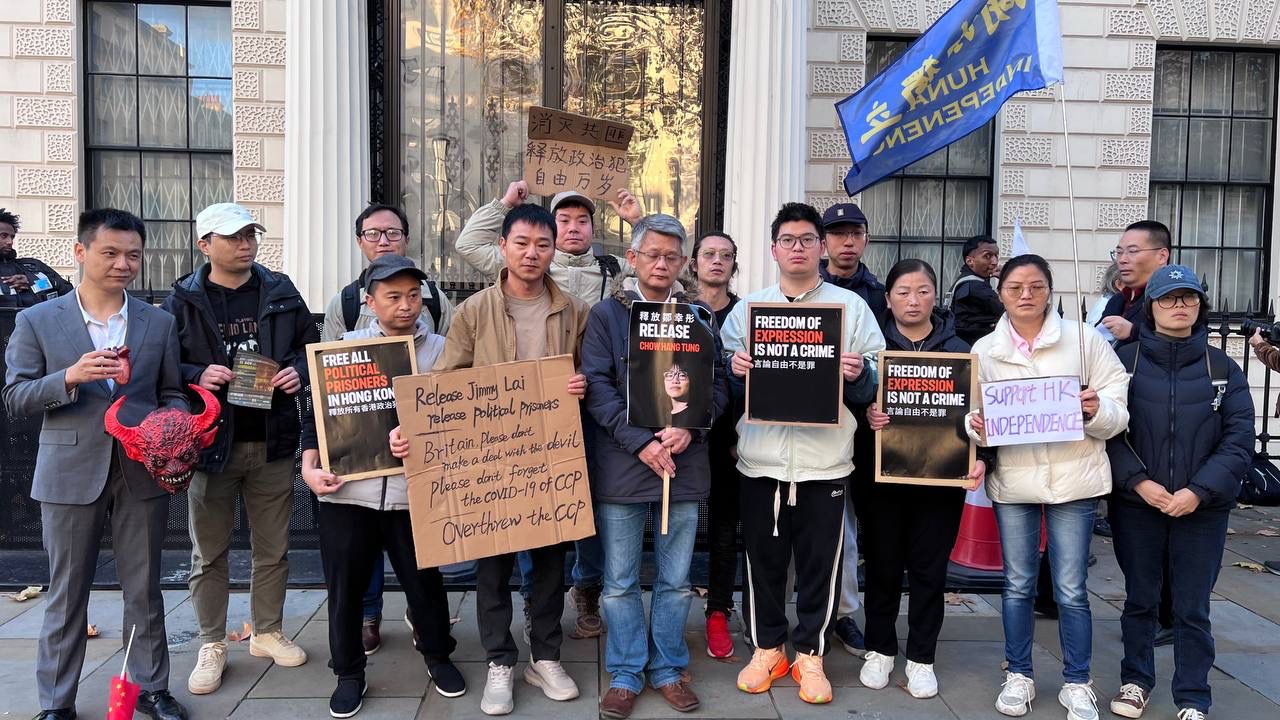
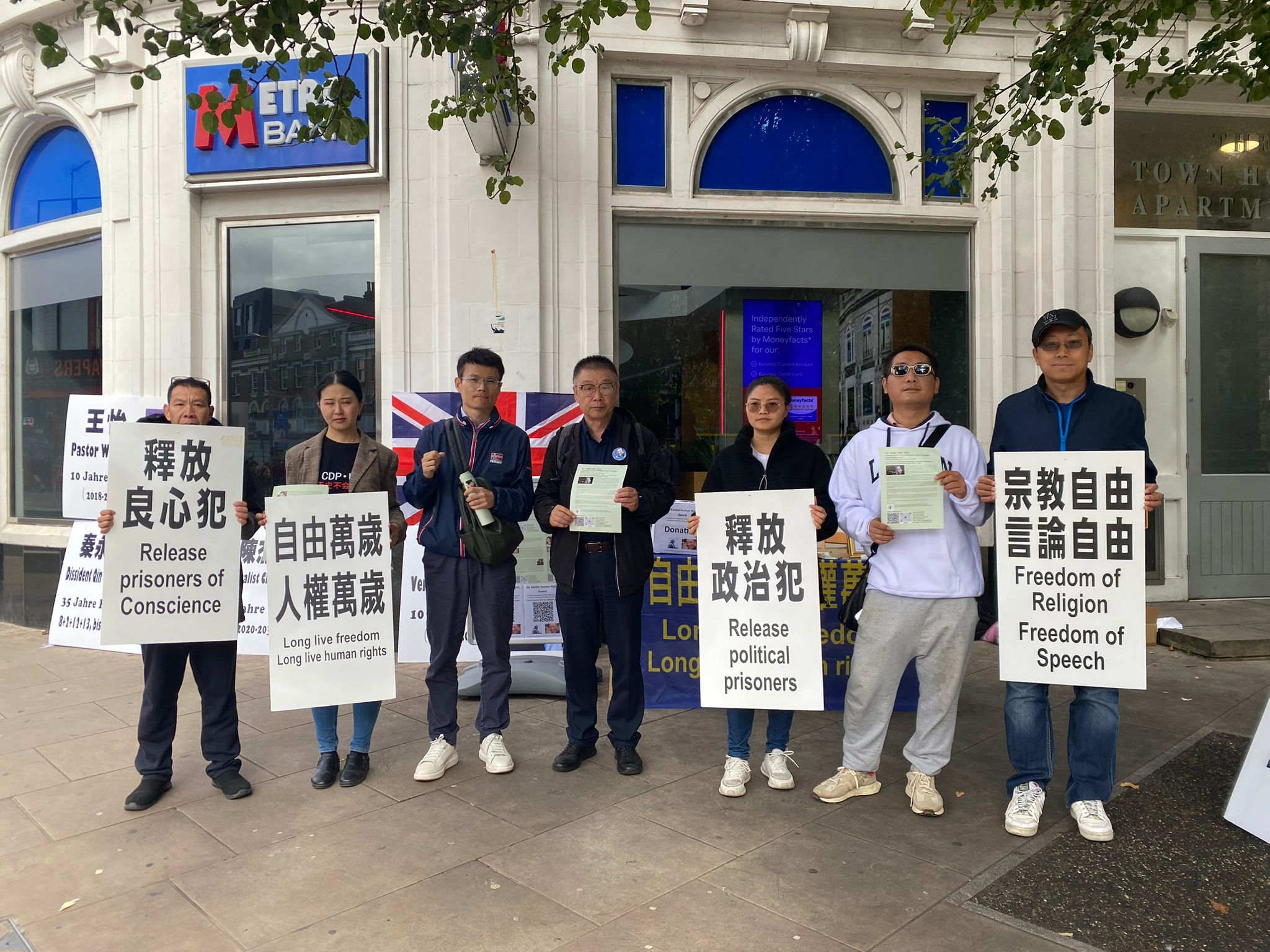
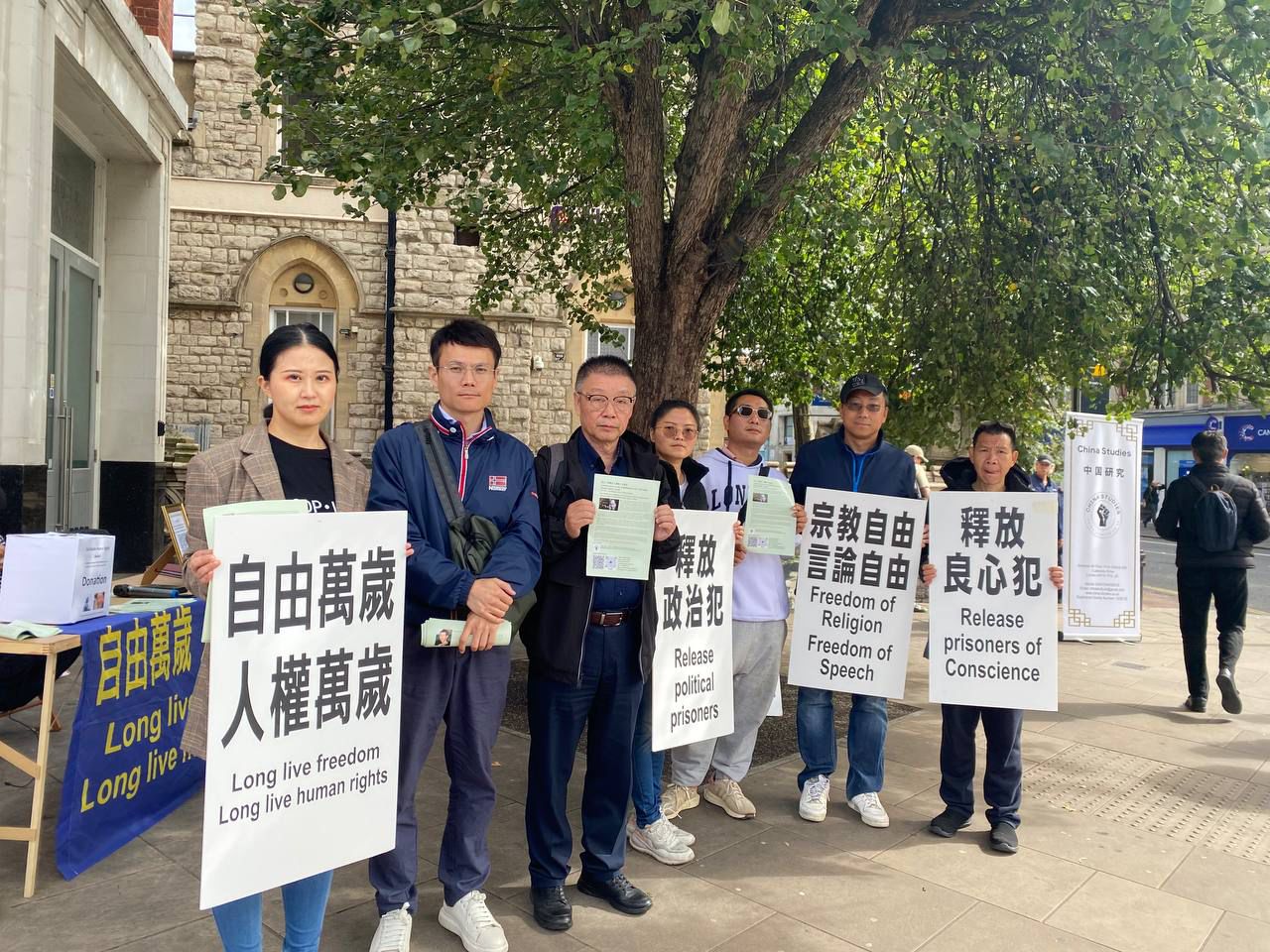
2025年7月13日,正值诺贝尔和平奖得主、著名异议人士刘晓波逝世八周年之际,中国民主党英国总部在中共驻英大使馆门前举行抗议示威活动,悼念这位为中国民主事业献身的知识分子,并呼吁中共当局释放所有良心犯,推进民主宪政进程。此次活动是中国民主党英国总部参加中国民阵和欧洲之声联合举办的全球纪念在线联动活动的一部分,旨在跨越地域限制,汇聚全球华人对刘晓波精神的纪念与坚守。

刘晓波因起草《零八宪章》,倡导中国进行政治体制改革,于2009年被中共当局以“煽动颠覆国家政权罪”判处11年有期徒刑。2010年,他在狱中荣获诺贝尔和平奖,成为中国历史上首位在押获奖者。2017年7月13日,刘晓波肝癌于狱中病逝,终年61岁。

当日下午1时,抗议活动在伦敦中国驻英大使馆外正式开始。尽管当天伦敦气温高达32摄氏度,骄阳似火、酷热难耐,现场参与者依然全程坚持站立,无一退缩。大家身着整洁服装,神情庄重肃穆,汗水浸湿了衣襟,脚步却始终坚定,展现出高度的组织纪律性与政治信念。

参与者手持写有“言论自由无罪”、“释放所有政治犯”、“刘晓波精神不死”等标语,高喊口号,强烈谴责中共专制政权对人权的持续打压。多名参与者胸前佩戴象征和平与自由的白丝带,并在现场点燃蜡烛,以表达沉痛哀悼。白烛在烈日下摇曳,烛光虽微,却如火种般传递着自由之光。

活动期间,中国民主党英国总部多位党员代表在发言的时候共同指出:“八年前,刘晓波在被非法关押期间死于肝癌,中国政府剥夺他接受自由治疗的权利,是对基本人权的赤裸裸践踏。今天,我们在海外继续为他的理想——民主运动——奋斗,这正是对专制最有力的控诉。”

整场抗议活动和平有序,持续约一小时,期间吸引多位伦敦市民驻足围观,并有部分民众加入队伍表达声援。烈日之下,志愿者们坚持手举标语牌,队伍整齐肃静,展现出坚定的信念和不屈的意志。组织方表示,将继续在每年7月13日前后举行纪念活动,确保刘晓波的精神不会在沉默中被遗忘。

在活动尾声,全体党员庄严肃立,为刘晓波逝世默哀一分钟。人群中寂静无声,只有蜡烛轻微的燃烧声与夏风拂动旗帜的声音,仿佛整个伦敦都在这一刻为他沉思。

在法国巴黎,中国民主党英国总部顾问黄华先生在纪念会上宣布设立“刘晓波人权奖”。该奖由廖天琪,潘永忠,王冠儒,黄华,Thomas Hao共同设立。

中国民主党英国总部党员李皓博供稿
2025年7月13日

活动组织者:卢灵飞,李皓博,朱嗣勇
发言党员名单:卢灵飞,雷喜哲、赵武,朱嗣勇
活动参与党员:
卢灵飞,李皓博,朱嗣勇,赵武,丁晨光,王魏晋,王建,张学美,候尔斌,何智威,吕建启,成小丹,杨溯,韦崇华,黄晓凤,雷喜哲,徐夏颖,戴超,范可为,兰子明,顾晓峰,俞杰辉,吴志芬,戴雪梅,赵玉莲,李涛,冯林

UK Headquarters of China Democracy Party Commemorates the 8th Anniversary of Liu Xiaobo’s Death in Front of Chinese Embassy in London

On July 13, 2025, marking the 8th anniversary of the death of Nobel Peace Prize laureate and renowned dissident Liu Xiaobo, the UK Headquarters of China Democracy Party held a protest in front of the Chinese Embassy in London. The demonstration was a tribute to Liu Xiaobo’s lifelong dedication to China’s democratic movement and a call for the immediate release of all prisoners of conscience and the advancement of constitutional democracy in China. The event was part of a global online commemorative action jointly organized by the China Democracy Front and Voice of Europe, uniting overseas Chinese communities across borders in remembrance of Liu’s legacy.

Liu Xiaobo was sentenced to 11 years in prison in 2009 by the Chinese authorities for “inciting subversion of state power” after co-authoring Charter 08, a manifesto calling for political reform in China. In 2010, he was awarded the Nobel Peace Prize while in prison, becoming the first Chinese citizen to receive the honor while incarcerated. He died of liver cancer on July 13, 2017, while still in custody, at the age of 61.

The protest began at 1 p.m. local time despite sweltering heat, with temperatures reaching 32°C in London. Undeterred by the scorching sun, participants stood throughout the event, maintaining solemn expressions and demonstrating unwavering discipline and political conviction. Dressed neatly and solemnly, many had their shirts soaked in sweat, but no one left the scene.

Protesters held placards bearing slogans such as “Freedom of Speech Is Not a Crime,” “Free All Political Prisoners,” and “Liu Xiaobo’s Spirit Lives On.” White ribbons, symbolizing peace and liberty, were worn by many, and candles were lit in mourning. Though flickering in the midday heat, the flames symbolized the enduring light of freedom.

Representatives of the UK Headquarters of China Democracy Party addressed the crowd, stating:

“Eight years ago, Liu Xiaobo died of liver cancer while illegally detained. The Chinese government’s denial of his right to receive medical treatment abroad was a blatant violation of basic human rights. Today, we continue his fight for democracy from overseas — this is our strongest condemnation of authoritarianism.”

The peaceful protest lasted for about an hour and drew the attention of several local residents, some of whom joined the demonstration in solidarity. Under the intense sun, volunteers held their signs firmly, the crowd standing in orderly silence — a testament to their conviction and resolve. Organizers pledged to hold annual memorials around July 13 to ensure Liu Xiaobo’s legacy is never forgotten.

At the event’s conclusion, all party members stood in a moment of silence to honor Liu Xiaobo. A hush fell over the crowd — only the sound of flickering candles and rustling flags could be heard, as if all of London paused in reflection.

Meanwhile, in Paris, UK Headquarters advisor Mr. Huang Hua announced the establishment of the “Liu Xiaobo Human Rights Award.” The award was co-founded by Liao Tianqi, Pan Yongzhong, Wang Guanru, Huang Hua, and Thomas Hao.

Submitted by: Li Haobo,

Date: July 13, 2025

Organizers: Lu Lingfei, Li Haobo, Zhu Siyong

Speakers: Lu Lingfei, Lei Xizhe, Zhao Wu, Zhu Siyong

Participants:

Lu Lingfei, Li Haobo, Zhu Siyong, Zhao Wu, Ding Chenguang, Wang Weijin, Wang Jian, Zhang Xuemei, Hou Erbin, He Zhiwei, Lü Jianqi, Cheng Xiaodan, Yang Su, Wei Chonghua, Huang Xiaofeng, Lei Xizhe, Xu Xiaying, Dai Chao, Fan Kewei, Lan Ziming, Gu Xiaofeng, Yu Jiehui, Wu Zhifen, Dai Xuemei, Zhao Yulian, Li Tao, Feng Lin

中国民主党英国总部“七•一”抗议示威,要求中共立即释放所有政治犯 UK Headquarters of China Democracy Party Holds July 1st Protest, Demands Immediate Release of All Political Prisoners

供稿人:黄天(中国民主党英国总部)

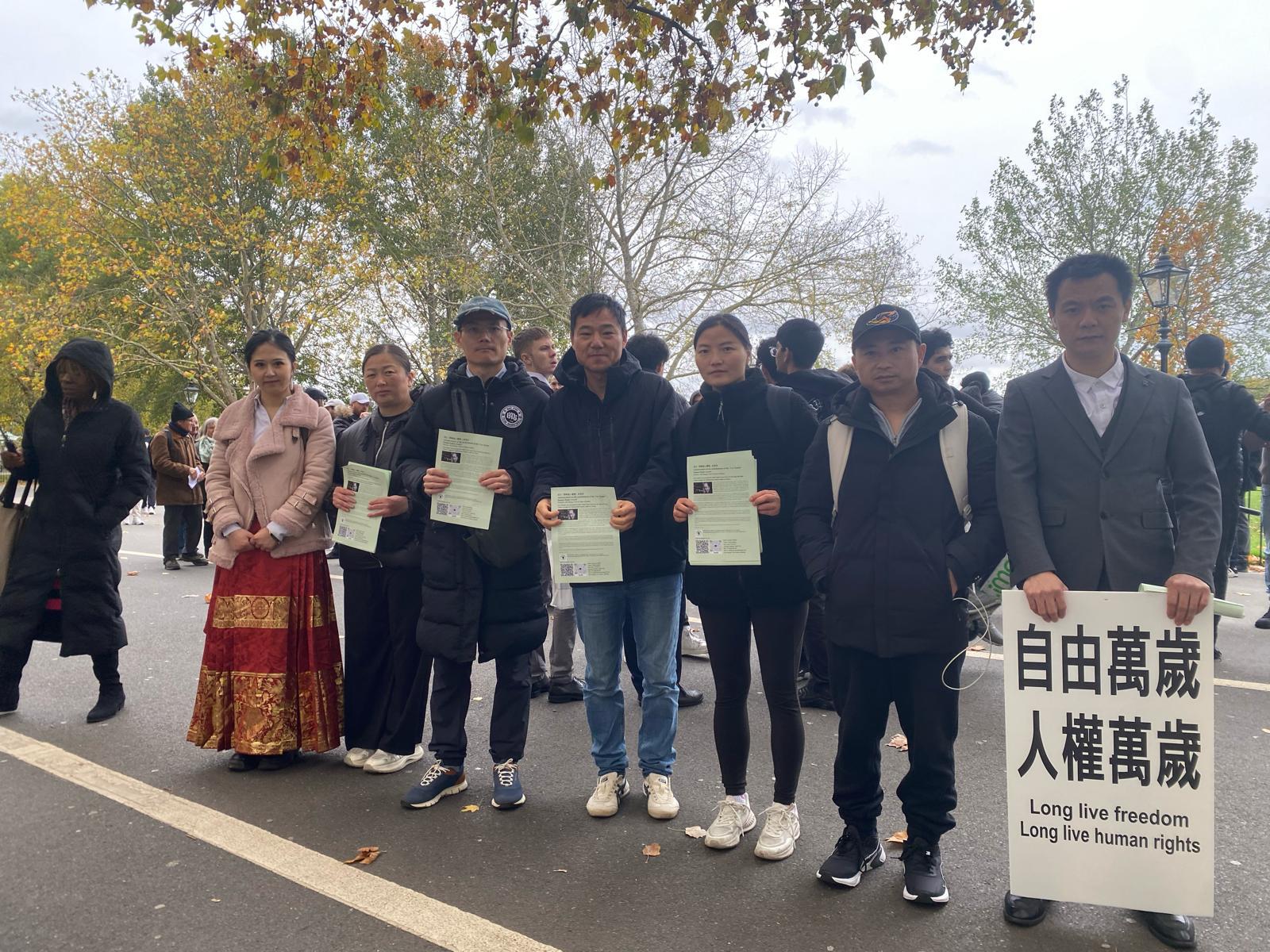
2025年7月1日,中国共产党“建党”104周年之际,中国民主党英国总部在总部顾问黄华的率领下,前往中国驻英国大使馆门外组织抗议示威活动,要求中共立即释放所有在押政治犯。党员黄天、黄俊等协助参与了组织工作。

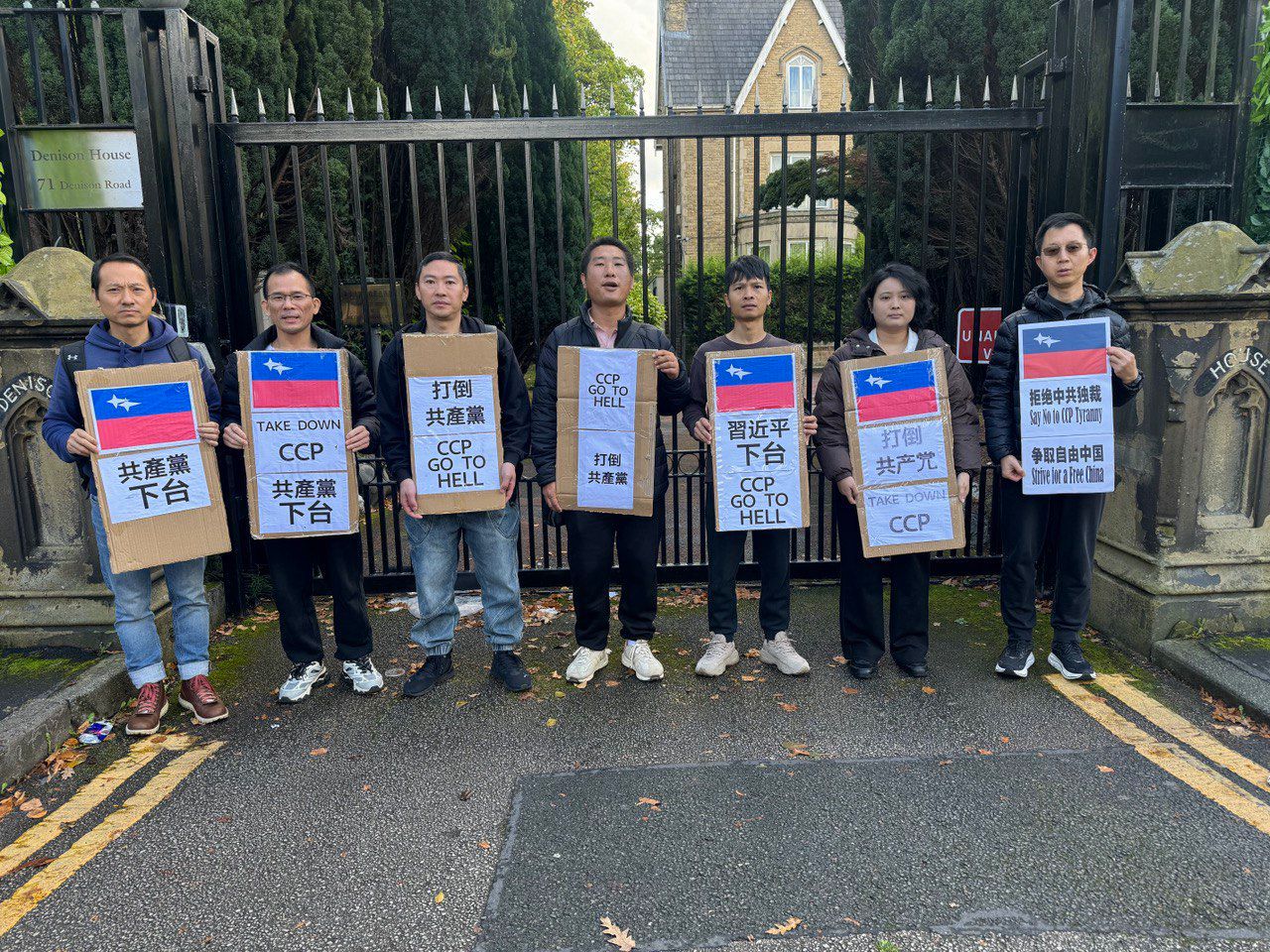
活动于伦敦当地时间14:00准时开始。总部顾问黄华率领党员高喊“共产党下台!”、“习近平下台!”、“释放政治犯!”等口号。黄华还在演讲中对党员们冒着烈日和酷暑参加抗议活动的热情表示了赞赏。随后,余杰辉,丁晨光,王建,卢灵飞,黄俊,黄天,王魏晋等人纷纷发表了讲话或带领党员高喊口号,表达了对于中共释放政治犯、还政于民的强烈诉求。

是日,伦敦当地气象部门发布了高温预警,酷热难耐。但是,中国民主党英国总部的党员们不畏酷暑,坚持来到现场参加活动,表现了非凡的组织性和纪律性。党员代表在现场踊跃发言,争先恐后地表达他们对于中国共产党的厌恶、抗议,和对结束一党专制、实现自由民主的坚定信念。他们中有的甚至从布莱克浦、曼彻斯特等地远道而来,在党部活动结束后,自愿前往参与其他组织主办的“七一”抗议活动。

中国共产党自1921年成立以来,在中国犯下了一系列罄竹难书的罪行,直接和间接造成的中国人民非正常死亡的数量超过一亿,远高于人类历史上任何一次已知的战争、疫病或自然灾害。中国共产党不仅是中国人民的罪人和劫难,也是危害世界和平和东北亚地区各国安全的罪魁祸首。中国共产党在“民族复兴”的妄念下,绑架全体中国人民,挑战既有国际秩序,颠覆正常国际规则,而这些秩序和规则正是老一辈中国人民通过参与世界大战、流血牺牲才换取到权利所参与制定的。中国共产党不仅是世界和平和国际承诺的背叛者,也是其所吹捧的百年屈辱历史中的“革命先烈”的背叛者,更是其用来欺骗中国人民、攫取政权的共产主义理想和工农联盟的背叛者。甚至,中国共产党自诞生之日起,就对资助和指导其发展的共产国际阳奉阴违、背信弃义,不惜在外敌环伺之时,仅仅因为莫须有的“苏联背景”,就以内部大清洗的方式对自己的同志“刀口向内”,展开大清洗运动。“背叛”一词刻在中国共产党的骨血中。中国共产党自始至终,都是一个没有理想信念、没有道德底线、没有自由追求的三无政党,生于不义,也必将亡于耻辱。

中国民主党英国总部将继续同全世界一切热爱自由的组织和个人一道,为推翻中共独裁暴政、在中国实现真正的自由与宪政而不懈奋斗。

发言党员名单:黄华,余杰辉,丁晨光,王建,卢灵飞,黄俊,黄天,王魏晋

出席党员名单:黄华,黄俊,黄天,李涛,雷喜哲,许少男,赵武,冯林,韦崇华,王魏晋,林钟,蒋蔚,王金秀,董彦均,王燕,王涛,俞杰辉,吴志芬,Kaney Huang,杨体荷,Lz Tan,范可为,丁晨光,王建,郭安迪,徐夏颖,胡晓,成小丹,蔡波,周勇,杨溯,徐伟华,林明强,侯尔斌,张学美,顾晓峰,黄晓凤,卢灵飞,戴超,温作团,周凤雄。

UK Headquarters of China Democracy Party Holds July 1st Protest, Demands Immediate Release of All Political Prisoners

Contributor: Huang Tian (UK Headquarters of China Democracy Party)

On July 1, 2025, the 104th anniversary of the founding of the Chinese Communist Party (CCP), the UK Headquarters of China Democracy Party organized a protest in front of the Chinese Embassy in London. The demonstration, led by party advisor Huang Hua, called for the immediate release of all political prisoners detained by the CCP. Party members Huang Tian, Huang Jun, and others assisted in organizing the event.

The protest began promptly at 2:00 p.m. local time. Advisor Huang Hua led members in chanting slogans such as “Down with the Communist Party!”, “Step Down, Xi Jinping!”, and “Free All Political Prisoners!” In his speech, Huang praised the dedication of members who braved the extreme heat to participate. He was followed by speeches and chants from Yu Jiehui, Ding Chenguang, Wang Jian, Lu Lingfei, Huang Jun, Huang Tian, and Wang Weijin, all of whom voiced a strong demand for the CCP to release political prisoners and return power to the people.

Despite an official heat warning issued by local authorities, party members of the UK Headquarters showed remarkable determination and discipline by attending the protest in the sweltering weather. Many participants spoke passionately on site, voicing their deep resentment toward the Chinese Communist Party and expressing unwavering belief in ending one-party dictatorship and realizing freedom and democracy in China. Some members traveled from cities such as Blackpool and Manchester, and even joined other July 1st protest events after the party’s demonstration concluded.

Since its founding in 1921, the Chinese Communist Party has committed countless atrocities, directly and indirectly causing the unnatural deaths of over 100 million Chinese citizens—far surpassing the death toll of any known war, epidemic, or natural disaster in history. The CCP is not only a historical catastrophe for the Chinese people but also a major threat to world peace and regional security in Northeast Asia. Under the delusion of “national rejuvenation,” the CCP holds all Chinese citizens hostage while attempting to disrupt the international order and undermine global norms—norms that earlier generations of Chinese helped to shape through their sacrifices during the World Wars.

The CCP has betrayed not only global peace and international commitments but also the revolutionary martyrs it claims to honor and the communist ideals it once used to gain power. Even in its early days, the CCP betrayed the Comintern that funded and trained it, launching violent purges against its own comrades under vague accusations of “Soviet ties” during times of external crisis. Betrayal is etched into the CCP’s DNA. It is a party born without ideals, without morality, and without any genuine pursuit of liberty—a party born in disgrace and destined to perish in shame.

The UK Headquarters of China Democracy Party will continue to stand in solidarity with all freedom-loving individuals and organizations across the globe in the fight to overthrow CCP dictatorship and realize true constitutional democracy in China.

Speakers: Huang Hua, Yu Jiehui, Ding Chenguang, Wang Jian, Lu Lingfei, Huang Jun, Huang Tian, Wang Weijin

Attending Members: Huang Hua, Huang Jun, Huang Tian, Li Tao, Lei Xizhe, Xu Shaonan, Zhao Wu, Feng Lin, Wei Chonghua, Wang Weijin, Lin Zhong, Jiang Wei, Wang Jinxiu, Dong Yanjun, Wang Yan, Wang Tao, Yu Jiehui, Wu Zhifen, Kaney Huang, Yang Tihe, Lz Tan, Fan Kewei, Ding Chenguang, Wang Jian, Guo Andy, Xu Xiaying, Hu Xiao, Cheng Xiaodan, Cai Bo, Zhou Yong, Yang Su, Xu Weihua, Lin Mingqiang, Hou Erbin, Zhang Xuemei, Gu Xiaofeng, Huang Xiaofeng, Lu Lingfei, Dai Chao, Wen Zuotuan, Zhou Fengxiong.

中国民主党英国总部参与“Global Art Performance Action”全球声援活动 UK Headquarters of China Democracy Party Participates in “Global Art Performance Action” International Solidarity Protest

供稿人:黄天(中国民主党英国总部)

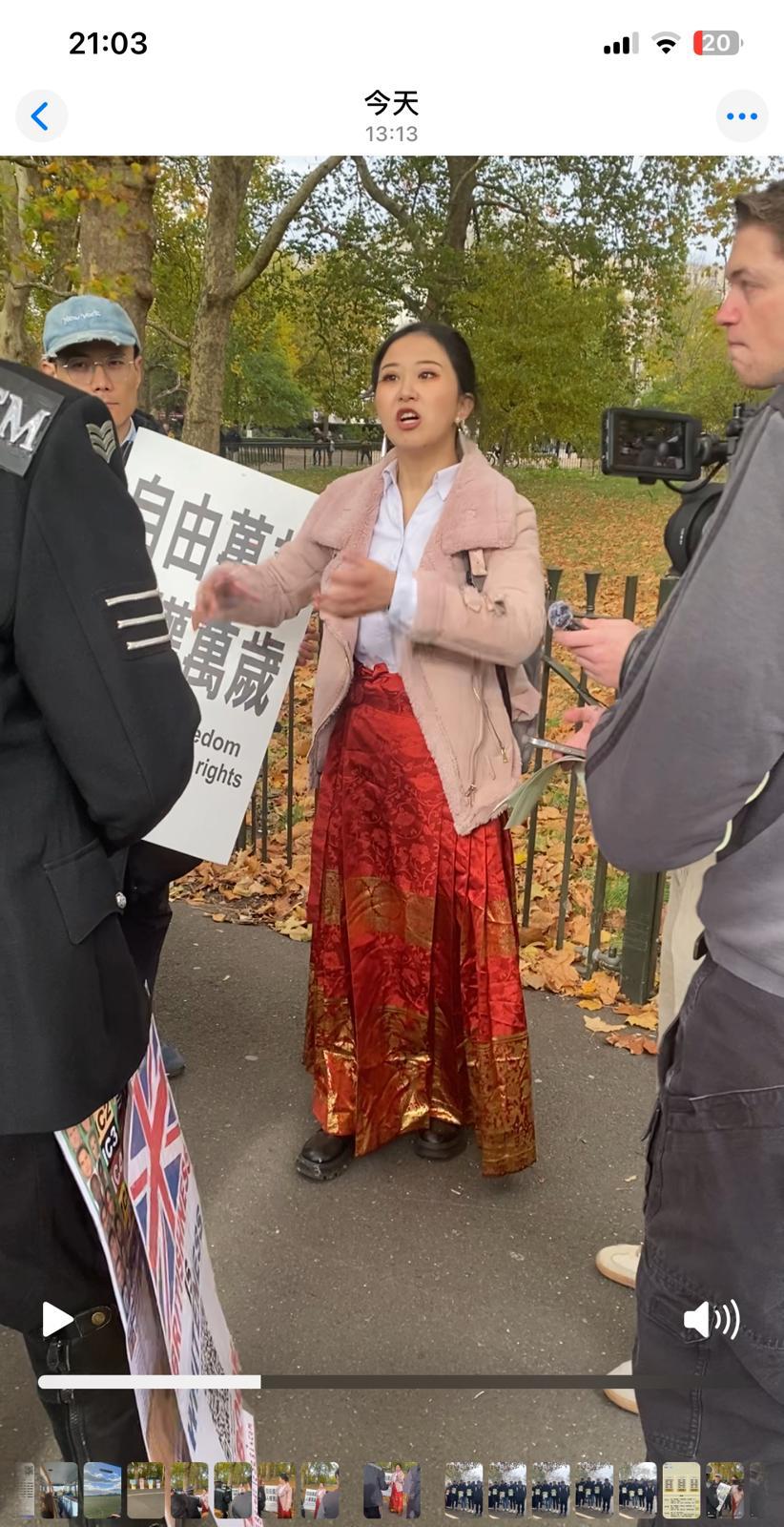
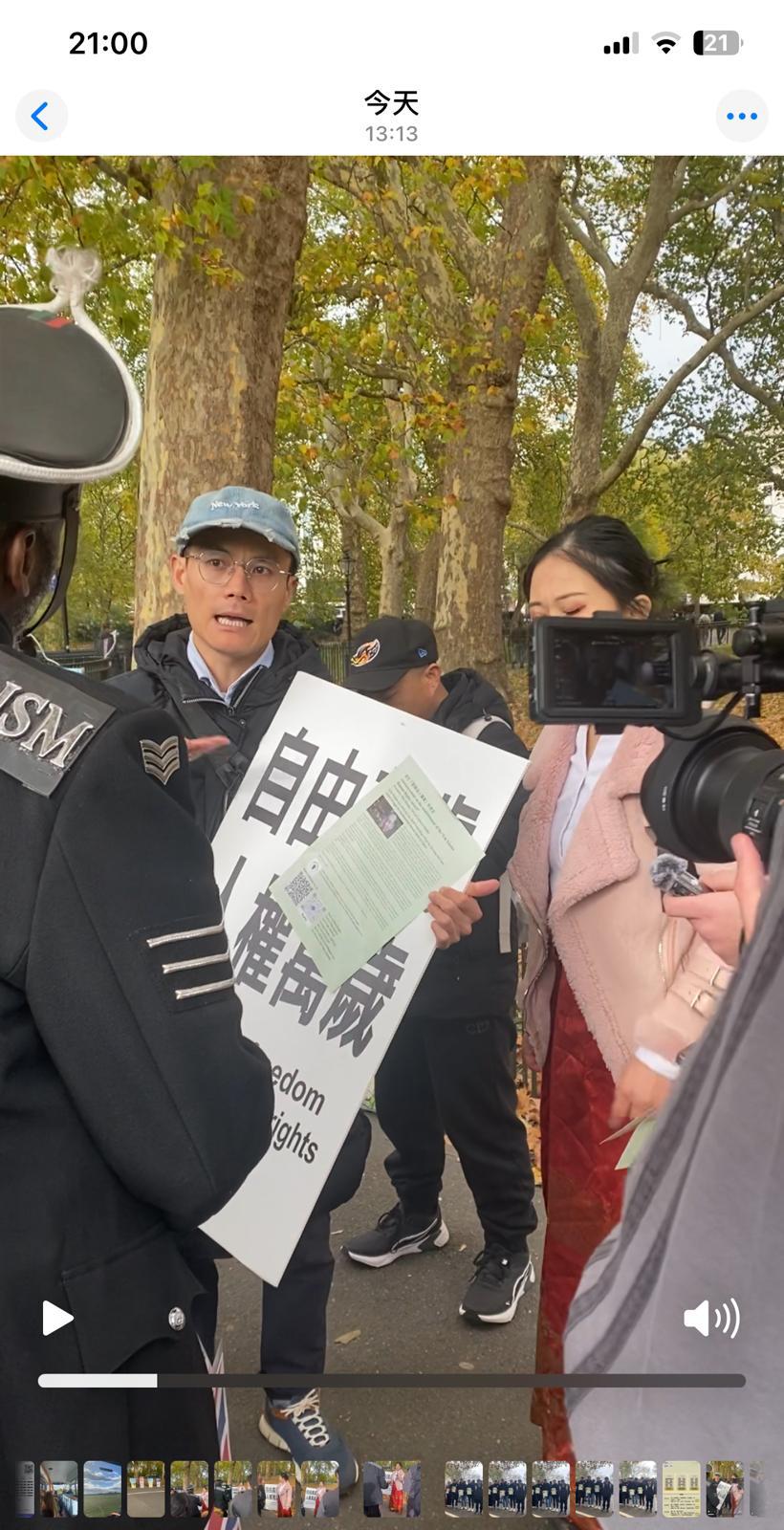
 2025年6月28日下午,中国民主党英国总部党员共计二十余人,在总部顾问黄华的带领下,前往伦敦市中心特拉法加广场参与“Global Art Performance Action”对抗中共大外宣的行为艺术活动,表达对活跃在各国的民主人士揭露中共美化叙事欺骗世界的支持。中国民主党英国总部党员黄天等人协助参与了活动的组织工作。

在活动中,中国民主党英国总部顾问黄华带领党员按照统一形式高举“Everything is fine…”系列标语,用静默抗议的方式,表达对于中共大外宣口中所谓欣欣向荣的民族复兴景象的嘲讽与唾弃,并对过往路人展示和宣传中国共产党对包括香港、台湾以及各少数民族地区人民在内的全体华人争取民主和自治权利的迫害与压制。尤其是,中国政府还将魔爪伸向了旅居海外的华人,公然进行跨国镇压活动,不仅侵犯了海外华人的权利和自由,也对他们所在国的主权和国家安全构成了严重的威胁和挑战。这进一步揭示了中国外交官口中的“互相尊重主权和领土完整、互不干涉内政”是一句彻头彻尾的政治谎言——它仅仅要求民主国家和全世界热爱自由的人们无视发生在中国的政治迫害和人权侵犯,而对别国主权、传统、价值观和国家安全毫不在意、毫无尊重。

虽然本次行为艺术抗议活动以静默形式进行,但党员的展示与嘲讽引起了过往路人的关注和共鸣,无声胜有声。中国民主党英国总部与参与活动的其他组织相互配合,团结协作,顺利实现了本次活动戳破中共外宣谎言、揭露中共国际国内的政治镇压与迫害的目的。在伦敦的心脏地带,中国民主党英国总部党员将中国共产党的弥天大谎和累累暴行展示给了络绎不绝的往来路人。活动结束后,总部顾问黄华还与党员就街头抗议活动中的注意事项进行了交流探讨,以期更多党员参与和组织更多样化的政治抗议活动,提升中国民主党英国总部的形象和知名度,扩大旅英中国异议人士的影响力。

本次活动由位于德国的港人组织Hongkongers in Germany牵头发起,在世界各国超过15个城市共同举办,相互呼应,仅在英国就有伦敦、曼彻斯特、利兹、谢菲尔德四地参与。除伦敦外,中国民主党英国总部在曼彻斯特居住的党员代表温作团、王涛等也在当地参加了声援活动,彰显了活跃在英国各地的党员的团结形象和政治参与热情。中国民主党英国总部将继续参与和支持海内外各路民主人士揭露和反抗中共暴政的活动,为推翻中共独裁暴政、在中国实现真正的宪政而不懈努力。

出席党员名单:黄华,黄天,朱嗣勇,王建,徐伟华,冯林,王魏晋,卢灵飞,范可为,王涛(曼彻斯特),温作团(曼彻斯特),张学美,侯尔斌,邬勇,顾晓峰,韦崇华,雷喜哲,刘耀行,戴超,黄晓凤,丁晨光,杨体和,钟淑琴,刘立岩,李涛。

UK Headquarters of China Democracy Party Participates in “Global Art Performance Action” International Solidarity Protest

Contributor: Huang Tian (UK Headquarters of China Democracy Party)

On the afternoon of June 28, 2025, more than twenty members of the UK Headquarters of China Democracy Party, led by party advisor Huang Hua, gathered at Trafalgar Square in central London to take part in the “Global Art Performance Action.” This protest, a form of performance art aimed at countering the CCP’s global propaganda narrative, was held to express solidarity with democracy activists worldwide who work to expose the Chinese Communist Party’s deceitful portrayals to the world. Party member Huang Tian and others assisted with organizing the event.

During the protest, advisor Huang Hua led party members in silently raising a unified series of placards reading “Everything is fine…”—a silent yet powerful satire targeting the CCP’s so-called narrative of national rejuvenation and prosperity. Through this form of demonstration, participants highlighted the oppression of democratic voices and the denial of autonomy for people across Hong Kong, Taiwan, and various ethnic minority regions. The protest also emphasized how the Chinese government has extended its repressive tactics abroad, engaging in transnational suppression of overseas Chinese. These actions seriously threaten not only the rights and freedoms of overseas communities but also the sovereignty and national security of host countries. This reveals the utter falseness of the CCP’s claims to respect for sovereignty and non-interference—it demands silence on China’s internal human rights abuses while disrespecting the sovereignty and values of others.

Although this performance art protest was silent, the visuals and message captured the attention and sympathy of many passersby. The collaboration between the UK Headquarters of China Democracy Party and other participating organizations successfully fulfilled the event’s goal: to expose the CCP’s propaganda lies and highlight its domestic and international repression. In the heart of London, party members made visible the CCP’s fabricated narratives and brutal actions to the crowds passing by. After the event, advisor Huang Hua held a discussion with party members on best practices for street protest actions, encouraging more involvement and planning of diverse political demonstrations to enhance the visibility and influence of Chinese dissidents in the UK.

The event was initiated by Hongkongers in Germany, a pro-democracy organization based in Germany, and was simultaneously held in over 15 cities worldwide. In the UK alone, coordinated actions took place in London, Manchester, Leeds, and Sheffield. In Manchester, party members Wen Zuotuan and Wang Tao also participated in local solidarity activities, demonstrating the unity and political commitment of members across the UK. The UK Headquarters of China Democracy Party will continue to support domestic and overseas efforts to resist the CCP’s tyranny and fight for a truly constitutional and democratic China.

Participating Party Members: Huang Hua, Huang Tian, Zhu Siyong, Wang Jian, Xu Weihua, Feng Lin, Wang Weijin, Lu Lingfei, Fan Kewei, Wang Tao (Manchester), Wen Zuotuan (Manchester), Zhang Xuemei, Hou Erbin, Wu Yong, Gu Xiaofeng, Wei Chonghua, Lei Xizhe, Liu Yaoxing, Dai Chao, Huang Xiaofeng, Ding Chenguang, Yang Tihe, Zhong Shuqin, Liu Liyan, Li Tao.

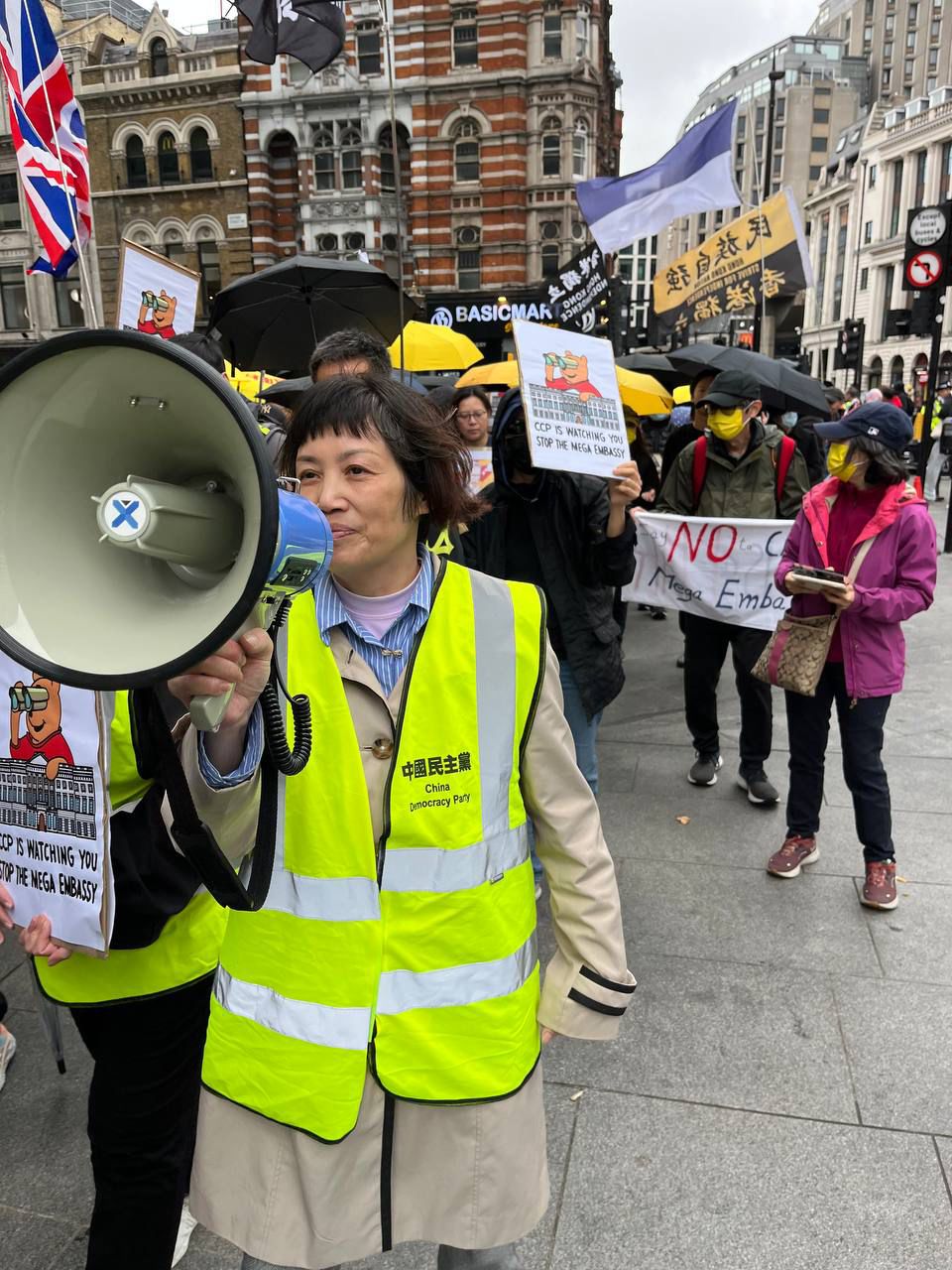
中国民主党英国总部积极参与“6·14反对中国超级大使馆计划”大集会 China Democracy Party UK Headquarters Actively Participates in the June 14 Protest Against the “Chinese Super Embassy Plan”

与多族裔团体联手抗议中共扩张,坚决守护英国民主与主权。

撰稿人:黄俊(中国民主党英国总部党员)

2025年6月14日(周六)下午2时至5时,英国伦敦皇家铸币厂(Royal Mint Court)门前再度响起反对中共的怒吼。第四轮“反对中国超级大使馆计划”抗议集会顺利举行,吸引逾2000名来自香港、台湾、西藏、新疆及英国本地的公民参与。中国民主党英国总部组织了数十名党员到场,与港人团体并肩发声,现场气氛高涨。

本次集会聚焦两大议题:“中共全球监控网络”与“跨境打压异见人士”。大会指出,中共拟将皇家铸币厂原址改建为其欧洲最大的大使馆,实则借外交外衣输出威权,严重威胁英国国家安全、社区安宁及海外华人自由。

中国民主党代表在现场指出:“这是一次象征性的插旗,是对英国核心价值的挑衅。我们站出来,不是为了仇恨,而是为了自由与良知。”

集会前夕,部分抗议团体自发手持印有“拒绝中共插旗英国”标语的横额,缓缓步行穿越伦敦塔桥,向民众展示中共大使馆计划的威胁,呼吁社会警觉。这一行动虽因警方安全安排未能正式列入行程,却成为网络热传的亮点之一。

为保障参与者权益,本次活动亦设有法律支援服务,协助处理可能的执法冲突与现场应对。大会呼吁所有参与者冷静、有序、合法表达意见,避免落入挑衅圈套。

我们呼吁:

英国政府必须立即否决中国改建大使馆的申请,保障国家主权,维护基本人权。自由不是天然存在,而是代代人用行动捍卫而来。

中国民主党英国总部

2025年6月14日

活动组织者: 黄俊、黄天

协助组织者: 邬勇

党员出席名单:

黄俊、黄天、冯林、杨体荷、王燕、董彦均、王金秀、王建、王魏晋、李濤、温作团、俞杰辉、吴志芬、Kaney Huang、王涛、成小丹、Lz Tan、许少男、白林、范可为、蒋蔚、雷喜哲、韦崇华、张石头、杨溯、丁晨光、赵武、邬勇、侯尔斌、张学美、卢灵飞、刘耀行、戴超、顾晓峰

China Democracy Party UK Headquarters Actively Participates in the June 14 Protest Against the “Chinese Super Embassy Plan”

Joining Multi-Ethnic Groups to Oppose CCP Expansion and Defend British Democracy and Sovereignty

Author: Jun Huang (Member of China Democracy Party Headquarters)

On Saturday, June 14, 2025, from 2:00 PM to 5:00 PM, protest chants once again echoed outside Royal Mint Court in London. The fourth round of demonstrations against the “Chinese Super Embassy Plan” was successfully held, attracting over 2,000 participants from Hong Kong, Taiwan, Tibet, Xinjiang, and the local British community. The China Democracy Party UK Headquarters mobilized dozens of party members to join the event, standing in solidarity with Hong Kong groups in a powerful show of resistance.

The rally focused on two main themes: “China’s Global Surveillance Network” and “Cross-border Repression of Dissidents.” Organizers warned that the Chinese Communist Party (CCP) plans to convert the Royal Mint Court site into its largest embassy in Europe—an act cloaked in diplomacy but aimed at exporting authoritarian influence, endangering UK national security, local community safety, and the freedoms of overseas Chinese.

A representative from the China Democracy Party declared on-site:

“This is a symbolic act of flag-planting, a provocation to the core values of the UK. We stand up not out of hatred, but out of conscience and a pursuit of freedom.”

On the eve of the rally, some protest groups independently marched across Tower Bridge holding banners reading “Reject CCP’s Flag in the UK,” raising public awareness of the embassy’s dangers. Although this action was not officially part of the event due to police safety arrangements, it went viral online and became a powerful visual highlight.

To safeguard participants’ rights, the protest provided legal support services to help handle potential law enforcement conflicts and ensure onsite response strategies. Organizers urged all attendees to remain calm, orderly, and lawful in expressing their views, and not to fall into provocation traps.

Our Call to Action:

The UK government must immediately reject China’s application to redevelop the embassy site, defend national sovereignty, and protect fundamental human rights. Freedom is not born naturally—it is earned through generations of struggle and action.

China Democracy Party UK Headquarters

June 14, 2025

Lead Organizers: Jun Huang, Tian Huang

Co-organizer: Yong Wu

Attending Party Members:

Jun Huang, Tian Huang, Lin Feng, Tihe Yang, Yan Wang, Yanjun Dong, Jinxiu Wang, Jian Wang, Weijin Wang, Tao Li, Zuotuan Wen, Jiehui Yu, Zhifen Wu, Kaney Huang, Tao Wang, Xiaodan Cheng, Lz Tan, Shaonan Xu, Lin Bai, Kewei Fan, Wei Jiang, Xizhe Lei, Chonghua Wei, Shitou Zhang, Su Yang, Chenguang Ding, Wu Zhao, Yong Wu, Erbin Hou, Xuemei Zhang, Lingfei Lu, Yaohang Liu, Chao Dai, Xiaofeng Gu

坚持和平理性非暴力的原则,推动中国走向民主,自由,法治,人权的强大繁荣国家 Upholding the Principles of Peace, Rationality, and Nonviolence to Build a Strong, Free, Democratic, and Law-Based China

黄华

2025年6月4日于伦敦

各位朋友,大家好。

今天我们在这里,纪念1989年6月4日——三十六年前,那场震惊世界的悲剧。三十六年前的今天,年轻的学生、市民在北京的街头高呼“反腐败、要民主”,他们是和平的,是理性的,是非暴力的。他们的理想是建设一个更加公正、自由的中国。

然而,国家机器却用坦克和子弹回应了这些和平的诉求。这不仅是对人的生命的践踏,更是对国家良知的深重伤害。它让一代人的梦想被血洗,也让整个民族陷入漫长的沉默。

三十六年过去了,记忆依然不能被抹去。正是因为这一历史悲剧,我们更加坚信:只有坚持和平、理性、非暴力的原则,只有坚持用道义与真理唤醒社会,用对话和行动推动变革,中国才可能真正成为一个尊重民主、自由、法治与人权的强大繁荣国家。

很多人质疑:既然当年的学生坚持和平、绝食、对话,最后仍然被坦克碾压,那我们为什么还要坚持和平、理性、非暴力的原则?

这个质疑,是很多经历六四、或者了解六四历史的人都曾有过的。面对暴力和压制,和平是否只是软弱的象征?道义是否真的有用?下面我想从几个角度谈谈我的看法:

一、坚持和平、理性、非暴力,不是因为它能立刻奏效,而是因为它是最具正当性、最能争取广泛共识、最可持续的路径

在1989年,学生和市民所坚持的,是道义上的制高点。正因为他们是和平的、非暴力的,才让世界看到了暴政的冷酷无情。这种正当性,是历史最终会认可的力量。暴力可以暂时镇压抗议,但无法消灭一个民族对正义的记忆和追求。

相反,如果抗争也使用暴力,就会失去道义基础,社会更容易陷入混乱甚至内战,改革也更可能被毁于血腥和对立。这不仅是六四的教训,也是全球许多国家转型经验的共识。

二、六四失败的部分原因,是当时缺乏制度化渠道与公民社会基础,而不是和平方式本身的失败

六四之所以最终走向镇压,并非仅仅因为学生选择了和平,而是因为:

  • 政权结构极度封闭,权力高度集中;
  • 媒体和言论不自由,导致政府对社会的不信任;
  • 缺乏独立的中间力量(比如有影响力的公民组织、媒体、宗教界)能够调解、施压;
  • 社会尚未有足够的民主意识和制度准备。

所以,今天我们纪念六四,不是为了重演一次情绪化的抗议,而是要推动真正持久的建设:培育公民意识,建设独立社会力量,争取制度改革,而不是仅靠一次次广场上的对抗。

三、历史证明:真正成功的民主转型,几乎都来自长期、和平、渐进的努力,而不是暴力革命

请看韩国、台湾、波兰、捷克、南非,这些国家和地区走向民主法治的过程,虽然也曾有高压和牺牲,但最终靠的是社会各阶层的联动、非暴力运动的坚持、内部改革力量的觉醒。

相反,靠武力推翻政权的变革,往往带来的是另一轮专制、混乱甚至长期战乱。

四、坚持和平并不意味着软弱,而是意味着战略智慧

非暴力不是妥协,而是一种道义与策略并重的智慧。它需要组织能力、长期耐心、信息传播、文化建设,以及对民心的深耕。我们不是寄望一场浪漫的“革命”,而是推动一代又一代人的觉醒与参与,把权力关进制度的笼子里。

所以,总结来说:

六四的血,是对极权的控诉,也是对和平抗争必要性的证明。正因为那场镇压的残酷,我们才更加知道不能再重复同样的模式——不能靠情绪化的冲撞去换来自由,而要靠深思熟虑的和平变革。

中国要走向民主、自由、法治、人权的国家,不可能靠一场突如其来的斗争,而需要我们持续不断地用和平、理性、非暴力的方式——一点点撬动体制,一步步拓展空间,最终推动整个社会向前走。

谢谢大家!

Upholding the Principles of Peace, Rationality, and Nonviolence to Build a Strong, Free, Democratic, and Law-Based China

By Huang Hua

June 4, 2025, London

Dear friends, greetings to all.

Today we gather here to commemorate June 4, 1989—the tragic event that shocked the world thirty-six years ago. On this day thirty-six years ago, young students and citizens marched peacefully through the streets of Beijing, calling for an end to corruption and the pursuit of democracy. They were peaceful, rational, and nonviolent. Their vision was to build a more just and free China.

Yet, in response to these peaceful demands, the state deployed tanks and bullets. This was not only an assault on human life, but also a grave wound inflicted on the moral conscience of the nation. An entire generation’s dreams were crushed in blood, and the entire nation was plunged into prolonged silence.

Thirty-six years have passed, but this memory cannot be erased. Precisely because of this tragic history, we are even more convinced that only by upholding the principles of peace, rationality, and nonviolence, by awakening society with morality and truth, and by promoting change through dialogue and action, can China truly become a strong and prosperous nation that respects democracy, freedom, the rule of law, and human rights.

Many people ask: Since the students of 1989 pursued peace, hunger strikes, and dialogue, and were ultimately crushed by tanks, why should we continue to adhere to these principles of peace, rationality, and nonviolence?

This is a question that has been asked by many who experienced or studied the events of June 4th. When faced with violence and repression, does peace simply mean weakness? Does morality really matter?

Here, I would like to offer my thoughts from several perspectives:

I. We adhere to peace, rationality, and nonviolence not because it guarantees immediate success, but because it is the most legitimate, sustainable path that can build the broadest consensus.

In 1989, the students and citizens occupied the moral high ground. Precisely because they were peaceful and nonviolent, the world was able to clearly see the cruelty of the regime. This legitimacy is a force that history will ultimately recognize. Violence may suppress protests temporarily, but it cannot erase a people’s pursuit of justice.

On the contrary, if resistance resorts to violence, it loses moral legitimacy, and society becomes prone to chaos or even civil war. Reforms would then be derailed by bloodshed and polarization. This is not only the lesson of June 4th but also the consensus of many countries that have undergone democratic transitions.

II. The failure of June 4th was not because of the peaceful approach itself, but because there were no institutional channels or foundations for civil society at the time.

The crackdown on June 4th was not simply because students chose peace. Rather, it was because:

  • The regime was extremely closed and highly centralized;
  • Freedom of the press and speech was absent, leading to deep distrust between the government and society;
  • There were no independent mediating forces (such as strong civil organizations, media, or religious communities) to negotiate or exert pressure;
  • Society lacked sufficient democratic awareness and institutional preparation.

Therefore, today when we commemorate June 4th, we are not seeking another wave of emotional protest. Rather, we aim to foster lasting change: cultivating civic awareness, building independent social forces, and striving for institutional reform—not relying solely on repeated confrontations in public squares.

III. History shows that successful democratic transitions almost always arise from long-term, peaceful, gradual efforts—not violent revolution.

Look at South Korea, Taiwan, Poland, the Czech Republic, South Africa—their paths to democracy and the rule of law involved repression and sacrifice, but ultimately relied on the mobilization of all sectors of society, the persistence of nonviolent movements, and the awakening of internal reform forces.

By contrast, revolutions achieved through violence often result in another cycle of authoritarianism, chaos, or long-term conflict.

IV. Adhering to peace does not mean weakness—it means strategic wisdom.

Nonviolence is not compromise; it is wisdom that combines morality and strategy. It requires organization, long-term patience, information dissemination, cultural development, and the nurturing of public consciousness. We do not hope for a romantic “revolution.” Instead, we seek to awaken generation after generation, so that power can be ultimately bound by institutions.

In conclusion:

The bloodshed of June 4th is a condemnation of authoritarianism, but also a powerful reminder of the necessity of peaceful resistance. Precisely because of the brutality of that crackdown, we know that we must not repeat the same path—we cannot pursue freedom through emotional outbursts, but through carefully considered, peaceful transformation.

China’s path to becoming a nation of democracy, freedom, rule of law, and human rights will not be forged by a sudden uprising. It will require us to persist in using peaceful, rational, and nonviolent methods—gradually prying open the system, step by step expanding the space for change, and ultimately moving society forward.

Thank you all!

2025年伦敦纪念“六四”民主研讨会暨烛光抗议活动圆满举行 2025 London “June 4th” Democracy Forum and Candlelight Vigil Successfully Held

撰稿人:黄俊 中国民主党英国总部党员

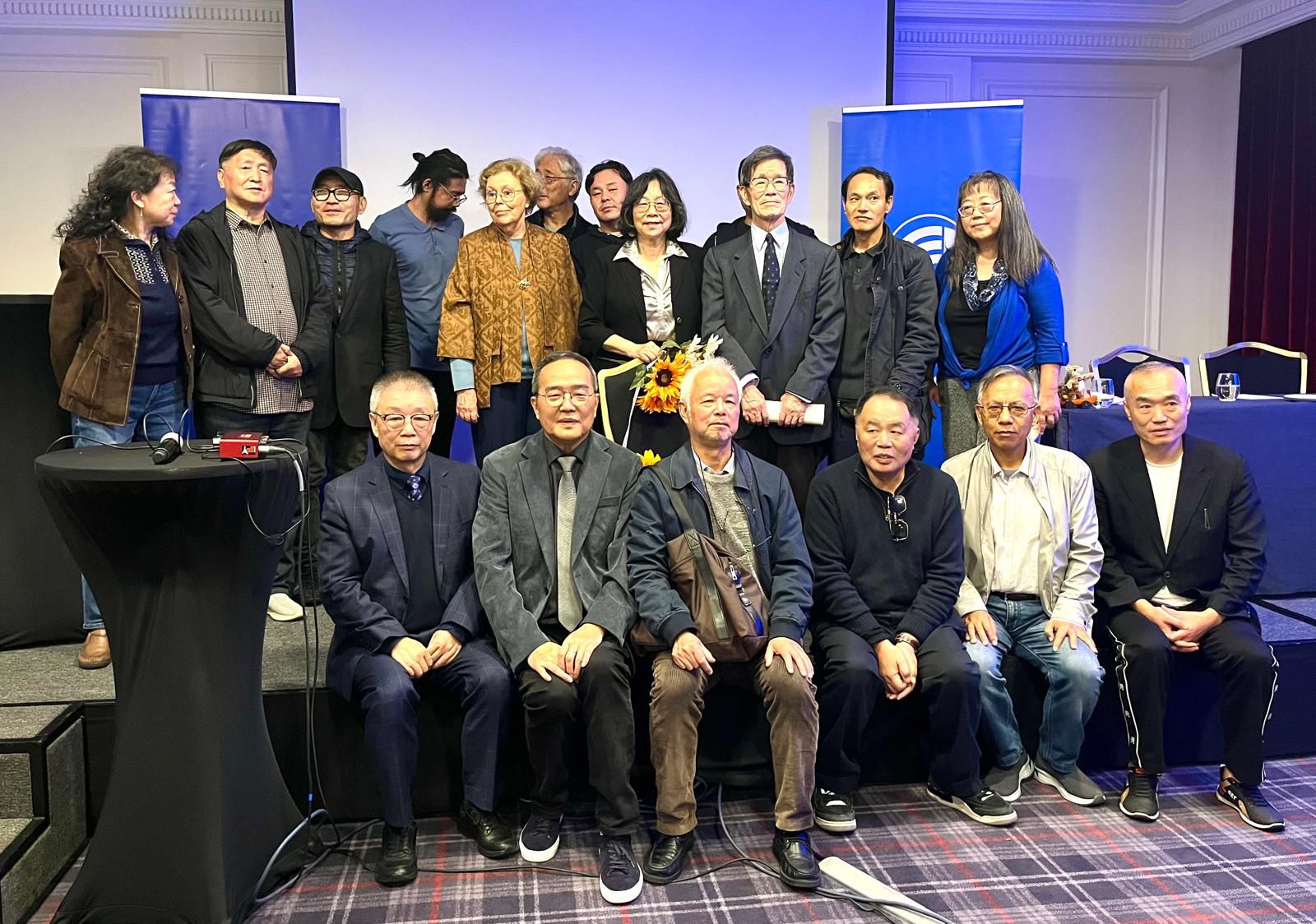
2025年6月4日,由中国民主党英国总部主办、「欧洲之声」等组织协办的“纪念六四·反对专制独裁”民主研讨会,在英国伦敦St Giles会议厅庄严召开。会议主持人黄华宣布会议开始,中国民主党英国总部主席王冠儒发表开幕致辞,黄俊与黄天担任统筹协调,充分展现了中国海外民运力量对历史责任的坚守与延续。

国际声援汇聚伦敦,彰显全球良知

本次研讨会汇聚了来自英国、法国、德国、台湾等多个国家与地区的民主人士、文化学者与人权捍卫者。他们跨越国界、不辞辛劳,只为共同纪念“六四”天安门大屠杀、声讨中共暴政。会议代表有70人。

重要嘉宾包括:

• 吾尔开希:1989年北京学运主要学生领袖,现任中华民国立法院人权委员会秘书长,从台湾飞抵伦敦参会。

• 廖天琪:德国笔会荣誉会长,专程从德国赴会。

• 玛丽亚:法国著名汉学家

• 本. 罗杰斯:英国保守党人权委员会副主席

• 潘永忠: 欧洲之声总编

• 王国兴:民主中国阵线总召集人

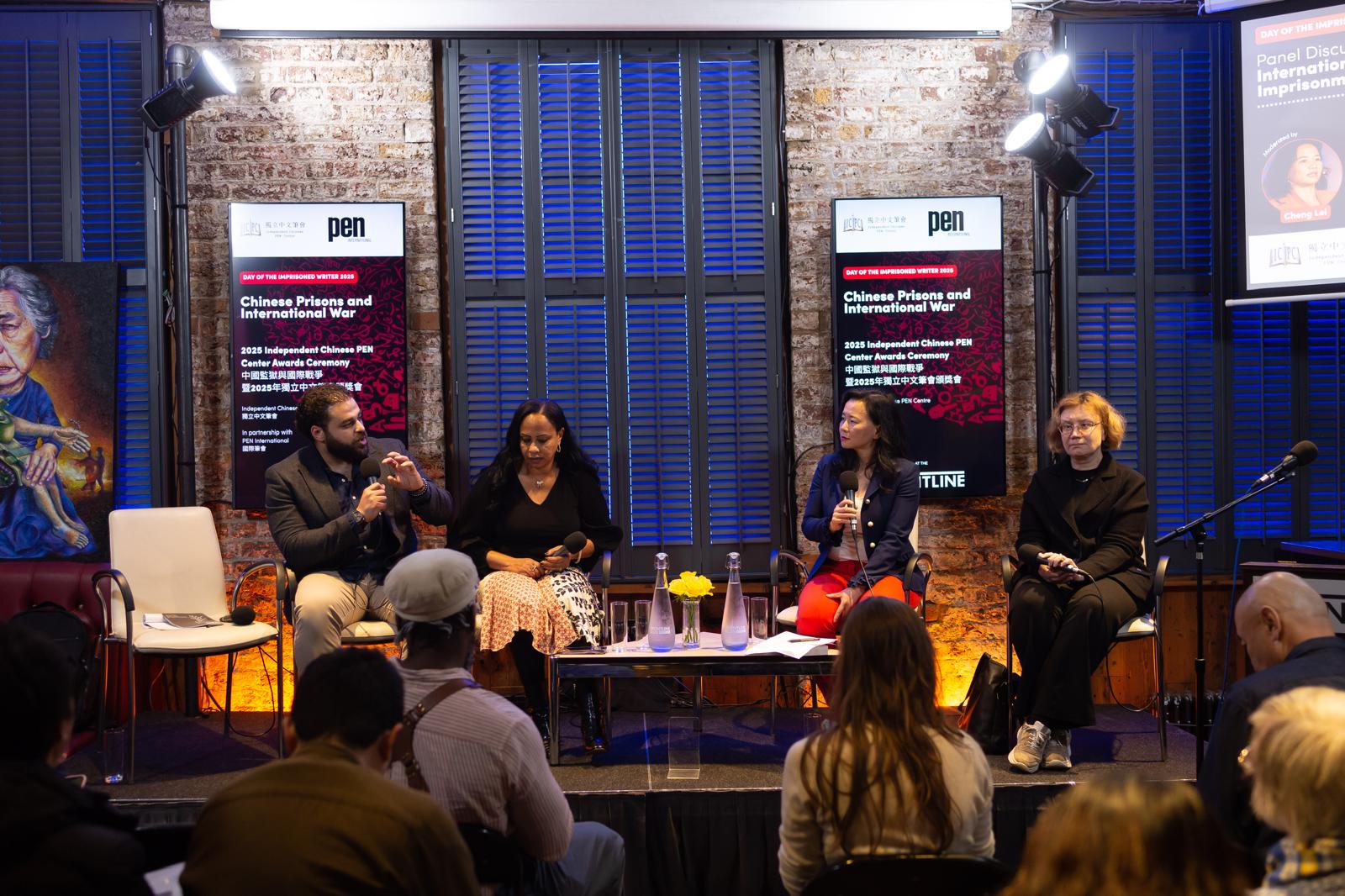
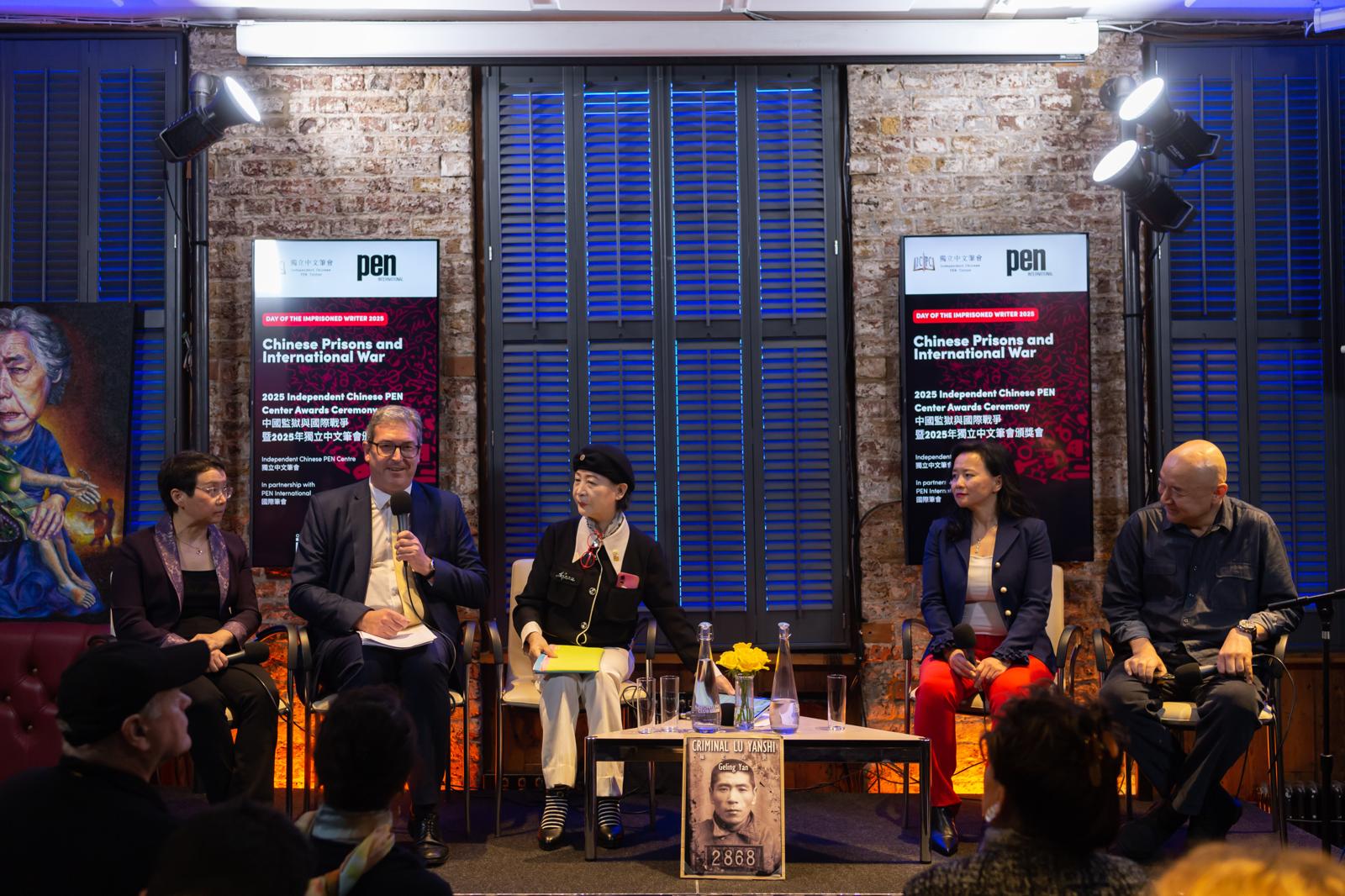
• 马建:流亡作家,独立中文笔会会长,与人权活动者侯芷明一同从法国前来声援。

他们应中国民主党英国总部诚挚邀请,亲赴会场,与全球华人一道纪念历史、共抗极权,展现出深厚的人道情怀和政治担当。

正如与会者所言:“这不仅是一次纪念,更是一场跨越时空与国界的民主呼喊。”

上午研讨会:回顾历史,呼唤未来

上午9时,大会在肃穆庄严的氛围中拉开序幕。王冠儒主席在致辞中强调:“我们纪念六四,不是为了回忆,而是为了唤醒。民主与自由,从未离开我们的责任与奋斗。”

三位重点发言嘉宾掀起会议高潮:

• 吾尔开希以亲身经历,深刻剖析中国民主困境与国际责任,现场与党员互动频繁,气氛热烈。

• 马建首次公开展示珍藏多年的“六四”原始屠杀照片,直言:“真相必须被守护,历史不能被删除。”

• Benedict Rogers,英国保守党人权委员会副主席及“香港监察”创始人,表示:“民主价值超越国界。中国人民追求自由的权利,不容否认。”

• 黄华作了发言:坚持和平理性非暴力的原则,推动中国走向民主,自由,法治,人权的强大繁荣国家。

• 中国民主党海外委员会主席宋书元和香港议会代表霍嘉志做了在线发言。

下午诗会与对话:历史与现实交锋

下午,英国知名诗人Sarah Lawson朗诵其“六四”后创作的诗篇《血色广场》,文字哀婉、情感深沉,引发现场长时间肃立。随后,与会观众与嘉宾围绕“历史记忆与当代民主运动”展开思想交锋,延伸出对中国政治转型、言论自由及青年责任的深入探讨。

傍晚烛光抗议:走向街头,照亮黑夜

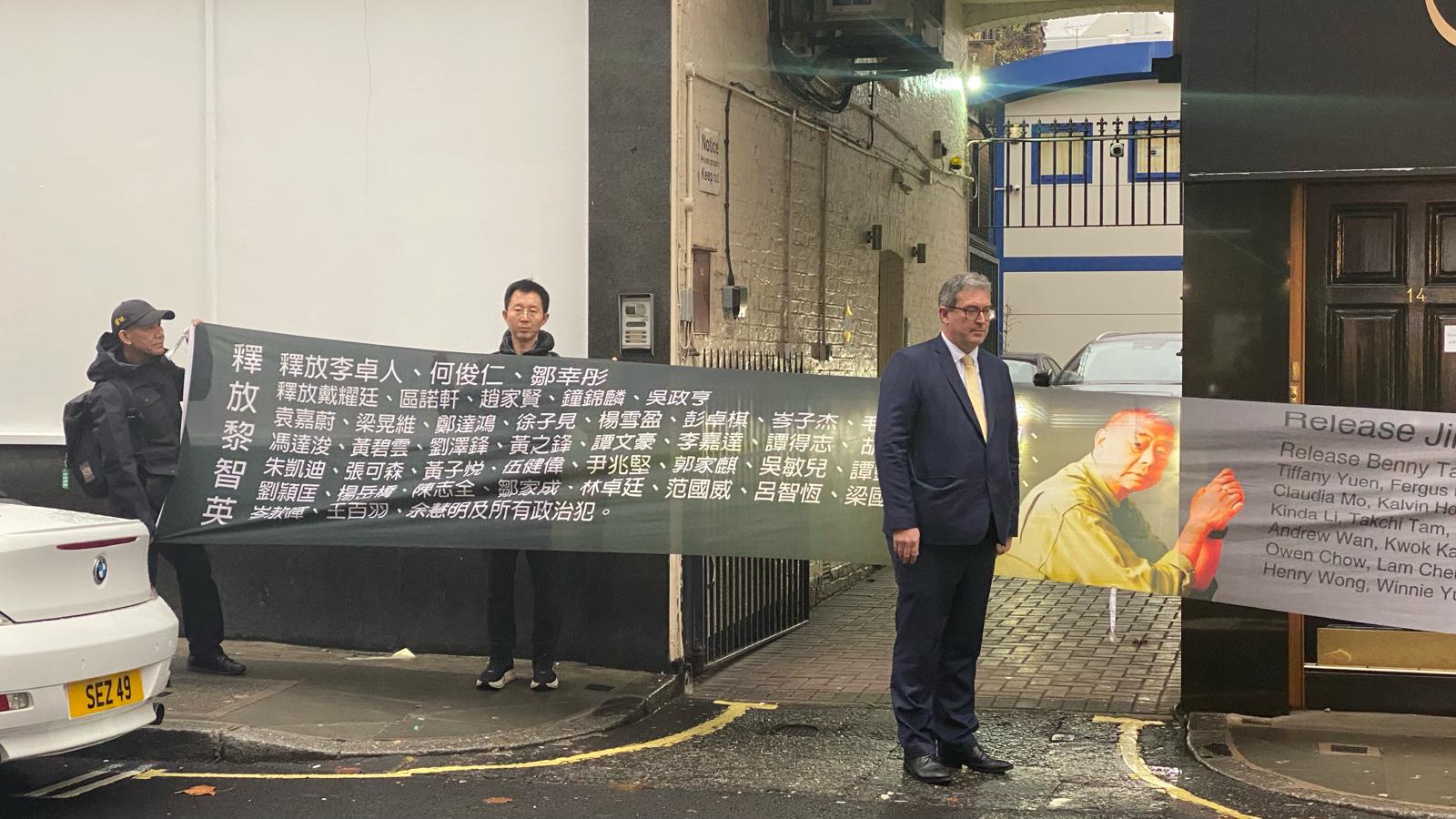
傍晚五时起,参会人员自发步行至中国驻英大使馆门前Portland Place街头举行烛光抗议。人群手持标语、国旗与蜡烛,整齐有序,口号响彻街头:“平反六四、反对专制、结束暴政!” “李鹏罪该万死!””邓小平罪该万死!”“习近平下台!”“共产党下台”。

活动高潮出现在三位嘉宾的发言时刻:

• 吾尔开希与廖天琪现场发表长篇演讲,直斥中共专制统治,群情激昂、掌声雷动;

• 马建则再次向群众展示屠杀见证,并号召海外华人行动起来,“用自由的声音,为被禁锢者代言。”

绝食布条缅怀亡灵,夜色中坚持到底

特别值得一提的是,自傍晚六点起,所有抗议者自发在额头绑上写有“绝食抗议”字样的白色布条,以无声方式致哀六四死难者、表达对极权政权的抗议。这一行为持续至深夜十一时,长明的烛火与飘扬的横幅,成为伦敦当晚最庄严肃穆的画面之一。

民主党的总结与誓言

中国民主党英国总部在会后发布声明指出:本次活动得到来自政界、文化界、人权团体与旅英华人群体的广泛响应与支持,是对“六四”历史的有力见证,更是一场全球华人共同发出的民主宣誓。

正如总结语中所言:

“我们纪念六四,不只是为了缅怀,更是为了觉醒。我们将持续推动中国实现宪政转型,让未来不再流血。”

活动总指挥部成员:黄天,黄俊,何智威。

附录:参加集会活动民主党党员名单:王冠儒, 蒋玉山, 谌彬,郝涛, 黄华,黄俊,黄天,何智威,李濤,许少男,俞杰辉,吴志芬,Kaney Huang,王魏晋,邬勇,冯林,温作团,杨体荷,王涛,胡晓,王建,郭稼瑄,Lz Tan,成小丹,丁晨光,周炜豪,黄林,侯尔斌 张学美,吕建启,成亚利,韦崇华,赵武,朱嗣勇,程敏,邓伟,蔡波,钟淑琴,范可为,赵玉莲,戴雪梅,戴超,李皓博,卢灵飞,徐伟华,李景棠,王应和,顾晓锋,兰子明,朱双林,仝鑫,雷喜哲,林钟

2025 London “June 4th” Democracy Forum and Candlelight Vigil Successfully Held

Reported by: Huang Jun, Member of the UK Headquarters of China Democracy Party

On June 4, 2025, the UK Headquarters of China Democracy Party, in collaboration with Voice of Europe and other organizations, solemnly hosted the “Commemorate June 4th · Oppose Totalitarian Dictatorship” Democracy Forum at the St Giles Conference Hall in London. The event was chaired by Huang Hua, with an opening speech by Chairman Wang Guanru. The forum was coordinated by Huang Jun and Huang Tian, fully demonstrating the overseas Chinese democratic movement’s continued commitment to historical responsibility.

International Support Converges in London — A Global Voice of Conscience

The forum gathered democracy advocates, cultural scholars, and human rights defenders from the UK, France, Germany, Taiwan, and other regions. Crossing national borders, they came together to commemorate the Tiananmen Massacre and denounce CCP tyranny. In total, 70 representatives attended the event.

Key guests included:

  • Wu’er Kaixi — leading student figure of the 1989 Beijing Democracy Movement, now Secretary-General of the Human Rights Commission of Taiwan’s Legislative Yuan, who flew from Taiwan to London for the forum.
  • Tianqi Liao — Honorary President of the German PEN Centre, attending from Germany.
  • Maria — renowned French Sinologist.
  • Benedict Rogers — Vice-Chair of the UK Conservative Party Human Rights Commission.
  • Pan Yongzhong — Editor-in-Chief of Voice of Europe.
  • Wang Guoxing — Convenor of the Democratic China Front.
  • Ma Jian — exiled writer, President of Independent Chinese PEN Centre, who attended with human rights activist Hou Zhiming, traveling from France.

Invited by the UK Headquarters of China Democracy Party, these guests joined Chinese people worldwide to commemorate history and resist authoritarianism, embodying profound humanitarian spirit and political courage.

As one attendee put it:

“This is not merely a memorial — it is a cross-border, timeless call for democracy.”

Morning Forum — Remembering the Past, Calling for the Future

At 9 AM, the forum commenced in a solemn atmosphere.

In his opening remarks, Chairman Wang Guanru stated:

“We commemorate June 4th not to dwell in the past, but to awaken. Democracy and freedom have never left our responsibility and struggle.”

Three keynote speeches marked the forum’s high point:

  • Wu’er Kaixi, drawing on his personal experience, offered deep reflections on China’s democratic challenges and international responsibility, sparking lively interaction with Party members.
  • Ma Jian publicly displayed rare original photographs of the Tiananmen Massacre for the first time, declaring: “Truth must be preserved — history cannot be erased.”
  • Benedict Rogers emphasized: “Democratic values transcend borders. The Chinese people’s right to freedom must not be denied.”
  • Huang Hua spoke on adhering to principles of peace, rationality, and nonviolence, to help China become a nation of democracy, freedom, rule of law, and human rights.
  • Song Shuyuan, Chairman of the Overseas Committee of the China Democracy Party, and Ho Ka Chi, representative of the Hong Kong Parliament, delivered speeches online.

Afternoon — Poetry and Dialogue: Bridging History and Today

In the afternoon, renowned British poet Sarah Lawson recited her poem Blood-Stained Square, written after June 4th — a piece full of poignant emotion, moving the audience to a standing tribute.

Subsequent discussions centered on “Historical Memory and Contemporary Democratic Movements”, with in-depth exchanges on China’s political transformation, freedom of speech, and youth responsibility.

Evening Candlelight Vigil — Into the Streets, Lighting the Darkness

From 5 PM, participants marched to the Chinese Embassy in London on Portland Place to hold a candlelight vigil. Holding banners, flags, and candles, they chanted slogans that echoed through the streets:

“Redress June 4th! Oppose dictatorship! End tyranny!”

“Li Peng deserves death!”

“Deng Xiaoping deserves death!”

“Xi Jinping step down!”

“Down with the Communist Party!”

The event reached a peak with speeches by key guests:

  • Wu’er Kaixi and Tianqi Liao delivered impassioned speeches condemning the CCP’s authoritarian rule, drawing waves of applause.
  • Ma Jian again displayed photographic evidence of the massacre and called on overseas Chinese to speak out for those still silenced.

Hunger Strike Bands — Mourning the Victims, Persevering Through the Night

A particularly moving moment came at 6 PM, when all protesters tied white bands reading “Hunger Strike Protest” across their foreheads. In silence, they mourned the victims of June 4th and protested authoritarianism. This continued until 11 PM, with flickering candlelight and fluttering banners creating one of London’s most solemn scenes that night.

Party’s Closing Statement — Memory and Commitment

In a post-event statement, the UK Headquarters of China Democracy Party noted that the event had received broad support from political, cultural, and human rights circles, as well as the overseas Chinese community in the UK.

It was not only a powerful witness to the history of June 4th but a global democratic pledge.

As the closing statement read:

“We commemorate June 4th not only to remember, but to awaken. We will continue working toward China’s constitutional transformation — so that the future will no longer be written in blood.”

Command Team:

Huang Tian, Huang Jun, He Zhiwei

Participating China Democracy Party Members:

Wang Guanru, Jiang Yushan, Chen Bin, Hao Tao, Huang Hua, Huang Jun, Huang Tian, He Zhiwei, Li Tao, Xu Shaonan, Yu Jiehui, Wu Zhifen, Kaney Huang, Wang Weijin, Wu Yong, Feng Lin, Wen Zuotuan, Yang Tihe, Wang Tao, Hu Xiao, Wang Jian, Guo Jiaxuan, LZ Tan, Cheng Xiaodan, Ding Chenguang, Zhou Weihao, Huang Lin, Hou Erbin, Zhang Xuemei, Lü Jianqi, Cheng Yali, Wei Chonghua, Zhao Wu, Zhu Siyong, Cheng Min, Deng Wei, Cai Bo, Zhong Shuqin, Fan Kewei, Zhao Yulian, Dai Xuemei, Dai Chao, Li Haobo, Lu Lingfei, Xu Weihua, Li Jingtang, Wang Yinghe, Gu Xiaofeng, Lan Ziming, Zhu Shuanglin, Tong Xin, Lei Xizhe, Lin Zhong.

《两种根本不同的政党》读后感:警惕苏式极权的历史警钟 Reflections on “Two Fundamentally Different Types of Political Parties”: A Warning from the History of Soviet-Style Totalitarianism

作者——中国民主党英国总部党员 程敏

读胡适先生的《两种根本不同的政党》,感触颇深。这篇文章不仅是对政党制度的深刻剖析,更是一份历史留给后人的警钟。文中胡适先生精准地区分了“多党竞争”与“一党独裁”的本质,明确指出苏联式的共产极权政党并非真正意义上的“政党”,而是一种彻底剥夺人民自由与权利的统治机器。

在现代社会体系下,真正的民主政党必须接受竞争,允许反对派存在,必须服从宪法、法治和选民意志,并拥有“胜固可喜,败亦欣然”的雅量。而中共继承自苏联的一党专政体制,则完全建立在暴力与恐惧之上,通过思想洗脑、新闻封锁、打击异己、清除异见来维系一党专政的恐怖统治。与苏联前辈不同之处在于,中共“善于吸取教训”,更会伪装,搞几个所谓的“民主党派”来以参政之名,行鼓掌之事,好给自己贴上“民主国家”的标签。而中共党魁常以100%得票率当选国家元首,更是苏系独裁制度的一大特色——既要独裁,又要装出一副民主选举的模样,荒诞而滑稽。

可无论他们怎么包装,骨子里这套继承自苏联的独裁制度从来就不承认任何政治对手的合法存在,不接受公开辩论,也不容许权力更替。它的本质是一种彻头彻尾的极权统治。这也是我认为中共永远无法与台湾和平统一的原因之一。不管他们对台湾许下什么甜言蜜语,都只是缓兵之计。中共的最终目的永远是把所有统治的地区都变成大陆那样,没有言论自由、没有新闻自由、只有一党独裁、恐怖高压的现代文明洼地。中共自己早已证明了这一点,香港就是最鲜明的前车之鉴。

苏式极权制度最大的危害,在于它不仅剥夺了人民的物质自由,更摧毁了精神自由与道德尊严。胡适本人被蒋介石接到台湾后,短短三个月内,他的老友,辅仁大学校长,学者陈垣就不得不在《人民日报》上发文批判胡适“背离人民、为反动政权服务”;随后毛泽东又在1951年1957年这七年间两次发动对“反动学术权威”胡适的大批判,期间纠集了超过160位学者作家对胡适口诛笔伐。胡适的小儿子胡思杜不仅被逼迫发表文章谴责父亲、歌颂共产主义,最后甚至被逼到自杀身亡。在这样可怕的独裁体制下,人民被迫服从一个“真理”的唯一来源,所有不同意见都被视为“反动”,甚至“罪恶”。教育变成洗脑,新闻变成宣传,批评被定性为“敌对势力”。并以最残酷的手段折磨甚至杀害所有“反动者”。久而久之,整个社会终将陷入集体沉默和虚伪,个体的思考能力与判断力被彻底消磨。

胡适先生曾说:“容忍比自由更重要。”而极权制度最不能容忍的,正是异见、怀疑和批评。苏式体制不允许独立人格的存在,更无法接受政治上的对话与博弈。结果就是,一个社会只能在高压下“表面稳定”,但真实的民意被压抑,制度的合法性建立在恐惧而非信任之上。一旦外部压力或内部裂缝出现,整个政权就像沙上之塔,随时可能崩塌。

从历史回望今天,胡适的这篇文章依然具有现实意义。一党独大,无监督、不透明、不受制衡,哪怕打着“人民”的旗号,也只会走向极权的深渊。中国人常说毛泽东伟大,因为他是第一个喊出“人民万岁”的领导人。但早在千年前,古人就有“民贵君轻”的口号了。毛泽东害死数千万人,罪行罄竹难书,可在中国,真正了解这些历史的人却寥寥无几。我们不能只听执政者说了什么,更要看他们做了什么,并且要确保在他们做错的时候,我们能有权斥责,甚至换掉他们——这才是民主制度的精髓。

如果民主是一辆摇摇晃晃的马车,虽然颠簸,但始终在路上,不至于偏离太远;那么独裁就是一辆高速狂奔的汽车,效率极高,雷厉风行,但一旦方向错误,车上所有人都只能跟着那个开车的疯子一起坠入悬崖。我们必须保持警醒。苏联的崩溃并未让极权主义彻底退出历史舞台,而中共每天都仍在用“稳定”“统一”的名义掩盖它的独裁与压迫。

Reflections on “Two Fundamentally Different Types of Political Parties”: A Warning from the History of Soviet-Style Totalitarianism

By Cheng Min, Member of the UK Headquarters of China Democracy Party

Reading Hu Shih’s essay Two Fundamentally Different Types of Political Parties left a profound impression on me. The piece is not only a sharp analysis of party systems but also a historical alarm bell for generations to come. In it, Mr. Hu makes a clear distinction between multi-party competition and one-party dictatorship, pointing out that Soviet-style communist parties are not genuine political parties in the democratic sense, but rather machines of control that strip the people of their freedom and rights.

In modern political systems, a real democratic party must accept competition, tolerate opposition, obey constitutional law and the will of voters, and have the grace to win with humility and lose with dignity. In contrast, the one-party rule inherited by the Chinese Communist Party (CCP) from the Soviet model is founded entirely on violence and fear. It sustains its rule through ideological indoctrination, media censorship, suppression of dissent, and the elimination of opposition.

Unlike its Soviet predecessors, the CCP has mastered the art of disguise. It manufactures a handful of so-called “democratic parties” to participate in government as symbolic ornaments, clapping hands in staged meetings to paint a false picture of a multi-party system. Its leaders, often “elected” with 100% of the vote, demonstrate the absurdity of its dictatorship masquerading as democracy—both grotesque and farcical.

But no matter how well-dressed, the nature of this Soviet-style dictatorship has always refused to recognize the legitimacy of any political rival, has never allowed public debate, and has never permitted a peaceful transition of power. At its core, it is an extreme form of totalitarian rule. This, in my view, is one of the fundamental reasons why the CCP will never be able to peacefully unify with Taiwan. No matter how sweet the promises it makes, they are merely delay tactics. The CCP’s true goal is always to turn every area it controls into another mainland China—without freedom of speech or press, ruled by fear and a single party.

Hong Kong is the most striking recent example of this reality.

The most insidious threat of Soviet-style totalitarianism lies not only in its deprivation of material freedom, but in its destruction of spiritual freedom and moral dignity. After Hu Shih was brought to Taiwan by Chiang Kai-shek, his longtime friend—scholar and university president Chen Yuan—was forced to publish a denunciation of Hu in the People’s Daily, calling him a “traitor to the people.” In the years that followed, Mao Zedong personally launched two large-scale campaigns to vilify Hu Shih (in 1951 and 1957), mobilizing over 160 writers and scholars to attack him.

Hu’s younger son, Hu Sidu, was pressured into publicly denouncing his father and praising communism. Eventually, he was driven to take his own life. In such a terrifying system, the people are forced to obey a single source of truth, and any dissenting view is labeled as “reactionary” or even “evil.” Education becomes indoctrination, the media becomes propaganda, and criticism is branded as hostility. Those deemed “enemies” are tortured or killed with cruelty. Over time, the entire society falls into silence and hypocrisy, as independent thought and moral judgment are gradually destroyed.

Hu Shih once said, “Tolerance is more important than freedom.” And the very thing that totalitarian systems cannot tolerate is dissent, doubt, and criticism. The Soviet model permits no space for independent personality, nor political dialogue or negotiation. The result is a society that appears stable under pressure, but in reality, silences public opinion and builds legitimacy on fear rather than trust. When external pressure or internal fractures appear, the whole regime, like a tower of sand, may collapse at any moment.

Looking back from today, Hu Shih’s words remain deeply relevant. When a party grows too powerful—without supervision, transparency, or checks and balances—it inevitably descends into totalitarianism, even if it claims to act “on behalf of the people.” Chinese people often say Mao Zedong was great because he was the first leader to shout “Long live the people.” But long before Mao, ancient Chinese philosophy had already declared, “The people are more important than the ruler.”

Mao Zedong caused the deaths of tens of millions, yet few in China truly understand that part of history. We must not only listen to what those in power say—we must watch what they do. And we must ensure that when they do wrong, we have the right to criticize them, or even remove them from office. That is the essence of democracy.

If democracy is a shaky carriage—bumpy but always moving forward—then dictatorship is a speeding car: fast and decisive, but once it steers in the wrong direction, everyone inside is doomed to crash with the driver.

We must remain vigilant. The collapse of the Soviet Union did not mean the end of totalitarianism. The CCP still cloaks its dictatorship and repression under the names of “stability” and “unity” every single day.

中国民主党英国总部党员代表列席支持“国际南蒙支援日”抗议活动 UK Headquarters of China Democracy Party Attends and Supports “International Southern Mongolia Support Day” Protest

供稿人:黄天(中国民主党英国总部)

2025年5月11日,内蒙古人民党主席特木其勒图(席海明)赴伦敦主持“International Southern Mongolia Support Day(国际南蒙支援日)”系列抗议示威活动。中国民主党英国总部部分党员代表在总部顾问黄华的倡议下,以个人身份参加本次抗议示威活动,来到伦敦中国驻英国大使馆门前,表达对中国少数民族地区捍卫自己的语言、文化和生活方式的支持,以及对民族平等、人权保障等普世价值观的认可。中国民主党英国总部党员何智威、黄天、黄俊参与了协调与组织工作。

抗议活动于当天下午2:00准时开始。内蒙古人民党党员代表在现场带领参与者高喊口号,要求中国政府切实保障少数民族地区的自治权,停止迫害少数民族,停止通过文化入侵的方式磨灭少数民族地区的文化认同。随后,内蒙古人民党主席席海明发表了讲话。他表示,大一统思维是秦制遗留在中国人心中的“万里长城”,它阻碍着中国各少数民族地区人民争取民族平等和民族自治的斗争,也加剧了汉族和少数民族人民之间的误解和矛盾。反抗中共暴政与民族自治是相辅相成的关系,各少数民族地区都应当团结起来共同推翻中共统治,而非党同伐异、相互猜忌。彼此之间的不同诉求应当在中共倒台后的民主框架下通过正当程序解决。

抗议活动结束后,中国民主党英国总部部分党员代表在总部顾问黄华的带领下,与内蒙古人民党主席席海明及部分党员进行了友好交流,就彼此在反抗中共暴政、争取自由宪政的斗争中的经验教训交换了看法。

“国际南蒙支援日”是为纪念蒙古族牧民Mergen为保护草原不受违规采矿活动侵扰而在抗议活动中不幸离世的悲剧而设立的。2011年5月11日,蒙古族牧民Mergen为保护牧场和水源,联合其他牧民封锁了当地的煤矿,要求政府保护蒙古族牧民的牧场,捍卫蒙古族自古以来的游牧生活方式。然而,他在抗议活动中被一名卡车司机残酷地撞击并被拖行145米,最终不幸离世,引发了各界对于蒙古民族文化和游牧生活方式被中共侵蚀的广泛忧虑。

中国民主党英国总部始终坚持求同存异之原则,对所有愿意反抗中共暴政、支持中国民主事业的政党、团体和个人敞开怀抱,合作共赢。尽管彼此政见不同,对民主中华的设想迥异,但是中国民主党英国总部始终支持所有热爱自由的人发表政见的权利,始终愿意与他们暂时搁置具体政见的分歧,为推翻中共统治而并肩战斗,为彼此观念的自由竞争创造坚实的宪政基础与必要的政治条件。这种对自由的自信是中共独裁专制下微弱却不息的亮光。中国民主党英国总部将继续同海内外民主运动人士和组织一道,为推翻中共独裁暴政、在中国实现真正的宪政而不懈努力。

党员演讲名单(按演讲先后顺序):俞杰辉,蒋蔚。

党员出席名单:俞杰辉,蒋蔚,王金秀,王燕,吴志芬,董彦均,Kaney Huang,冯林,黄林,张学美,侯尔斌,韦崇华,王涛,赵武,卢灵飞 ,郭稼瑄,戴超,杨体荷,温作团,李涛,杨溯,黄天,范可为,成小丹,黄华,何智威,徐伟华,朱嗣勇,吕建启,Xin Tong。

UK Headquarters of China Democracy Party Attends and Supports “International Southern Mongolia Support Day” Protest

Submitted by: Huang Tian (UK Headquarters of China Democracy Party)

On May 11, 2025, Temtsiltu Shobtsood (Xi Haiming), Chairman of the Inner Mongolian People’s Party, led a series of demonstrations in London to mark International Southern Mongolia Support Day. At the initiative of Huang Hua, advisor to the UK Headquarters of China Democracy Party, a number of party members attended the event in a personal capacity. They gathered in front of the Chinese Embassy in London to express support for ethnic minorities in China defending their languages, cultures, and ways of life, and to show recognition of universal values such as ethnic equality and human rights. Party members He Zhiwei, Huang Tian, and Huang Jun were involved in the coordination and organization of the event.

The protest began at 2:00 PM. Representatives from the Inner Mongolian People’s Party led the crowd in chanting slogans, calling on the Chinese government to respect regional autonomy, end the persecution of ethnic minorities, and stop erasing cultural identities through assimilation policies.

Chairman Temtsiltu Shobtsood then delivered a speech, stating that the ideology of national unification is like a “Great Wall” left behind by the Qin imperial system, entrenched in the minds of Chinese people. He argued that it continues to obstruct the pursuit of ethnic equality and autonomy for China’s minority peoples, while intensifying misunderstanding and conflict between Han Chinese and minority communities. He emphasized that resisting CCP tyranny and fighting for ethnic autonomy are interconnected, and that all minority regions should stand in solidarity to overthrow CCP rule, rather than falling into division or mutual suspicion. Differences in vision should be addressed through democratic procedures after the CCP has fallen.

After the protest, representatives from the UK Headquarters of China Democracy Party, led by advisor Huang Hua, engaged in friendly exchanges with Chairman Temtsiltu and members of the Inner Mongolian People’s Party. They discussed lessons and experiences in the shared struggle for freedom and constitutional democracy against the CCP dictatorship.

International Southern Mongolia Support Day commemorates the tragic death of Mergen, a Mongolian herder who died while defending his grasslands from illegal mining. On May 11, 2011, Mergen, along with other herders, blocked access to a local coal mine to protest environmental destruction and to safeguard the traditional nomadic lifestyle of the Mongolian people. During the protest, he was fatally struck and dragged for 145 metres by a coal truck driver, sparking widespread concern over the CCP’s erosion of Mongolian culture and the nomadic way of life.

The UK Headquarters of China Democracy Party has always adhered to the principle of “seeking common ground while respecting differences”, and is open to working with all parties, groups, and individuals who oppose CCP tyranny and support China’s democratic transformation. Despite ideological differences or divergent visions for China’s future, the Party firmly supports the right of all freedom-loving people to express their views, and is willing to temporarily set aside disagreements in order to stand united against authoritarianism.

The Party believes that open competition of ideas under constitutional democracy is the foundation of true freedom. This confidence in freedom is a faint but unwavering light amid the darkness of CCP dictatorship. The UK Headquarters of China Democracy Party will continue to work alongside democratic activists and organizations worldwide to overthrow the CCP and build a free, democratic, and constitutional China.


Speakers (in order):

Yu Jiehui, Jiang Wei

Attending Members:

Yu Jiehui, Jiang Wei, Wang Jinxiu, Wang Yan, Wu Zhifen, Dong Yanjun, Kaney Huang, Feng Lin, Huang Lin, Zhang Xuemei, Hou Erbin, Wei Chonghua, Wang Tao, Zhao Wu, Lu Lingfei, Guo Jiaxuan, Dai Chao, Yang Tihe, Wen Zuotuan, Li Tao, Yang Su, Huang Tian, Fan Kewei, Cheng Xiaodan, Huang Hua, He Zhiwei, Xu Weihua, Zhu Siyong, Lü Jianqi, Xin Tong.

中国民主党英国总部组织5月3日抗议活动:反对中共在伦敦兴建超级大使馆 UK Headquarters of China Democracy Party Organizes May 3 Protest Against CCP’s Mega Embassy in London

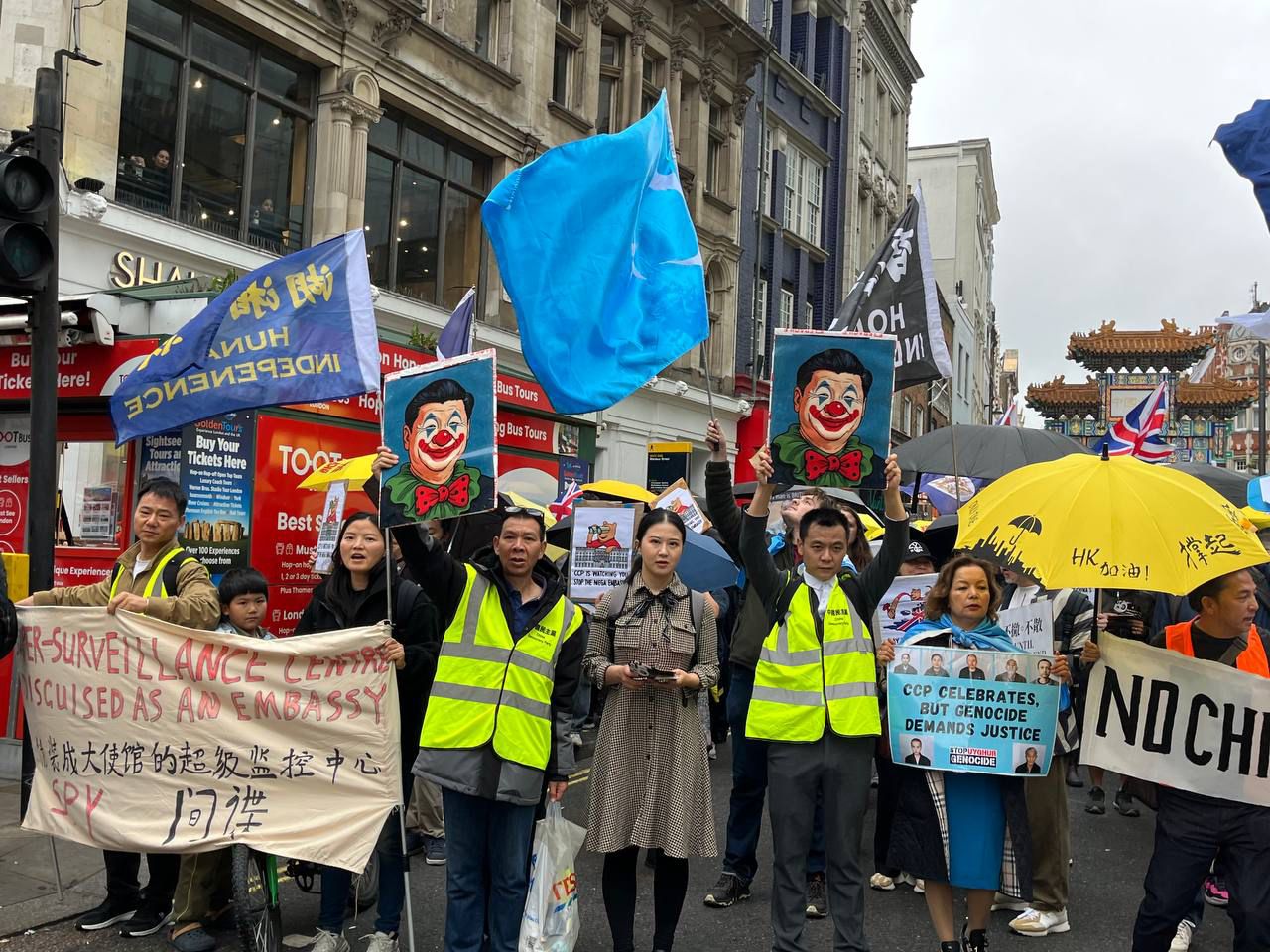
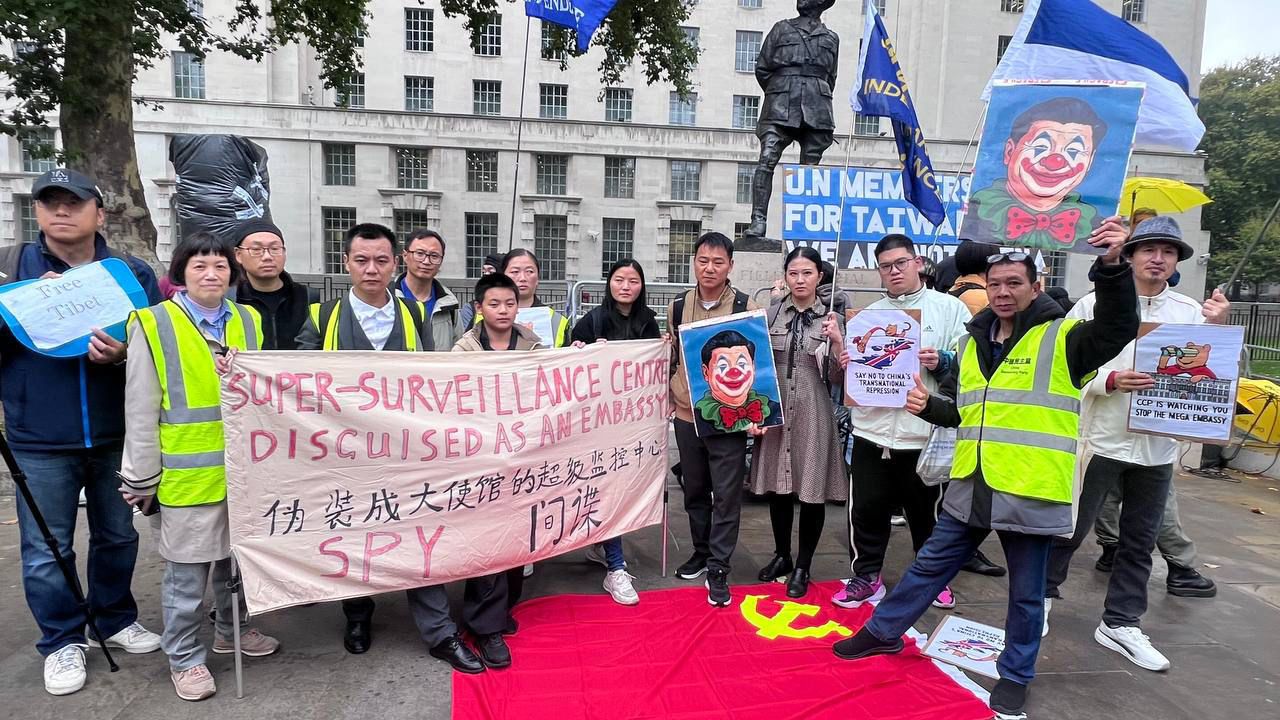
2025年5月3日,中国民主党英国总部联合香港、维吾尔、西藏人权团体,在伦敦皇家铸币厂(Royal Mint Court)外举行大规模抗议集会与游行,强烈反对中国政府在该地兴建所谓“超级大使馆”。

此次活动表达了对中共渗透西方民主社会的不满与警惕,并呼吁英国政府立即终止该项目,保护伦敦社区的公共安全与言论自由。据了解,英方或将在5月内就该项目作出最终决定,组织者认为此刻正是社会各界表态的关键时机。

【游行现场:近三千人包围皇家铸币厂】

抗议活动于当天下午2时正式开始,约3000名示威者从铸币厂外集结,人数以香港人居多,并围绕Royal Mint Court展开约一公里的环绕式游行。由于人数众多,队伍前方返回起点时,队尾尚未起步,游行队伍延绵不绝,场面壮观。

现场参与者高举“No Mega Embassy”、“CCP Out of London”、“人权不容践踏”等标语,高喊“习近平下台”、“共产党滚出英国”等口号,表达对中共政权的强烈抗议,呼吁停止伦敦中共超级大使馆的建设项目。

部分参与者还积极与路人交流,介绍活动诉求与中国民主党的立场,赢得不少英国市民的理解与支持。

警方在场维持秩序,整体气氛和平有序。但据现场消息,一名为示威者提供支援的救护志愿者被捕,引发部分关注。

【中国民主党英国总部:坚守非暴力原则,联合抗争极权扩张】

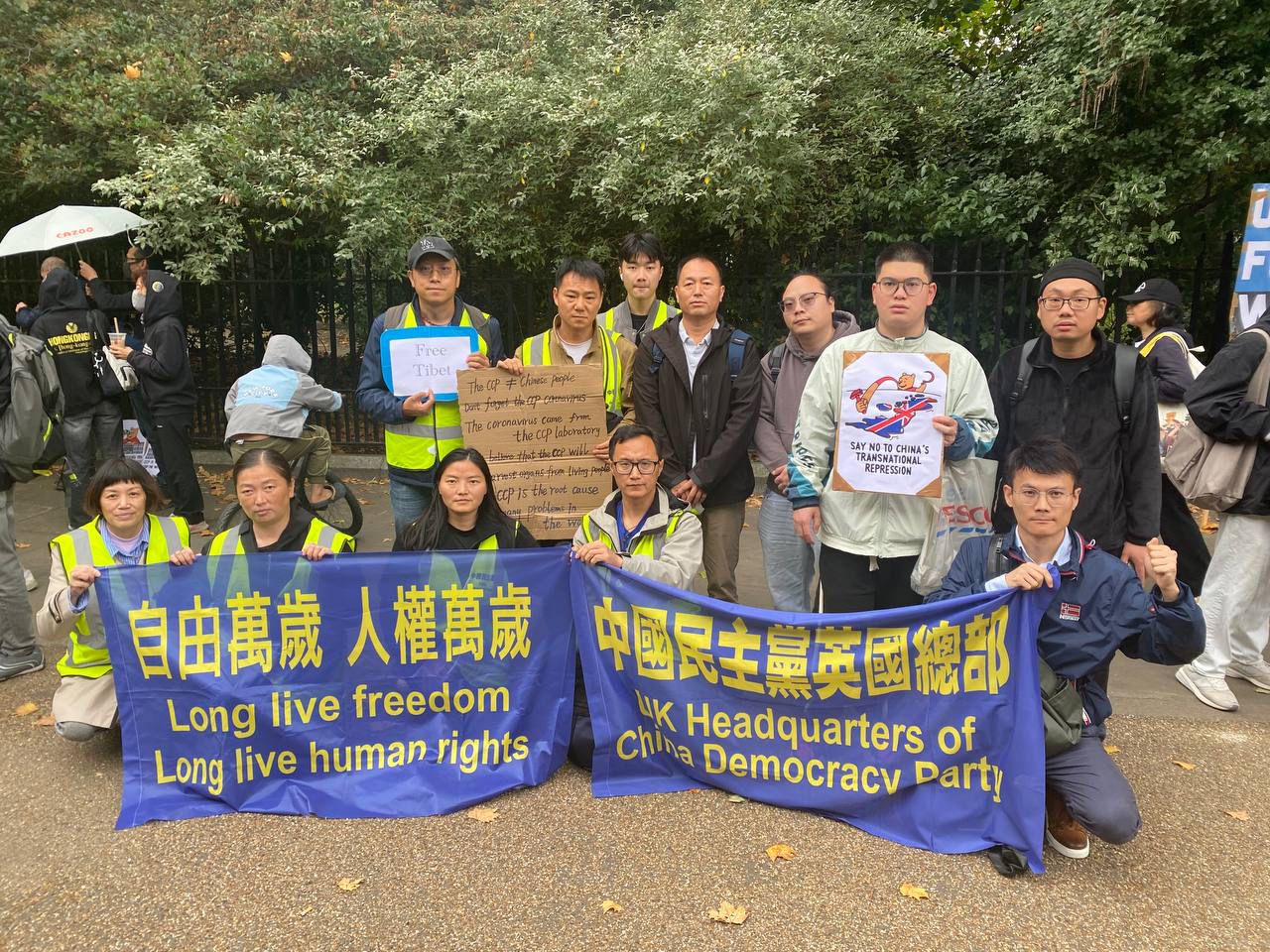
本次抗议活动由中国民主党英国总部成员黄俊、黄天、何智威组织,并获得“港人英国”、“香港同行”以及西藏与维吾尔人权代表的广泛声援。我党多位资深党员与支持者到场参与,展现了坚定的反极权立场和对民主自由的执着追求。

中国民主党英国总部始终坚持和平、理性、非暴力原则,积极与伦敦警察厅沟通报备,确保活动在合法、安全、有序的前提下顺利进行。活动当日现场秩序良好,参与者严格遵守公共秩序,展现了高度的责任感与组织能力。

在集会过程中,党内成员秉持“求同存异、鼓励发言”的原则,支持党员自由表达观点,积极与在场民众沟通交流,赢得良好互动与正面回馈。

中国民主党英国总部将继续与海内外民主力量携手,坚决反对极权势力对自由社会的渗透,致力于推动中国迈向真正的宪政民主未来。

活动组织者:黄俊 黄天 何智威

党员及支持者出席名单:

5月3号活动:周环,冯林,林明强,郭稼瑄,杨溯,朱双林,李皓博 ,李涛,王建,赵武,丁晨光,温作团,侯尔斌,顾晓锋,张学美,赵玉莲,邬勇,韦崇华,范可为,黄俊,成亚利,成小丹,黄天,吕建启,兰子明,戴超,戴雪梅,白林,何智威,俞杰辉,蒋蔚,王燕,董彦均,吴志芬,Kaney Huang,王金秀,刘耀行,许少男,郭宇轩,曾福。

撰稿记者:黄俊

UK Headquarters of China Democracy Party Organizes May 3 Protest Against CCP’s Mega Embassy in London

Reported by: Huang Jun (UK Headquarters of China Democracy Party)

On May 3, 2025, the UK Headquarters of China Democracy Party, in collaboration with Hong Kong, Uyghur, and Tibetan human rights groups, organized a large-scale protest and march outside Royal Mint Court in London. The demonstration was held in strong opposition to the Chinese government’s proposed construction of a so-called “mega embassy” at the site.

The protest expressed deep concern over the CCP’s infiltration into Western democratic societies, and called on the UK government to immediately terminate the project in order to safeguard public safety and freedom of speech in London. As the British authorities are expected to make a final decision on the project within May, organizers stressed that now is a crucial moment for all sectors of society to speak out.


[At the Scene: Nearly 3,000 Protesters Surround Royal Mint Court]

The protest officially began at 2:00 PM, gathering approximately 3,000 demonstrators, the majority of whom were from the Hong Kong community. The crowd formed a one-kilometer marching route around Royal Mint Court. The procession was so extensive that by the time the front of the march returned to the starting point, the rear had not yet begun moving—a powerful and visually striking demonstration.

Participants held banners reading “No Mega Embassy”, “CCP Out of London”, and “Human Rights Are Not Negotiable”, while chanting slogans such as “Xi Jinping Step Down” and “CCP Get Out of the UK”. These messages conveyed strong opposition to the Chinese regime and a clear demand to halt the construction of the CCP’s mega embassy in London.

Many participants also took the initiative to engage with bystanders, explaining the protest’s purpose and the political position of the UK Headquarters of China Democracy Party, winning considerable understanding and support from local residents.

While police were present to maintain order and the atmosphere remained largely peaceful, it was reported that one volunteer paramedic assisting protesters was arrested, which drew concern among some attendees.

UK Headquarters of China Democracy Party: Peaceful Resistance Against Authoritarian Expansion

The protest was organized by Huang Jun, Huang Tian, and He Zhiwei, and received widespread support from groups including Hongkongers in Britain, Stand with Hong Kong, as well as Tibetan and Uyghur rights advocates. Numerous senior members and supporters of the UK Headquarters of China Democracy Party attended, showing firm resistance to authoritarianism and a steadfast commitment to democracy and freedom.

The UK Headquarters of China Democracy Party adheres firmly to the principles of peace, reason, and nonviolence, maintaining close communication with the Metropolitan Police to ensure the event proceeded legally, safely, and in an orderly manner. The demonstration was well-organized, with all participants respecting public order and demonstrating a high level of discipline and responsibility.

During the gathering, party members followed the principles of encouraging free expression and unity in diversity, actively interacting with the public, facilitating open dialogue, and receiving positive feedback.

The UK Headquarters of China Democracy Party remains committed to standing alongside democratic movements both in China and around the world, resolutely opposing authoritarian influence in free societies, and striving to build a future of constitutional democracy in China.

Organizers:

Huang Jun, Huang Tian, He Zhiwei

Attending Party Members and Supporters (May 3):

Zhou Huan, Feng Lin, Lin Mingqiang, Guo Jiaxuan, Yang Su, Zhu Shuanglin, Li Haobo, Li Tao, Wang Jian, Zhao Wu, Ding Chenguang, Wen Zuotuan, Hou Erbin, Gu Xiaofeng, Zhang Xuemei, Zhao Yulian, Wu Yong, Wei Chonghua, Fan Kewei, Huang Jun, Cheng Yali, Cheng Xiaodan, Huang Tian, Lü Jianqi, Lan Ziming, Dai Chao, Dai Xuemei, Bai Lin, He Zhiwei, Yu Jiehui, Jiang Wei, Wang Yan, Dong Yanjun, Wu Zhifen, Kaney Huang, Wang Jinxiu, Liu Yaoxing, Xu Shaonan, Guo Yuxuan, Zeng Fu.