Understanding the Russia-Ukraine War from My Perspective
Author: Deng Wei
Three years into the Russia-Ukraine war, U.S. President Donald Trump has suspended aid to Ukraine. From a national interest perspective, this decision is understandable. However, from a moral standpoint and in terms of the values of human civilization, the United States, as the world’s sole superpower, the beacon of the free and democratic world, and the widely recognized global peacekeeper, has chosen to turn a blind eye to Russia’s invasion of Ukraine. Trump’s rhetoric and actions do not convey the idea that Putin is a dictator and an aggressor; instead, he seems to view the Ukrainian president as the dictator. This is truly baffling!
Ukrainian President Volodymyr Zelensky wants peace—he is by no means the war profiteer or butcher that some claim he is. What are the conditions for peace? Should the Ukrainian people surrender? Without a solid security guarantee, Ukraine will never be safe, especially when facing a neighbor like Russia, whose obsession with territorial expansion is nearly fanatical. History has already proven this. Ukraine desires peace but will never compromise by allowing the aggressor to have its way. This war is being fought for freedom and for future generations. If Trump truly believes he can bring peace, he should at least understand why Ukrainians persist in their resistance.
Regarding the U.S.-Ukraine mineral agreements, this was originally a mutually beneficial deal between the two nations—Ukraine needs U.S. aid, and the U.S. seeks economic benefits. However, the White House talks ultimately ended in discord. Without delving into the details, it is clear that both sides bear some responsibility for the fallout.
As for Europe’s stance, many critics fixate on the argument that “Europe is both buying Russian energy and supporting Ukraine.” While it is true that Europe has continued to purchase Russian energy, this is a reluctant necessity—it was never realistic to sever energy ties with Russia completely the moment war broke out. Furthermore, European nations have diverse interests and do not always align, as seen in countries like Hungary and Serbia, or among Eastern European and Baltic states, which have historically been more dependent on Russian energy than other European countries. However, over the course of the war, Europe has transitioned from “high dependence” on Russian energy to “low dependence.” For those curious about the efforts made in this regard, a simple AI search can provide ample evidence. It is by no means the simplistic claim that “Europe buys Russian energy while supporting Ukraine”—this is an oversimplified and misleading narrative.
Regarding the future trajectory of the Russia-Ukraine war, the U.S. remains committed to its isolationist stance by suspending aid, while Europe, following the appointment of Germany’s new chancellor, has increased its support for Ukraine. This could pressure Russia back to the negotiating table. I do not know whether Ukraine’s demands for peace will include relinquishing the four eastern territories in exchange for NATO and EU membership, but I certainly hope so.
No one opposes peace. However, if peace is built on endless compromise, it will spell disaster for Ukraine.
反抗马克思主义暴政,我们应该大声歌唱那些让马克思主义者最厌恶、最忌惮的抗争之歌——高唱波罗的海森林兄弟之歌,高唱星条旗之歌,高唱《Ain’t I Right》。如果你是中国民族主义者,你也可以唱中华民国国歌。
但唯独,请各位不要在反共产主义政权的集会上,再播放那首令人作呕的僭主之歌——《国际歌》。
因为在共产主义政权下,那些饥寒交迫的奴隶,早已厌倦了这首象征压迫者的歌。
The Internationale has no saviour from on high delivers—Only Marxists who aspire to be masters and gods
Junius Tian
I don’t know what kind of mindset leads to this. The Internationale seems to have an unshakable grip on many Chinese dissidents. Ever since the Tiananmen protests, you can almost bet that at any big anti-Communist gathering, someone will suggest belting out the Internationale as a show of defiance against the Communist Party.
Maybe it’s unintentional. Maybe they think it’s ironic—using Communist propaganda against the Communists. Or maybe they’ve bought into some trendy Western leftist idea that the Chinese Communist Party isn’t real socialism, just “state capitalism.” But whatever the reason, you’d be hard-pressed to find another anti-Communist movement anywhere in the world that does this, especially outside the grip of a Communist regime.
Look at the victims of Communism—Cubans, North Koreans, Vietnamese. Ever seen them break into The Internationale at an anti-Communist protest? Ever heard of someone who escaped from a brutal Communist dictatorship and then, once safely abroad, started belting out the anthem of their oppressors? Didn’t think so.
Stop Kneeling, Start Fighting
This whole thing reminds me of those old imperial Chinese courtiers who, instead of standing up to a tyrant, would fall to their knees, kowtow, and beg: My master, this law is a tradition set by the late emperor. I humbly and respectfully ask that you take notice of it.
The difference between modern democracy activists and those loyal old courtiers is simple: democracy activists understand what fucking called equality. They should know themselves as a rebel, not a slave begging for mercy from their master. The courtiers? They grovel, quoting Confucius and begging a dictator to be a little less cruel, have they ever understood what dignity is?
Across the world, people oppressed by Communism have found their own anthems of resistance. So why do so many Chinese dissidents still cling to a song soaked in Communist rhetoric and violence? Is this some deep-seated mental block called Culture-bound syndrome?
The Ridiculous background of The Internationale
The Internationale comes from the Paris Commune—a failed coup in 1871, driven by deserters and street mobs who wanted to overthrow a republican government and replace it with a socialist dictatorship. But thanks to decades of Communist propaganda, most Chinese people have never heard a word of criticism about this so-called “progressive” uprising. What’s worse, this anthem of tyranny is the Chinese Communist Party’s unofficial theme song.
Whenever I hear The Internationale, I picture a bunch of self-proclaimed “people’s leaders,” slick talkers promising paradise while plotting their own rise to power. They sing, There has never been a savior, sneering at gods, caesar, and tribunes—yet they set themselves up as gods, more ruthless than any emperor in history.
They rule through terror, arresting, torturing, and murdering anyone who dares to disagree. They crush religious faith, silence moderates, and manipulate people with ever more radical slogans, all to satisfy their own ambitions. Their so-called “revolution” is nothing more than a blood-soaked fantasy, a power trip disguised as justice.
And let’s be clear: the Paris Commune was not about democracy. It was about overthrowing a legitimate republic elected by the French people. Marxists always moan about how capitalist governments “don’t represent the people,” but let’s face it—capitalist democracies still allow Marxists to run for office. But when the fucking Marxists actually seize power? They will make sure no opposition ever gets a say.
Elections? Gone. Public debate? Illegal. Tell me, friends in China—how many of you have ever seen a real, competitive national election? How many of you have ever attended a political rally that wasn’t state-controlled?
The Internationale and the Reality of Communist Rule
Rather than being a song of the people, The Internationale is, in essence, an anthem of tyrannical usurpation. These are the same people who tell you that “the revolution belongs to the people,” while making sure they get to decide who “the people” actually are. They call for “the uprising of the oppressed,” yet their dream society is one where the Opponents and ethnic minorities will forever be the untouchables in extermination camps, the privileged ‘workers’ of state-owned enterprises control the factories, the farmers remain tied to collective farms, and the Party chairmen and general secretary remain in charge forever.
In all of human history, no ideology has produced a more totalitarian nightmare than Marxism. Even Napoleon III—an actual emperor—held referendums to justify his rule. Even his government had a weak, but still elected, parliament where opposition voices could be heard. Napoleon III exiled his enemies; Marxists eliminate them. Even the worst old-school European monarchs didn’t match the sheer brutality and mind control of a Communist regime.
Throw the symbol of tyranny into the trash can
So why should let The Internationale—a song that glorifies overthrowing democracy—be the anthem of people fighting against Communist oppression?
Democracy movements aren’t about mourning a fallen emperor or waiting for a “righteous” strongman to seize power and play the role of Robin Hood. Democracy movements are not about storming the capital just to replace one dictatorship with another. The real fight is about dismantling the entire system that allows Party Secretaries, Commissars, and people’s Leaders to rule over ordinary people’s lives.
If you want to resist Communist tyranny, then sing the songs that actually scare them—sing the anthems of the Baltic forest brothers, sing The Star-Spangled Banner, sing Ain’t I Right. If you’re a Chinese nationalist, sing the anthem of the Republic of China.
But whatever you do, please stop playing that disgusting tyrant anthem—The Internationale—at anti-Communist rallies.
Because the people who still suffer under Communist rule—the ones starving, shivering, and silenced—have long since had enough of that song. Asian lives matter!
Fleeing tyranny but loving the tyrant: What are they really thinking?
Junius Tian
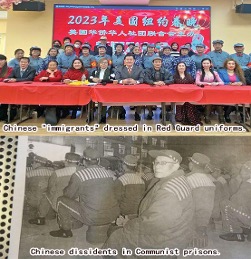
This is undoubtedly a darkly ironic spectacle. As China’s prisoners of conscience suffer in cold prisons, separated from their loved ones, countless Chinese “refugees” move freely in and out of the country they claim to have “fled” from. Having secured citizenship in free countries through asylum, they quickly adopt the persona of the privileged Chinese elite. They travel back to the tyrannical state they profess to have escaped, drinking and laughing with the Chinese Communist Party’s united front organisations, all the while playing their part in the tyranny stained with blood. In front of the slaves still bound under Communist rule, they assume the airs of authority, despite once being among the same oppressed people under that regime.
When you ask them, “Hey mate, weren’t you a refugee fleeing tyranny? Why does it seem like you’re not afraid at all to return to the place that persecuted you?” They always respond with an “innocent” grin, quickly followed by the Chinese saying, “Wealth and honour should not return to one’s hometown, like wearing embroidered robes in the dark.” It seems they view obtaining refugee status through asylum as a means to elevate their social standing, seeing it as a reward that allows them to flaunt their sense of superiority before those who are still oppressed. The tears, blood, and real suffering of those who loved freedom under tyranny become nothing more than a dream for some assholes: the dream of their earning a fortune by doing under-the-table work in a free country, sending money back to China to amass wealth. It is a dream built upon using the privileges granted by one’s status to return to China, stepping on the heads of those who love freedom and the hard-working masses, serving as a stepping stone to elevate oneself above them.
All men are created equal, endowed by their Creator with certain unalienable rights, including life, liberty, and the pursuit of happiness.” This resounding declaration has been heard for over two hundred and forty years, and yet, tragically, the right to freedom remains, under Marxist regimes, a privilege rather than an inalienable right. Those who enjoy freedom inherently possess a privilege that places them on equal footing with the aristocracy of tyrannical states—no matter how exalted, even a figure like Bo Xilai must pay the price for plotting the harm of a citizen of the free world. Meanwhile, those of little virtue or false vanity, once granted freedom, squander it in sycophantic flattery of the tyrant of the Far East. In front of those who have lost their freedom, they stand tall, draped in the sham of power, freedom for them like putting lipstick on a pig.
Left-wing globalists often claim to embrace globalisation, but not in the same way as neoconservatives, whose ideals, though naive, are based on a good vision. Neoconservatives fantasise about spreading democratic values through force to every dark corner of the world, while left-wing globalists, under the guise of promoting diversity, enjoy the fruits of cheap labour and the grace from the servitude of the oppressed in totalitarian states like China. They indirectly exploit the blood and sweat of low-wage workers in such regimes, continually sourcing inexpensive products, and transform countries like China—where freedom is scarce—into vast playgrounds for privileged Westerners and elite Chinese, they enjoy the services offered by slaves in a humble and degrading manner of those enslave, yet without any sense of guilt.
Surrounding the ideology of left-wing globalism, one often finds Chinese ‘refugees’ who claim to have fled tyranny, yet swiftly switch sides, aligning themselves with the oppressors and exploiters once they gain their freedom. They reject being treated as slaves under the Communist regime but gladly accept the services of those who, much like their former selves, are still enslaved. On every National Day of the People’s Republic of China, one can always spot these nauseating figures in Chinatowns around the world, they pay homage to the tyrants, merely to secure their ticket to becoming the new oppressors.
They transform into the “patriotic overseas Chinese” touted by the CCP’s state-run media, completely forgetting the absurd reasons they became “overseas Chinese,” and forgetting how they once tearfully recounted the atrocities of the Communist Party to immigration officers. They are scattered across Chinatowns and Chinese takeaway shops, spreading the tradition of exploiting labor and evading taxes, fostering it on free soil like an insidious moss that erodes the roots of the tree of liberty, which was nourished by the blood of heroes. They view anti-Communist organizations as a threat, flipping the bird at victims of Communist oppression from Hong Kong and Tibet, arrogantly chasing away elderly women practicing Falun Gong, expelling human rights activists concerned with China’s plight into the pouring rain, and reporting dissident students and scholars to the CCP authorities.
If you are reading this article in a fit of rage, I hope you can answer one question for me: since you are so passionate about your homeland and so eager to uphold a tradition of superiority that oppresses others, what kind of tyranny are you fleeing to become a “refugee”? Is it because you are not fucking one of the exploiters yourself?
The Reality of the Democracy Movement and the Logical Trap of Stigmatization— A Response to Recent Misguided Arguments
Anonymous Article
A recently published anonymous article appears to analyze the problems within democratic movements, but in reality, it deliberately manipulates public opinion, fostering distrust and leading people to completely lose faith in the pro-democracy cause. Its core argument is that imprisonment does not necessarily validate one’s righteousness, that democracy movements are plagued by internal strife, and that spies are everywhere—therefore, the movement is doomed to fail and is unworthy of trust. While this rhetoric may sound reasonable at first glance, it is actually constructing a narrative of despair and fear—precisely the psychological poison the Chinese Communist Party (CCP) wishes to inject into the democratic camp.
The article repeatedly implies that “going to prison” is merely a political strategy used by some pro-democracy figures to gain political capital and even suggests that some may be secret agents deliberately “building a heroic image” to infiltrate the opposition. This logic is so absurd that it defies belief.
In reality, imprisonment is an inescapable sacrifice, not a chosen strategy. Take Zhu Yufu as an example:
• In 1989, he was imprisoned for two years for participating in the democracy movement.
• In 1999, he was sentenced to seven years for his involvement in China Democracy Party.
• In 2011, he was sentenced to another seven years for once again advocating democracy.
• Even after his release, he has been under strict surveillance.
Would anyone choose to be imprisoned, tortured, and deprived of all freedoms three times just to “build an image”? If imprisonment is merely a publicity stunt, does that mean that Liu Xiaobo and Cao Shunli, who died from mistreatment, were also deliberately crafting tragic personas?
This type of stigmatization strategy has been seen before in dictatorships like the Soviet Union, East Germany, and North Korea. They use the “traitor-hero-spy” cycle to dismantle opposition movements, ensuring that civil society is consumed by distrust and suspicion.
The Reality of Political Imprisonment: No Privilege, Only Persecution
Empirical data clearly shows that “imprisoned” pro-democracy activists have no economic advantage.
As of 2023, at least 2,000 political prisoners remain in Chinese prisons (source: Human Rights Watch 2023 Report), and this number is expected to rise in 2024. Most face extreme financial difficulties after their release, their families suffer consequences, and those in exile struggle to survive.
In contrast, actual government agents often secure green cards, stable economic resources, and at crucial moments, defect or provide intelligence to gain even greater political capital.
If “imprisonment = spy strategy”, why do so many well-known pro-democracy activists face financial hardship abroad, with some working in restaurants or odd jobs to make a living?
The Inevitable Tensions Within Democracy Movements
The article attempts to portray internal conflicts within the democracy movement—such as past divisions in the Social Democratic Party (社民党) and disagreements among overseas activists—as proof that “all democracy movements are destined for internal strife and failure.”
However, it deliberately ignores an important fact: democratic politics itself is built on the foundation of competing factions, disagreements, and negotiations.
Consider historical examples:
• The U.S. Republican Party originated from conflicts between abolitionists and moderate reformists.
• Taiwan’s democracy movement in the 1980s and 1990s faced intense internal struggles between the “Formosa faction” and “New Tide faction,” yet still successfully advanced democratization.
• Hong Kong’s pro-democracy camp has fractured multiple times over the past decade, yet during every major movement, they have still united against oppression.
Divisions do not signify failure; rather, they are part of the growth process of democratic organizations.
Compare this with the CCP itself, where internal struggles are far more brutal.
• In 2023 alone, the CCP’s “internal purges” led to the downfall of at least 20 high-ranking officials, including the Minister of Defense and Minister of Foreign Affairs.
• During the Cultural Revolution (1966-1976), millions of party members were persecuted.
Yet, why does no one use “CCP internal conflict” to declare the failure of its political structure?
In reality, internal disagreements are not unique to democracy movements—they exist in all political organizations. The key is not whether divisions occur but whether an institutional framework exists to manage and resolve them.
The Effectiveness of Nonviolent Movements
The article claims that “nonviolent movements” (和理非) are inherently weak and doomed to fail. However, both history and contemporary studies prove that dictatorships fear nonviolent resistance the most.
American political scientist Erica Chenoweth analyzed 323 political movements between 1900 and 2015 and found that:
• Nonviolent movements succeeded 53% of the time.
• Violent movements succeeded only 26% of the time.
Historical examples include:
• The “Velvet Revolution” that peacefully ended Communist rule in Czechoslovakia.
• The “People Power Revolution” that overthrew Ferdinand Marcos in the Philippines.
China’s own history further proves this:
• The 1989 Tiananmen Movement and the 2019 Hong Kong Anti-Extradition Bill Movementboth started as nonviolent protests.
• However, fearing a loss of legitimacy, the CCP ultimately resorted to massacre and suppression.
The CCP fears nonviolent movements even more than armed resistance, because nonviolence gains public and international support and influences long-term public opinion.
So, who is truly “weak”? The nonviolent activists, or the dictatorship that cannot even tolerate peaceful protests?
The CCP’s Psychological Warfare: Sowing Distrust
The article’s final argument is that all pro-democracy organizations can be infiltrated, and all prominent activists could be spies—therefore, no one should be trusted.
This extreme skepticism is exactly the CCP’s preferred propaganda strategy.
The Soviet KGB used a similar psychological warfare tactic during the Cold War: they spread distrust among exiled dissidents, ultimately paralyzing their ability to organize.
Spreading suspicion, attacks, and total rejection of all activists does not defeat dictatorship—instead, it strengthens it.
If everyone refuses to cooperate due to fear of infiltration, how can the democracy movement survive?
True democratic struggle is not built on blind trust, but on institutionalized transparency, accountability, and oversight.
Blind trust is foolish, but a political movement without trust is doomed to collapse.
Conclusion
If the democracy movement has problems, the solution is institutional reform and action—not conspiracy theories and emotional denunciations that only serve to destroy it.
In this world, the only people who truly wish to see democracy fail are the CCP and other dictatorships.
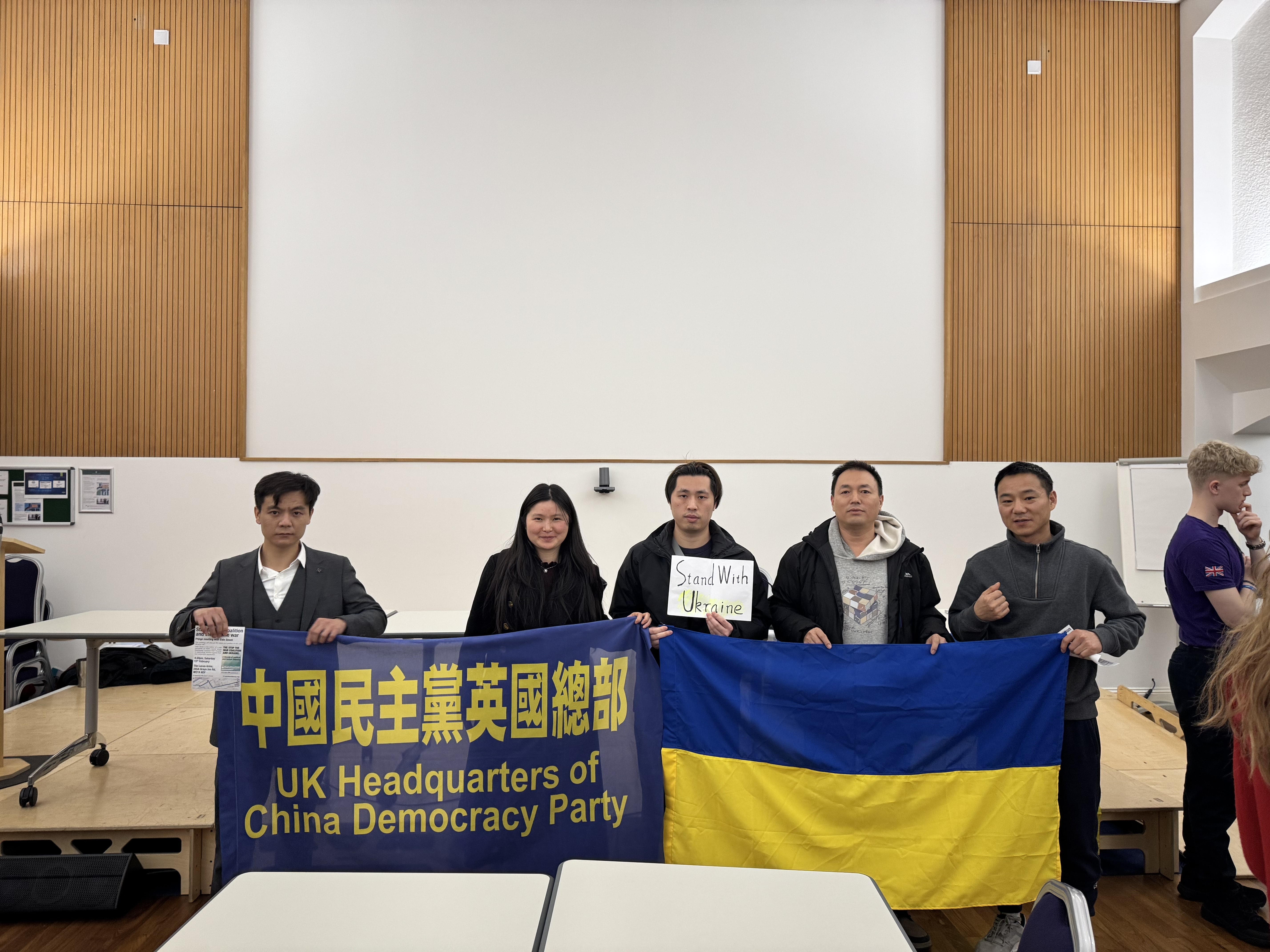
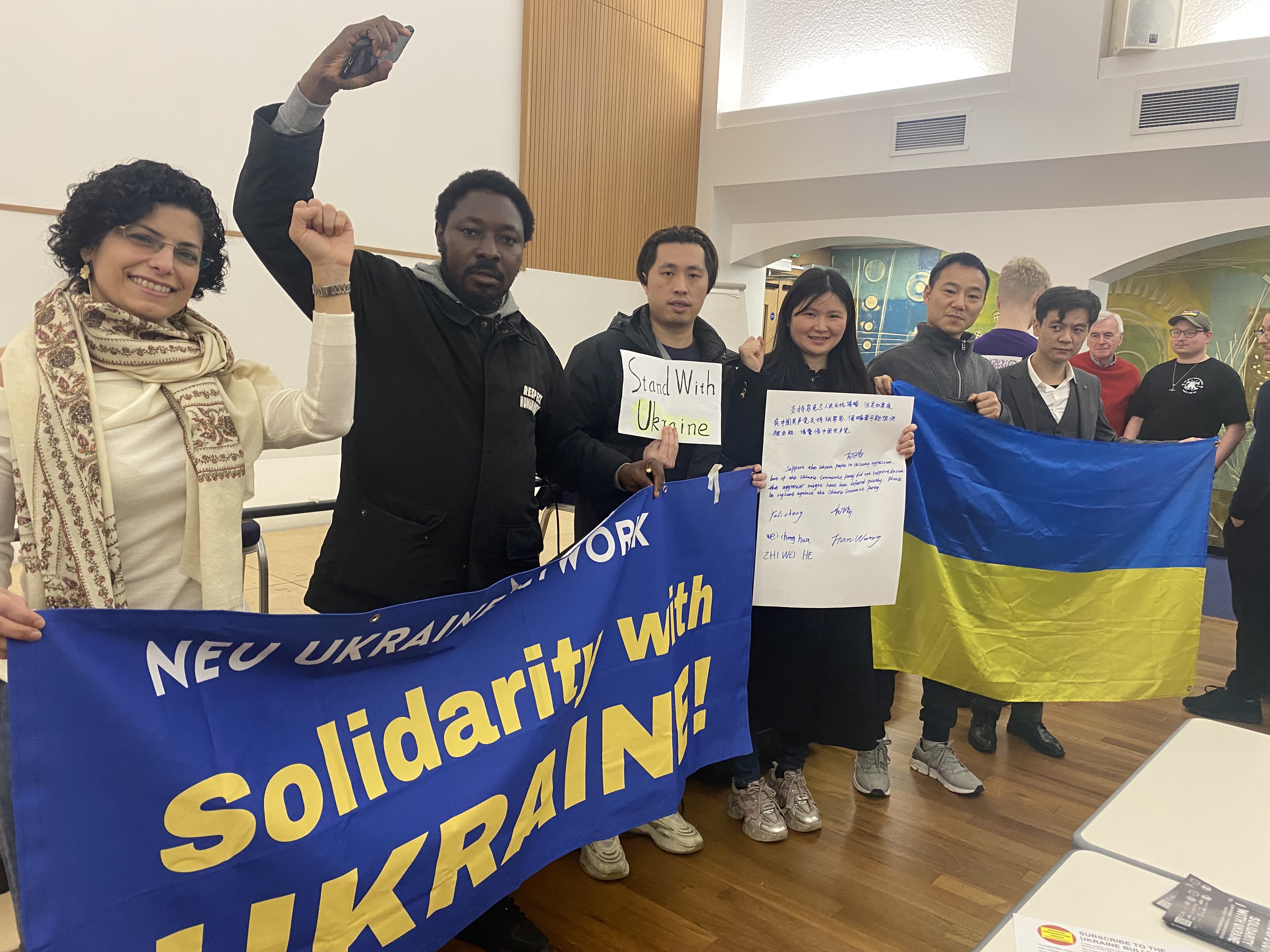
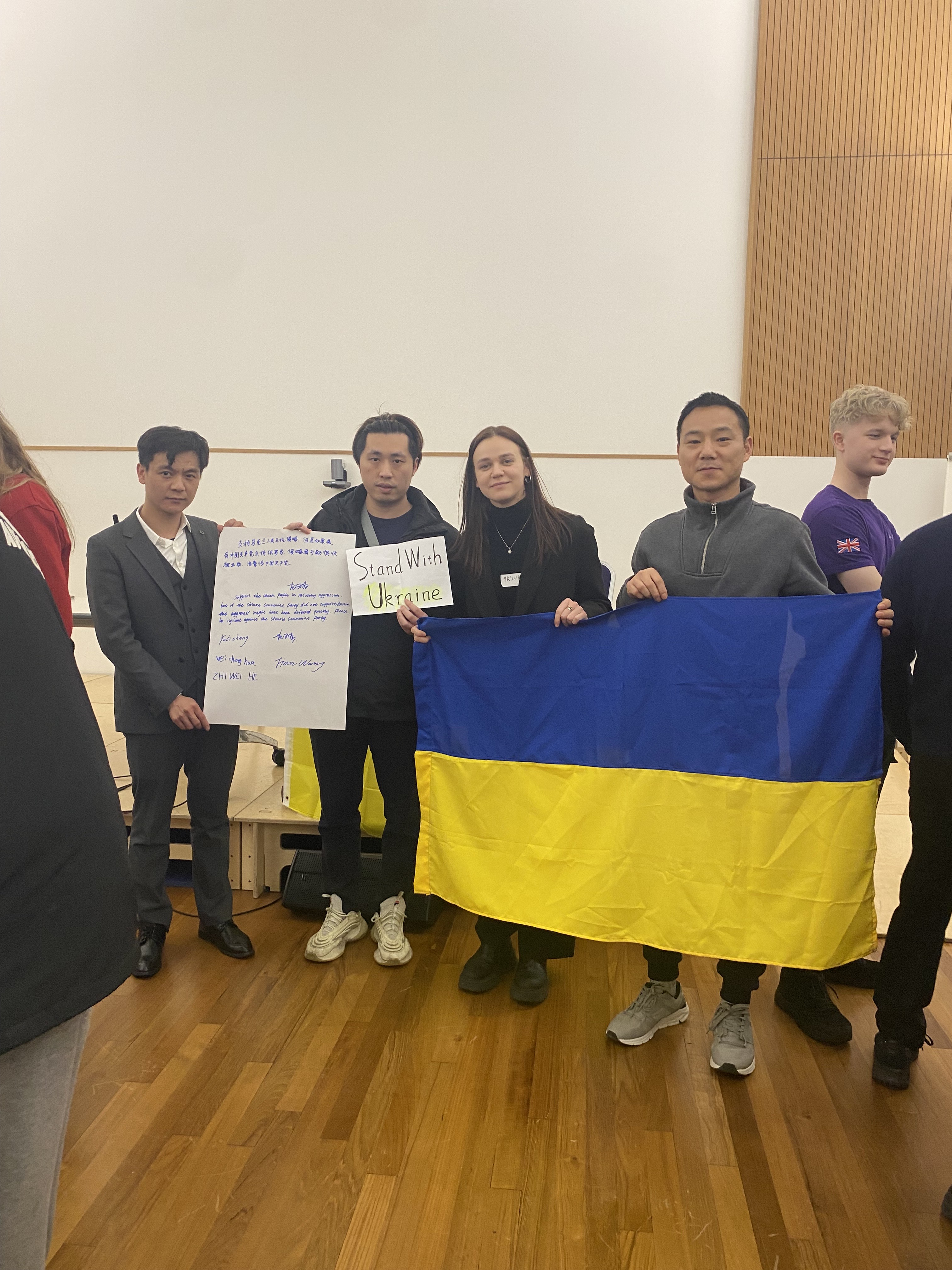
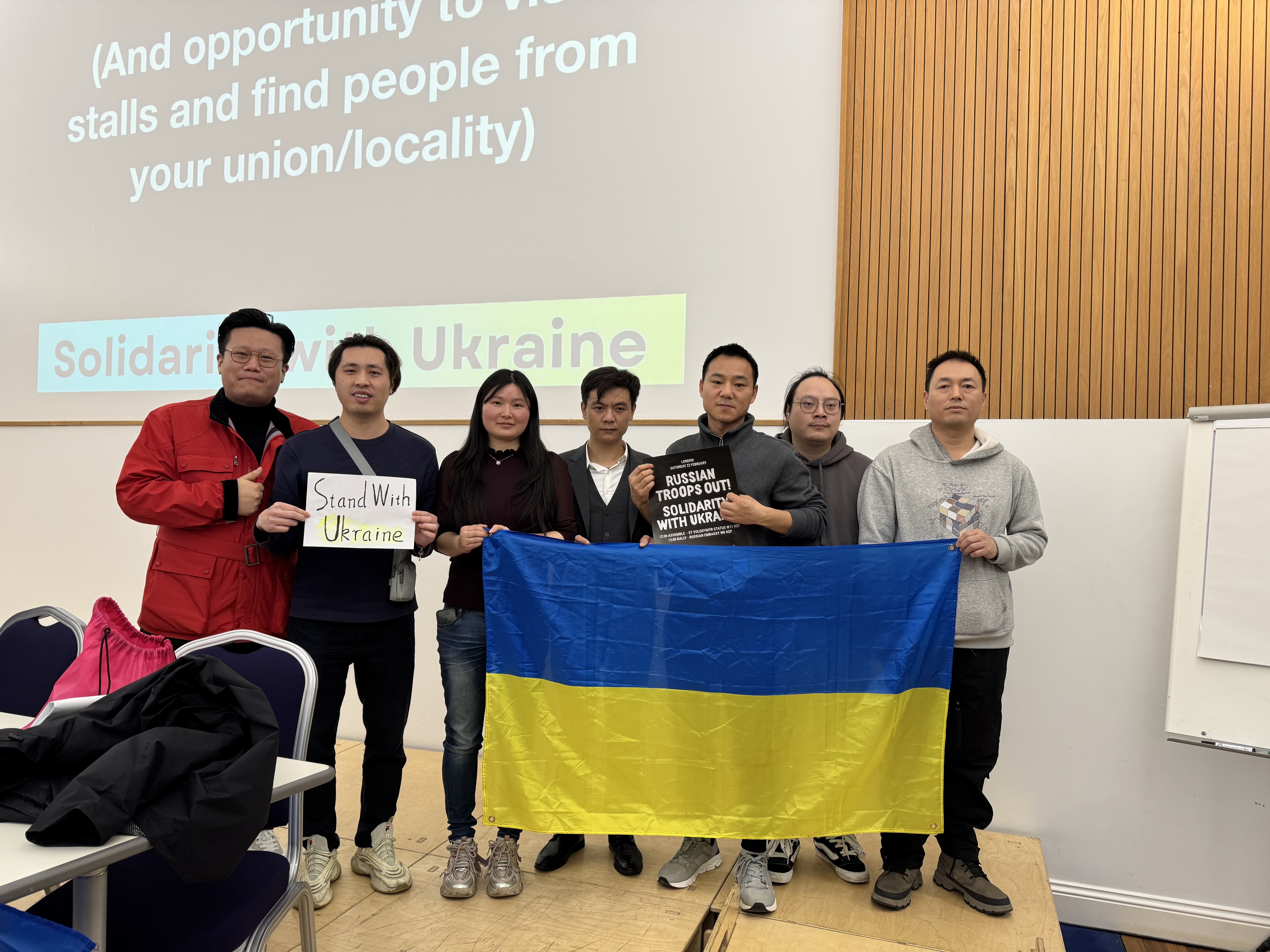
在当前国际局势依然紧张、乌克兰主权和领土完整面临严峻挑战的背景下,NEU决定于2025年2月15日在伦敦举办“Solidarity with Ukraine’s fight against Russian occupation”活动,旨在表达对乌克兰的坚决支持,同时呼吁国际社会团结一致,共同对抗侵略行为。
活动的主题“Solidarity with Ukraine’s fight against Russian occupation”寓意着团结与互助,强调在全球化时代,只有各国携手合作,才能有效维护和平与正义。 本次“Solidarity with Ukraine’s fight against Russian occupation”活动不仅展示了来自伦敦及全球各地人士对乌克兰的深情支持,也彰显了国际社会在面对不公与侵略时的团结精神。
Solidarity with Ukraine’s Fight Against Russian Occupation
Event Date: 15 February 2025
Event Location: London
Organizer: NEU (National Education Union) Against the backdrop of ongoing international tensions and the severe challenges faced by Ukraine’s sovereignty and territorial integrity, NEU has decided to hold the “Solidarity with Ukraine’s Fight Against Russian Occupation” event in London on 15 February 2025.
The event aims to express unwavering support for Ukraine while calling on the international community to unite in countering acts of aggression. The theme, “Solidarity with Ukraine’s Fight Against Russian Occupation,” embodies the spirit of unity and mutual assistance, emphasizing that in the era of globalization, only by joining forces can peace and justice be effectively maintained.
This event not only showcased heartfelt support for Ukraine from people in London and across the globe but also demonstrated the international community’s solidarity when confronting injustice and aggression. As one of the firm supporters, the UK Headquarters of the Chinese Democratic Party used this platform to reaffirm its commitment to international human rights and democratic causes.
Following the event, the organizers announced plans to continue following up on relevant international cooperation projects, promoting further dialogue and assistance to provide tangible support to Ukraine and other nations in need.
Through this event, all participants came to a deeper understanding that in today’s globalized world, peace and security require the joint efforts of all nations; only through united action can external threats be effectively resisted and a just, prosperous future be created.
Event Attendees: He Zhiwei, Cheng Yali, Wei Chonghua, Fan Kewei, Huang Tian, Wang Jian, Yu Gang.
Reported by He Zhiwei, Member of the UK Headquarters of China Democracy Party.
Wang Xizhe’s Further Rebuttal to the So-Called “Revolutionary Coup” by Jie Lijian, Lan Wei, Qin Xiquan, Li Xiaolong, and Others
1. Responding to the Argument: “If You’re Not Supporting Revolution, Don’t Oppose Ours”
My response: Does waving the banner of “revolution” give you the right to do whatever you please? Does it justify a coup within the General Headquarters of China Democracy Party (联总, Lianzong)?
Who in history has most effectively used the banner of “revolution” to justify absolute power? None other than the Chinese Communist Party (CCP)! From the “Land Revolution” in the 1920s to the “Cultural Revolution” of the 1960s and 70s, Mao Zedong and the CCP used the excuse of “revolution” to wreak havoc on the Chinese people.
You claim to be “anti-CCP” and “democratic,” yet why do you insist on copying the Communist Party’s tactics?
2. Addressing the Alleged Questioning by Han Wu
Online, a user suspected to be Han Wu asked:
“Former Chairman Wang Min once chaired a meeting in Las Vegas in March 2017, where one agenda item was ‘Reform is Dead, Revolution Must Rise.’ Would you demand that he leave your party for this?”
My response:
The founding party charter of China Democracy Party clearly defines it as a constitutional democratic party, not a “revolutionary anti-CCP party.” The party advocates openness, peace, rationality, and non-violence.
Even if you seek to transform Lianzong into a revolutionary party, you cannot carry out a coup to seize power.
The issue today is not about changing the party’s nature—it is about your illegal conspiratorial coup. Don’t try to deflect from the real issue.
When Wang Min chaired the Third Congress of Lianzong, he ignored the party charter and loudly promoted “revolution” and “armed struggle”. I raised objections but did not interfere too much because Wang Min was the legitimately elected chairman. As such, I had to respect him, and his rhetoric remained mere slogans without altering the party charter.
However, Han Wu is now actively manipulating Jie Lijian and others, believing that by simply branding their actions as “revolution,” they can illegally stage a coup, overthrow the legitimately elected Fifth Congress Chairman Zheng Cunzhu, and seize power.
By doing this, you are the ones who are truly aligned with the Communist Party’s methods, and that is why I am standing up to oppose you.
3. Jie Lijian and Li Xiaolong Profit from the Suffering of Imprisoned Chinese Democracy Party Members While Stripping Them of Their Rights—Why?
Jie Lijian, Li Xiaolong, and their backer Han Wu claim to be “revolutionaries fighting against the CCP”, which we do not oppose. If you wish to establish a new “revolutionary” faction, go ahead.
But why do you insist on clinging to the name and banner of “China Democracy Party” and “General Headquarters of China Democracy Party” (Lianzong) like a treasure?
The answer is simple: because the name “China Democracy Party” carries enormous weight—it represents nearly 30 years of sacrifice, with over a hundred Chinese Democracy Party members imprisoned for a cumulative total of thousands of years.
This “golden credential” allows people like Jie Lijian and Li Xiaolong to use it as proof in asylum applications to U.S. and other immigration authorities, securing protection while exploiting the sacrifices of genuine dissidents.
Yet at the same time, they shamelessly declare that these very dissidents—who endured years of prison and torture—are “not eligible for membership” in the overseas China Democracy Party General Headquarters (Lianzong) and have no voting, appointment, or internal party rights.
They even claim that these veteran political prisoners “disrupt and undermine the party’s operations”!
Jie Lijian, Li Xiaolong, and the “Four-Person Gang”—do you have any conscience left?
4. The Harm of “High-Profile Revolutionary” Rhetoric to Chinese Democracy Party Members in China
For years, overseas figures have loudly proclaimed their “revolutionary” and “anti-CCP” stance under the name of China Democracy Party, which has caused severe consequences for party members still inside China.
Their high-profile rhetoric has made it even more difficult for Democracy Party members in China to argue for legal survival—the very goal of the party in the first place.
Leaders of the China-based Democracy Party have repeatedly objected to this high-profile “revolutionary” rhetoric. Even Wang Youcai, after his release and arrival overseas, publicly opposed the use of slogans like “Down with the CCP”, because the phrase itself is violent in nature and was originally coined and used by the Communist Party for over a century.
When I, Wang Xizhe, was leading the early China Democracy Party, I realised this problem. That is why I advised Wang Bingzhang to withdraw from the party and remain only as an advisor, given his preference for a “revolutionary” approach.
But what happened next?
As most of the early intellectuals and democracy advocates in the overseas pro-democracy movement withdrew or faded away, the “pro-democracy movement” over the past 20 years has been increasingly dominated by illegal immigrants seeking asylum and green cards.
For many of them, without figures like Jie Lijian leading them to the front of Chinese consulates abroad, chanting extreme “revolutionary” slogans, they would lack the evidence needed to prove “political persecution” to immigration authorities and thus fail to obtain green cards.
5. The True Motive Behind the Coup: Protecting Their Own Interests
When Wang Juntao established the National Committee of China Democracy Party (全委会) in New York in 2009, he led weekly anti-CCP protests in Times Square, including the so-called “Jasmine Revolution”, which quickly expanded their ranks and funding sources.
Not to be outdone, Wang Min, after taking over Lianzong’s West America branch, escalated even further, calling for “armed revolution” against the CCP, which also brought in more followers.
Since I had retired from active leadership and am a realist, I did not actively oppose their slogans. My only bottom line was this:
“Anti-CCP must not turn into Anti-China.”
If the China Democracy Party were to be perceived as anti-China, it would forever lose the ability to explain itself and gain trust from the Chinese people.
6. The Real Reason for Jie Lijian’s Coup
Jie Lijian and his associates have long benefited from exploiting the suffering of imprisoned Democracy Party members in China.
But as soon as figures like Wang Youcai and Zhu Yufu were released from prison and came overseas, they began to question the radical rhetoric of Jie Lijian’s faction—especially their tendency towards anti-China nationalism.
This posed a direct threat to Jie Lijian and his group, because if Wang Youcai and Zhu Yufu publicly opposed their extreme rhetoric, it would jeopardise their ability to provide “evidence” for immigration applications.
This would cut off their financial and legal lifelines.
Yet, they could not abandon the “China Democracy Party” brand, as it is their most valuable political asset.
Thus, they launched this coup, under the false pretext of “you are not revolutionary anymore, so don’t oppose our revolution,” and they illegally expelled Zhu Yufu and others.
Do you understand now?
Wang Xizhe
Founder of the Overseas Branch and Former Permanent Chairman of the General Headquarters of China Democracy Party 16 February 2025
A Despicable Coup – A Rebuttal to Jie Lijian, Lan Wei, Qin Xiquan, Li Xiaolong, and Others
I am Wang Xizhe, the overseas founder and former Permanent Chairman of the General Headquarters of China Democracy Party.
1. Refuting the Absurd Claim Regarding Zhu Yufu’s Party Membership
The statement that “Zhu Yufu was a member of the Zhejiang Preparatory Committee of China Democracy Party in mainland China, but does not qualify as a member of the General Headquarters of China Democracy Party overseas, and therefore has no voting rights, appointment rights, or other internal party privileges” is sheer nonsense!
In 1998, when the first and second batch of founding leaders of China Democracy Party in China, including Zhu Yufu, were imprisoned, the Beijing Party Branch of China Democracy Party took the lead in forming the General Headquarters of China Democracy Party (联总, Lianzong) to respond to the crisis. At that time, Xu Wenli, Wang Youcai, Qin Yongmin, and I (Wang Xizhe) were elected as “Permanent Chairmen”. However, since Xu Wenli, Wang Youcai, and Qin Yongmin were all imprisoned, I alone carried the responsibility of Permanent Chairman for nearly ten years.
During that time, not only the leadership of the Beijing Party Branch, including He Depu, but also the leadership of the Zhejiang Preparatory Committee, including Chen Shuqing and Nie Minzhi, as well as all domestic and overseas China Democracy Party organisations, were under my leadership. Therefore, I recognised and declared that all members of China Democracy Party in mainland China were also members of the General Headquarters of China Democracy Party.
Nine years later, in 2009, Wang Juntao contacted Wang Youcai in New York to establish a separate faction—the “National Committee of China Democracy Party” (全委会, Quanweihui). However, this was merely an overseas factional split and had nothing to do with China Democracy Party members in China. There was never a question of domestic members needing to “pick sides” among overseas factions.
Thus, all early members of China Democracy Party in China, especially those founding leaders who endured years of imprisonment, such as Wang Youcai and Zhu Yufu, are automatically members of both the General Headquarters (联总) and the National Committee (全委会).
Jie Lijian and Li Xiaolong’s claim that “Zhu Yufu does not qualify as a member of the General Headquarters of China Democracy Party and has no voting rights or appointment rights” is utterly absurd! In fact, the opposite is true—it is Zhu Yufu and other founding leaders who have the authority to question the legitimacy of so-called ‘China Democracy Party members’ like you!
Take Li Xiaolong, for example. You were once a party member in Guangxi, but the Guangxi Party Branch never formally joined the General Headquarters (联总). So, on what basis do you claim to be a member of the General Headquarters? What is your proof of membership? Did you ever receive approval from the Permanent Chairman, Wang Xizhe?
You have none of these, yet you claim you have the “right” to be a member of the General Headquarters and to exercise voting and appointment rights. The only reason you were ever considered a member was because I declared that all early, verifiable members of China Democracy Party in China were automatically part of the General Headquarters.
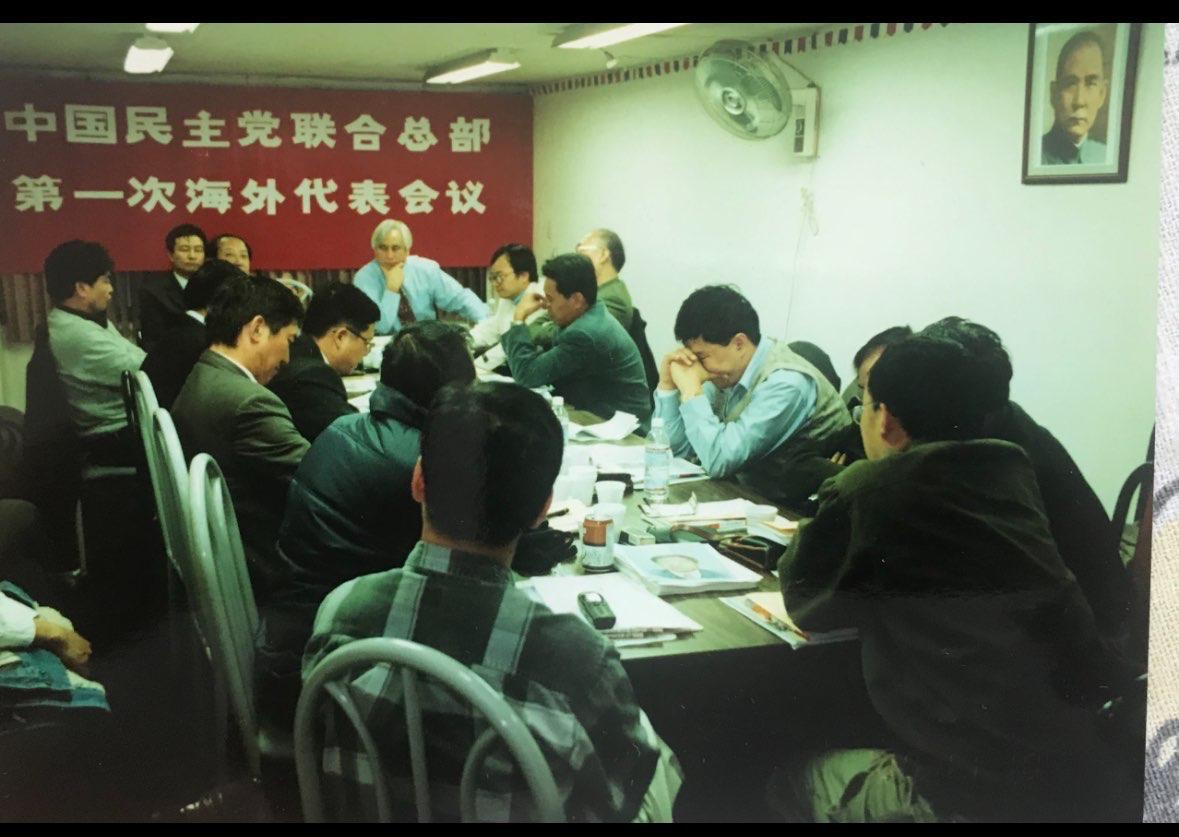
Unlike the early overseas members of the General Headquarters, who all took an oath under my leadership before a portrait of Sun Yat-sen, you and others—such as Lan Wei and Qin Xiquan—never underwent any formal induction or swearing-in ceremony.
So, on what grounds do you deny the rightful membership of Zhu Yufu, a founding leader who endured years of imprisonment for the cause? As for Jie Lijian, there is even less to be said about his baseless claims.
2. Questioning the Legitimacy of the So-Called “Suspension” of Zheng Cunzhu
Jie Lijian, Lan Wei, Qin Xiquan, and Li Xiaolong—on what grounds, according to which article of the party charter, do you claim the authority to “suspend the duly elected Fifth Congress Chairman, Zheng Cunzhu”, and appoint a so-called “acting chairman”?
You claim that Zheng Cunzhu resigned. Where is his resignation letter? Have you ever presented it? Why has Chairman Zheng Cunzhu repeatedly demanded that you show his resignation letter to all party members, yet you have never been able to produce it?
If you cannot present the letter, yet continue to spread lies, fabricating them a thousand times over as if they were the truth—what is your real intention?
Even if, for the sake of argument, Zheng Cunzhu had submitted a resignation letter, which article of the party charter grants you the authority to convene a secret meeting behind the chairman’s back and unilaterally “suspend” him?
You claim you were acting according to the party charter—then show us the specific rule that allows you to do this! If you cannot, then you are guilty of nothing less than a despicable coup.
A chairman elected by the Party Congress can only be removed by another Party Congress. No other body has the authority to override this decision.
Even under extraordinary circumstances, the chairman may convene a Special Party Congress to discuss temporary measures, but any decision made must still be ratified by the next Party Congress.
Most importantly, Chairman Zheng Cunzhu has publicly and repeatedly stated that he never submitted a resignation letter.
Even if—hypothetically—he had at some point considered resigning, he withdrew the request before the Party Congress accepted it. Until his resignation is officially ratified, he remains the legitimate chairman, and no other party body has the power to override this.
Thus, the actions of Jie Lijian, Lan Wei, Qin Xiquan, and Li Xiaolong constitute a deliberate, sinister, and disgraceful coup within the party.
3. Jie Lijian’s Illegal Re-Registration of a Fake “China Democracy Party General Headquarters” Should Be Prosecuted
Jie Lijian’s unauthorised registration of a false “China Democracy Party General Headquarters” is illegal and should be pursued through legal action.
By doing so, he has effectively severed himself from the original China Democracy Party General Headquarters.
As for Lan Wei, Qin Xiquan, and Li Xiaolong, despite knowing this to be a blatant violation, you persist in supporting this coup. You must reflect on and correct your actions to salvage any credibility.
Otherwise, you should all be expelled from the China Democracy Party General Headquarters.
Wang Xizhe
Founder of the Overseas Branch and Former Permanent Chairman of the General Headquarters of China Democracy Party
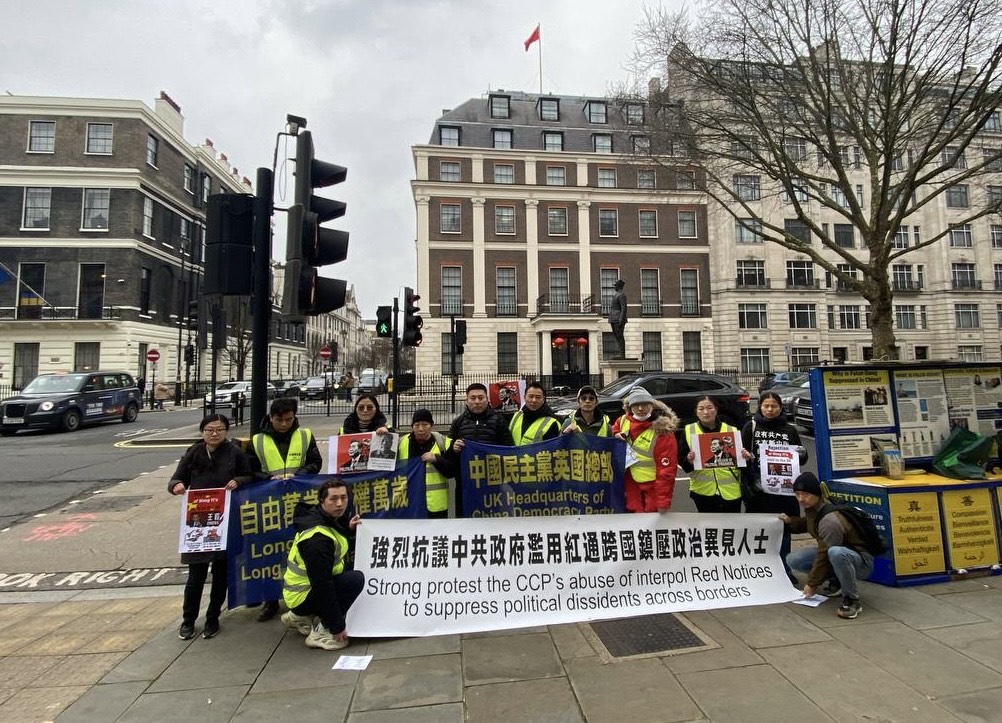
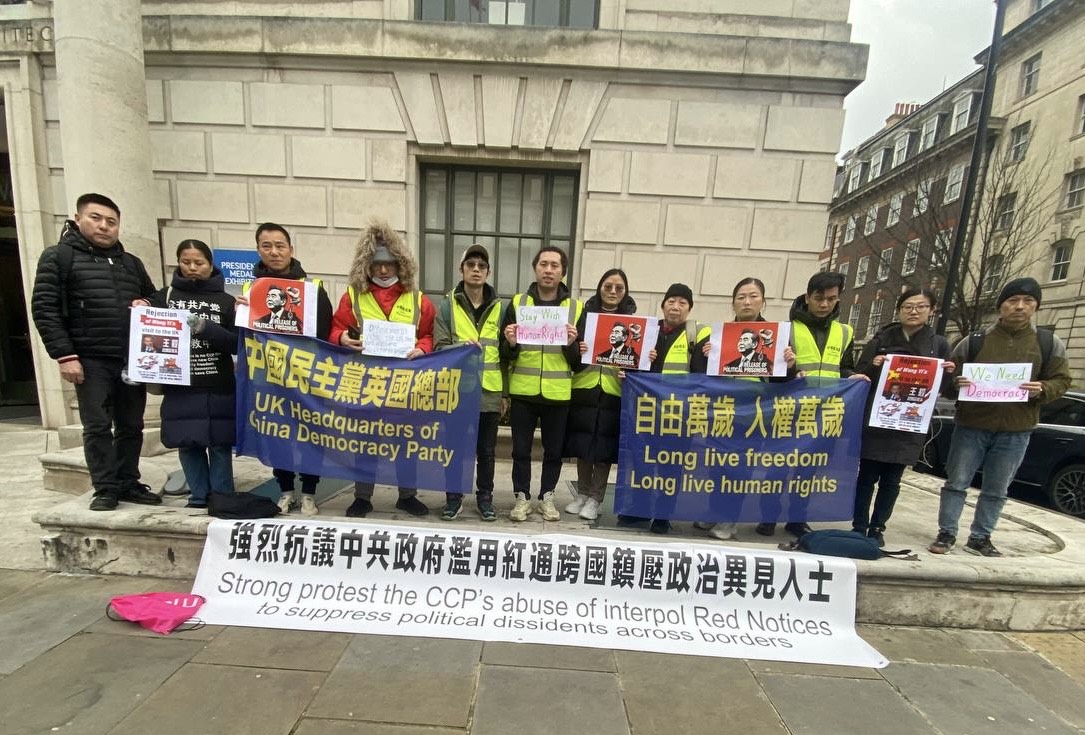
Protest by the UK Headquarters of China Democracy Party in Front of the Chinese Embassy During Chinese Foreign Minister Wang Yi’s Visit to the UK
On 13 February 2025, during the official visit of Chinese Foreign Minister Wang Yi to the United Kingdom, a protest took place outside the Chinese Embassy in central London. Organised by members of the UK Headquarters of China Democracy Party, demonstrators gathered outside the embassy, holding placards and chanting slogans to draw attention to China’s deteriorating human rights situation. The protest called for the release of political prisoners and condemned the Chinese government’s suppression of dissent.
At the protest site, Cheng Xiaodan, the chief coordinator of the demonstration, and He Zhiwei, the deputy coordinator, gave interviews to international media. Speaking to Voice of America and Radio Free Asia, they stated, “There is no real freedom of speech in China, nor are basic human rights protected. We have taken to the streets to show the world how the Chinese government suppresses dissenting voices. We must speak up for democracy and freedom.” Another protester criticised Wang Yi, referring to him as the “chief instructor of wolf warrior diplomacy”, arguing that his visit to the UK was an attempt to cloak the CCP’s authoritarian rule in the guise of international diplomacy.
According to on-site observers and reports from international media, the demonstration remained peaceful overall, with police maintaining security to ensure public order. The protest was widely interpreted as a continued condemnation of China’s human rights record and an expression of discontent among overseas dissidents towards the Chinese government’s diplomatic manoeuvres. Additionally, some reports noted that the protest drew attention from British political circles and civil society, reigniting discussions on how UK-China relations should balance economic diplomacy with human rights concerns.
As members of the UK Headquarters of China Democracy Party, we represent a strong critique of China’s current political system and authoritarian rule. Through this demonstration, we sought to urge the British government to prioritise universal values and human rights protections when engaging with China.
Overall, the protest on 13 February 2025 was not just a side event during Wang Yi’s visit but a significant action by overseas Chinese and dissidents to continue calling for political reform. The UK Headquarters of China Democracy Party used this platform to express sharp criticism of the Chinese government’s domestic and foreign policies, while also reflecting the international community’s ongoing concerns over human rights and democratic development in China.
Organisers: Cheng Xiaodan, He Zhiwei
Attending members: He Zhiwei, Zhang Xuemei, Huang Jun, Fan Kewei, Liao Liuyan, Jin Xuecen, Dai Chao, Zhao Yulian, Wei Chonghua, Wu Yong, Cheng Xiaodan, Liu Liyan.
Report by He Zhiwei, UK Headquarters of China Democracy Party
Large-Scale Protest in Front of London’s “Super Embassy” Site – UK Headquarters of China Democracy Party Actively Participates
Date and Location:
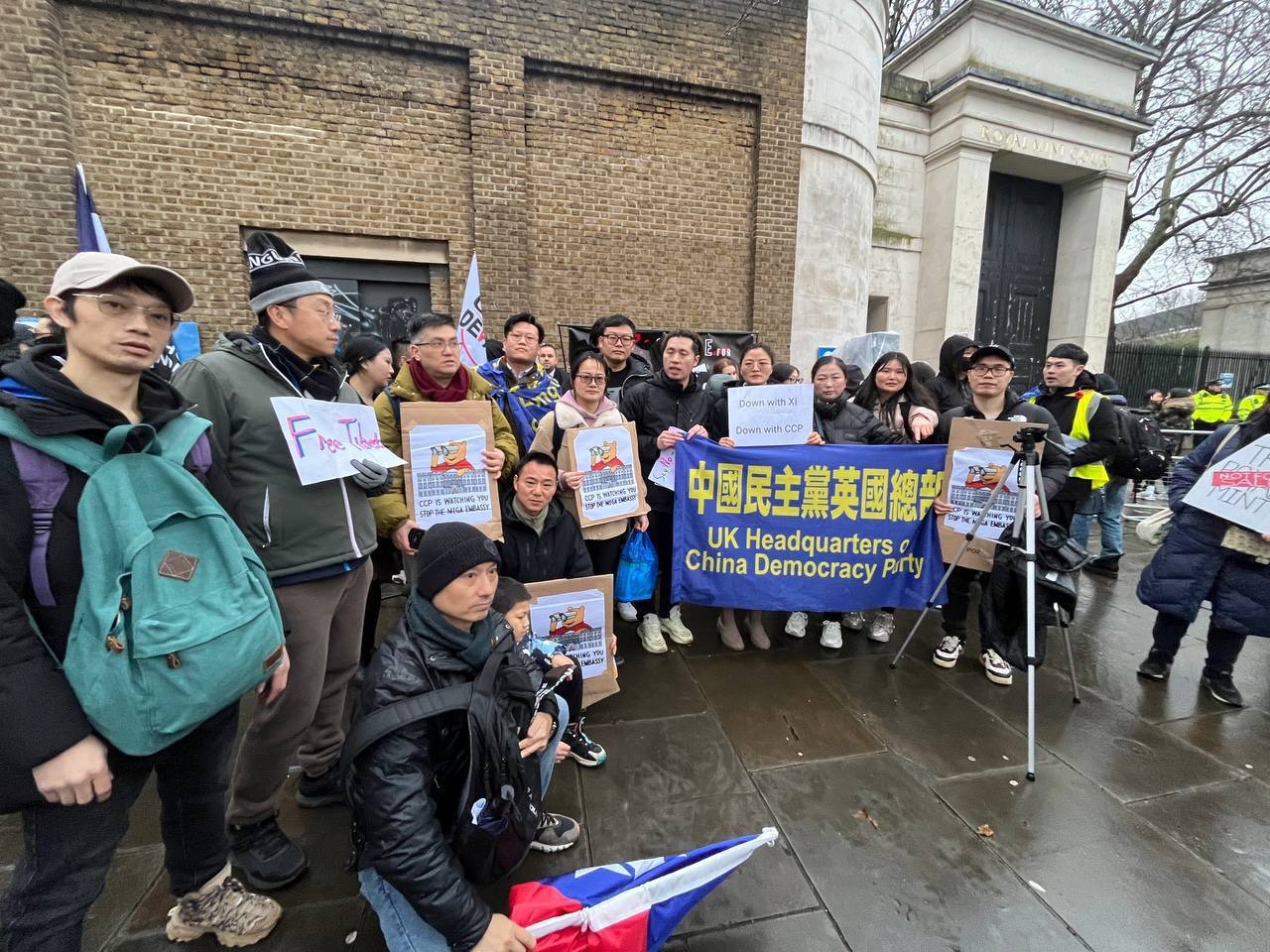
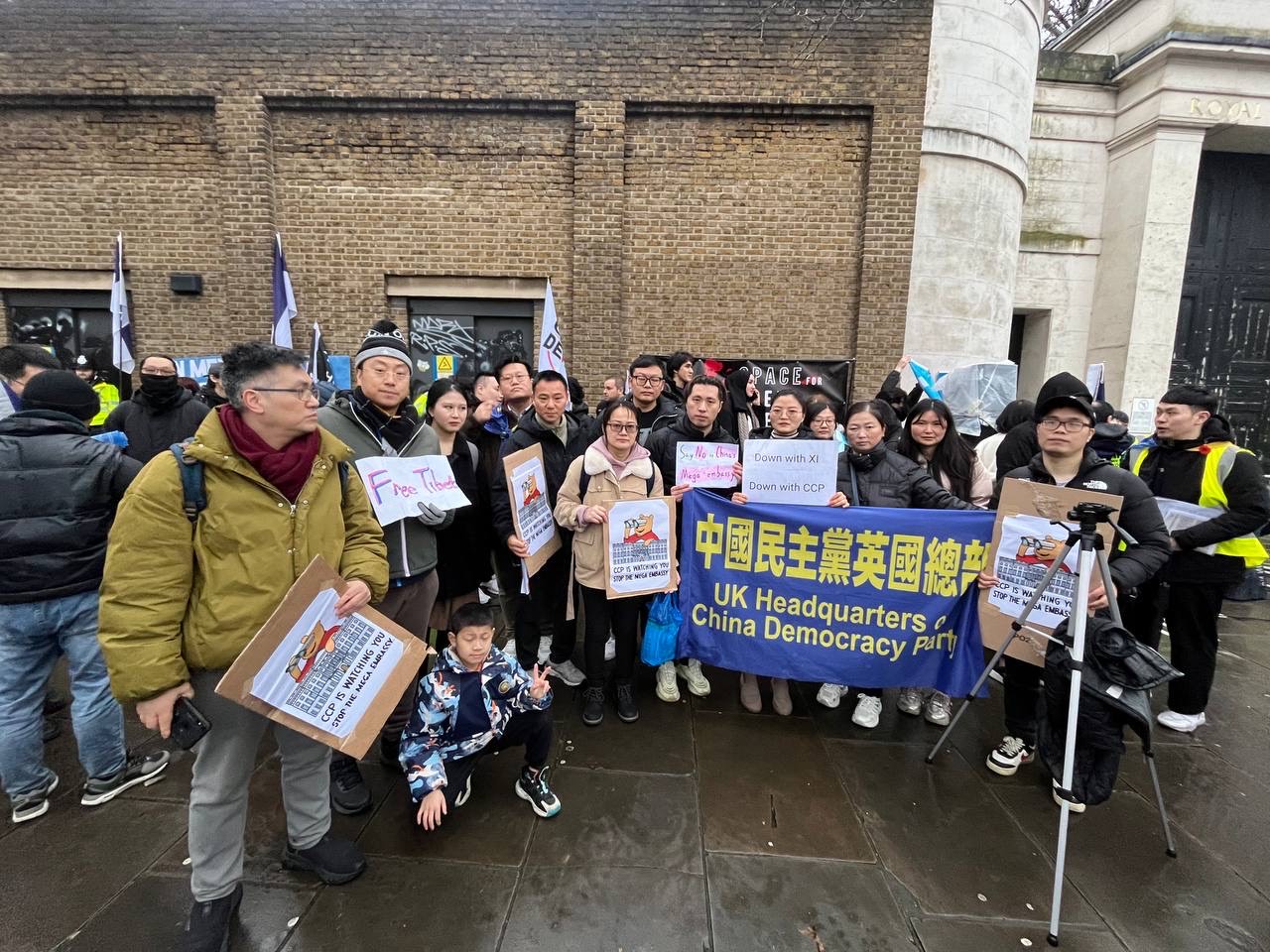
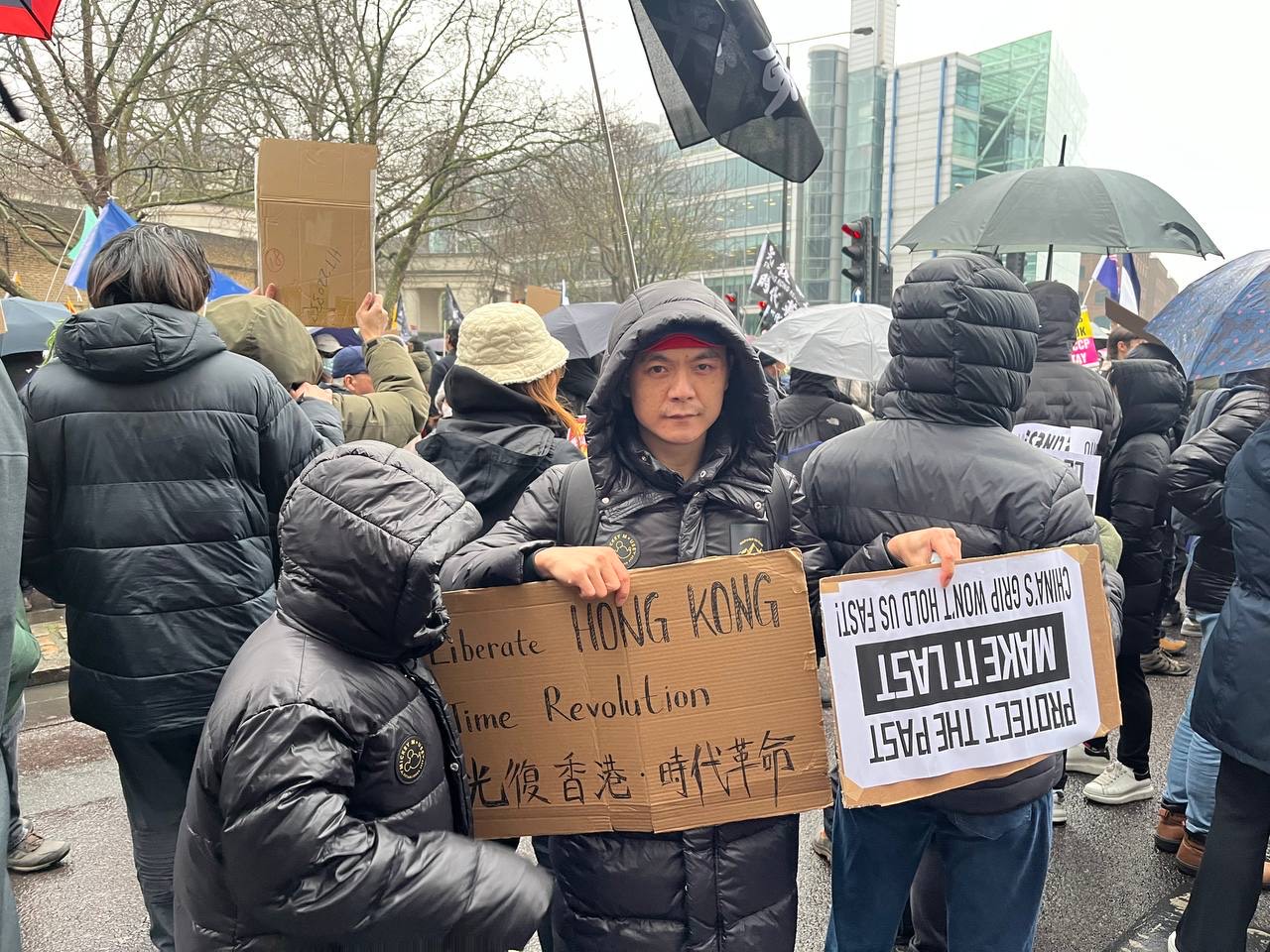
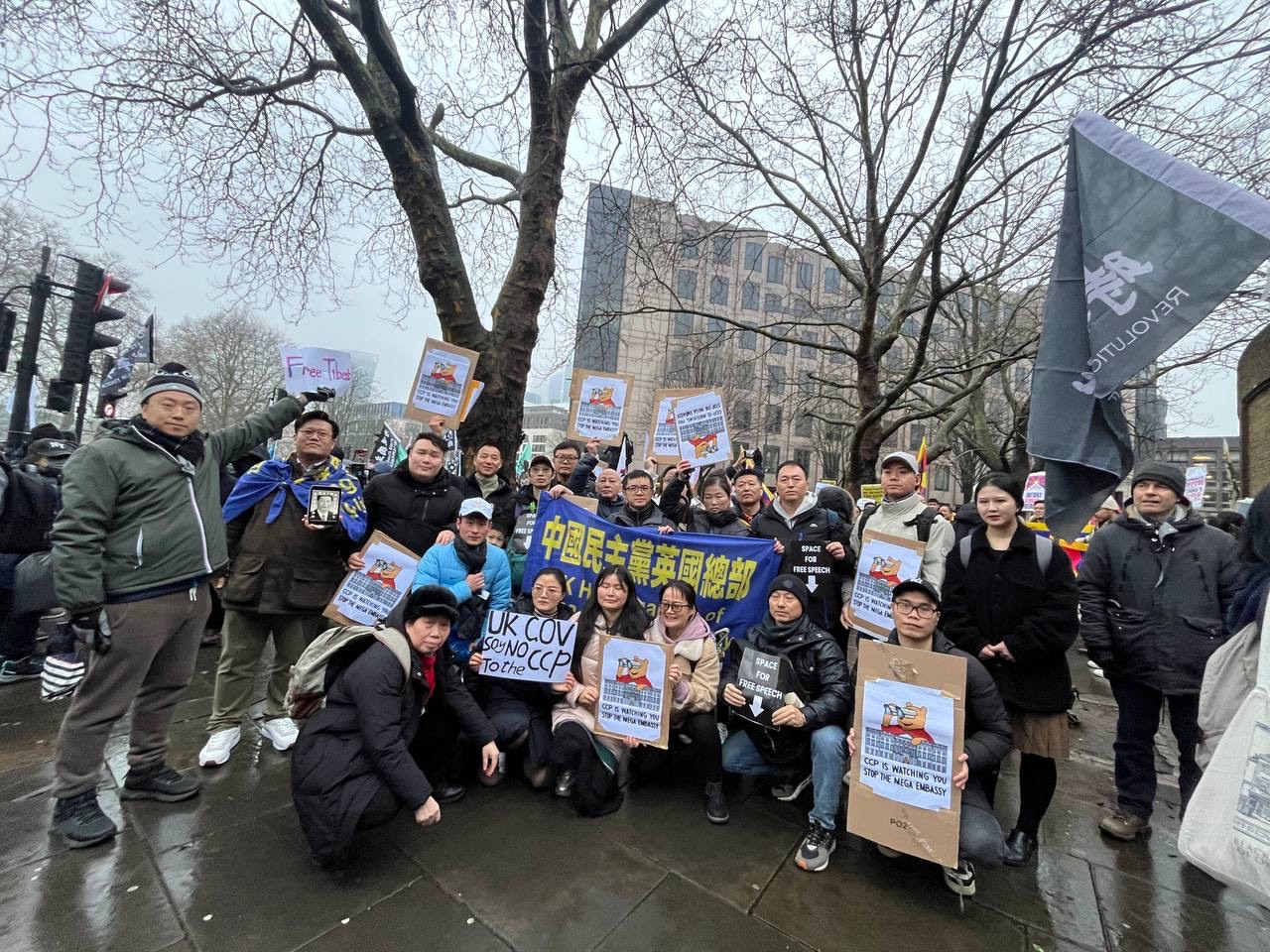
On 8 February 2025, a protest was held in front of Royal Mint Court, London, the proposed site for what would be the largest “super embassy” of the Chinese Communist Party (CCP) in Europe.
Event Overview:
At around 2:00 PM, between 3,000 and 4,000 protesters from various backgrounds—including Hong Kongers, Tibetans, Uyghurs, and other communities across the UK—gathered in front of Royal Mint Court. Holding placards and banners, they strongly opposed the CCP’s expansion of influence in London, voicing concerns that the new embassy could serve as a Chinese intelligence hub and a tool for transnational repression.
Protest Developments:
• Mobilisation and Crowd Growth:
The protest began at 2:00 PM, with organisers coordinating transport from Manchester, Birmingham, Sheffield, and other cities, bringing demonstrators to London. The crowd quickly expanded, and due to the large turnout, some protesters spilled beyond the designated protest area, leading to temporary street closures and minor disruptions to local traffic.
• Police Intervention and Order Maintenance:
Given the large-scale demonstration, London police swiftly deployed multiple patrol cars and over a hundred officers to maintain order. Some protesters were briefly detained for violating public assembly regulations, ensuring that overall order was controlled.
• Voices from Various Sectors:
The protest was attended not only by ordinary demonstrators but also by several British Members of Parliament and local representatives, who openly expressed support for the movement. In their speeches, they highlighted the risks posed by the new Chinese embassy, warning that it could threaten public freedoms and national security in the UK. Some MPs urged the government to stand firm against CCP influence, emphasising that Britain must not yield to authoritarian pressure.
Participation of the UK Headquarters of China Democracy Party:
A notable aspect of the protest was the active participation of the UK Headquarters of China Democracy Party, which sent representatives and party members to the demonstration. The organisation stated on social media that this protest was a vital effort by overseas Chinese to defend democracy and freedom. At the scene, its representatives reaffirmed:
“Only by upholding freedom and democracy can we effectively resist the CCP’s overseas expansion.”
Follow-up Developments:
The protest lasted several hours, and order was gradually restored under police guidance. However, the demonstrators’ voices and discussions about the event continued to spread across social media. Organisers stated that they would closely monitor the British government’s review process regarding the embassy construction application and plan further actions to reflect public opposition in due course.
Attending Party Members:
He Zhiwei, Dai Chao, Dai Xuemei, Zhao Yulian, Deng Wei, Huang Tian, Fan Kewei, Zhou Yong, Hu Xiao, Huang Jun, Zhang Xuemei, Yang Su, Cheng Xiaodan, Cheng Yali, Wang Yujun, Yu Bin, Cheng Min, Wei Chenyu, Zeng Fu, Wei Chonghua, Wang Jian, Wu Yong, Li Haobo, Lin Mingqiang, Lan Ziming, Gu Xiaofeng, Thomas Hao.
Report by He Zhiwei, UK Headquarters of China Democracy Party
Discussing China’s Democracy and Religious Freedom: Promoting Cooperation and Exchange Among Overseas Anti-CCP Groups
Report by Cheng Min, UK Headquarters of China Democracy Party
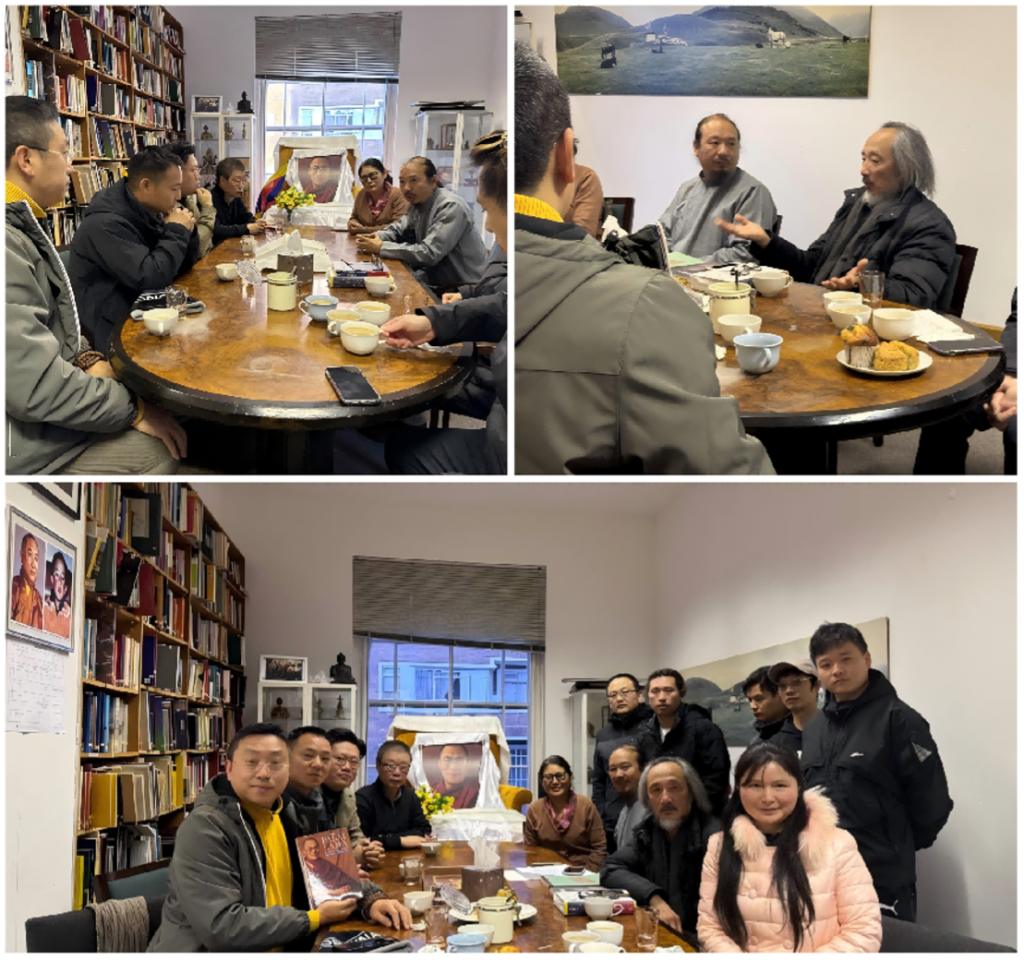
On 6 February 2025, at the invitation of Sangay Gyatso, Representative of the Tibetan Government-in-Exile in Geneva, and Tsering Yangkyi, Representative in the UK, ten representatives from the UK Headquarters of China Democracy Party attended a symposium on China’s Democracy and Religious Freedom held at the London Office of the Tibetan Government-in-Exile. The event was also attended by Ma Jian, President of the Independent Chinese PEN Centre and a UK-based writer.
The symposium focused on the past, present, and future of democracy and religious freedom in China. Each participant shared their perspectives based on their own experiences and insights.
Tsering Yangkyi emphasised that, in order to preserve Tibetan traditional culture, the Tibetan Government-in-Exile has always pursued a peaceful approach and is willing to seek genuine and high-degree autonomy within the framework of One China, without seeking independence. She reiterated that, under this principle, Tibetans should strive for friendly relations with the Chinese people.
Sangay Gyatso firmly opposed the Chinese government’s oppression of Tibetans’ religious freedom and survival space, but clarified that Tibetans are not against the Chinese people. He mentioned that, starting in September this year, Tibetan communities would host a year-long celebration to mark the 90th birthday of His Holiness the Dalai Lama, and warmly welcomed everyone to participate. He stated that Tibetan organisations have long encouraged Tibetans to establish friendships and mutual support with overseas Chinese who pursue democracy and freedom, so that together, they can unite against their common enemy—the Chinese Communist Party.
Huang Hua stated that only in a democratic and rule-of-law China can the issue of ethnic minorities truly be resolved.
Writer Ma Jian shared his memories of living in Tibet, recalling his experiences there. He also offered suggestions on how to effectively promote the image and philosophy of His Holiness the Dalai Lama.
Party members expressed their firm belief that political democratisation is the fundamental prerequisite for religious freedom in any land. They reiterated that the core political programme of the China Democracy Party is to promote China’s democratisation through peaceful, rational, and non-violent means. Furthermore, the first principle of the party’s stance on religion is that all Chinese people should have the right to freely choose any religious belief. Many of these ideals align with those of the Tibetan Government-in-Exile, and the UK Headquarters of China Democracy Party hopes to enhance cooperation and exchange with Tibetans in the future to jointly advance democracy and religious freedom in China.
Following the discussions, Tsering Yangkyi gave the attendees a tour of the office and led them to take a group photo in front of a portrait of His Holiness the Dalai Lama.
Attendees from the UK Headquarters of China Democracy Party
Huang Hua, He Zhiwei, Dai Chao, Cheng Xiaodan, Cheng Yali, Yong Zhou, Huang Tian, Xiao Zhu, Xiao Wei, Fan Kewei, Cheng Min