中国民主党及其他异议人士抗议中国政府利用国际刑警组织进行跨国镇压 China Democracy Party and other dissidents protest against the Chinese government’s use of Interpol for transnational repression

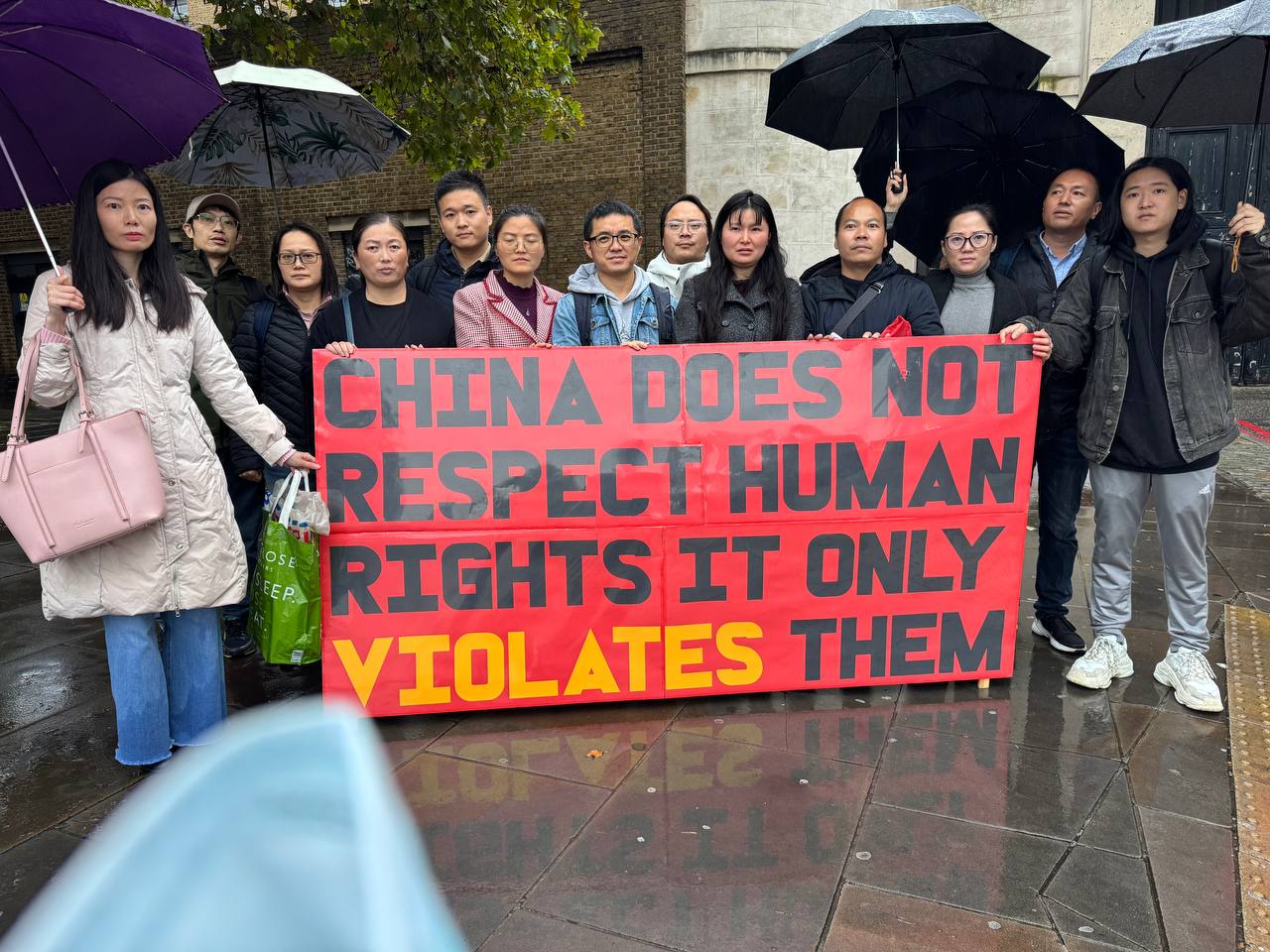
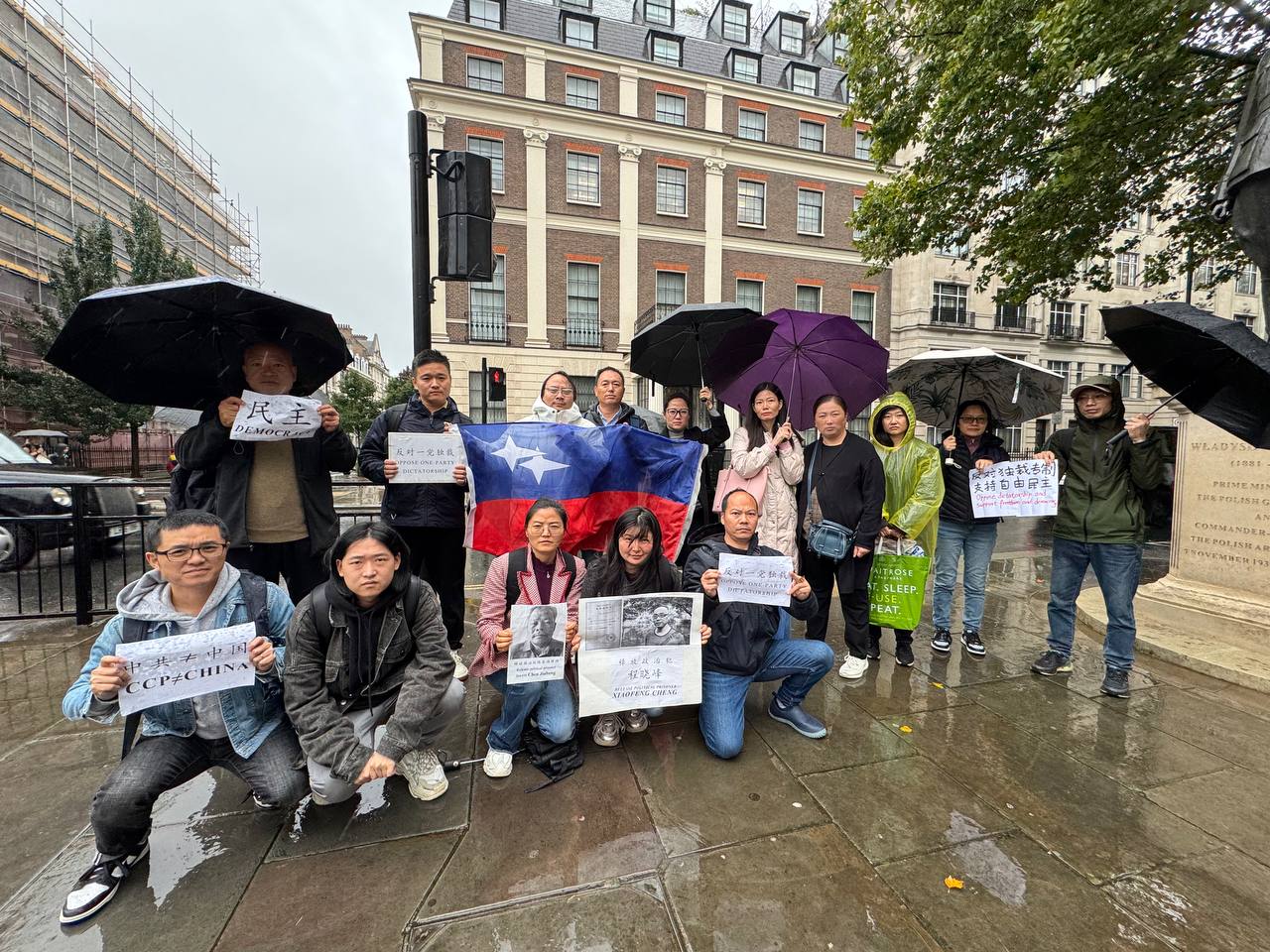
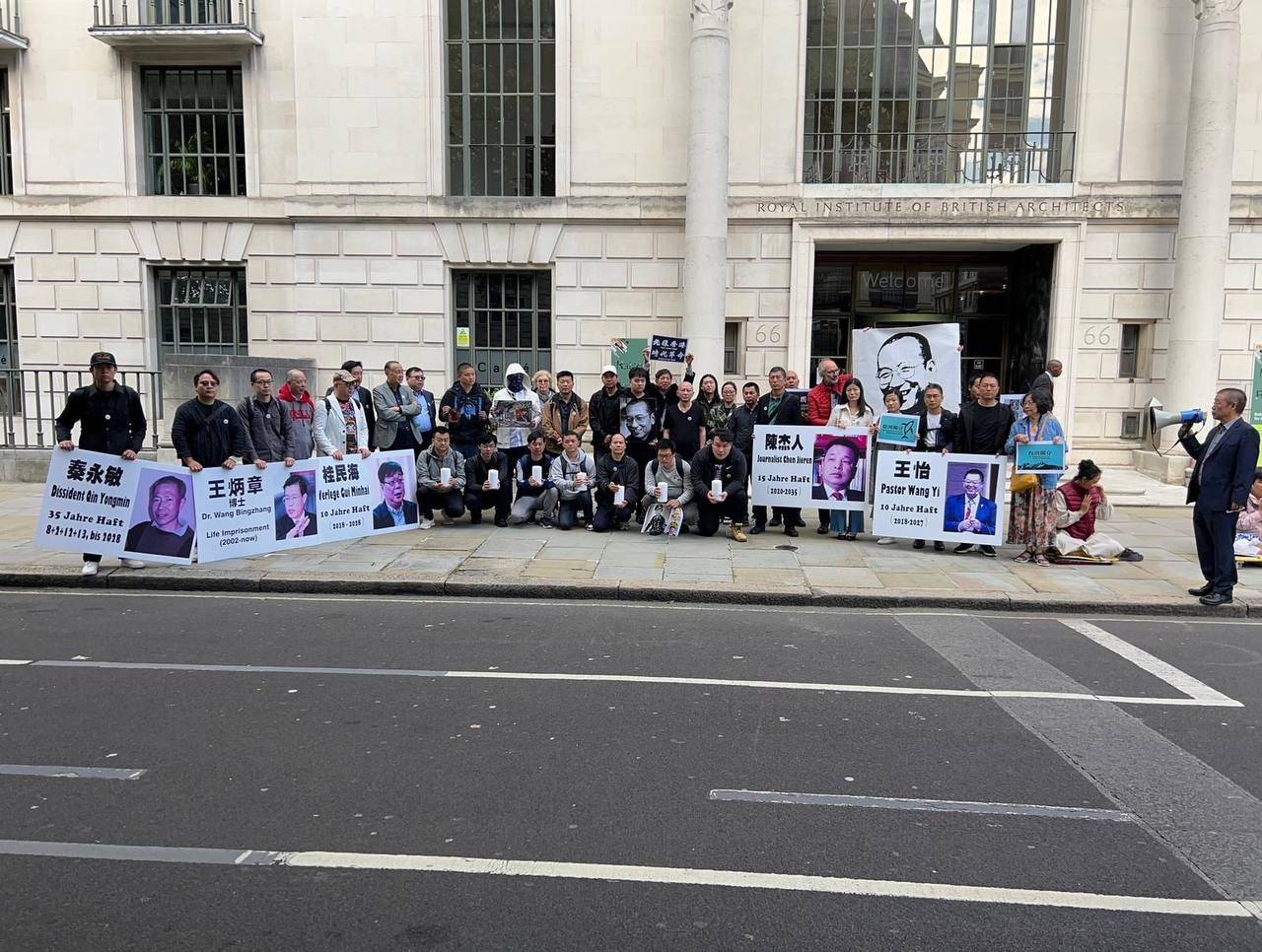
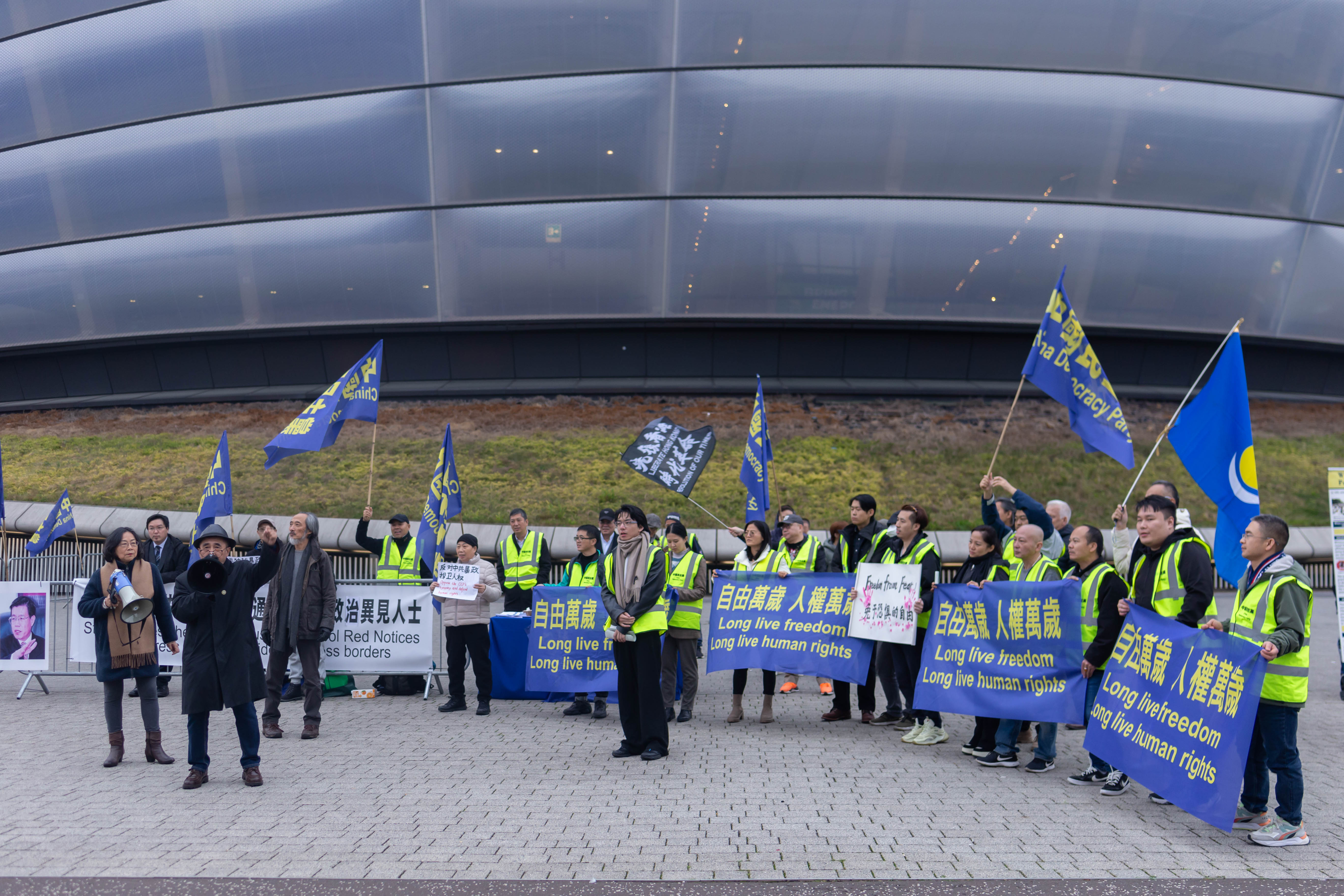
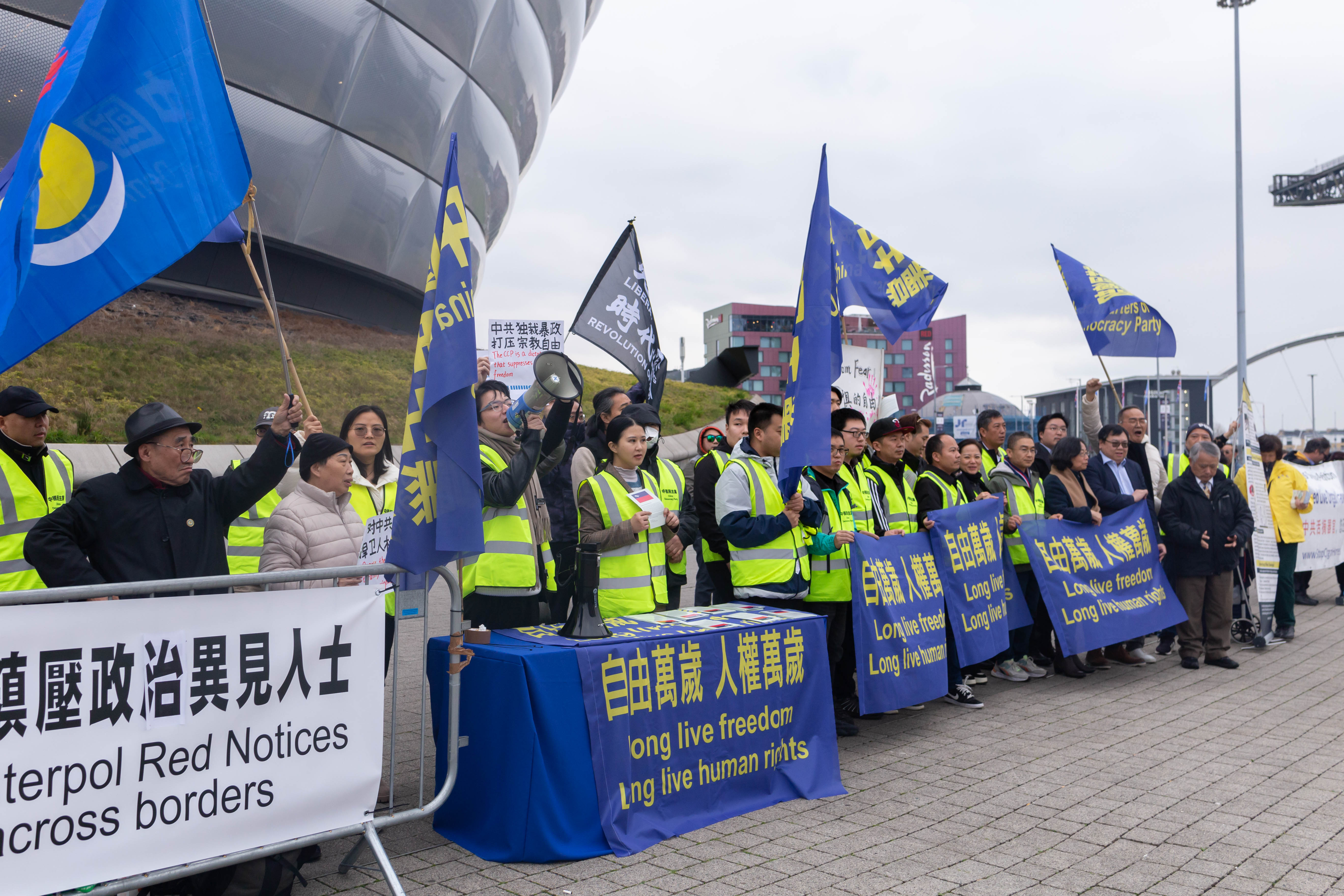
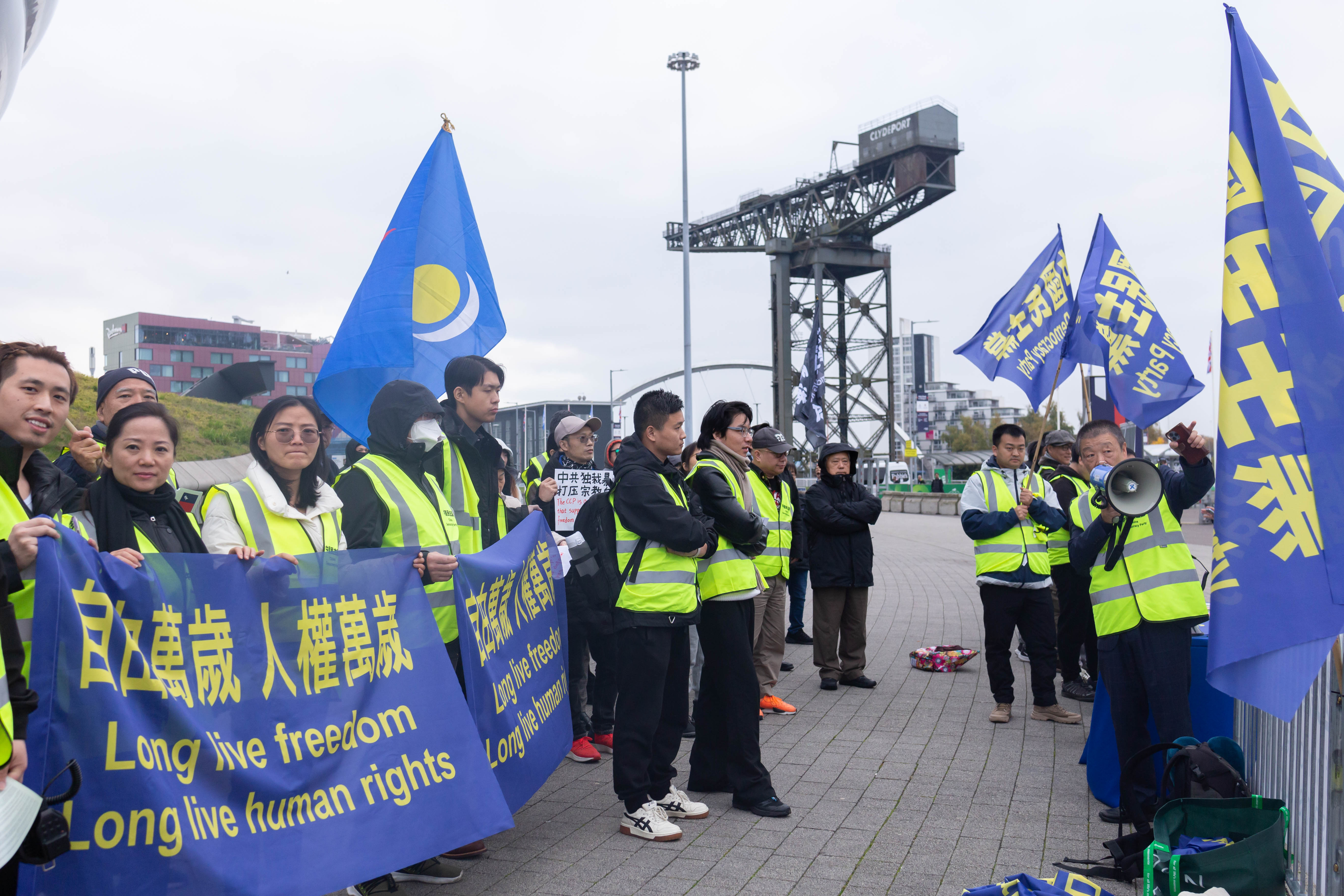
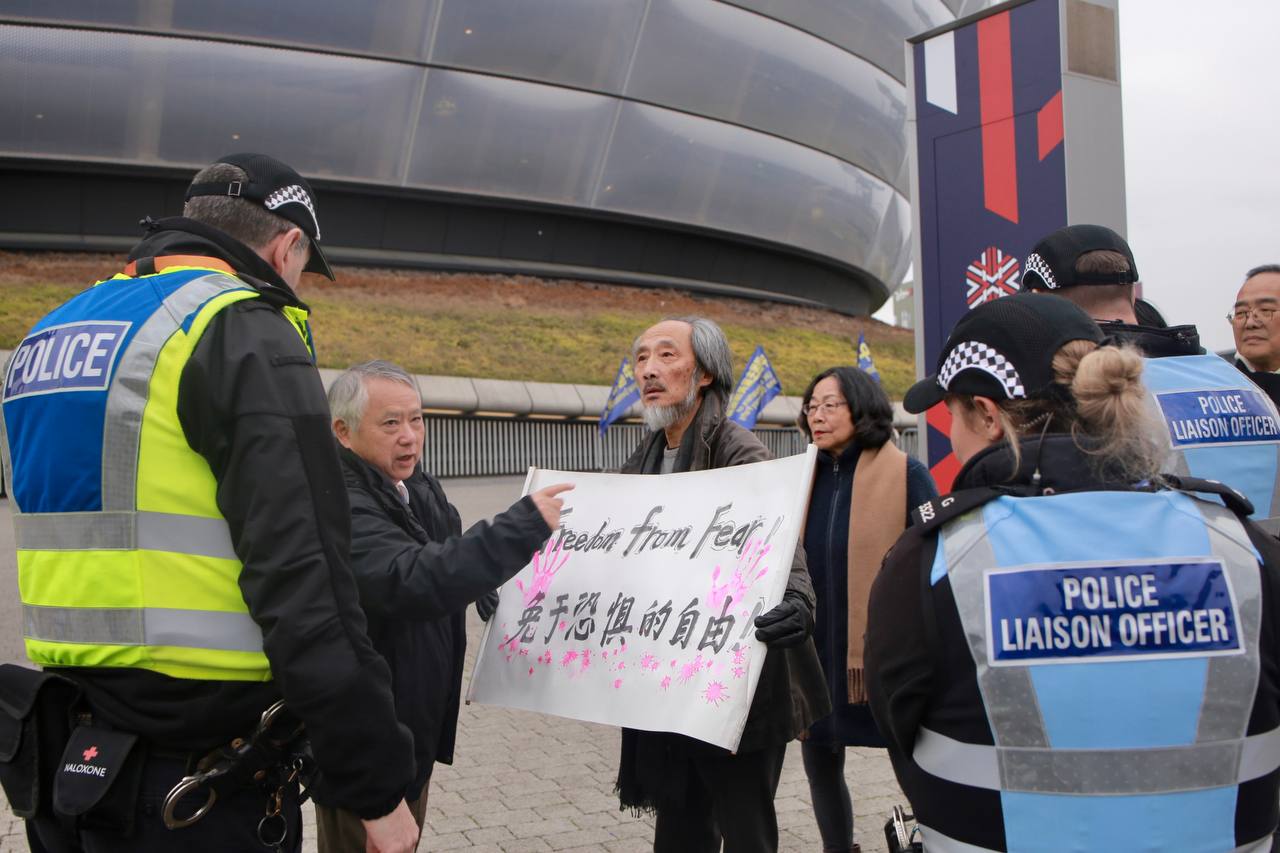
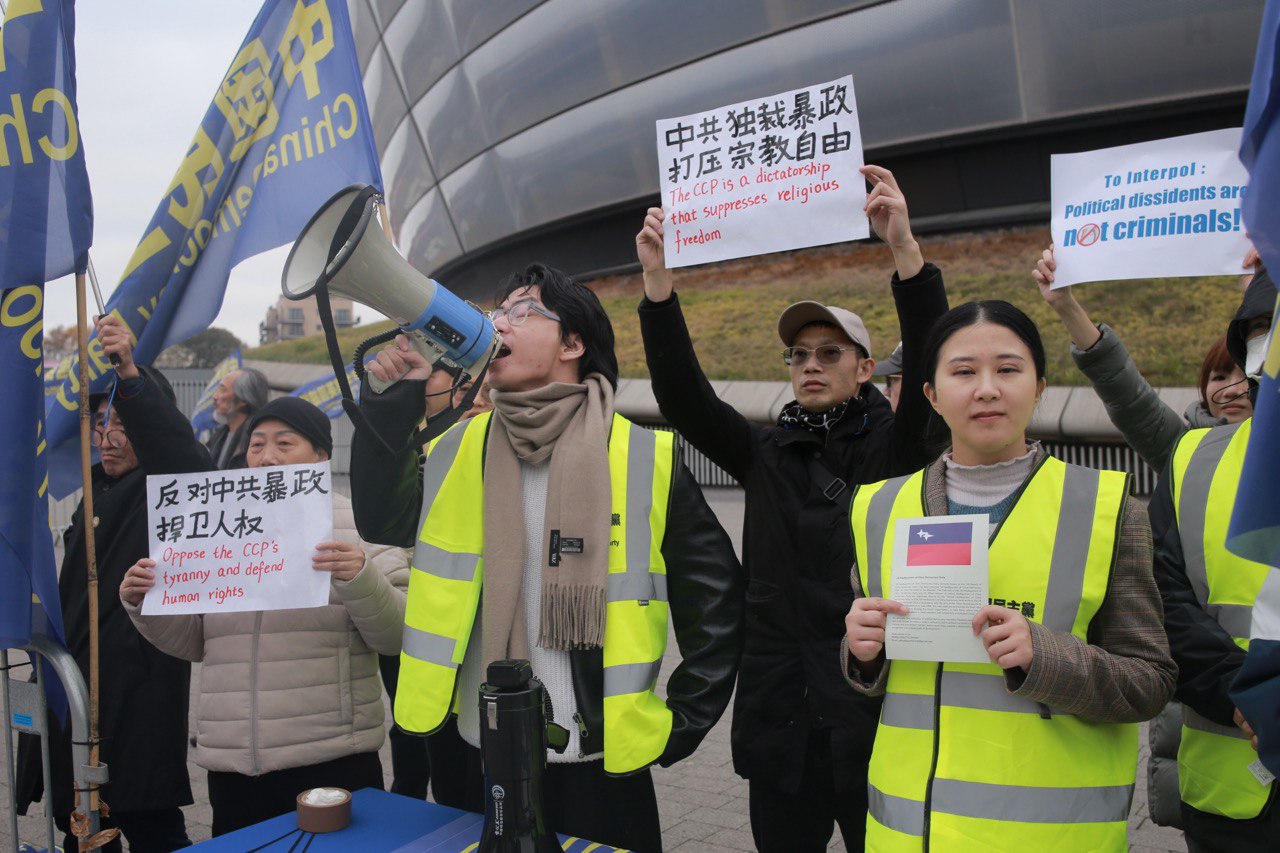
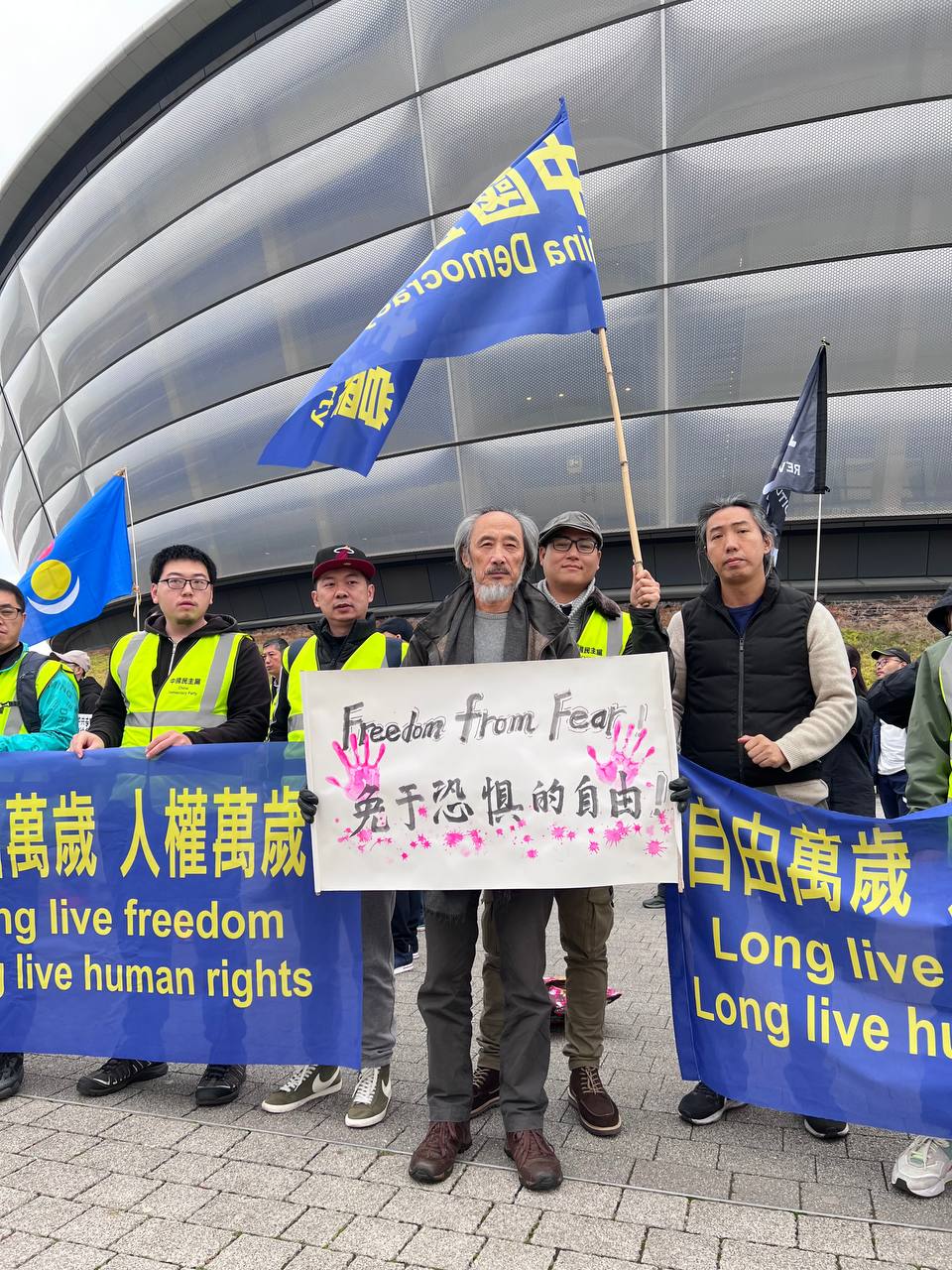
2024年11月5日,在苏格兰格拉斯哥召开的国际刑警组织(INTERPOL)年会上,几十位中国民主党成员及人权活动人士聚集会场外,举着横幅,高喊口号,呼吁国际社会关注中共政府利用国际刑警组织的“红色通缉令”(简称“红通”)来打压异议人士的现象。这一抗议活动引发了参会代表的关注。中国民主党英国总部等团体认为,中国政府将“红色通缉令”作为镇压手段,用以对付批评政府的声音,使他们在国际上无处藏身。迫使他们回国面对不公正的法律审判。

抗议活动由中国民主党英国总部组织,汇集了多个民主团体及流亡人士。抗议者手举标语,呼吁国际刑警组织重新审视并加强对“红色通缉令”发布流程的监督,确保这一机制不被任何国家滥用。抗议者们在国际刑警组织年会会场外打出标语,标语上写着“抗议中共政府滥用红通跨国镇压政治异见人士”、“自由万岁、人权万岁”等字样。中国民民主党英国总部顾问黄华接受美国之音采访时表示,我们在会场外表达了我们的诉求,“强烈谴责中共滥用红通,跨国镇压政治异见人士”,英国的警察非常友善,给我们提供了便利。

“红色通缉令”原本是国际刑警组织为帮助成员国打击跨国犯罪而设计的一项全球通缉令,目的是让成员国间能够迅速分享嫌疑人的信息,进行跨国协作。然而,近年来有越来越多的批评声音指出,一些国家,尤其是中国和俄罗斯,土耳其,频繁申请发布“红色通缉令”以追捕政治异见者或民权活动家,而非真正的罪犯。中国政府方面则否认这一指责,称所有的“红色通缉令”都遵循法律程序,用以追捕在逃的经济或刑事犯罪嫌疑人。然而,国际人权组织指出,许多持不同政见的流亡者仅因发表反对政府的言论或参与政治活动,就遭到中国政府指控为“刑事犯罪”并被发布“红通”。

一位参与抗议的流亡人士所说:“自由世界应为那些没有机会发声的人们站出来发声,守护国际组织的公正性。否则,国际刑警组织将不再是追捕罪犯的工具,而是被用来镇压政治异见的利器。”

中国民主党英国总部报道

参加此次活动的党员:王冠儒、黄华、Thomas、俞滨、郭宇轩、周小斌、程敏、成小丹、朱双林、胡晓、李亚伦、李皓博、韦伊铭、林明强、周亮、王宇峻、王应和、朱司勇、李景棠、魏辰雨、何智威、闫磊等

China Democracy Party and other dissidents protest against the Chinese government’s use of Interpol for transnational repression

On 5 November 2024, dozens of members of UK Headquarters of China Democracy Party and human rights activists gathered outside the INTERPOL annual conference in Glasgow, Scotland, holding banners and shouting slogans calling for international attention to the Chinese Communist government’s use of the Interpol ‘Red Notice’ (‘Red Notice’) to suppress dissidents. ‘Red Notice”) of Interpol to suppress dissidents. The protest sparked concern among delegates to the conference. Groups such as UK Headquarters of China Democracy Party argued that the Chinese government uses the ‘Red Notice’ as a means of repression against voices critical of the government, so that they have no place to hide in the international arena. The protest was organised by the CDP UK HQ.

The protest was organised by the UK Headquarters of China Democracy Party and brought together a number of pro-democracy groups and exiles. Protesters held banners calling on Interpol to review and strengthen its oversight of the Red Notice process to ensure that the mechanism is not abused by any country. Outside the Interpol annual meeting, protesters put up banners with slogans such as ‘Protest against the Chinese Communist government’s abuse of Red Notices to suppress political dissidents across the border’ and ‘Long live freedom, long live human rights’. In an interview with Voice of America, Huang Hua, an adviser to the UK Headquarters of China Democracy Party, said that we expressed our demands outside the venue, ‘strongly condemning the CCP’s misuse of the Red Notice to suppress political dissidents across the border,’ and that the police in the UK were very friendly and provided us with facilities.

The ‘Red Notice’ is originally a global wanted notice designed by Interpol to help member countries combat transnational crimes, with the aim of enabling member countries to share information on suspects quickly and collaborate across borders. However, in recent years, there has been growing criticism that some countries, notably China and Russia and Turkey, have frequently applied to issue ‘red notices’ to pursue political dissidents or civil rights activists rather than actual criminals. For its part, the Chinese government has denied the accusation, saying that all ‘red notices’ follow legal procedures for pursuing fugitive economic or criminal suspects. However, international human rights organisations have noted that many dissident exiles have been charged with ‘criminal offences’ and issued with ‘red notices’ by the Chinese government simply for speaking out against the government or engaging in political activities.

As one of the exiles involved in the protests put it: ‘The free world should stand up for those who have no chance to speak out and defend the impartiality of international organisations. Otherwise, Interpol will no longer be a tool for hunting down criminals, but a tool for suppressing political dissent.’

By UK Headquarters of China Democracy Party

Party members who attended the event: Wang Guanru, Huang Hua, Thomas, Yu Bin, Guo Yuxuan, Zhou Xiaobin, Cheng Min, Cheng Xiaodan, Zhu Shuanglin, Hu Xiao, Li Yalun, Li Haobo, Wei Yiming, Lin Mingqiang, Zhou Liang, Wang Yujun, Wang Yinghe, Zhu Siyong, Li Jingtang, Wei Chenyu, He Zhiwei, Yan Lei, etc.
“终将燎原:纪念四通桥与彭立发的抗争之火” ‘Eventually a prairie fire will start: commemorating the fire of resistance in Sitongqiao and Peng Lifa’

作者 中国民主党英国总部党员 程敏 

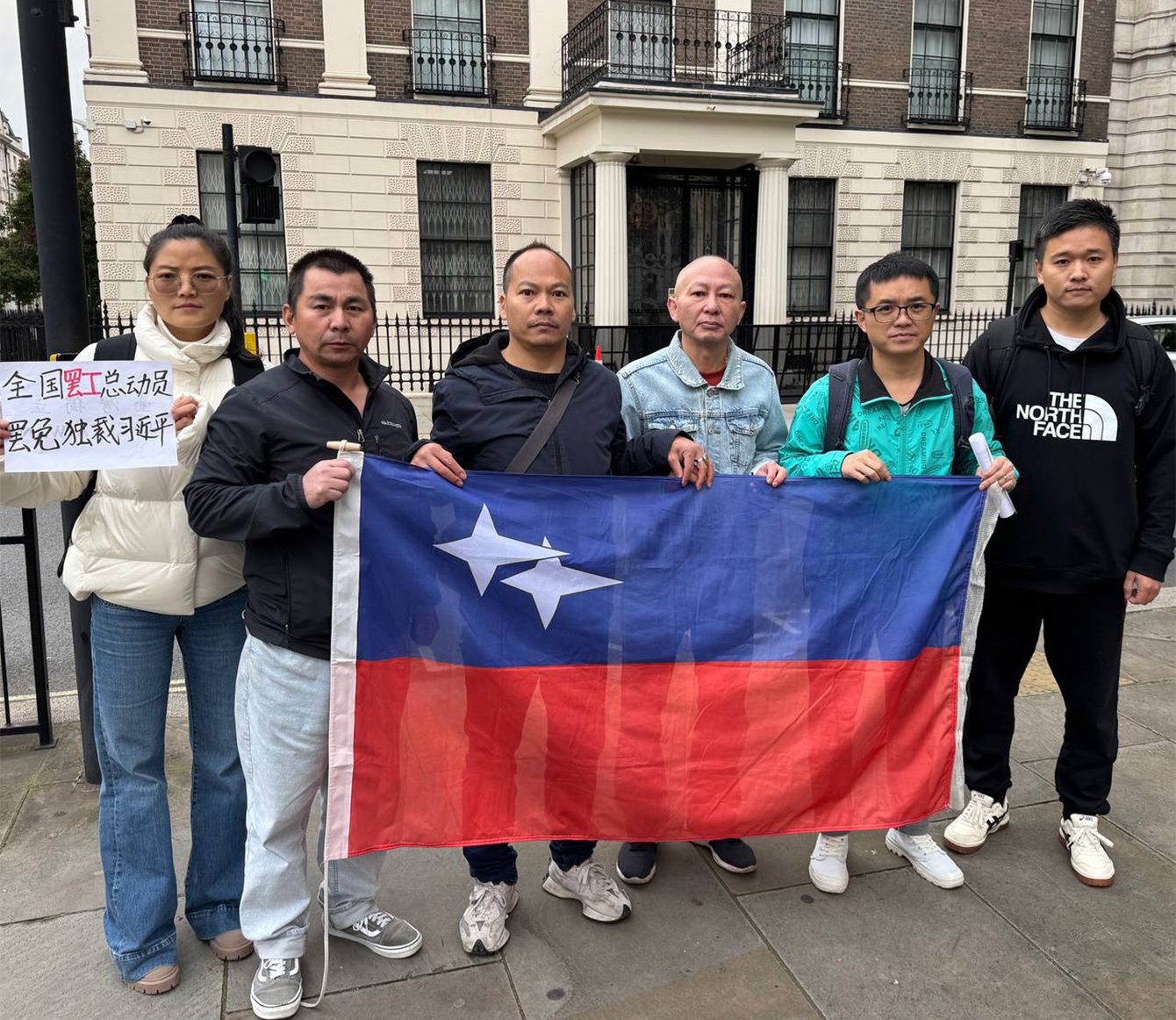
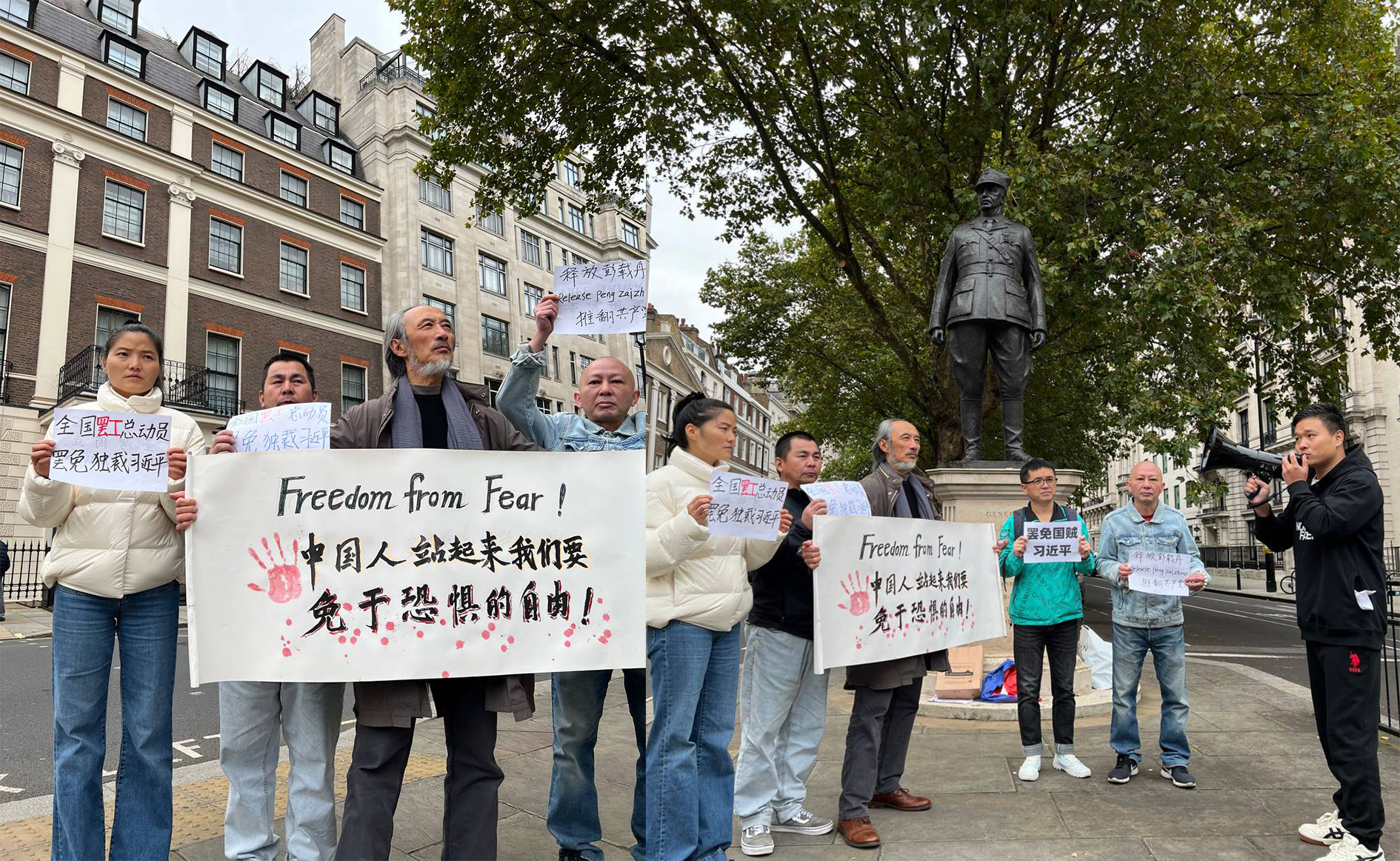
2024年10月13日,这一天是北京四通桥事件两周年纪念日,同时也是彭立发先生被捕入狱迄今两周年整。中国民主党英国总部多位党员与著名旅英作家一同前往中国驻英大使馆前,马建先生与在场党员一同高呼口号,抗议中共长期非法拘押彭立发,要求中共释放彭立发并停止监控骚扰其家人。

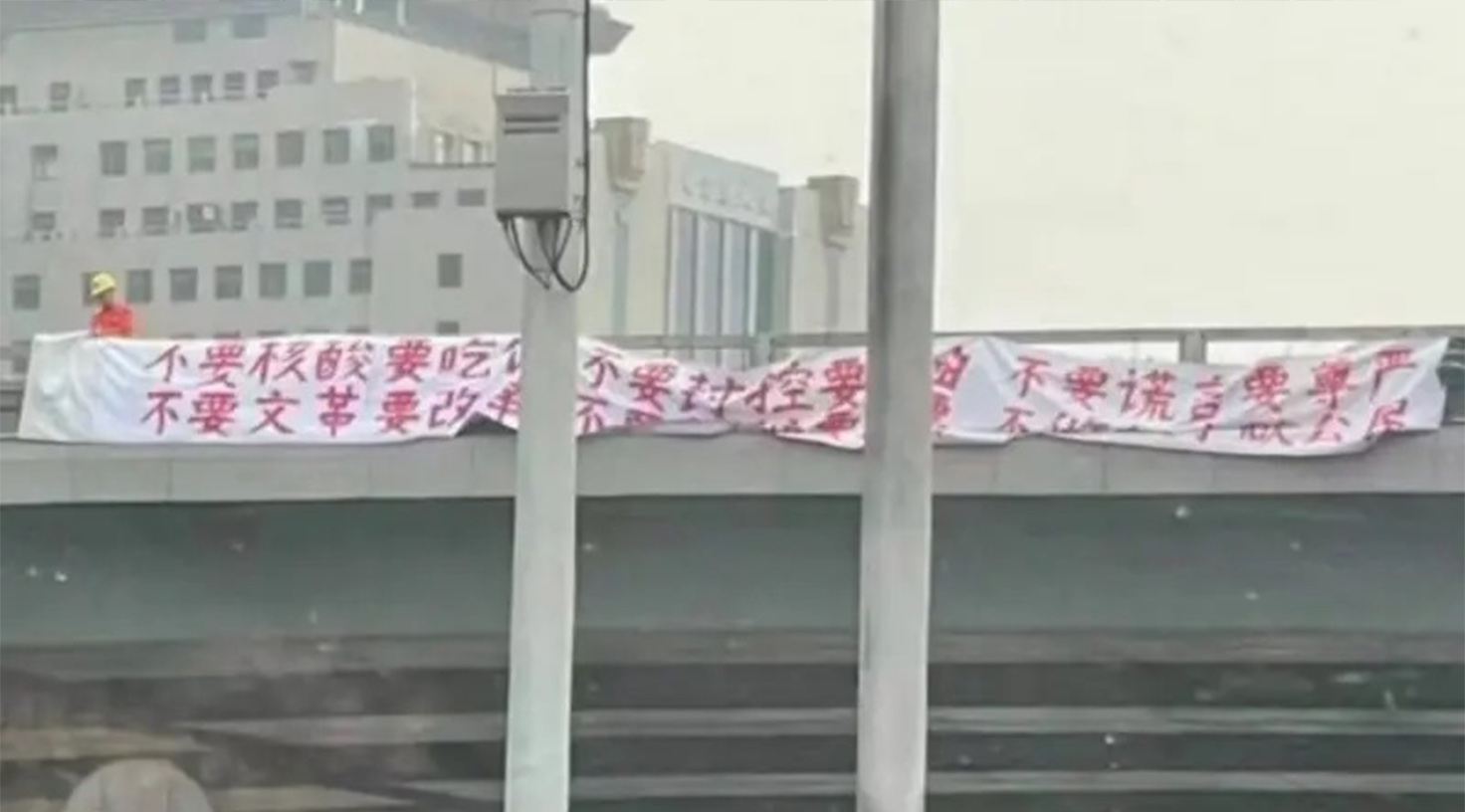
两年前,北京四通桥事件发生前,彼时的中国还停留在动态清零的恐怖阴影下,各地因封控政策导致的人伦惨剧层出不穷,上海的小提琴家陈顺平因急性胰腺炎前往医院就诊,因疫情政策被拒之门外,只能回家,最后苦熬一夜后不忍病痛折磨跳楼身亡。而诸如孕妇产子在即却因没有核酸报告不被收治等事件更是层出不穷。全国人民被动态清零政策折磨得惶惶不可终日,正是在这样的背景下,彭立发孤身一人来到北京四通桥上,悬挂了那张被载入史册的反抗中共暴政的横幅。向整个独裁政权发出挑战,抗议动态清零、反对独裁统治、呼吁自由民主。

四通桥事件发生后,彭立发在当天立即被捕,迄今已有两年,我们除了知道他还活着以外,几乎无法获得任何有关他的任何消息,譬如他被关在何处?遭受了何种虐待?何时能重见天日?而他的妻儿亲朋也都时刻处于中共的严密监控和限制自由下生活。虽然中共事后火速删除屏蔽了中国互联网上一切和彭有关的任何信息,但彭的行为绝不是飞蛾扑火式的一腔孤勇,而是在世界上造成了巨大的影响力和象征意义,更是点燃了亿万中国民众心中长期压抑的对动态清零政策和共产党独裁统治的怒火,直接催生了波及全国的、倒逼中共结束清零政策的抗议事件——白纸革命。

为众人抱薪者,不可使其冻毙于风雪。彭立发甘愿牺牲自己为正义、为亿万普罗大众发声,我们也一定要为了彭立发发声,中国共产党可以迫害刘晓波、彭立发,张展、阮晓寰以及无数知名的和默默无闻却同样为中国的民主事业牺牲自由与生命的良心犯,但中共永远无法代表正义,或许他们可以藉感恩和仇恨教育洗脑愚弄广大民众,借监禁与折磨去吓阻民主人士发声,借欺瞒与伪装骗取国际社会的信任。但民主是大势所趋,即便中共真的能一手遮天,但我们永远不会遗忘那些由中共一手造成,又被他们极力掩饰、讳莫如深的民族苦难,我们不会遗忘那些为民主发声而被中共关押折磨甚至失去性命的良心犯。人类对民主与自由的向往是刻在骨子里的,中共可以永远蒙骗一個人,可以暂时蒙骗所有人,但绝无可能永远蒙骗所有人。

如同中华民国的缔造者孙中山先生在1911年曾说过——中国现在正处在一次伟大的民族运动的前夕,只要是星星之火,就能在政治上造成燎原之势。,那么113年后,我们中国民主党今天也可以在此断言,彭立发、刘晓波、张展、阮晓寰等为了中国民主事业作出极大牺牲的民主志士们,他们亲手燃起的民主星火绝不会就此熄灭,而是与我们心中的火焰汇聚在一起传承下去,而未来会有更多的人了解他们、尊敬他们、继承他们。民主不灭,必将再起。其势更烈,终将燎原!

活动名单:马建,周小斌、成小丹,徐伟华、程敏、林明强,李皓博

活动组织者:周小斌、程敏

‘Eventually a prairie fire will start: commemorating the fire of resistance in Sitongqiao and Peng Lifa’

Author Cheng Min, member of the UK Headquarters of China Democracy Party

On 13th October 2024, it was the second anniversary of the Sitongqiao incident in Beijing, and also the second anniversary of the arrest and imprisonment of Mr Peng Lifa. A number of members of the CDP’s UK Head Office, together with a famous British writer, went to the Chinese Embassy in the UK, where Mr Ma Jian and other members of the party chanted slogans protesting against the Chinese Communist Party (CCP)’s prolonged and unlawful detention of Mr Peng Lifa, and demanded that the CCP release Mr Peng Lifa and stop the surveillance and harassment of his family.

Two years ago, before the Sitongqiao incident in Beijing, when China was still under the shadow of the horror of dynamic zeroing, there were numerous human tragedies caused by the closure and control policy. Chen Shunping, a violinist from Shanghai, went to the hospital for treatment of acute pancreatitis, was refused entry due to the epidemic policy, and could only go home, and finally jumped to his death after a night’s hard suffering, unable to tolerate the torture of the disease. Incidents such as the pregnant woman who was about to give birth but was not admitted due to the lack of a nucleic acid report are even more numerous. Against this backdrop, Peng Lifa, alone on the Sitong Bridge in Beijing, hung the historic banner of defiance against the tyranny of the Communist Party of China (CPC), challenging the entire dictatorship. Challenging the entire dictatorial regime, he protested against dynamic zeroing, opposed dictatorial rule, and called for freedom and democracy.

Peng Lifa was arrested on the day of the Sitongqiao incident. It has been two years since then, and apart from the fact that he is still alive, we have hardly been able to obtain any information about him, such as where he is being held? What kind of abuse has he suffered? When will he see the light of day again? His wife, children, relatives and friends are also under the close surveillance and restriction of freedom by the CCP at all times. Although the Chinese Communist Party quickly deleted and blocked all information related to Peng on the Chinese Internet, Peng’s behaviour was by no means an act of courage like a moth to a flame, but rather it created a huge impact and symbolism around the world, and ignited the long-suppressed anger of hundreds of millions of Chinese people against the Dynamic Zeroing Policy and the Communist Party’s autocratic rule, which led to the White Paper Revolution – a nationwide protest event to force the Chinese Communist Party to end the Zeroing Policy. The White Paper Revolution, a protest event that has spread across the country and pushed the CCP to end the zero policy.

He who carries a salary for all must not be allowed to freeze and die in the wind and snow. Peng Lifa willingly sacrificed himself to speak out for justice and for the hundreds of millions of people in the general public. The CCP can persecute Liu Xiaobo, Peng Lifa, Zhang Zhan, Ruan Xiaohuan, and countless other well-known and obscure prisoners of conscience who have also sacrificed their freedom and their lives for the cause of democracy in China, but the CCP can never stand for justice, and perhaps they can educate and brainwash the general public to fool them by teaching them to be thankful and hateful, and to deter them from democracy by imprisonment and torture. Perhaps they can brainwash and fool the general public by teaching gratitude and hatred, deter democrats from speaking out by imprisonment and torture, and deceive the international community by deception and disguise. However, democracy is the general trend, and even if the CCP can really cover up the whole world with one hand, we will never forget those national sufferings caused by the CCP, which they have tried to cover up and kept secret, and we will never forget those prisoners of conscience who were imprisoned and tortured by the CCP, and even lost their lives, for the sake of speaking out for democracy. The aspiration of human beings for democracy and freedom is engraved in their bones. The CCP can fool one person forever, and it can fool all people temporarily, but it can never fool all people forever.

As Dr SUN Yat-sen, the founder of the Republic of China, once said in 1911 – China is now on the eve of a great national movement, and as long as there is a spark, it can cause a prairie fire in politics. So 113 years later, we in the CDP can also assert here today that the democratic aspirants such as Peng Lifa, Liu Xiaobo, Zhang Zhan, Ruan Xiaohuan and others who have made great sacrifices for the cause of democracy in China will never be extinguished, but will be handed down together with the flame in our hearts, and in the future, more people will understand them, respect them and inherit them. Democracy will not be extinguished, but will rise again. Its momentum is even stronger, and it will eventually start a prairie fire!

Event List: Ma Jian, Zhou Xiaobin, Cheng Xiaodan, Xu Weihua, Cheng Min, Lin Mingqiang, Li Haobo

Event organisers: Zhou Xiaobin, Cheng Min

中华民国国庆113周年:集会声讨中共,守护台湾民主 113th Anniversary of the Republic of China: Rally Against the CCP, Defend Taiwan’s Democracy.

作者 中国民主党英国总部党员 程敏 

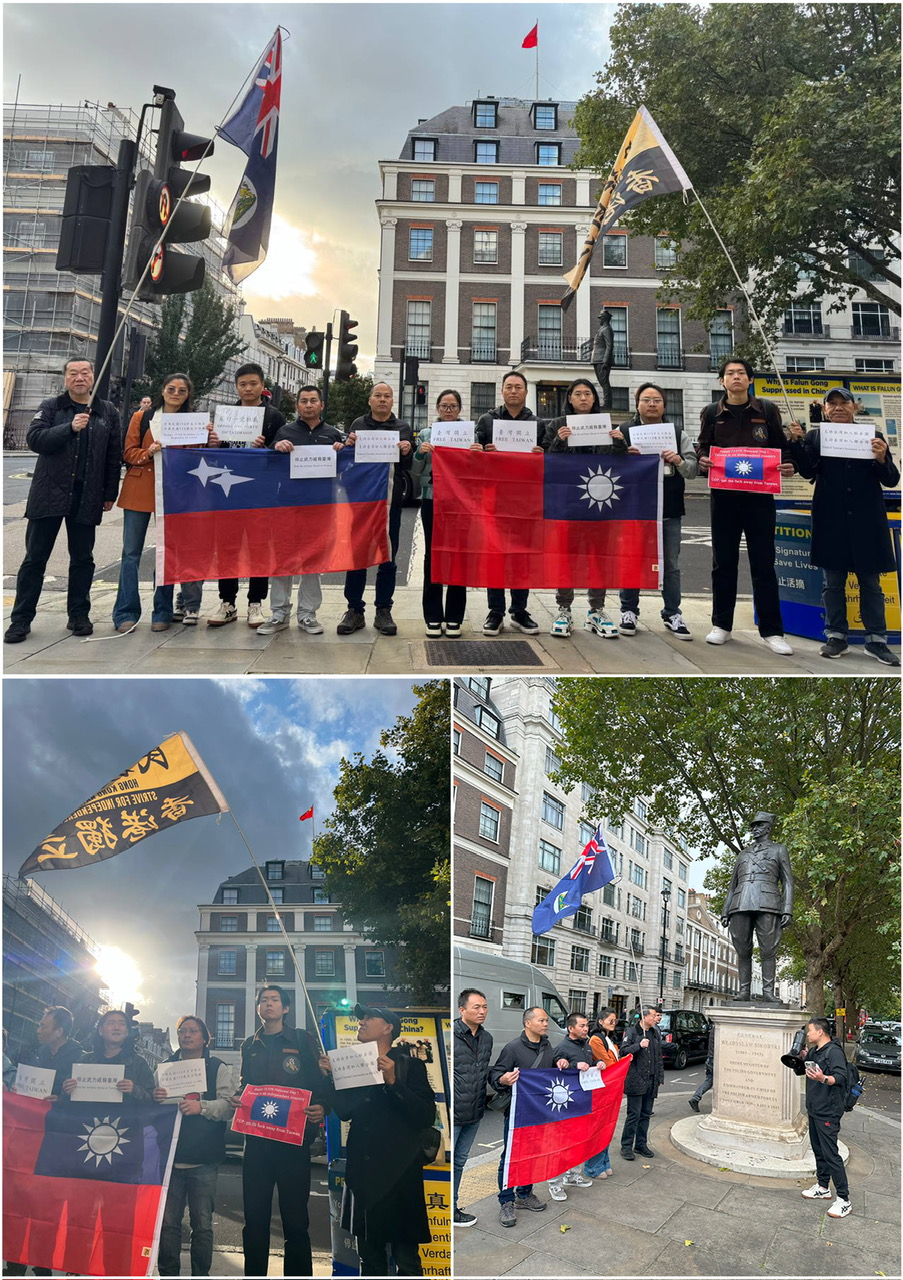
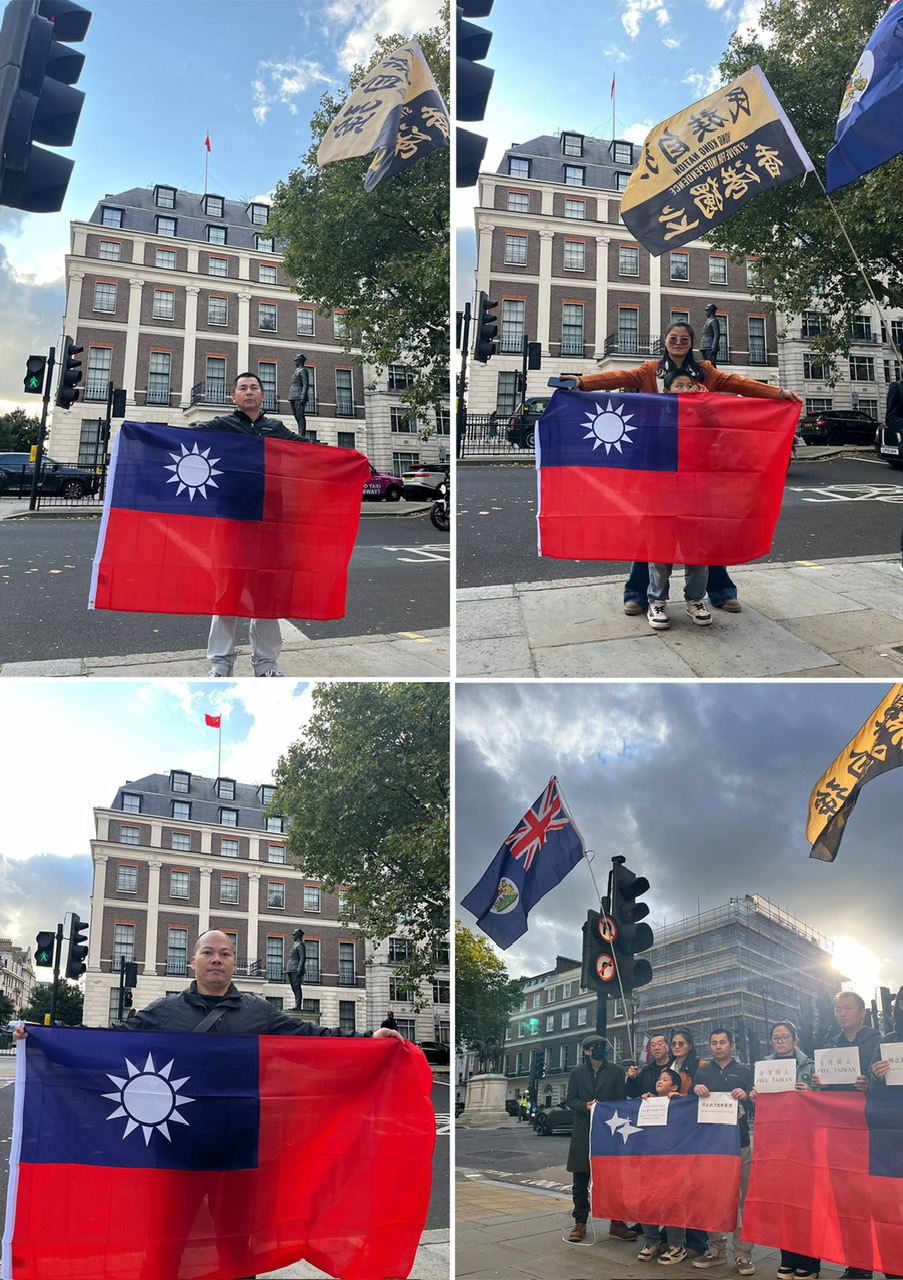
2024年10月10日下午,正值中华民国113周年国庆日,中国民主党英国总部多位党员在中国驻伦敦大使馆外,举行了一场集会抗议活动,严厉谴责中国政府以“统一”之名行“侵略”之实,要求中国政府立即放弃一切对台武力威胁行为,还台湾安宁,还香港自由,还人民权力。

现场,中国民主党的党员们共同举起青天白日旗和中国民主党党旗,手持“停止武力侵略台湾”、“台湾独立”、“支持台湾加入联合国”等标语,并高喊“打倒中国共产党”、“台湾独立、香港独立”等口号,表达了我们保护台湾民主制度的坚定立场以及对中共近年来多次武力袭扰台湾的强烈愤慨。现场还有香港民主人士自发加入示威队伍,高举“香港独立”等旗帜。

本次活动组织者之一的党员程敏在现场讲话表示:中国政府对已经失去的大片土地诸如海参崴、外蒙古等故意淡化处理,甚至装聋作哑,却只对台湾穷追不舍,喊打喊杀,无非是因为台湾是仅存的华人民主政权,会危及中共的执政地位与执政合法性。如果中共胆敢武力侵略台湾,必将招致国际社会最严厉的制裁与台湾人民最激烈的反抗,甚至引发波及全世界的战争。

自香港实行“港版国安法”四年以来,曾经璀璨耀眼的东方之珠已彻底蒙尘于独裁者习近平之手,而在中共对台湾虎视眈眈的今天,只有让他们看到每个人守护台湾的坚定态度和决心,才能有效的震慑并遏制他们武力侵略台湾的野心。中国民主党英国党部将继续通过各种形式的活动,呼吁西方社会更加重视中共对于自由民主价值观的威胁,我们坚信,在所有民主人士的共同努力下,未来在中国、在台湾、在香港、在西藏,一定能迎来真正长久的民主、和平与自由!

组织者:徐伟华、程敏、周小斌

参加活动的党员名单:周小斌,徐伟华,成小丹,程敏,郭宇轩,魏辰雨,韦伊铭,王建

113th Anniversary of the Republic of China: Rally Against the CCP, Defend Taiwan’s Democracy.

Author: Cheng Min, Member of the China Democratic Party (UK Headquarters)

On October 10, 2024, in celebration of the 113th Anniversary of the Republic of China, several members of the China Democratic Party (UK Headquarters) held a rally outside the Chinese Embassy in London to strongly condemn the Chinese government for committing “aggression” in the name of “unification.” They demanded that the Chinese government immediately abandon all threats of military force against Taiwan, restore peace to Taiwan, freedom to Hong Kong, and power to the people.

At the scene, members of the China Democratic Party jointly raised the Blue Sky with a White Sun flag and the party flag, holding signs that read “Stop Military Aggression Against Taiwan,” “Taiwan Independence,” and “Support Taiwan’s Entry into the United Nations.” They shouted slogans such as “Down with the Chinese Communist Party,” “Taiwan Independence, Hong Kong Independence,” expressing our firm stance in protecting Taiwan’s democratic system and our strong indignation against the repeated military harassment of Taiwan by the CCP in recent years. Hong Kong democrats also spontaneously joined the demonstration, raising banners proclaiming “Hong Kong Independence.”

One of the organizers, member Cheng Min, spoke at the scene, stating that the Chinese government deliberately downplays the loss of vast territories such as Vladivostok and Outer Mongolia, even pretending to be deaf and mute, yet relentlessly pursues Taiwan. This is because Taiwan is the last remaining democratic regime of the Chinese people, which threatens the CCP’s ruling position and legitimacy. If the CCP dares to use military force against Taiwan, it will surely provoke the most severe sanctions from the international community and the most vigorous resistance from the Taiwanese people, potentially even leading to a war that could engulf the entire world.

Since the implementation of the “National Security Law” in Hong Kong four years ago, the once brilliant Pearl of the Orient has been completely tarnished by the hands of the dictator Xi Jinping. In today’s context, where the CCP has its eyes set on Taiwan, it is crucial to show them our unwavering attitude and determination to protect Taiwan. The China Democratic Party (UK Headquarters) will continue to call on Western society to pay more attention to the CCP’s threats to the values of freedom and democracy through various forms of activities. We firmly believe that, with the joint efforts of all democratic individuals, a long-lasting democracy, peace, and freedom will surely be realized in China, Taiwan, Hong Kong, and Tibet in the future!

Organizers: Xu Weihua, Cheng Min, Zhou Xiaobin
Participants: Zhou Xiaobin, Xu Weihua, Cheng Xiaodan, Cheng Min, Guo Yuxuan, Wei Chenyu, Wei Yiming, Wang Jian

追寻中国民主的困惑与反思 Confusion and Reflection in the Pursuit of Chinese Democracy

作者:中国民主党英国总部 程敏

中国人从来不恨特权,恨的是自己没有特权。中国人也不恨人上人,恨的是自己没能成为人上人。所以中国人几千年来疯狂崇拜、迷恋权力。绝大多数中共独裁政权统治下的人,无论是中共党内的中高层,抑或是党外略有薄财的小生意人,他们所希望的平等社会不过是“自我以上人人平等,自我以下阶级分明”。

我时常会扪心自问,作为一个中共及其拥趸眼中“脑后有反骨”的“汉奸走狗卖国贼”,我是真心为了中国的自由民主事业而发声吗?还是说我只是愤恨于中共骑在我的脖子上享受特权而想要反抗?有朝一日中共亡了,我还能否像今天一样慷慨激昂,问心无愧的面对大家,一同高呼打倒独裁,民主自由?我只能告诉自己,反抗压迫和争取个人自由,正是为了让每个人能生活在一个公正、自由的环境中,这正是民主和自由的本质。

我的答案是不知道。一方面,我心中的正义感告诉我,我会始终坚守民主、自由、平等的普世价值观,我盼望未来的某一天,中国人人平等,没有人再自认“韭菜”,没有人崇拜与畏惧权力,每个人都拥有独立思考和判断的能力。那面横亘在中国人与世界之间的“数字柏林墙”轰然倒塌,中国在浴火重生中建立起完善的权力制衡体系与社会制度。

但另一方面我心中的理智告诉我,我说的这些不就是中共执政前曾经对人民许下的承诺吗?难道所有的中共党员从一开始就是试图哄骗民众、窃取权力的民贼吗?难道中共海量因腐败被捕的官员们,他们在学生时代不曾怀有一腔热血希望能够造福百姓,建设更好的国家吗?那为什么最后他们都变成了中共这颗毒瘤的一部分,成为寄生在中国身上疯狂汲取利益的腐臭蝇蛆?

人是情感欲望最为复杂的动物,在漫长的一生中需要面临无数的变数与考验。人的思想也同样无时无刻不在发生变化。姑且不提那些中共诱惑腐蚀下,因为屈服于权色交易而做下伤天害理之事的恶人们,前不久被抓的海外民运领袖之一唐元隽因难忘故土亲人被迫沦为中共爪牙的经历也令我大受震动。当你面对一个无耻到能用故土亲人的探视权去消磨你的反抗意志的敌人时,任何正义热血的大道理都显得苍白单薄了。入党宣誓在此时唯一的用处就是让组织能以“背誓”之名跟他划清界限。但你、我,每一个投身中国民主事业的人都可能在将来的某一天面对和唐元隽相同的境地。

现实比理想更残酷复杂,而在这样的现实面前,人的信念常常经受不住威胁与诱惑的考验。这并不意味着我们应当放弃追求民主与自由的理想,相反,正因为现实残酷,我们更需要警惕中共体制对人性的腐蚀与压制。或许,我们每一个追求民主的人都无法完全避免人性的弱点,但正是这种不断反思和自我警醒的能力,才是民主社会的精华,更是我们避免重蹈唐元隽覆辙的关键!

Confusion and Reflection in the Pursuit of Chinese Democracy

Author: Cheng Min, UK Headquarters of China Democracy Party

Chinese people never hate privileges, but hate themselves for not having them. Nor do the Chinese hate people who are superior to them, but they hate themselves for not being superior to them. That is why Chinese people have been madly worshipping and obsessed with power for thousands of years. The vast majority of people under the dictatorship of the Chinese Communist Party (CCP), no matter whether they are middle or high ranking members of the CCP or small businessmen with a little bit of money outside the CCP, their hope for an egalitarian society is just ‘equality for everyone above the self, and a clear distinction between classes below the self’.

I often ask myself, as a ‘traitor, lackey and sellout’ with a ‘backbone in the back of his head’ in the eyes of the CCP and its supporters, do I really speak out for the cause of freedom and democracy in China? Or am I just resentful that the CCP is riding on my neck and enjoying privileges, and I want to resist? One day when the CPC dies, will I still be able to face all of you with the same impassioned and clear conscience as I do today, shouting together to overthrow dictatorship, democracy and freedom? I can only tell myself that resisting oppression and fighting for personal freedom is precisely for the sake of enabling everyone to live in a just and free environment, which is the essence of democracy and freedom.

My answer is no. On the one hand, the sense of justice in my heart tells me that I will always uphold the universal values of democracy, freedom and equality, and I hope that one day in the future, everyone in China will be equal, no one will think of themselves as ‘leeks’ any more, no one will worship or fear power, and everyone will have the ability to think and make judgements independently. The ‘digital Berlin Wall’ between the Chinese and the world will collapse, and China will be reborn with a perfect system of checks and balances on power and social institutions.

But on the other hand, my rational mind tells me that what I am talking about are not the promises that the CCP made to its people before it came to power? Are all CCP members thieves from the very beginning who try to deceive the people and steal power? Did not the vast number of CCP officials arrested for corruption have a passionate desire to benefit the people and build a better country when they were students? Then why did they all become part of this cancerous tumour of the CCP, and become rotten flies that parasitically feed on China?

Human beings are animals with the most complex emotions and desires, and they have to face countless variables and tests in their long lives. The human mind is also changing all the time. Leaving aside those evil people who have been corrupted by the temptations of the Chinese Communist Party (CCP), and who have done terrible things because they have succumbed to the power and sex trade, I have also been greatly shocked by the experience of Tang Yuanjun, one of the overseas pro-democracy leaders, who has been arrested recently, and who was forced to become a henchman of the CCP because of the unforgettable experience of his loved ones in his homeland. When you are faced with an enemy that is so shameless as to use the visitation rights of your loved ones in your homeland to wear down your will to resist, any righteous and fervent reasoning will seem pale and thin. The only use of the party oath at this point is to allow the organisation to draw a line under him in the name of ‘reneging’ on the oath. But you, me, and everyone else who is committed to the cause of democracy in China will probably face the same situation as Tang Yuanjun one day in the future.

Reality is crueler and more complex than ideals, and in the face of such reality, people’s beliefs are often not tested by threats and temptations. This does not mean that we should give up the ideal of pursuing democracy and freedom. On the contrary, it is precisely because of the cruelty of reality that we need to be even more vigilant against the corruption and suppression of human nature by the CCP system. Perhaps every one of us who pursues democracy cannot completely avoid the weaknesses of human nature, but it is this ability to constantly reflect and alert ourselves that is the essence of a democratic society, and the key to avoiding a repeat of Tang Yuanjun’s mistake!

中国国庆日抗议,呼吁人权与自由 Protest on China’s National Day, calling for human rights and freedom

2024年10月1日今天,中国民主党英国总部在伦敦中国大使馆门前举行了一场抗议活动,表达对中国政府人权问题的谴责。他们手持标语、高喊口号,呼吁中国政府尊重人权、释放政治犯,并呼吁国际社会关注中国国内的民主化进程。

随后,中国民主党英国总部的成员又去到了中国大使馆新的选址门前,参与港人和藏人组织的抗议活动。

本次抗议活动的组织者魏辰雨表示,选择在10月1日这个特殊的日子进行集会,旨在向世界传递一个明确的信息:中国政府在庆祝建国周年的同时,依然忽视其国内人民的基本权利。活动中,抗议者们举着印有“释放良心犯”、“结束言论控制”和“还我自由”等字样的横幅和标语,并不断呼喊“结束一党专政”、“追求自由民主”等口号。

中国政府长期以来对异议人士的打压和对人权的漠视,使得我们这些身在海外的中国人感到痛心。我们希望通过这次活动,让中国政府明白,我们不会放弃对自由、民主的追求,同时也希望国际社会给予更多的关注和支持。

参加本次活动的党员:李皓博 周小斌 成小丹 程敏 俞滨 魏辰雨 林丽君 王建 靳雪涔 成亚利

作者 中国民主党英国总部成员 魏辰雨

Protest on China’s National Day, calling for human rights and freedom

1 October 2024, UK Headquarters of China Democracy Party held a protest in front of the Chinese Embassy in London to express condemnation of the Chinese government’s human rights issues. They held banners and shouted slogans, calling on the Chinese government to respect human rights, release political prisoners, and call on the international community to pay attention to China’s domestic democratization process.

Later, members of UK Headquarters of China Democracy Party went to the new site of the Chinese Embassy to participate in the protest organized by Hong Kong and Tibetans.

Wei Chenyu, the organizer of this protest, said that the choice of October 1, a special day, to hold a rally is intended to send a clear message to the world: the Chinese government still ignores the basic rights of its people while celebrating the anniversary of the founding of the People’s Republic of China. During the event, protesters held banners and slogans with words such as “Release prisoners of conscience”, “End speech control” and “Give me freedom”, and kept shouting slogans such as “End one-party dictatorship” and “Pursue freedom and democracy”.

The Chinese government’s long-term suppression of dissidents and disregard for human rights have made us Chinese living abroad feel sad. We hope that through this event, the Chinese government will understand that we will not give up the pursuit of freedom and democracy. We also hope that the international community will give more attention and support.

Participating party members: Li Haobo, Zhou Xiaobin, Cheng Xiaodan, Cheng Min, Yu Bin, Wei Chenyu, Lin Lijun, Wang Jian, Jin Xuezhen, Cheng Yali

Author Wei Chenyu, member of UK Headquarters of China Democracy Party.

中国民主党英国总部党员参加“四圣谛”修炼讲座 Members of the China Democracy Party’s UK Headquarters Attend the “Four Noble Truths” Practice Lecture

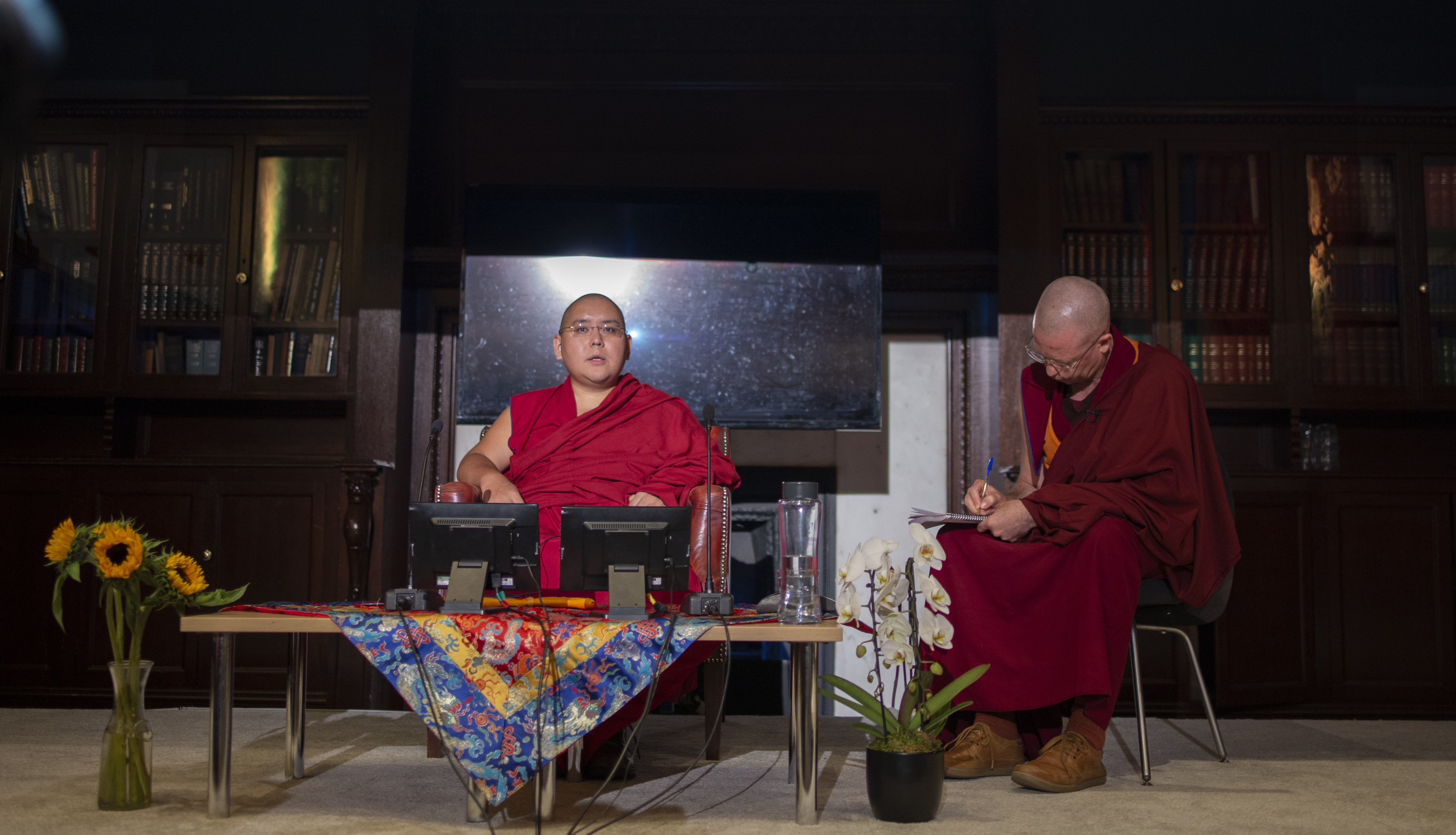
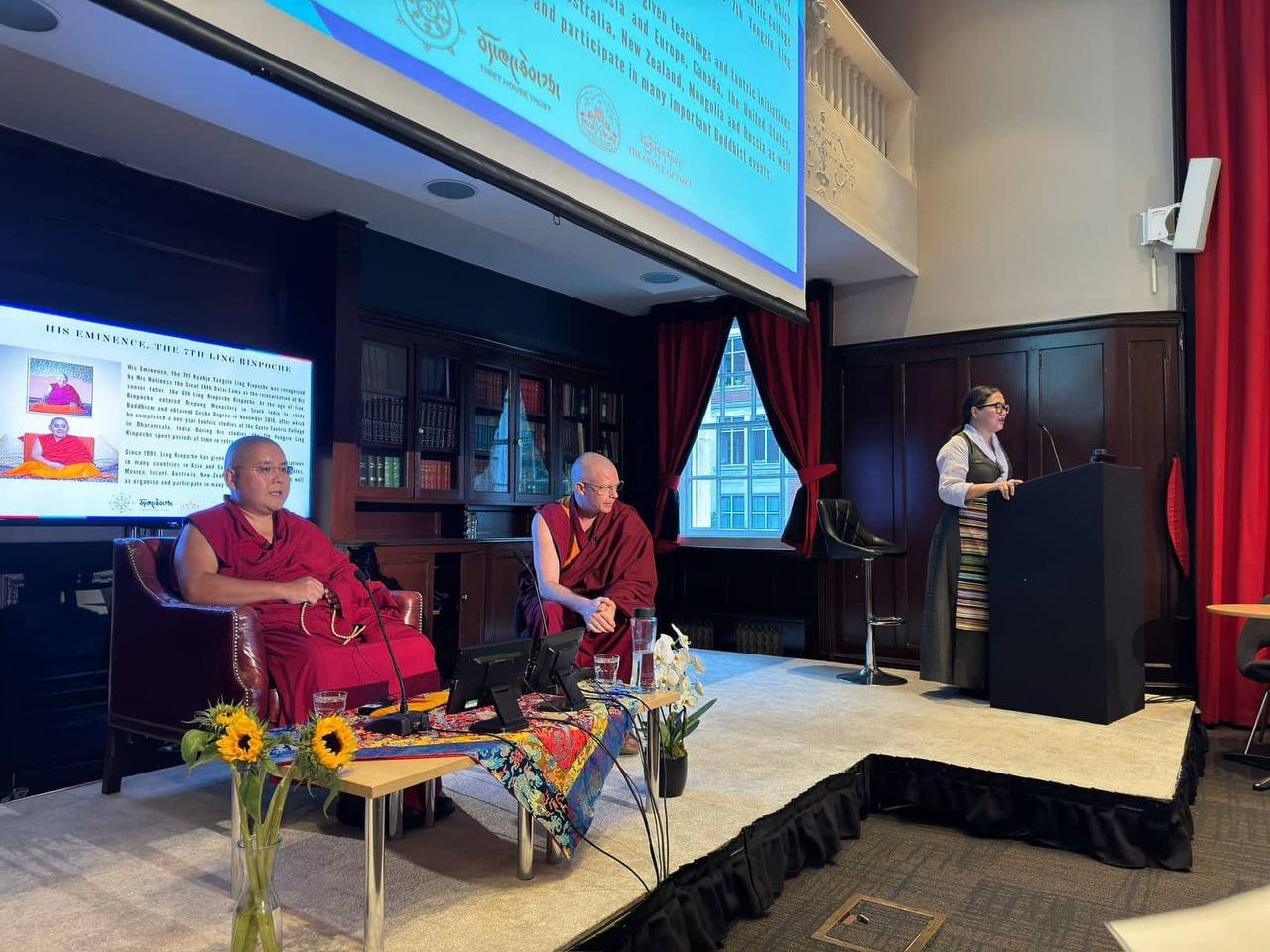
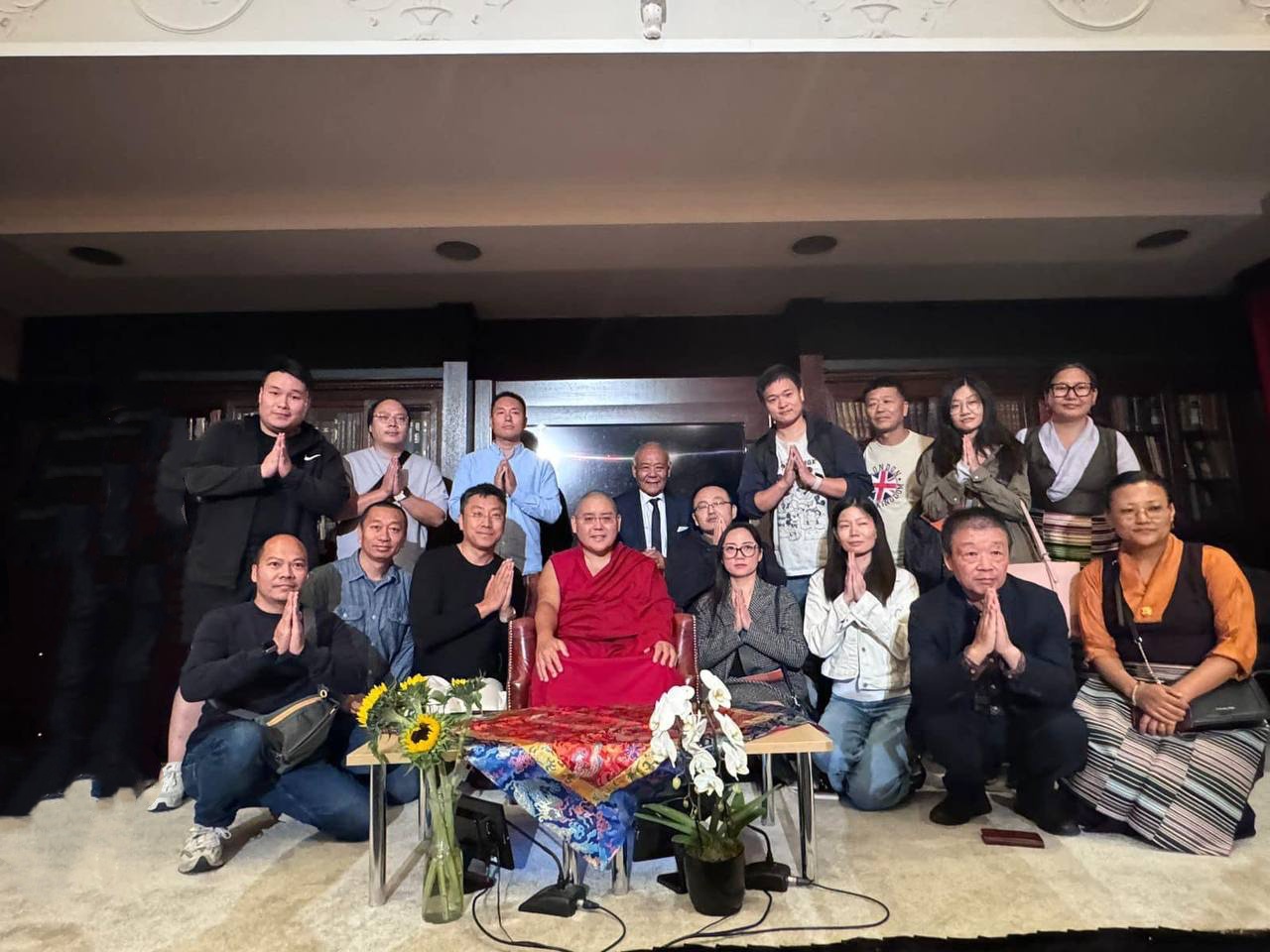
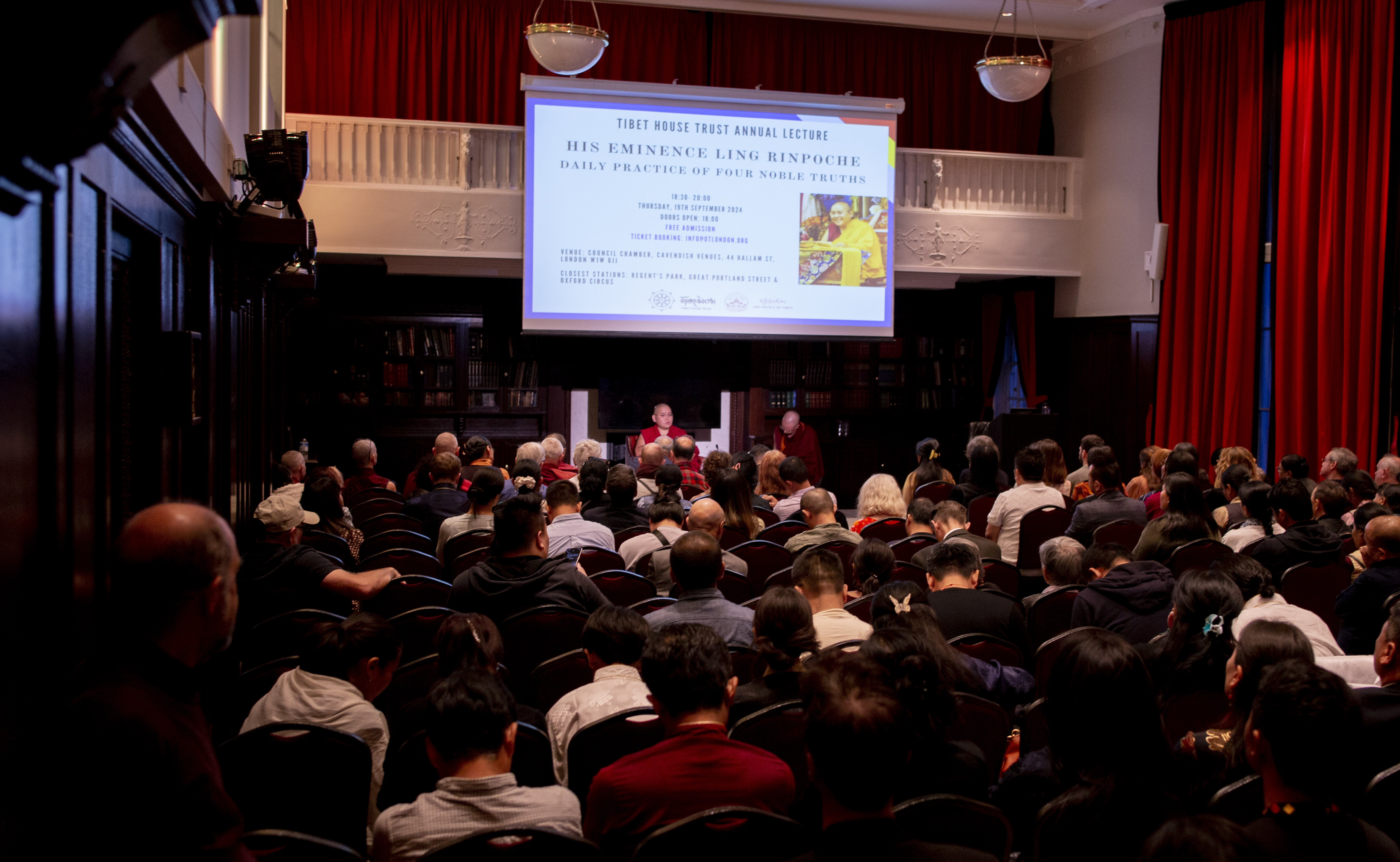
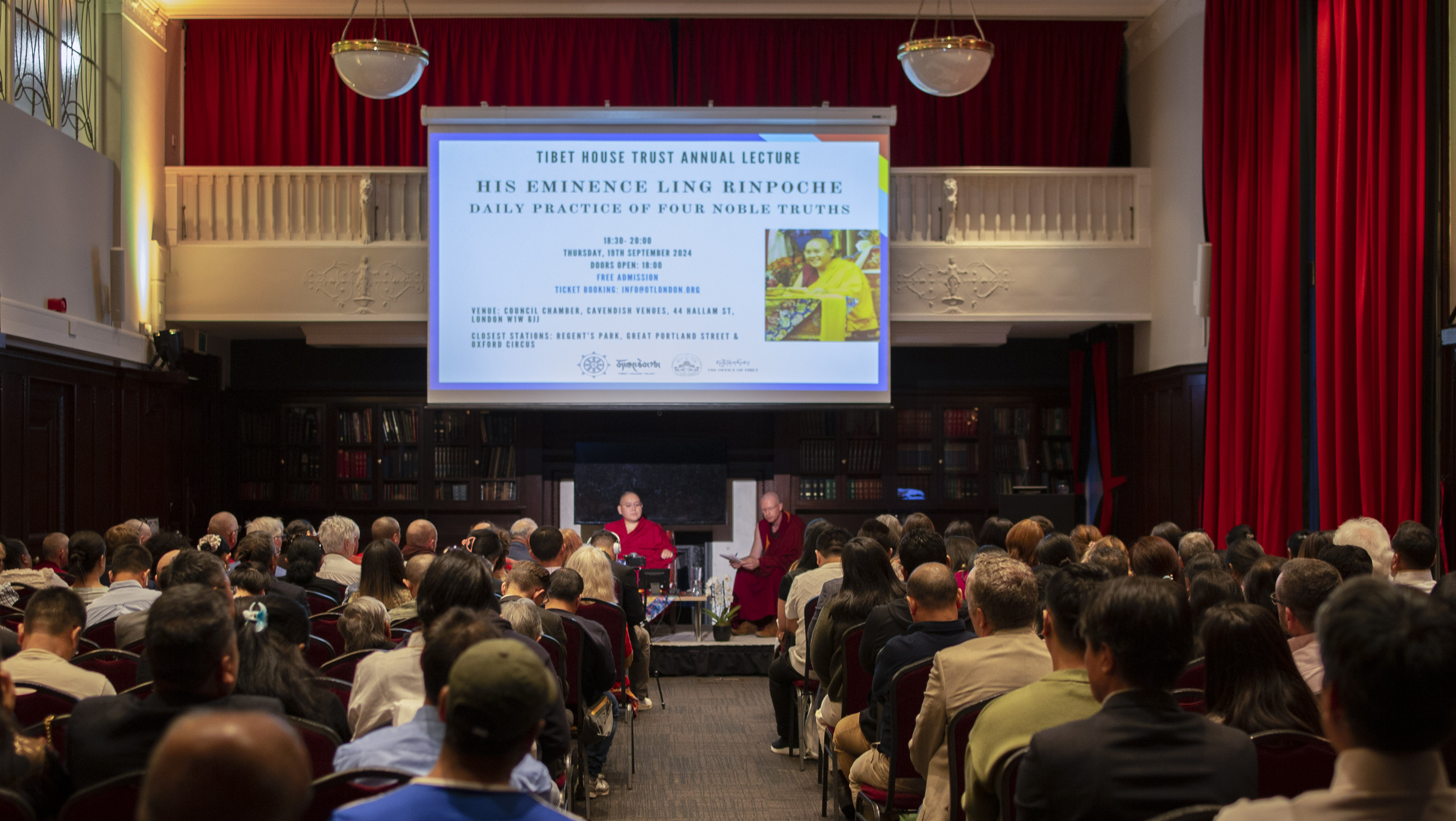
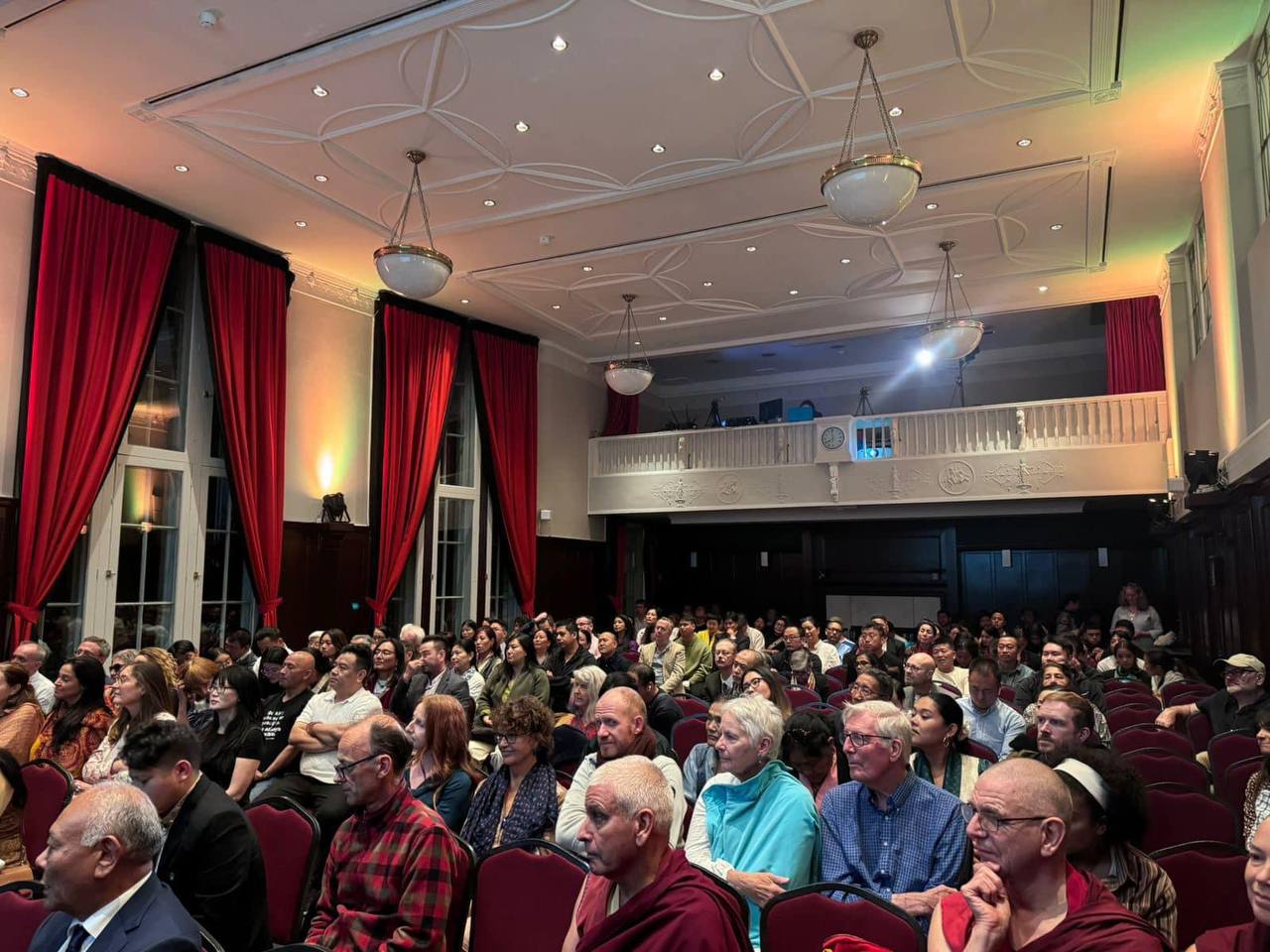
2024年9月20日,星期四,由藏传佛教著名领袖——“第七世林仁波切”主讲的“四圣谛”日常修炼专题讲座于伦敦市区的Cavendish Venues会议厅召开。中国民主党英国总部的多位党员和许多中国佛教徒共同参加了此次讲座。本次讲座中,第七世林仁波切通过藏传佛教四圣谛的核心教义——“苦、集、灭、道”,强调苦是人生无法回避的现实,而通过修炼,认识并消解痛苦,才能在纷繁复杂的社会生活中保持心灵的安定与平和。此外,讲座还探讨了如何通过修习“道”来解决生活中的困境与挑战。仁波切以丰富的佛学知识结合实际案例,为在场信众提供了切实可行的修炼方法。与会人士超过一百位,因人数众多,部分人不得不站立聆听佛法。现场气氛安静祥和,大家静心聆听第七世林仁波切的宣讲,并在之后的问答环节积极与林仁波切进行互动与合影留念。

第七世林仁波切于1985年11月18日诞生于印度达兰藤拉。1987年由达赖喇嘛尊者认证为第六世克千永津林仁波切的转世。(第六世林仁波切于1983年圆寂)。第六世林仁波切是达赖尊者的精神导师,1959年仁波切陪同尊者一起西藏出走,尊者称仁波切为「我的根本上师」,仁波切也是第97任甘丹赤巴(甘丹赤巴一意为格鲁派法座持有者),是20世纪最著名的圆满证悟大师,在藏传佛教的历史中占据着举足轻重的地位。第七世林仁波切也被达赖尊者寄予厚望,被视为藏传佛教格鲁派的新一代精神领袖。

中国民主党长期以来将支持宗教信仰自由作为党派的宗教政治纲领,反对政府和政治组织凭借政治权力限制宗教自由、迫害宗教人士。中国民主党致力于建成包容多个宗教共同发展进步的和谐社会,倡导思想的多元与开放。未来党部将继续组织参加类似活动,促进党部与各个宗教之间的交流与理解。

Members of the China Democracy Party’s UK Headquarters Attend the “Four Noble Truths” Practice Lecture

On Thursday, September 20, 2024, a special lecture on the daily practice of the “Four Noble Truths,” led by the renowned Tibetan Buddhist leader, the 7th Ling Rinpoche, was held at the Cavendish Venues Conference Hall. Several members of the China Democracy Party’s UK headquarters and many Chinese buddhists participated in the event. During the lecture, the 7th Ling Rinpoche emphasized the core teachings of the Four Noble Truths in Tibetan Buddhism—suffering, its origin, its cessation, and the path (dukkha, samudaya, nirodha, and magga). He stressed that suffering is an unavoidable reality of life. Through spiritual practice, one can recognize and dissolve suffering, maintaining inner peace and tranquility amidst the complexities of social life.

Additionally, the lecture explored how practicing the “path” can help overcome life’s challenges and difficulties. Drawing from his extensive knowledge of Buddhist teachings and real-life examples, Rinpoche offered the attendees practical methods for spiritual practice. More than 100 people attended the event, and due to the large number of participants, some had to stand while listening to the teachings. The atmosphere was peaceful and serene, with attendees attentively listening to the 7th Ling Rinpoche’s teachings. During the Q&A session that followed, participants actively engaged with Rinpoche and took photos with him.

The 7th Ling Rinpoche was born on November 18, 1985, in Dharamshala, India. In 1987, he was recognized by His Holiness the Dalai Lama as the reincarnation of the 6th Kyabje Yongzin Ling Rinpoche (the 6th Ling Rinpoche passed away in 1983). The 6th Ling Rinpoche was the spiritual teacher of His Holiness the Dalai Lama. In 1959, Rinpoche accompanied the Dalai Lama when they fled Tibet. The Dalai Lama referred to him as “my root guru”. Rinpoche also served as the 97th Ganden Tripa (the Ganden Tripa is the throne holder of the Gelug school), and he was one of the most renowned masters of realization in the 20th century, holding a pivotal position in the history of Tibetan Buddhism. The Dalai Lama has high hopes for the 7th Ling Rinpoche, who is regarded as the new generation spiritual leader of the Gelug tradition of Tibetan Buddhism.

The China Democracy Party has long supported religious freedom as part of its religious and political agenda and opposes the use of political power by governments and political organizations to restrict religious freedom or persecute religious individuals. The China Democracy Party is committed to building a harmonious society where multiple religions can develop and progress together, advocating for ideological diversity and openness. In the future, the Party will continue to organize and participate in similar events to promote communication and understanding between the Party and various religious groups.

中国人权问题的恶化:从方艺融到彭立发——集权统治下的独裁与抗争 The Deterioration of Human Rights Issues in China: From Fang Yirong to Peng Lifa – Dictatorship and Resistance under Centralised Rule

中国的集权统治以其高度集中的权力结构和严格的控制机制闻名,这种体制导致人权问题日益严重。对异议人士的打压和信息封锁加剧了社会的压迫与不公。通过探讨方艺融和彭立发的故事,可以更深刻地理解中国目前的集权统治弊端,以及如何在高压环境中推动变革和争取自由。

方艺融的抗争:事件经过与背景

2024年7月30日,湖南娄底新化县的22岁青年方艺融在天桥上悬挂了反对独裁的标语,内容包括:“要自由,要民主,要选票!罢课罢工罢免独裁国贼习近平。”他通过这种方式揭示中国集权体制下的压迫,并呼吁公众关注政治改革和人权问题。

方艺融的行动迅速引起了地方政府的注意,他在悬挂标语时录制的视频表达了对中国未来的希望和对专制的抵制。然而,这一勇敢的举动也导致了政府的强烈打压。方艺融被逮捕,并面临严酷审问和折磨。中国民主党洛杉矶总部迅速组织了声援活动,通过集会、媒体宣传和社交平台传递对方艺融的支持信息,呼吁国际社会关注这一事件。

抗争与集权:共同点与勇气

方艺融和彭立发的抗争行动都体现了在中国集权体制下的勇敢与坚持。2022年10月13日,彭立发在北京中关村四通桥上悬挂了反对中共独裁的横幅,标语内容直指中国政府的严酷封控政策和政治体制。两人的行动不仅是对中国现状的挑战,也是对未来民主自由的渴望。

两人都面临着政府的严厉打压。彭立发因抗议行动被拘留,方艺融则因言论自由问题遭受严酷惩罚。两人的经历表明,在中国集权体制下,任何形式的异议行为都可能遭遇严酷的报复。

集权统治下的人权与政策

对异议人士的打压

中国的集权体制使得对异议人士的打压成为常态。彭立发和方艺融的经历正是这种打压的典型例证。政府通过监视、恐吓和逮捕来维持对社会的控制,压制异议声音,使得社会无法进行有效的讨论和反思,也阻碍了社会的进步和改革。对异议人士的严酷打压不仅损害了个人的自由和安全,还对社会的言论自由和公民权利造成了广泛侵害。

信息封锁与媒体控制

中国政府对信息的封锁和媒体的控制是集权体制下的另一个重要特征。政府通过审查和封锁网络信息,控制媒体报道,限制公众获取真实信息的渠道。近期,中国公安部和国家互联网信息办公室发布的《国家网络身份认证公共服务管理办法(征求意见稿)》和“网络身份证”试点就是典型例子。这些政策的实施进一步加强了对互联网的控制,限制了公众的言论自由和信息获取。

“网络身份证”的推出引起了广泛的关注和担忧。该系统要求老百姓申领网络身份证和网号,对各网络平台进行实名认证。民众普遍认为这类似于疫情期间的健康码,将个人上网行为常态化地监控起来。很多人担心,网证网号的应用将使政府能够更容易地对个体进行全程监控,实现全网封号禁言,精确到人实施断网。这不仅使得信息封锁和媒体控制更加严密,也使得异议声音难以发出。

方艺融和彭立发的勇敢抗争显示,即使在高压环境下,争取自由和民主的声音依然可以得到回应,并推动社会的进步。中国未来的变革需要更多人的勇气和坚持,共同推动社会的变革和人权的改善。

作者 :中国民主党英国总部党员 闫磊

The Deterioration of Human Rights Issues in China: From Fang Yirong to Peng Lifa – Dictatorship and Resistance under Centralised Rule

China’s centralised rule is known for its highly centralised power structure and strict control mechanisms, a system that has led to growing human rights problems. The suppression of dissidents and the blocking of information have exacerbated social oppression and injustice. By exploring the stories of Fang Yirong and Peng Lifa, it is possible to gain a deeper understanding of the shortcomings of China’s current centralised rule and how to push for change and freedom in a repressive environment.

Fang Yirong’s Struggle: Events and Background

On 30 July 2024, 22-year-old Fang Yirong of Xinhua County in Loudi, Hunan Province, hung a banner against the dictatorship on a flyover, which read: ‘Want freedom, want democracy, want votes! Strike to remove the dictatorial state thief Xi Jinping.’ In this way, he revealed the oppression under China’s centralised system and called for public attention to political reform and human rights issues.

Fang Yirong’s action quickly drew the attention of the local government, and the video he recorded while hanging the banner expresses hope for China’s future and resistance to authoritarianism. However, this courageous act also led to a strong crackdown by the government. Fang Yirong was arrested and faced harsh interrogation and torture. The CDP’s Los Angeles headquarters quickly organised a solidarity campaign, delivering messages of support for Fang Yirong through rallies, media campaigns and social media platforms, and calling for international attention to the incident.

Resistance and Centralised Power: Common Ground and Courage

Both Fang Yirong’s and Peng Lifa’s acts of resistance demonstrate courage and perseverance in the context of China’s centralised system of power.2022 On 13 October, Peng Lifa hung a banner against the Chinese Communist Party’s dictatorship on Sitongqiao Bridge in Beijing’s Zhongguancun, with slogans that pointed to the government’s draconian policies of closure and control and its political system. Both men’s actions not only challenge China’s status quo, but also aspire to a future of democracy and freedom.

Both men have faced severe government repression. Peng Lifa was detained for his protests and Fang Yirong was severely punished for her freedom of expression. Both men’s experiences show that under China’s centralised system, any form of dissent can be met with harsh reprisals.

Human Rights and Policies under Centralised Rule

Repression of Dissent

China’s centralised system has made the suppression of dissent the norm. The experiences of Peng Lifa and Fang Yirong are typical examples of such repression. The government maintains control over society through surveillance, intimidation, and arrests, and the suppression of dissenting voices prevents effective discussion and reflection in society, and hinders social progress and reform. The harsh repression of dissidents not only undermines the freedom and security of individuals, but also causes widespread infringement on the freedom of expression and civil rights of society.

Information Blockade and Media Control

The Chinese government’s information blocking and media control is another important feature of the centralised system. By censoring and blocking information on the Internet and controlling media coverage, the government restricts the public’s access to truthful information. Recently, the Ministry of Public Security and the State Internet Information Office issued the ‘National Network Identity Authentication Public Service Management Measures (Draft for Public Comments)’ and the ‘Network ID Card’ pilot programme as typical examples. The implementation of these policies has further tightened control over the Internet, limiting the public’s freedom of expression and access to information.

The introduction of the ‘network identity card’ has caused widespread concern and worry. The system requires the general public to apply for an Internet identity card and a network number to authenticate their real names on various Internet platforms. The public generally regarded this as similar to the health code during an epidemic, which monitors individuals’ online behaviour on a regular basis. Many people are concerned that the application of the network ID and network number will enable the government to more easily monitor individuals throughout the process, achieve network-wide blocking and banning, and implement disconnection of the network precisely to the individual. This will not only make information blocking and media control tighter, but also make it difficult for dissenting voices to be heard.

The courageous protests of Fang Yirong and Peng Lifa show that even in high-pressure environments, voices fighting for freedom and democracy can still be heard and drive social progress. China’s future transformation will require the courage and perseverance of many more people to work together for social change and human rights improvement.

Author: Yan Lei, member of China Democracy Party UK Headquarters

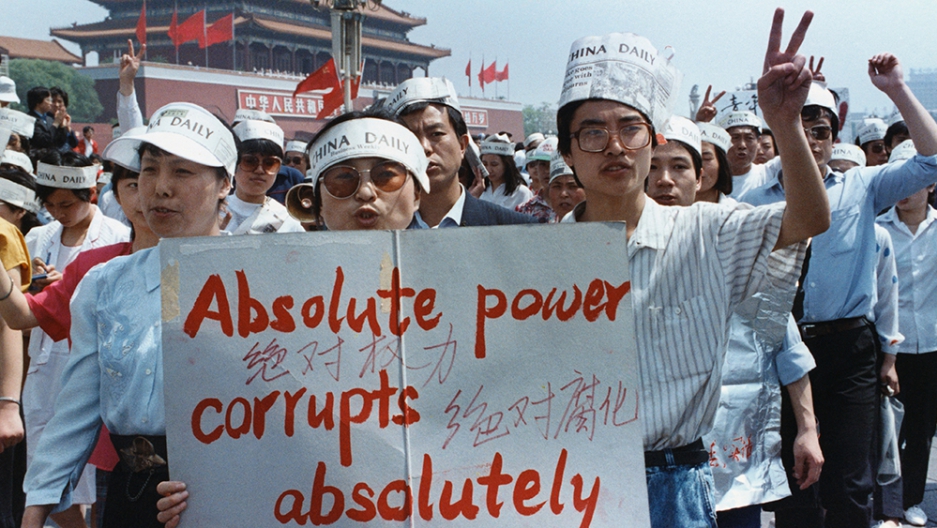
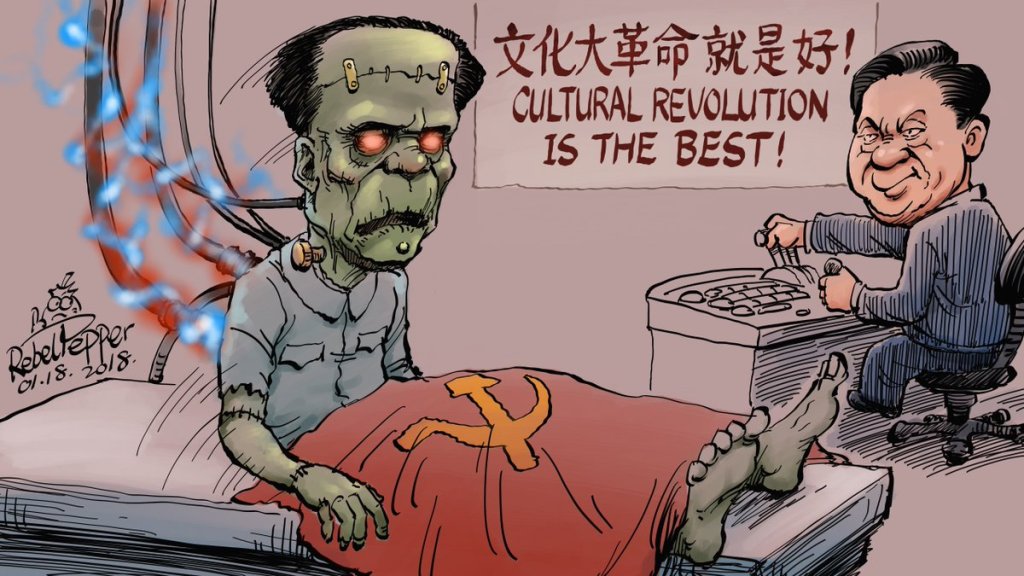
权力只对权力来源负责,绝对的权力导致绝对的腐败 Power and Accountability: The Downfall of Absolute Power. The Chinese Communist Party’s Promises and Reality

中国共产党自从诞生之日起,就自诩为人民民主的进步政党,在与蒋介石争夺天下时,如《解放日报》等官媒更是民主金句不断,诸如“没有民主,一切都是假的”、 “自由和民主是现代社会的阳光和空气”、 “必须有完全的新闻自由”等放到今日来看依然毫不过时,单看彼时的中共,俨然是一心革除封建专制余孽,为了伟大事业抛头颅洒热血的民主斗士!然而1999年,中国作家笑蜀编撰了一本《历史的先声——来自半个世纪前的庄严承诺》,将这些中共上世纪40年代发表的民主金句尽数收录并出版,其中并未添加任何私货,结果此时早已坐稳江山,彻底暴露极权面目的中共被这记隔了半个世纪,由自己亲手发出的的回旋镖正中面门,独裁者岂能忍受这等阴阳怪气的嘲讽,中共恼羞成怒,两个月后时任中共中央宣传部长丁关根在会议上重点抨击此书的出版,并火速下令全国查禁,出版社停业整顿,出版社负责人调离原职,已出版书籍查封销毁,北京公安更是在图书馆翻来覆去寻找漏网之书,以这种自己啪啪打脸的桥段沦为全世界的笑柄。

民主制度的优缺点

现代民主制度绝非完美的制度,英国历史上最伟大的首相丘吉尔曾说过:“民主是最糟糕的制度,但它是我们所尝试过的所有制度中最不坏的。”诚然,民主制度总是伴随着一系列衍生问题,诸如决策效率低、周期长,政策不连贯,盲目迎合选民等,但就目前来说,民主是唯一真正实现了将权力关进笼子的社会制度,精妙的分权制衡与监督机制,确保了民主拥有强大的纠错机制。这也是民主制度的精髓,仅此一点民主就可以碾压独裁国家社会的所有“优点”。

中国的“全过程民主”

反观中国的“全过程民主”,中国的最高权力机构全国人大如今不过是习近平的掌中玩物,2900余名全国人大代表皆是冢中枯骨、举手机器。连任时间高达66年、公认建国以来资格最老的全国人大“常青树”申纪兰接受记者采访时曾有过一句惊世名言——“我非常拥护共产党。当代表就是要听党的话,我从来没有投过反对票”。申纪兰女士可能锄了一辈子地,以至于四肢发达头脑简单,不知道有些话是要放在心里不适合说出来的,也可能她只是希望借机向国家领袖表达她的忠诚,但无论是哪一种可能,根据她的实际作为来看,这番话很可能是她发自肺腑的真心话,但这也就意味着她当人民代表的一生中,曾经既支持人民公社,又支持取消人民公社。既支持大跃进,又支持取消大跃进。既支持文革,又支持平反文革。举手机器的风采在她身上体现的淋漓尽致。

权力与监督的失衡

中共自始至终就没有想过和老百姓分享权力,事实上,无论是自诩为进步政党,还是自称追求正义、代表最广大的农民也好,这些都没有实际意义,任何以暴力作为后盾、且权力不受制衡的政权最终都只会走上独裁极权这条路,西方国家的人民在实行对公权力的监督权时,总是保持十二分的警惕,将公权力视为洪水猛兽,时刻关注权力的牢笼有没有松懈的可能,此外传媒行业也在时刻运用舆论的力量行使监督政府的第四权,这种权力的有效分配与互相监督是民主制度的基石,既确保了权力是自下而上的赋予,也确保了权力只能在笼子里跳舞而不敢越雷池一步。

反观中国,姑且不谈胡温时期中国还残留着些许党内民主的氛围,自习近平这位“千古一帝”上任以来,中共种种倒行逆施不断,包括但不限于镇压监禁有良心的异见人士,以“四个意识”全方位加强中共对整个社会的掌控力,2018年更是悍然修改宪法,将国家主席“不得连任超过两届”的祖训删去,摆明了要终身连任。中国的媒体不见分毫的质疑和抗议之声,反而声情并茂地大唱赞歌,声称这是“符合国家事业发展需要、顺应人民意愿”、 “有助于推动宪法与时俱进、完善发展”。可谓毫无新闻工作者的操守,已彻底沦为中共的喉舌与宣传工具。而早在2016年,央视就曾在习近平前来视察时,明牌打出了“央视姓党,绝对忠诚,请您检阅”这等恬不知耻的溜须拍马标语。批评此事的任志强,也在2020年因发文痛斥习近平是“脱光了衣服也要当皇帝的小丑”而被捕入狱,皇帝震怒之下,下面的官员匆匆找了个理由将任志强重判了18年有期徒刑。

被滥用的公权力

近年来中共维稳费支出节节攀升,2020年中国的维稳经费已然超过军费开支7%,高达2100亿美元,纵观古今中外,可谓前无古人后无来者,要知道,这笔钱甚至远远超过覆盖14亿中国人免费医疗的所需。而庞大的维稳经费和社会管控带来的另一个问题,就是宣传与现实的巨大脱节,在新闻宣传里,中国的前景永远稳中向好,四海升平,是“全世界最安全的国家”,然而在现实里,针对无辜者的暴力恐怖事件频发,各地因遭遇不公的维权上访不断,恐慌弥漫在每个中国人的心中。

那么为什么中共可以如此肆意妄为而不必在乎影响和民意呢?正是因为中国的体制决定了权力是由上而下赋予,上级领导掌握着下级官员的生杀予夺,所以官员永远只需对上负责,2023年8月杜苏芮台风过境时,中共官员为了保住习近平钦点的“千年大计”雄安,在未通知泄洪转移和部署救援措施的前提下,悍然将洪水倾泻在70万常住人口的涿州,酿成一幕幕生离死别、流离失所的惨剧,究其根源不过是因为习近平是这些中共官员的权力来源罢了,他们的办事逻辑也很简单:“皇上重视雄安,做奴才的自然要为皇上分忧,就苦一苦百姓吧”,倘若这些官员是由人民选举,接受人民和媒体监督,那他们还敢冒天下之大不韪作出此等匪夷所思的决策吗?

权力只对权力来源负责,这一原则在中国的政治体制中显得尤为突出。在一个权力高度集中的体系中,官员的首要任务往往是取悦上级,而非服务于普通人民。这种结构使得权力的滥用成为常态。中国现行的体制虽然宣称实行“全过程民主”,但实质上却体现了权力的极端集中和对公民自由的压制。

结论

如果中国有实现民主自由的那一天,必须实现权力的自下而上的赋予。公权力真正来源于人民,绝非人手一张选票那么简单。完善的分权制衡与监督机制,同时公众对政治有清醒的认知和警惕,才能有效遏制权力的腐败和滥用。民主制度并非完美无缺,但它通过权力的分散和系统的监督,提供了一种相对有效的方式来约束权力、保护公民权益。中国的未来在于学习和借鉴这些经验,推进真正的权力改革,让权力对人民负责,而不是仅仅对上级负责。唯有如此,中国才能避免当前的权力滥用,实现真正的公平和进步。

作者:中国民主党英国总部党员程敏

Power and Accountability: The Downfall of Absolute Power. The Chinese Communist Party’s Promises and Reality

From its inception, the Chinese Communist Party (CCP) claimed to be a progressive party advocating for people’s democracy. During its struggle against Chiang Kai-shek, party media such as Liberation Daily were filled with pro-democracy rhetoric like “Without democracy, everything is fake”, “Freedom and democracy are the sunlight and air of modern society”, and “Complete freedom of the press is essential”. These slogans, still relevant today, painted the CCP as democratic warriors sacrificing for a great cause. However, in 1999, Chinese writer Xiao Shu published The Voice of History: The Solemn Promise from Half a Century Ago, compiling these quotes without any personal commentary. The CCP, by then firmly in power and showing its true authoritarian nature, was infuriated. In response, then-Minister of Propaganda Ding Guangen criticized the book and swiftly banned it nationwide, shutting down the publisher and destroying the books, turning this self-inflicted humiliation into a global laughingstock.

The Pros and Cons of Democracy

Modern democratic systems are far from perfect. As Winston Churchill, one of the greatest British Prime Ministers, famously said, “Democracy is the worst form of government, except for all the others that have been tried.” Indeed, democracy often comes with inefficiencies, long decision-making processes, and the risk of populism. However, it remains the only system that effectively confines power within a cage. The intricate checks and balances ensure a robust mechanism for correcting mistakes. This inherent strength of democracy alone allows it to surpass all the “advantages” claimed by autocratic regimes.

China’s “Whole-Process Democracy”

In contrast, China’s so-called “whole-process democracy” is a farce. The National People’s Congress, China’s highest authority, is merely a puppet of Xi Jinping, with its 2,900 representatives acting as mere rubber stamps. For instance, Shen Jilan, the longest-serving delegate since the founding of the People’s Republic, once famously said, “I wholeheartedly support the Communist Party. Being a representative means listening to the Party. I have never voted against any proposal.” This statement, whether out of loyalty or naivety, reveals her as a mere tool of the Party, supporting contradictory policies without question.

The Imbalance of Power and Supervision

The CCP has never intended to share power with the people. Regardless of its claims of pursuing justice and representing the majority, any regime backed by violence and unchecked power inevitably becomes dictatorial. In Western democracies, citizens vigilantly monitor public power, and the media plays a crucial role as the fourth estate. This effective distribution and mutual supervision of power are the cornerstones of democracy, ensuring power is granted from the bottom up and remains confined within legal boundaries.

Conversely, since Xi Jinping’s rise to power, China has regressed into stricter authoritarianism, cracking down on dissidents, enforcing the “Four Consciousnesses” to strengthen control, and abolishing presidential term limits to allow Xi’s indefinite rule. Chinese media, instead of questioning, sings praises for these moves, showcasing its transformation into a mere propaganda tool. In 2016, CCTV even shamelessly displayed a banner proclaiming “CCTV is loyal to the Party, please inspect us” during Xi’s visit, leading to the arrest and heavy sentencing of critic Ren Zhiqiang in 2020.

The Abuse of Public Power

China’s stability maintenance expenditures have skyrocketed, exceeding military spending by 7% in 2020, totalling $210 billion. This unprecedented expenditure highlights a stark disconnect between propaganda and reality. While the media portrays China as the safest country globally, the reality is marked by frequent violent incidents and widespread unrest among citizens facing injustice.

The root of the CCP’s unchecked actions lies in its top-down power structure. Officials are accountable only to their superiors, not the people. During the 2023 Typhoon Doksuri, to protect Xi Jinping’s “Millennium Plan” for Xiong’an, officials diverted floodwaters to Zhuozhou without proper warning or evacuation, causing widespread devastation. This decision reflects the simple logic: “The Emperor values Xiong’an, so we must alleviate his worries, even if it means sacrificing the people.” If these officials were elected and accountable to the people and media, would they dare to make such reckless decisions?

Conclusion

For China to achieve true democracy and freedom, power must be granted from the bottom up, originating from the people. This involves more than just having a vote; it requires a robust system of checks and balances and a vigilant public. While democracy is not flawless, its decentralisation of power and systematic oversight provide an effective way to curb corruption and protect citizens’ rights. China’s future lies in learning from these experiences, advancing genuine reforms, and ensuring that power is accountable to the people, not just to superiors. Only then can China avoid the current abuses of power and achieve true fairness and progress.

Author: Cheng Min, Member of the UK Headquarters of China Democracy Party

“仇恨与忠诚:中共洗脑教育的深远影响” “Hatred and Loyalty: The Profound Impact of CCP Brainwashing Education”

我们都知道,每个中国的孩子从记事起就开始接受系统化的教育,这种教育不仅仅是为了传授知识,更重要的是在潜移默化中塑造他们的思想和价值观。从幼儿园的红歌开始,到小学的红领巾,再到中学的共青团,最后到大学的入党,一步步将共产党的理念深深植入每个孩子的心中。这种教育方式不仅向每个中国人灌输忠诚于党的思想,还通过灌输历史仇恨,将对于外国的敌对情绪根植于每个中国人内心深处。本文将略微探讨这种洗脑教育的具体形式及其对中国人思想和行为的深远影响。

每个中国人自打“出厂”以来,都毫无例外地接受着共产党流水线式的洗脑教育。从幼年起,我们便被教导“爹亲娘亲没有毛主席亲”,“没有共产党就没有新中国”,“东方红太阳升,中国出了个毛泽东”等等。诸如此类歌颂共产党的红歌数不胜数,几乎任何一个还没识字的孩子都可以朗朗上口地唱几句红歌。

等到孩子上了小学,鲜红的红领巾便迫不及待地缠上幼嫩的脖子,时刻提醒着孩子要学习先辈,忠党爱国。在2000年代那会儿,如果上学忘记带红领巾,将是一种很严肃的错误,会被教师体罚甚至要求回家去取。上了初中后,红领巾被取下来了,接踵而来的又是共青团的宣誓,之后大学则是入党。在中国人建立三观最重要的十年里,共产党从未有一天缺席,相反,他们始终牢牢占据着孩子心中至关重要的位置,不厌其烦地教导每一个孩子要爱党爱国。共产党的宣传从不避讳这一点,永远是把党放在国前面,而经历了数千年封建专制统治的中国人也丝毫不以为奇,只觉得理所当然。

我们在中国长大的年轻人,绝大多数的童年都经历过这样一件事:当我们深夜在家中哭闹不休时,我们的父母或长辈有时会吓唬我们——如果再哭闹,外面的豺狼或者鬼怪便会来将你抓走。这种恐吓对于幼时的孩子往往分外有效,而共产党也正是采取了与这种恐吓如出一辙却百试不爽的方法,从另一种角度完成了对中国人的洗脑。

一方面,中国人经过几千年来的儒家思想驯化,骨子里期盼的就是君圣臣贤的专制“盛世”;另一方面,中国近代百年来被侵略的屈辱历史也是共产党施行仇恨教育的绝佳背景。中共在几十年间拍摄、出版了数以千计歌颂美化自身的电影、电视剧以及书籍,在这些作品中大肆丑化、甚至妖魔化它的敌人们,刻意引导每一个中国人去仇恨外国。“帝国主义亡我之心不死”,这一句中国人耳熟能详的名言和“没有共产党就没有新中国”一样,都是中共通过几十年如一日的洗脑教育烙印在每一个中国人内心最深处的刻印。

这种仇恨与忠诚双管齐下的洗脑模式,塑造了今天中国人在面临国际事件时的矛盾心态。一方面,中国人对中共统治下的中国非常自豪,中国的民族凝聚力和国家认同感远超世界上任何一个民主国家,这也是中共施行洗脑教育的根本目的。但另一方面,大多数中国人因为受到长期的洗脑而缺乏国际视野与思维的开放性,看待问题缺乏缜密的逻辑和理性的思考。比起现代化国家的国民,他们倒更像是二战时期日本军国主义的余孽。中国的社交媒体上充斥着诸如“核平台湾”、“东京大屠杀”之类的暴论,而中共出于政治需要,对这类言论往往视而不见,反而积极删除和屏蔽那些本就是少数派的理性发言。

长此以往,当内部矛盾激化到不可调节,文革2.0或是武力侵略台湾只怕是不远了。

作者:中國民主黨英國總部黨員程敏

“Hatred and Loyalty: The Profound Impact of CCP Brainwashing Education”

We all know that every Chinese child begins to receive systematic education from a very young age. This education is not just about imparting knowledge; more importantly, it subtly shapes their thoughts and values. Starting with the “red songs” in kindergarten, moving on to the red scarves in elementary school, then the Communist Youth League in middle school, and finally party membership in college, the Communist Party’s ideology is deeply ingrained in every child’s heart step by step. This educational approach not only instills loyalty to the Party in every Chinese person but also roots hostility towards foreign nations deep within their hearts through historical hatred. This article will briefly explore the specific forms of this brainwashing education and its profound impact on the thoughts and behaviors of Chinese people.

Every Chinese person, since “leaving the factory,” has been inevitably subjected to the Communist Party’s assembly line-like brainwashing education. From a young age, we are taught slogans like “Parents are dear, but not as dear as Chairman Mao,” “Without the Communist Party, there would be no new China,” and “The East is Red, the Sun rises, China has produced a Mao Zedong.” There are countless such red songs praising the Communist Party, and almost any child who hasn’t yet learned to read can sing a few lines of these red songs.

When children enter elementary school, the bright red scarves eagerly wrap around their tender necks, constantly reminding them to learn from their predecessors and to be loyal to the Party and love the country. In the 2000s, forgetting to wear a red scarf to school was considered a serious mistake, resulting in punishments from teachers or even being sent home to retrieve it. After entering middle school, the red scarf is taken off, only to be replaced by the pledge of the Communist Youth League, followed by Party membership in college. Throughout the most formative decade of establishing their worldview, the Communist Party never misses a single day, always occupying a crucial place in children’s hearts, tirelessly teaching each child to love the Party and the country. The Party’s propaganda never shies away from placing the Party before the country, and the Chinese people, who have endured thousands of years of feudal autocracy, find this completely natural.

Many of us who grew up in China have experienced this: when we cried incessantly at night, our parents or elders would sometimes scare us, saying that if we continued crying, wolves or monsters outside would come and take us away. Such threats are often very effective on young children, and the Communist Party adopts a similar yet foolproof method to complete the brainwashing of the Chinese people from another perspective.

On one hand, after thousands of years of Confucian indoctrination, Chinese people inherently long for a “Golden Age” of benevolent autocracy. On the other hand, the century-long history of humiliation and invasion is the perfect backdrop for the Communist Party to implement hatred education. Over several decades, the CCP has produced and published thousands of movies, TV dramas, and books glorifying itself, while vilifying and even demonizing its enemies in these works, deliberately guiding every Chinese person to hate foreign countries. Phrases like “Imperialism never dies” are as familiar to Chinese ears as “Without the Communist Party, there would be no new China,” both being indelible imprints of the CCP’s decades-long brainwashing education.

This dual approach of instilling hatred and loyalty has shaped the contradictory mindset of Chinese people when facing international events. On one hand, Chinese people are extremely proud of the China under CCP rule, with a sense of national cohesion and identity far surpassing any democratic country in the world, which is the fundamental purpose of CCP brainwashing education. But on the other hand, most Chinese people, due to long-term brainwashing, lack international perspective and open-minded thinking, often viewing issues without logical rigor and rational consideration. Compared to citizens of modernized countries, they are more akin to remnants of WWII-era Japanese militarism. Chinese social media is filled with extreme rhetoric like “nuke Taiwan” or “Tokyo massacre,” and the CCP, for political reasons, often turns a blind eye to such comments while actively deleting and blocking the rational voices, which are already a minority.

In the long run, when internal conflicts become irreconcilable, a Cultural Revolution 2.0 or military invasion of Taiwan may not be far off.

Author: Cheng Min, Member of the UK Headquarters of China Democracy Party

纪念刘晓波逝世七周年 Commemoration of the Seventh Anniversary of Liu Xiaobo’s Death

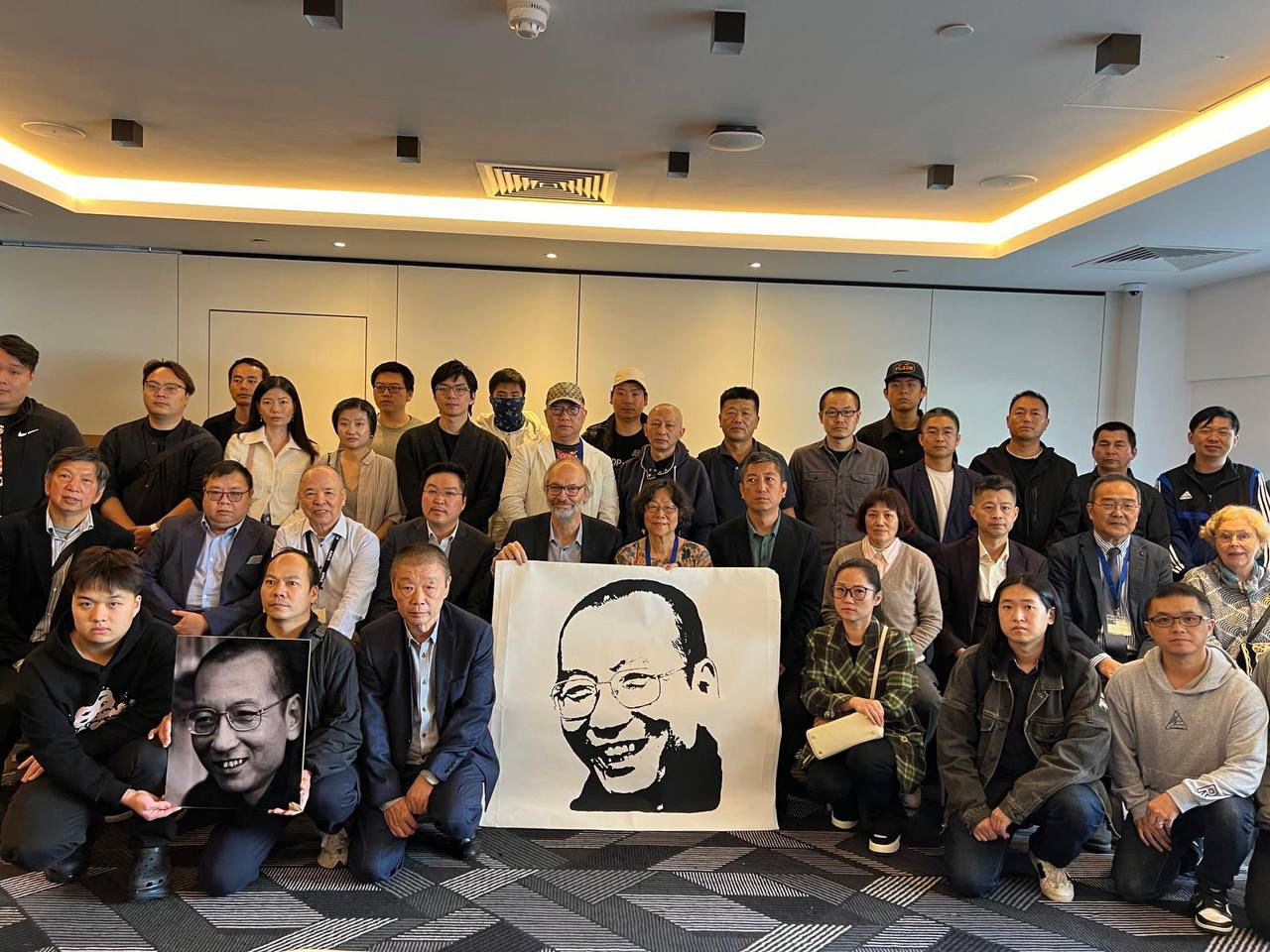
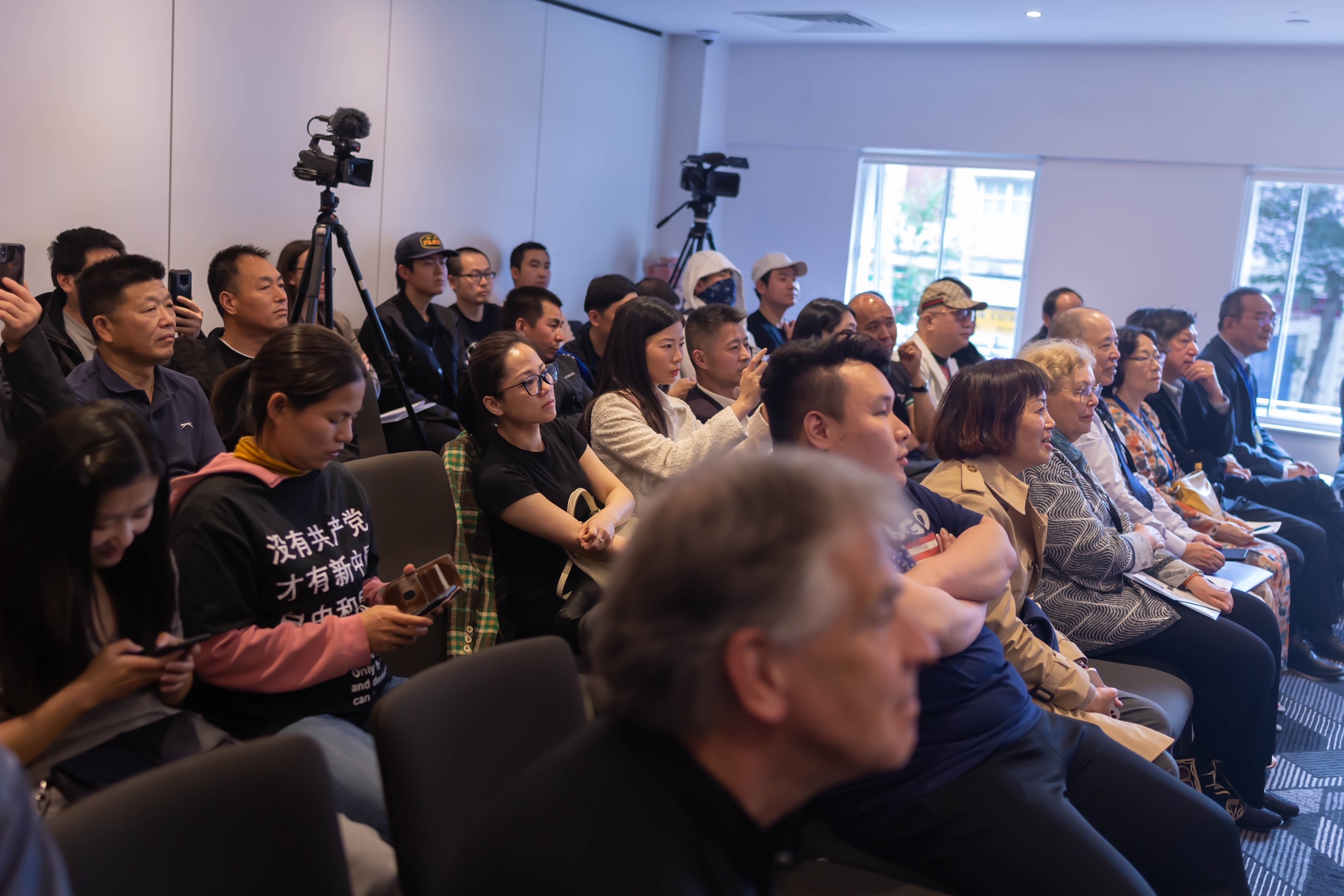
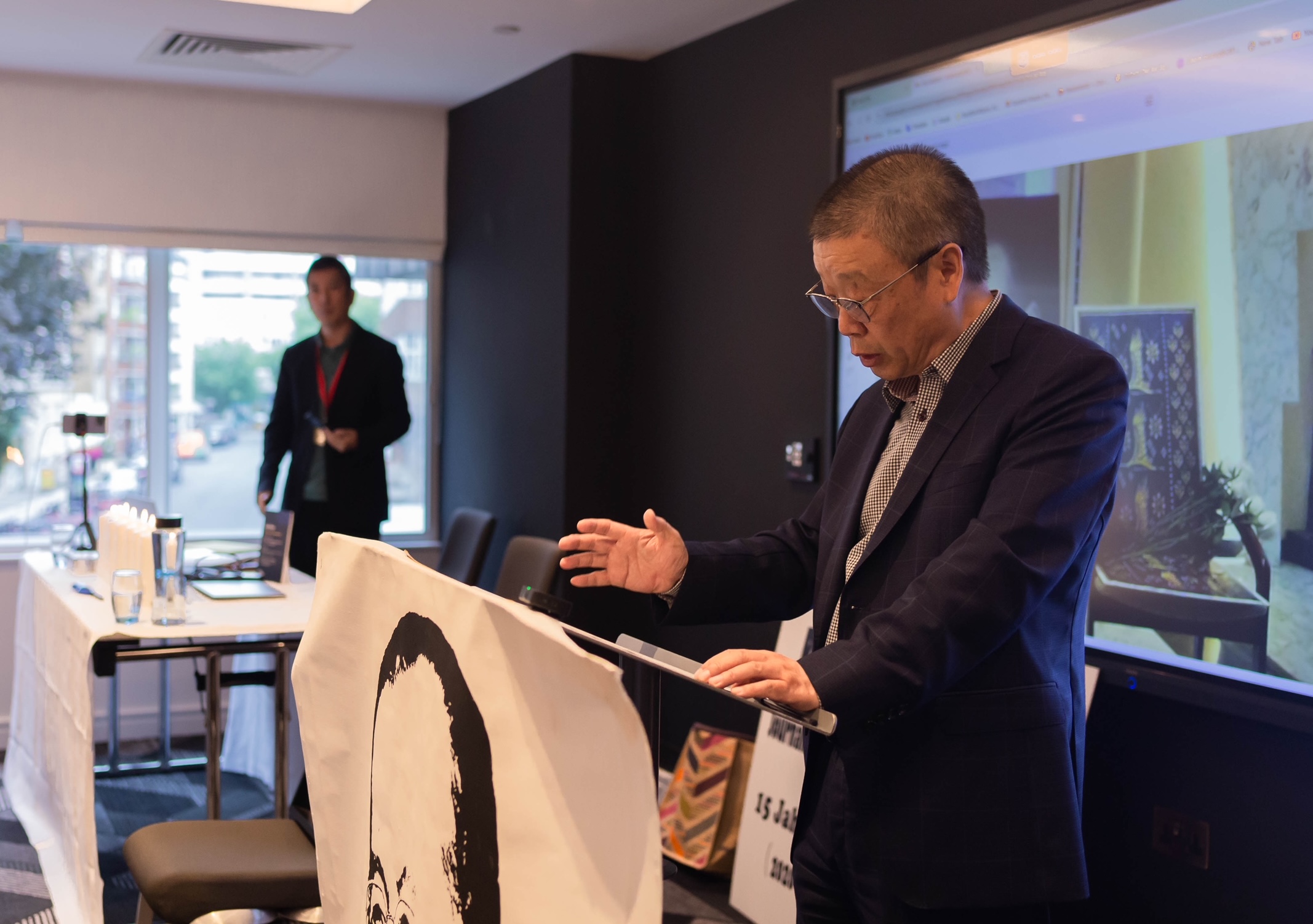
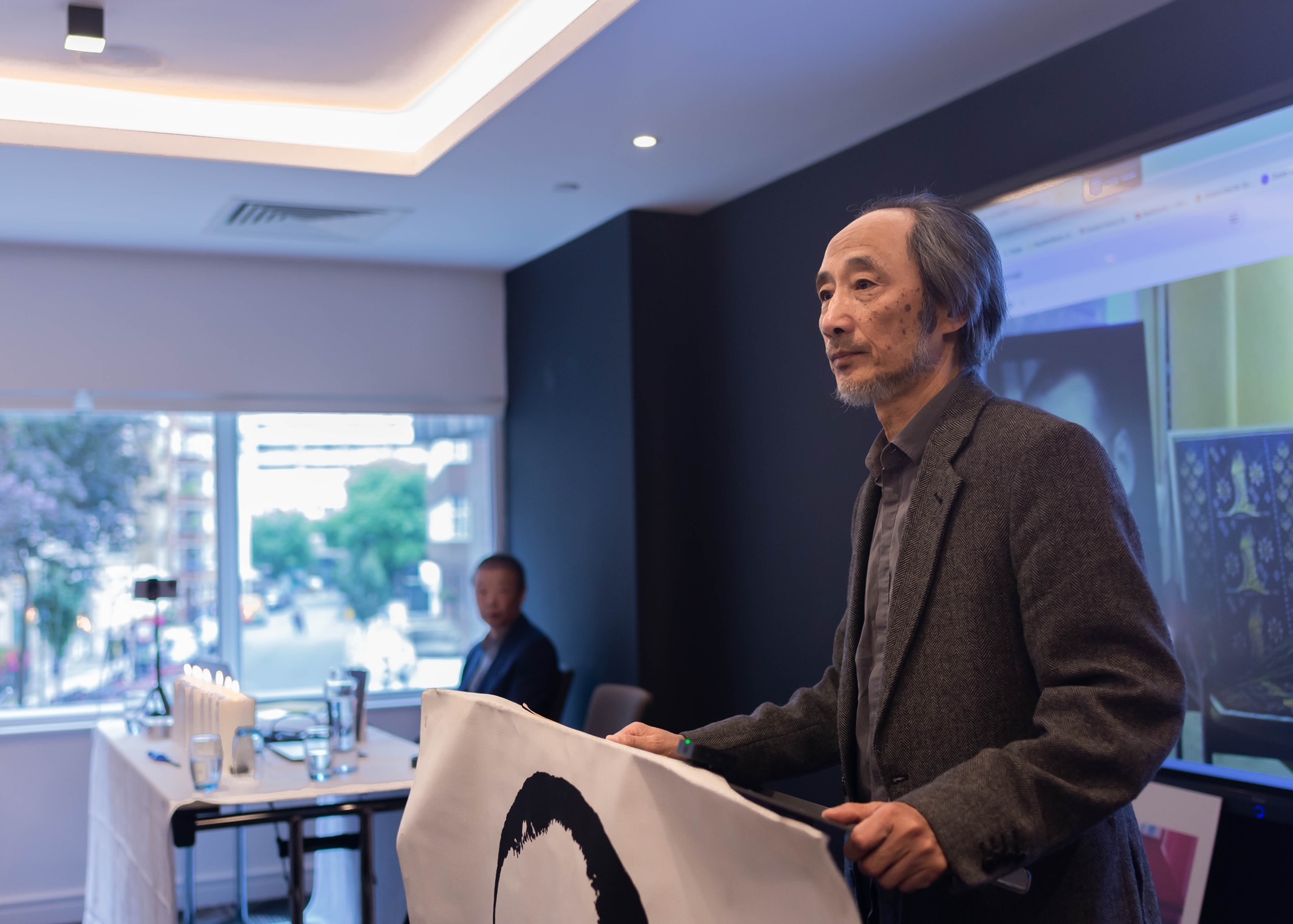
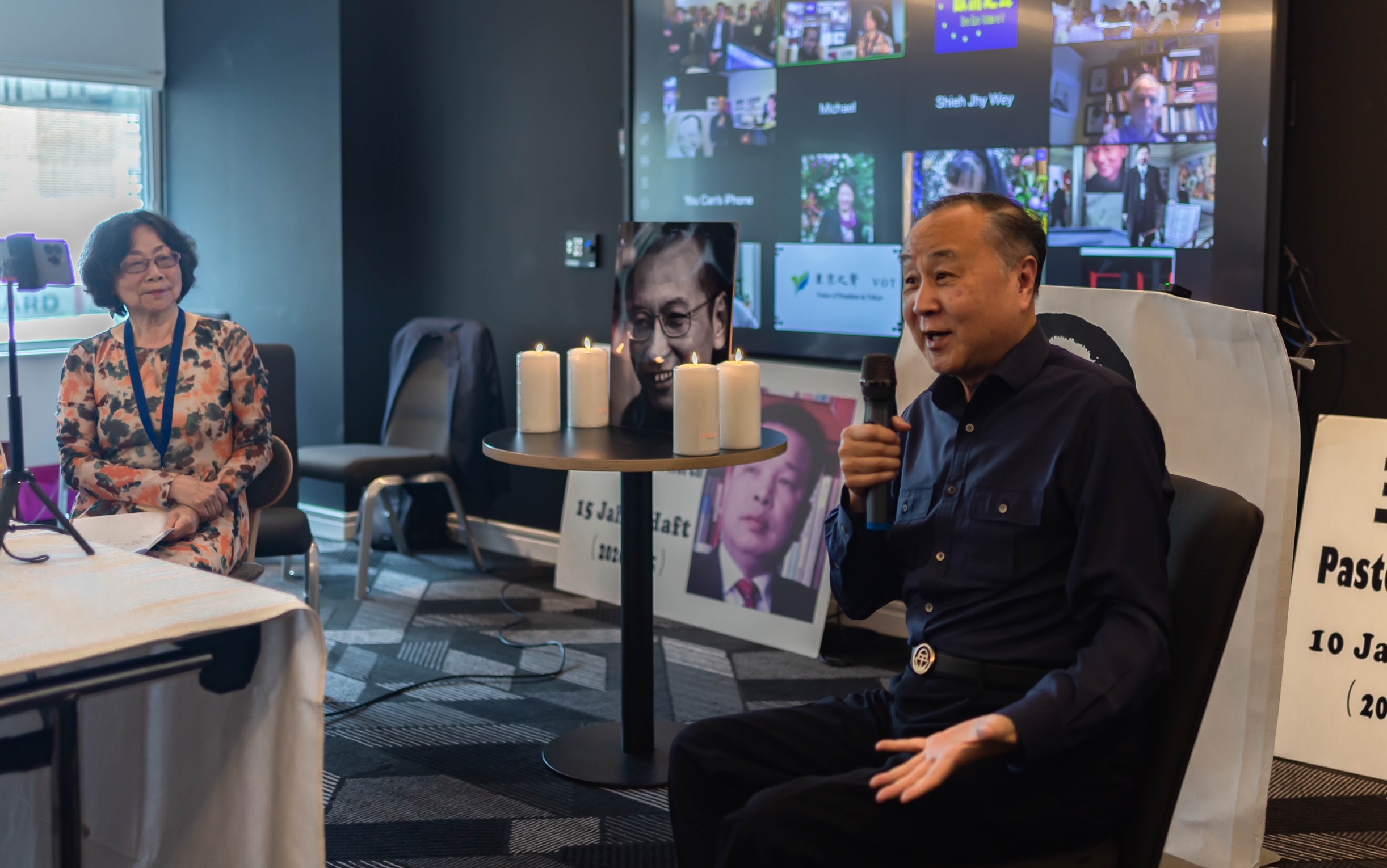
2024年7月13日,为纪念中国著名异见人士刘晓波逝世七周年,中国民主党英国总部与欧洲之声联合举办了一场庄严而充满意义的纪念活动。此次活动在伦敦市中心Royal Natonal Hotel的一个会议厅举行,吸引了来自各地的民主人士、人权活动家、学者以及中国民主党党员,共同缅怀这位为中国民主事业献身的伟大人物。

活动开始,首先由中国民主党全国联合总部副主席、中国民主党英国总部主席王冠儒向与会嘉宾和党员致欢迎词,然后主持人欧洲之声社长廖天琪女士介绍了刘晓波的生平和他的主要事迹。刘晓波是中国著名的文学评论家、学者及人权活动家,因其倡导民主、自由和人权而屡次被捕。他最著名的事迹之一是起草了《零八宪章》,该宪章呼吁中国进行政治改革,建立宪政民主。2010年,刘晓波被授予诺贝尔和平奖,但他却因“煽动颠覆国家政权罪”被判处11年监禁,并于2017年在狱中患肝癌去世。

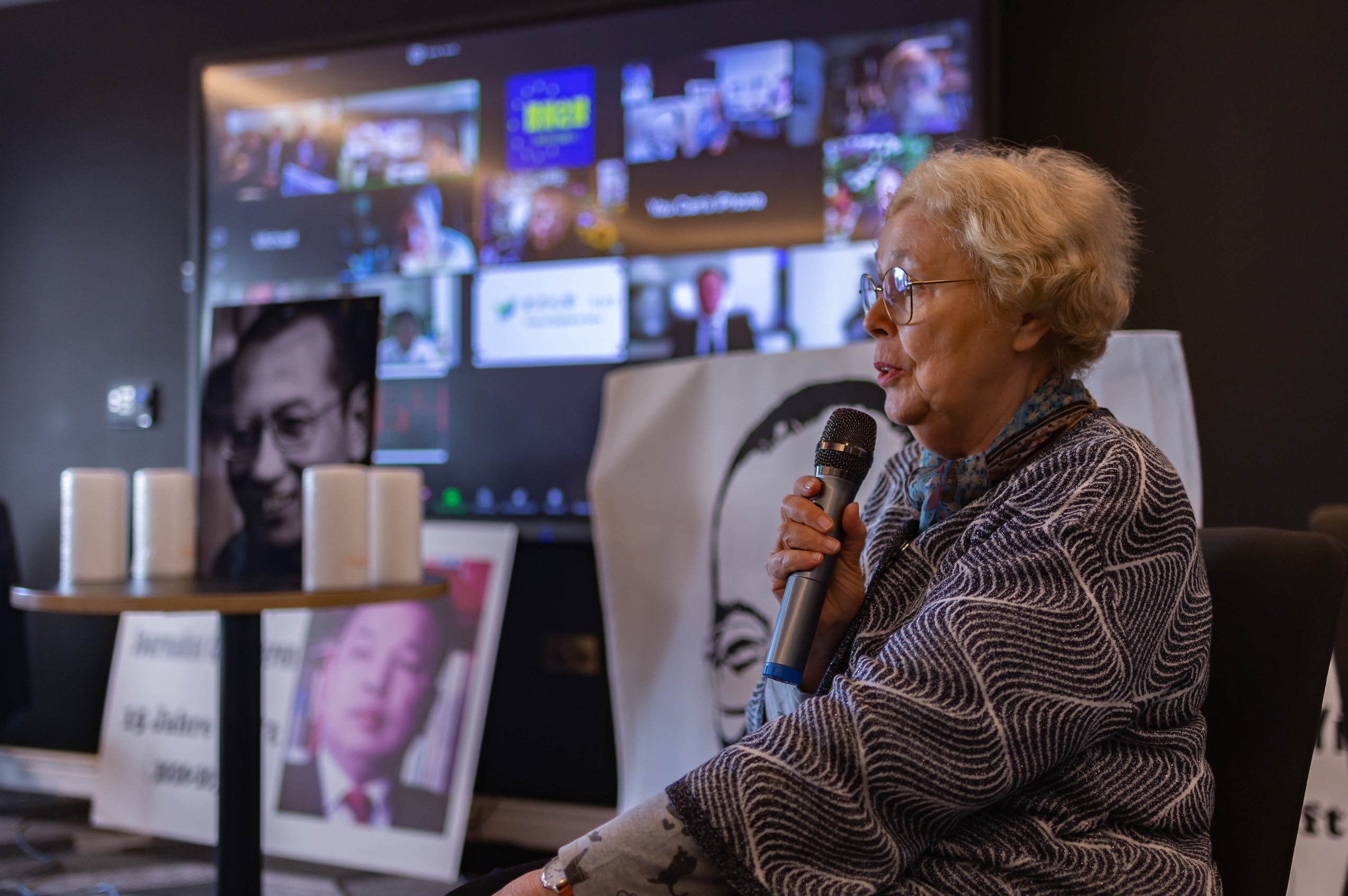
随后,中国民主党英国总部和欧洲之声的负责人分别发表了讲话。他们回顾了刘晓波为争取中国民主和人权所作出的巨大牺牲,强调了他的精神遗产对当今中国和世界的深远影响。讲话中提到,尽管刘晓波已经离世,但他的思想和精神依然激励着无数追求自由和公正的人们。接下来,几位特邀嘉宾发表了演讲,包括著名的中国问题专家、作家和人权活动家。他们分别从不同的角度探讨了刘晓波的思想遗产、当前中国的人权状况以及国际社会应对中国人权问题的策略。一位嘉宾深情回忆了他与刘晓波的几次会面,分享了刘晓波在私下里温暖而坚定的一面,使与会者对这位伟人的个人形象有了更为立体的认识。活动还安排了视频播放环节,展示了刘晓波生前的一些珍贵影像资料。屏幕上,刘晓波那坚定的目光和温和的话语仿佛穿越时空,直击人心。

中国民主党英国总部的党员卢灵飞、朱双林、李景棠、朱司勇、胡晓等深受感动,在会议现场积极参与发言,表达对自由民主的追求和对刘晓波的深刻缅怀。

此次纪念活动分上午的现场活动和下午的网络活动,下午会议结束,与会人士赶到中国驻伦敦大使馆举行抗议活动。此次活动不仅是对刘晓波个人的缅怀,更是对自由、民主和人权普世价值的坚定支持。通过这样的纪念活动,刘晓波的精神得以传承,他的追求也将继续激励更多人投身于争取自由与正义的事业中。

参与此次活动的党员:王冠儒、黄华、蒋玉山、Thomas、林丽君、李亚伦、靳雪涔、刘恩成、于伟梁、郭宇轩、赵强、廖柳燕、罗宾、闫磊、李皓博、周亮、阮谦、顾晓峰、兰子明、林明强、朱双林、魏辰雨、徐伟华、周亮、朱司勇、周小斌、黄林、韦伊铭、李景棠、胡晓、卢灵飞、王建、陈明旺、David、 Junius Tian等

中国民主党英国总部报道

Commemoration of the Seventh Anniversary of Liu Xiaobo’s Death

On July 13, 2024, to commemorate the seventh anniversary of the death of prominent Chinese dissident Liu Xiaobo, the UK Headquarters of China Democracy Party and the Voice of Europe jointly organized a solemn and meaningful commemorative event. The event was held in a conference hall at the Royal National Hotel in central London, attracting democrats, human rights activists, scholars, and members of the China Democracy Party from various regions to honor this great figure who dedicated his life to the cause of democracy in China.

The event began with a welcoming speech by Wang Guanru, Vice Chairman of the National Joint Headquarters of the China Democracy Party and Chairman of the UK Headquarters of China Democracy Party, addressing the guests and party members. Then, Liao Tianqi, President of the Voice of Europe, introduced Liu Xiaobo’s life and his major achievements. Liu Xiaobo was a renowned literary critic, scholar, and human rights activist in China, repeatedly imprisoned for his advocacy of democracy, freedom, and human rights. One of his most notable achievements was drafting the “Charter 08,” which called for political reform and the establishment of constitutional democracy in China. In 2010, Liu Xiaobo was awarded the Nobel Peace Prize, but he was sentenced to 11 years in prison for “inciting subversion of state power” and died of liver cancer in custody in 2017.

Subsequently, the leaders of the UK Headquarters of China Democracy Party and the Voice of Europe delivered speeches. They recalled Liu Xiaobo’s tremendous sacrifices for democracy and human rights in China, emphasizing the profound impact of his spiritual legacy on contemporary China and the world. It was mentioned in the speeches that although Liu Xiaobo has passed away, his ideas and spirit continue to inspire countless individuals pursuing freedom and justice. Following this, several invited guests, including well-known China experts, writers, and human rights activists, gave speeches. They explored Liu Xiaobo’s intellectual legacy, the current human rights situation in China, and the international community’s strategies for addressing human rights issues in China from various perspectives. One guest fondly recalled several meetings with Liu Xiaobo, sharing his warm and resolute demeanor in private, providing attendees with a more comprehensive understanding of this great figure. The event also featured a video segment showcasing some precious footage of Liu Xiaobo. On the screen, Liu Xiaobo’s steadfast gaze and gentle words seemed to transcend time and space, touching hearts.

Party members of the UK Headquarters of China Democracy Party, including Lu Lingfei, Zhu Shuanglin, Li Jingtang, Zhu Siyong, and Hu Xiao, were deeply moved and actively participated in the discussions, expressing their pursuit of freedom and democracy and their profound remembrance of Liu Xiaobo.

The commemoration consisted of a morning in-person event and an afternoon online event. After the afternoon meeting concluded, attendees proceeded to the Chinese Embassy in London for a protest. This event was not only a commemoration of Liu Xiaobo but also a firm support for the universal values of freedom, democracy, and human rights. Through such commemorations, Liu Xiaobo’s spirit is perpetuated, and his pursuit continues to inspire more people to engage in the struggle for freedom and justice.

Participants in the Event

Wang Guanru, Huang Hua, Jiang Yushan, Thomas, Lin Lijun, Li Yafei, Jin Xueqin, Liu Encheng, Yu Weiliang, Guo Yuxuan, Zhao Qiang, Liao Liuyan, Robin, Yan Lei, Li Haobo, Zhou Liang, Ruan Qian, Gu Xiaofeng, Lan Ziming, Lin Mingqiang, Zhu Shuanglin, Wei Chenyu, Xu Weihua, Zhou Liang, Zhu Siyong, Zhou Xiaobin, Huang Lin, Wei Yiming, Li Jingtang, Hu Xiao, Lu Lingfei, Wang Jian, Chen Mingwang, David, Junius Tian, and others.

Reported by the UK Headquarters of China Democracy Party.